
“Longing is everywhere in my paintings”
Malik Thomas Jalil Kydd is a British-Iraqi artist whose work transcends traditional boundaries between painting, drawing, and fiber art, using raw silk and natural dyes to explore the intimate intersections of identity, memory, and desire. His latest exhibition, Garden of Murmurs, on view at Carbon 12 gallery in Dubai, presents a poignant reflection on personal and cultural introspection. Grounded in his Iraqi heritage and informed by his deep engagement with textiles, Kydd uses the tactile language of fabric—particularly silk, a material rich with symbolic resonance—to question notions of masculinity, sensuality, and the complexity of selfhood. His work invites viewers into a multi-sensorial experience, where sage-dyed surfaces and large-scale male figures convey both the vulnerability and resilience of identity shaped through heritage, displacement, and longing.
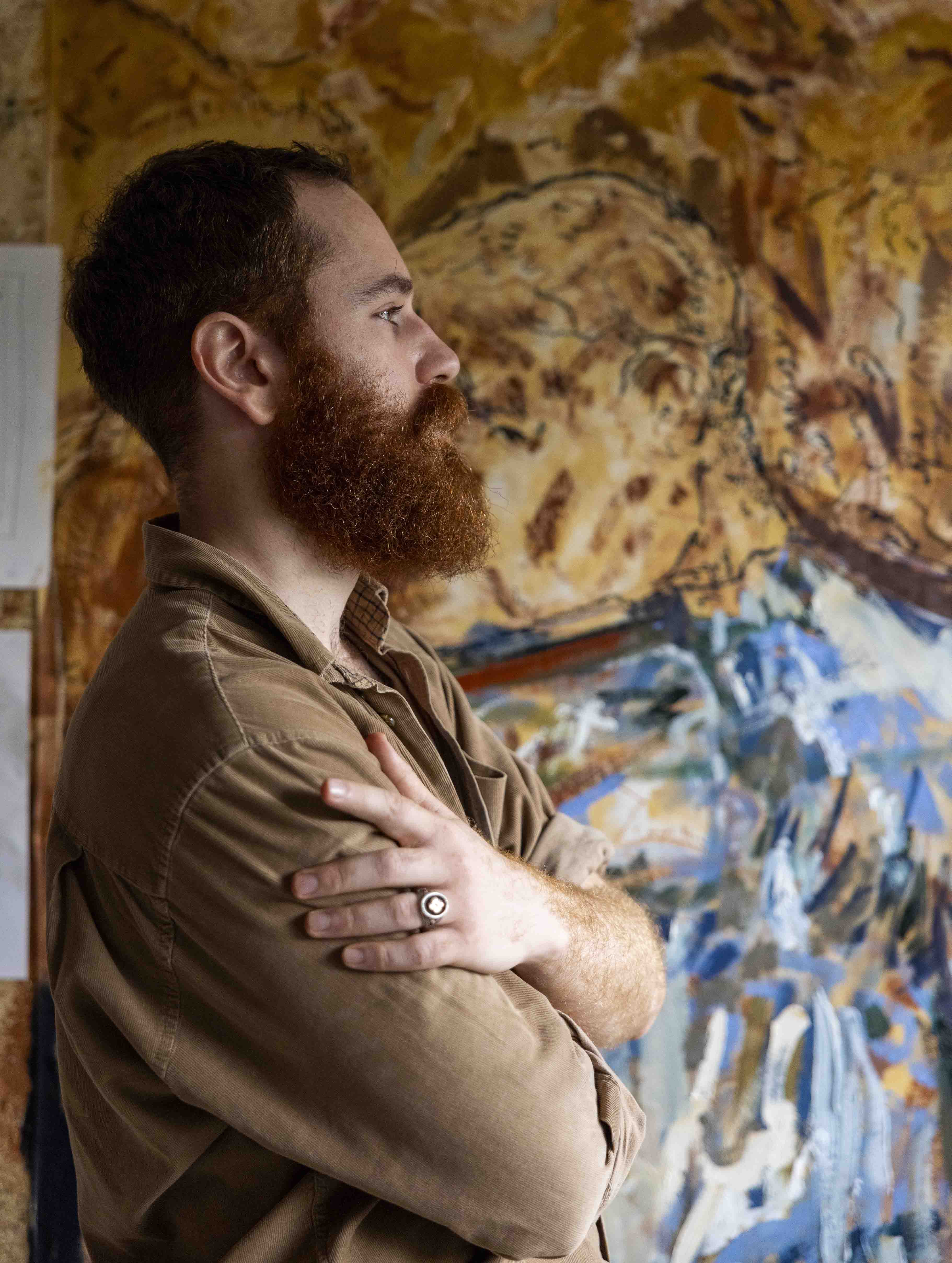
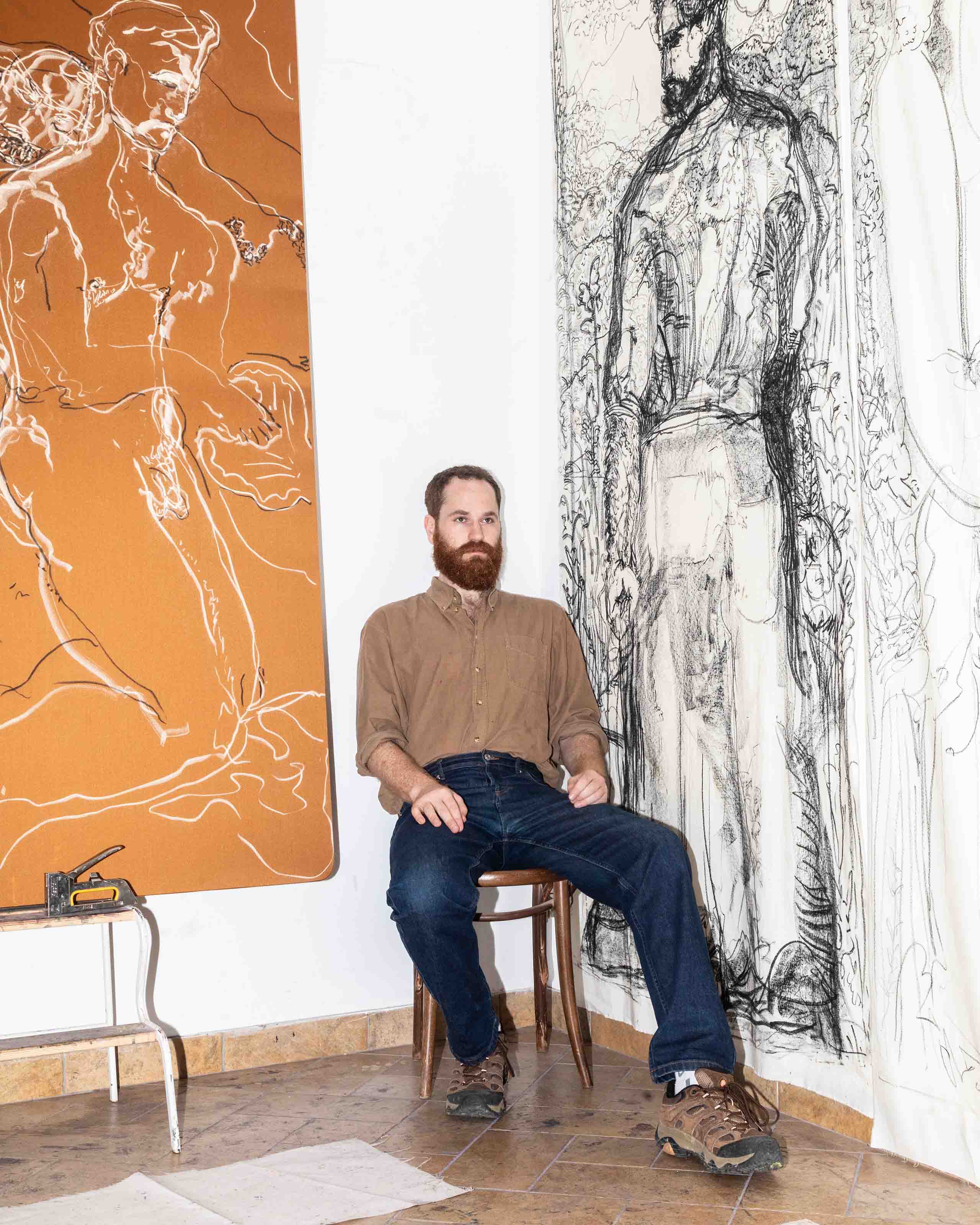
Kydd’s practice, rooted in both Amman and London, interweaves emotional expression with formal experimentation. His hand-dyed raw silk panels, stitched together to form expansive canvases, mirror the fluid and evolving nature of self-representation. Through moody figuration, gestural markings, and a careful use of mixed media—charcoal soaked in linseed oil, pastel, and oil—his works suggest a delicate interplay between ephemerality and permanence. Rather than offering overt narratives, Kydd constructs poetic spaces that speak to personal desire, queer intimacy, and familial memory, while simultaneously engaging with broader cultural critiques. His work resists over-contextualization, instead encouraging an emotional and empathetic response, and creating room for reflection on the shared and shifting dimensions of human experience.
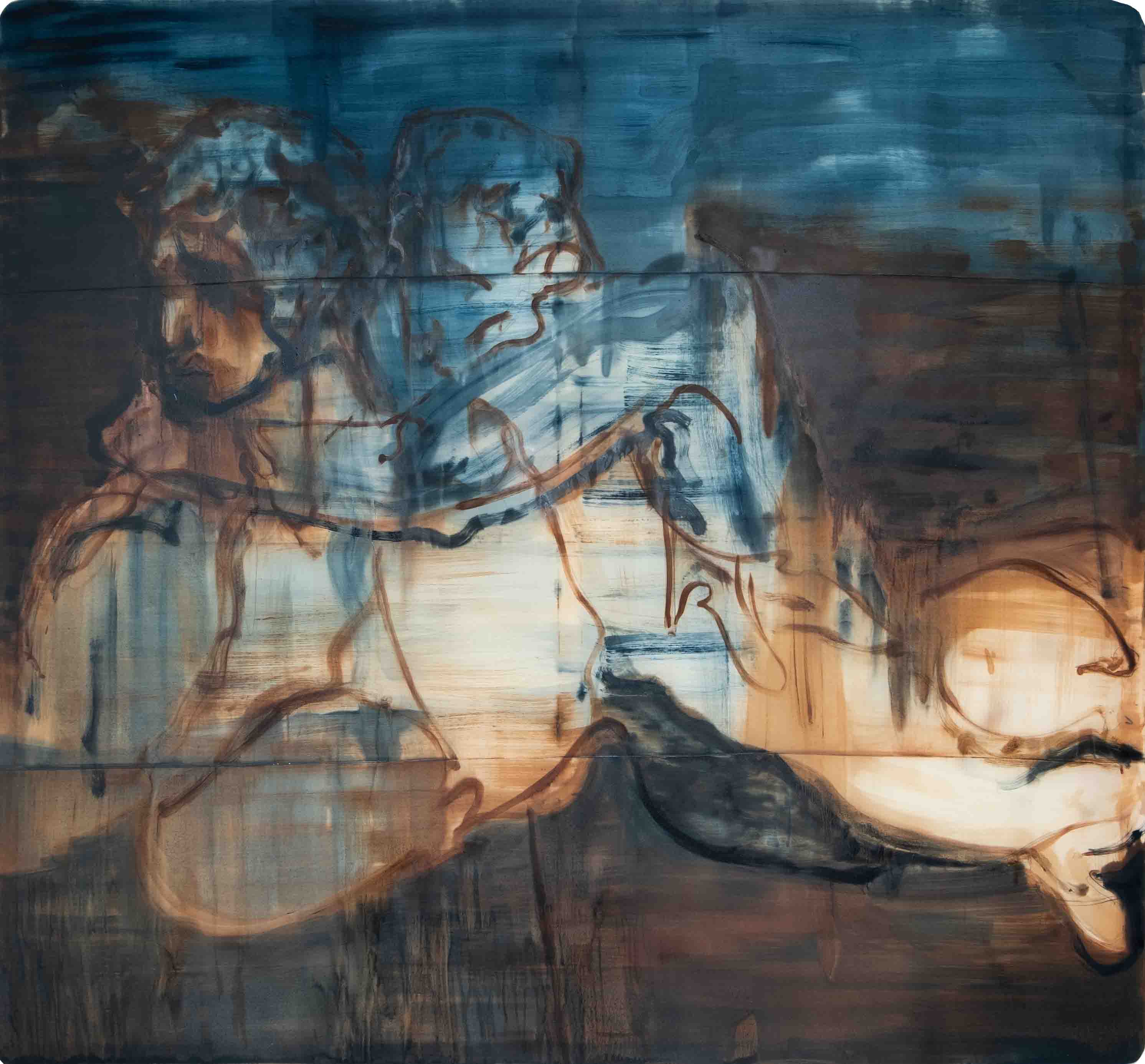
José Berrocoso, our lifestyle editor, sits down with artist Malik Thomas Jalil Kydd to talk about the intimate layers of identity, heritage, and desire woven through his latest exhibition Garden of Murmurs.
Your work brings together textiles, drawing, and painting in a fluid conversation. When did fabric first become a central medium in your artistic practice, and what led you there?
Fabric forms the basis of my material language. I studied fashion print at university, then worked with designers before spending a few years producing my own screen-printed garments. During that period, I developed a deep affinity for textiles — I was handling fabric with a kind of instinct. I began to think about fabric not only for its tactile qualities, but also for its broader cultural and symbolic charge. So when I turned toward painting and drawing, I brought that material memory with me.
I began working with raw silk, a fabric I had used for clothing — but I started using it differently. I wanted to shift it into another language. It’s often treated as precious and delicate, and that’s often mistaken — unfairly — as feeble. I wanted to expand upon this impression and make it a site for gesture and poetry, to surface its vitality.
Raw silk plays a profound role in your compositions—both visually and symbolically. What does this material represent to you personally, especially in relation to your identity and heritage?
There is a quiet strength in silk. It holds pigment in a way that is both absorbent and reactive. Its tactility and delicacy mirror aspects of emotional life. I think about touch, and how silk carries both strength and softness.
The silk I use is found locally, here in Amman, though it travels from elsewhere. That crossing of material matters to me. It’s not a complete metaphor — but the journey the material makes to end up in my hands speaks to movement, and how we are shaped by it.
You often stitch together silk panels to form expansive surfaces. Can you talk about this act of stitching—its physicality, symbolism, or even ritualistic quality?
It started because the silk pieces I use are narrow, and in order to work on expansive compositions, I had to join them together. But now I don’t fight it — I like what the stitch does. The stitched line is a different kind of mark from the ones made by my hand; it contrasts with the more gestural, spontaneous marks of drawing or staining.
The act of stitching the work together creates a stage where intention is set — before beginning a process that is otherwise shaped as it unfolds. In that sense, I see it as mirroring the idea of “priming” in traditional oil-on-canvas painting. It’s my way of preparing the surface. Though unlike primed canvas, I actually work on the silk unprimed.
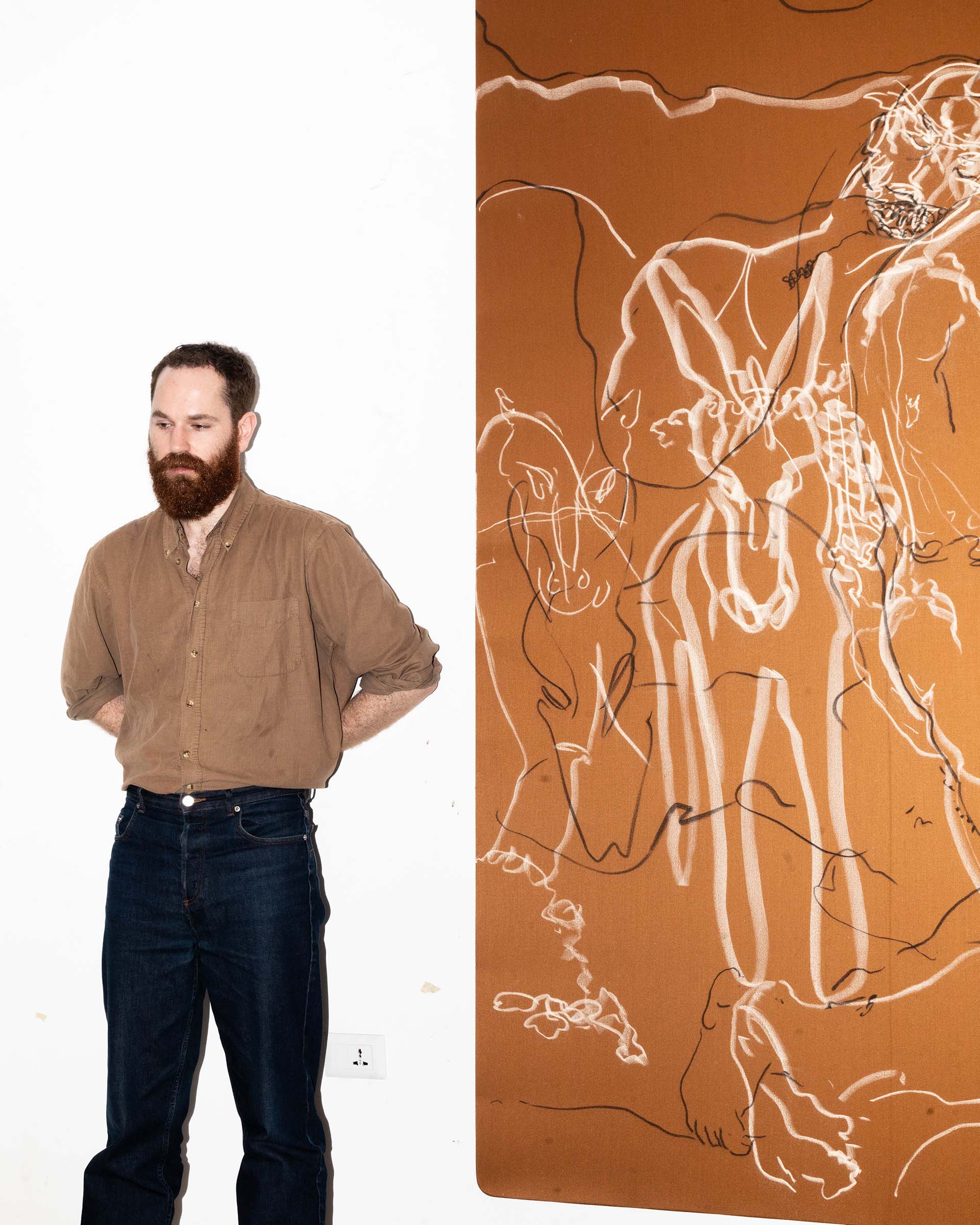
The use of sage as a natural dye is both a sensory and spiritual gesture in your work. How do you see this blending of material process and spirituality shaping the emotional tone of your art?
Using sage introduces an element of unpredictability — the plant releases colour in its own time, through its own code. The dyeing process becomes a kind of ritual; the scent fills the studio and there is a physical, grounding quality to it. I don’t think of it as deliberately symbolic, but I am drawn to the blend of intention and surrender through making material choices that cannot be fully controlled. It is another process which I see as preparatory – when I work with it the studio shifts and in turn the artist does – in this sense it is therapeutic.
Much of your practice revolves around the male form, often larger-than-life. What draws you to this subject, and how do you navigate the tension between sensuality, vulnerability, and power?
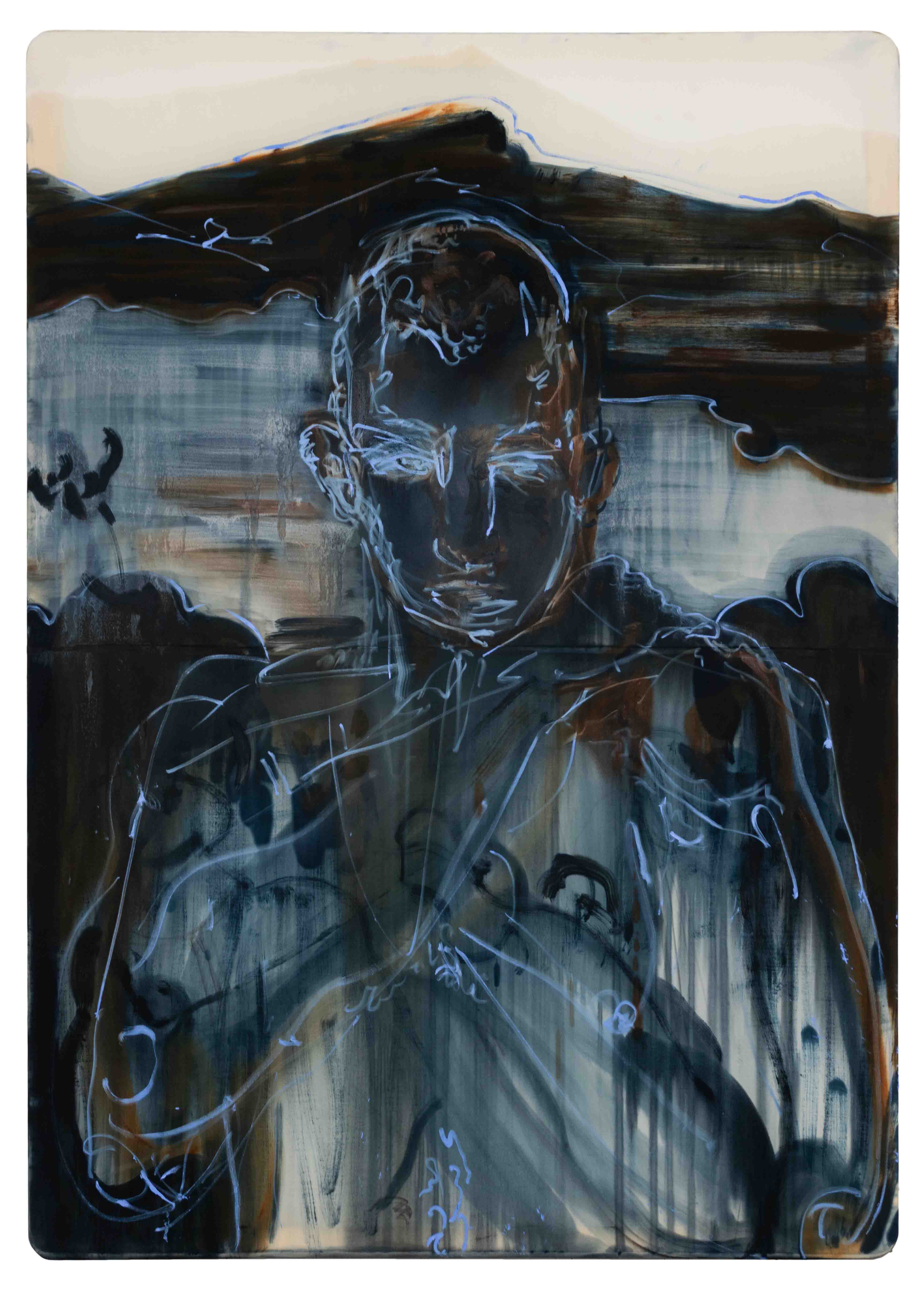
The male figure is interiority. The figures are drawn at a scale slightly beyond life-size — what I call “angel scale.” I see them as reflections, as forms that carry traces of connection and longing. They come from a deep place, but they don’t always explain themselves. It’s about presence — they are versions of memory, and when I drawn them I am aware that there is process of veneration which occurs.
In pieces like They Invaded at Night, you reference intimacy and displacement in the context of political turmoil. How do personal and geopolitical narratives intersect in your work?
In They Invaded at Night, the figures lean into each other, but there’s also a suggestion of weight — or weariness — within that closeness. The piece began with sketches of museum sculptures, but it evolved into something more layered: an embrace that also feels like shelter or survival. Everything touches everything. Nothing is isolated, and I think places, people, and histories can sharpen your awareness without your having planned for it. You might recognise currents in a work that speak to broader existences than your immediate starting point.
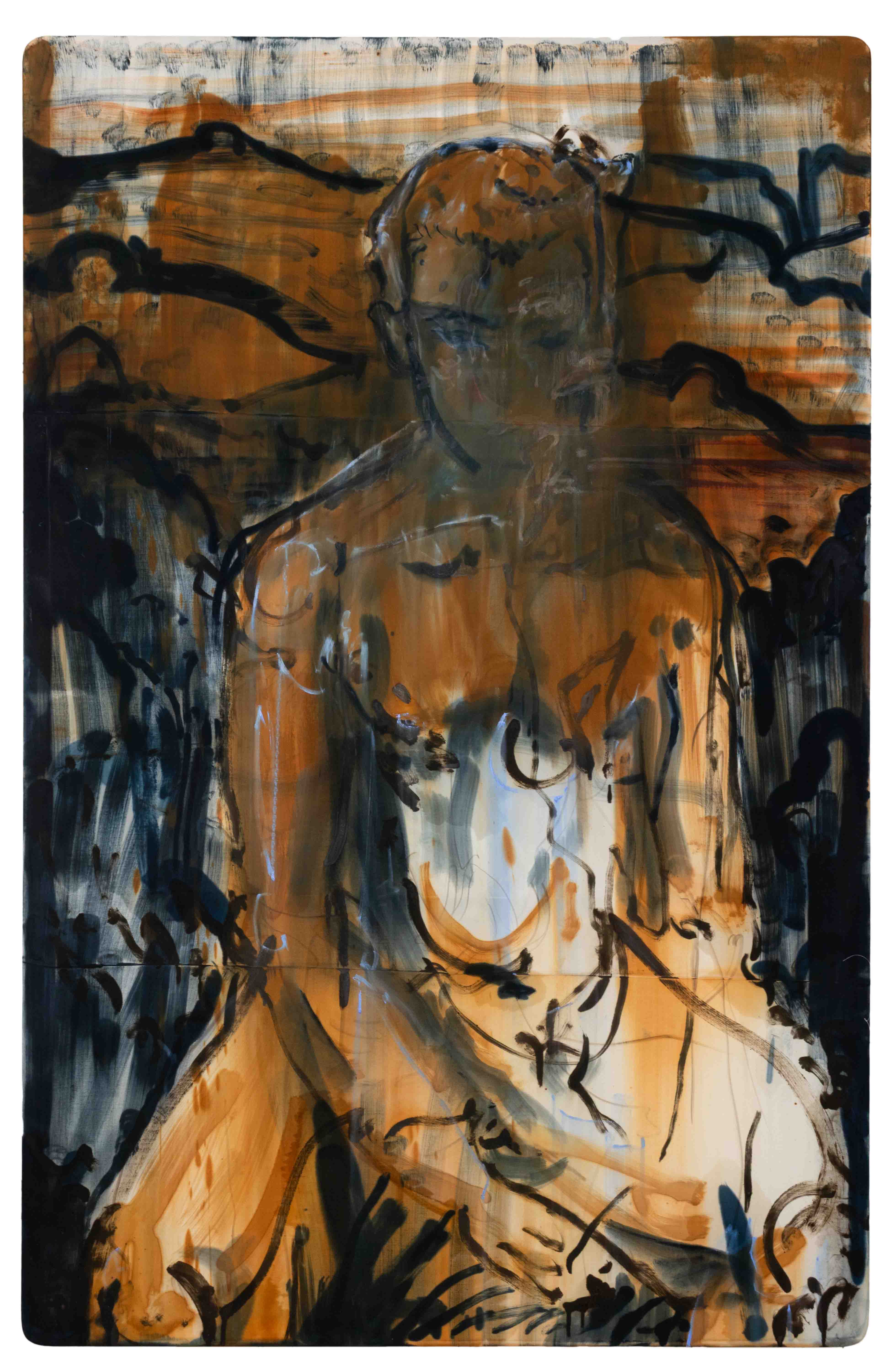
You speak about memory as form—fading, shifting, ephemeral. How do you translate this fragility into the materiality of your work, particularly through your use of charcoal, oil, and pastel?
Memory doesn’t arrive clearly. It stains, it disappears, and returns in fragments. I try to mirror that through process—I let things blur. I use materials that smudge, that don’t always stay where you put them. I work with charcoal soaked in linseed oil, which makes it behave almost like pastel. It allows for both precision and diffusion. When used, there are multitudes to the marks: an intentional line, a stain, and sometimes an unintentional print. The materials shift during drying time, and this echoes the loss of memory and its resurgence—changed. The materials help me forget just enough to remember differently.
There’s a poetic restraint in your depiction of desire—emotive rather than explicit. What role does longing play in your exploration of identity and connection?
Longing is everywhere in my paintings. It’s in the distance between the viewer and the figure, in the precision of the linework, and the quiet tension of the composition. I’m depicting an emotional atmosphere—what’s unsaid, what’s remembered, and what’s hoped for. It’s a space that’s ambiguous and allows for reflection. It lets the viewer enter the image on their own terms, to feel rather than decode. I want to make space for something tender, unfinished, or waiting.
Your figures often feel simultaneously specific and anonymous—drawn from lived experiences yet veiled in abstraction. How do you navigate the balance between the personal and the universal?
These figures come from memory—sometimes from brief encounters, sometimes from dreams or fragments of emotion. I want them to transcend just my own experience—to feel familiar to others in unexpected ways. I draw them in a way that allows them to blur a little; the abstraction creates an opening between the self and the other.
I think it’s my role as a painter to observe and reflect on certain encounters, but I don’t see my gaze as built from unique circumstances. I may have paused to consider the figure, but someone else’s interpretation of that encounter might carry parallel readings that relate to shared experiences. I believe there is a lot of communality that can be felt through figural painting—or rather, figuration can become a portal to connection and deeper understanding between people.
How does your practice shift between working in Amman and London? Does place influence the emotional or visual texture of your work?
I am now based in Amman, and it’s central to my practice. I source my materials here—the silk, the sage—and there’s a balance of stillness and density in the city that shapes the tone of my work. The landscapes and emotional topographies are embedded in what I make. There is a proximity to tradition and to texture that directly affects the work itself.
What kind of emotional or intellectual response do you hope viewers leave with after experiencing Garden of Murmurs? Is empathy the ultimate aim?
I think if people can feel a sense of shift, a warmth, perhaps an unexpected familiarity—that’s enough. I’m not chasing clarity, but if the work opens a space for sensitivity, for recognition, a moment of stillness, then that’s enough.