
“Blending Function, Fantasy, and Fine Art”
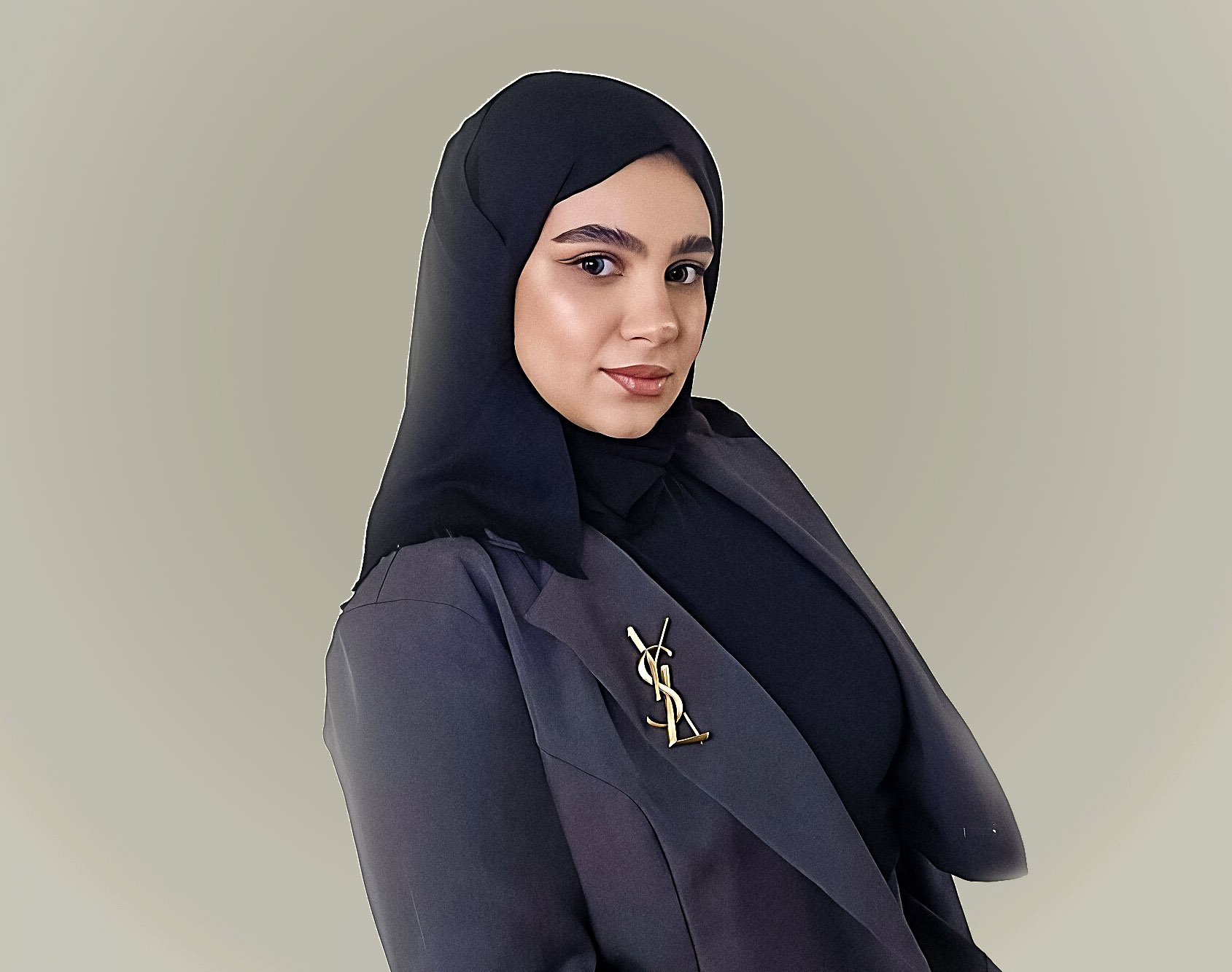
Zhraa Al-Juraidan is an interior architect and devoted artist whose journey with creativity began at the age of nine. What started with sketching inspired by Disney characters and Spacetoon magazines has flourished into a lifelong passion for art and design. A graduate of Kuwait University’s College of Architecture, specialising in Interior Architecture, Zhraa has mastered the balance between functionality and imagination. Her artistic practice leans towards realistic surrealism, weaving dreamlike narratives and human forms into compelling visual stories, while her architectural projects reveal the same artistic sensibility transforming spaces into experiences that engage all the senses. Through her Instagram platform, @zhouralj, she shares her evolving world of paintings, sketches, and design projects, connecting with a wide community of art enthusiasts and clients. In this exclusive CP Magazine interview, Zhraa reflects on her inspirations, her creative process, and how art has become an inseparable part of her everyday life.
Please introduce yourself to our readers.
I am Zhraa Al Juraidan, born on the 5th of September, 1993. I am married and have a small family. I studied at Kuwait University, in the College of Architecture, specialising in Interior Architecture. I am addicted to art, and my passion began when I was nine years old. I used to collect Spacetoon and Disney magazines and use them as references to create simple artwork. My father noticed my interest in art, and since then he supported me by enrolling me in different classes. Today, art has become an essential part of my daily life.
What motivated you to pursue both art and interior architecture, and how do these disciplines inform each other in your work?
I have always been fascinated with the idea of transferring what is in my head onto paper. Then I asked myself: what if I could bring what is on paper to life? Creating an atmosphere that people can experience, taking them on a journey, immersing them in a gigantic painting they can live in. Using their senses not only feelings becomes part of the experience.
Art can be messy, but when combined with some discipline and mathematics, it can produce unique designs. My choices often involve having a main artistic element or movement within a design. As an architect, art is a vital part of my work, helping me create aesthetically engaging spaces.
Can you describe the moment when you realised you were not just creating art, but also shaping spaces?
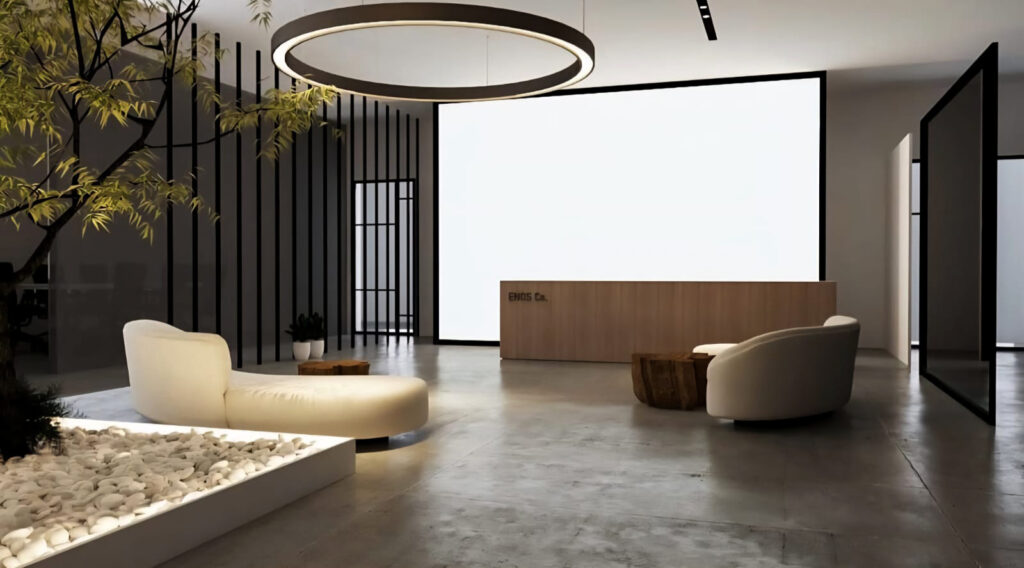
One of my favourite projects at university was a representation class. I was assigned to create a model and label it with a function. I realised that what I had been working on was a theatre. Creating a fantasy world in a defined space with an atmosphere to experience was the core of the idea. I transformed the model into life-size, incorporating coloured lighting, a short story, and even a smoke machine to create mist. Then I filmed a short advertisement for the play. That was the moment I realised that shaping space is more than just design, it is an art form, a journey to take, an atmosphere to feel, and an experience to go through.
How would you define your artistic style, and what themes recur across your pieces?
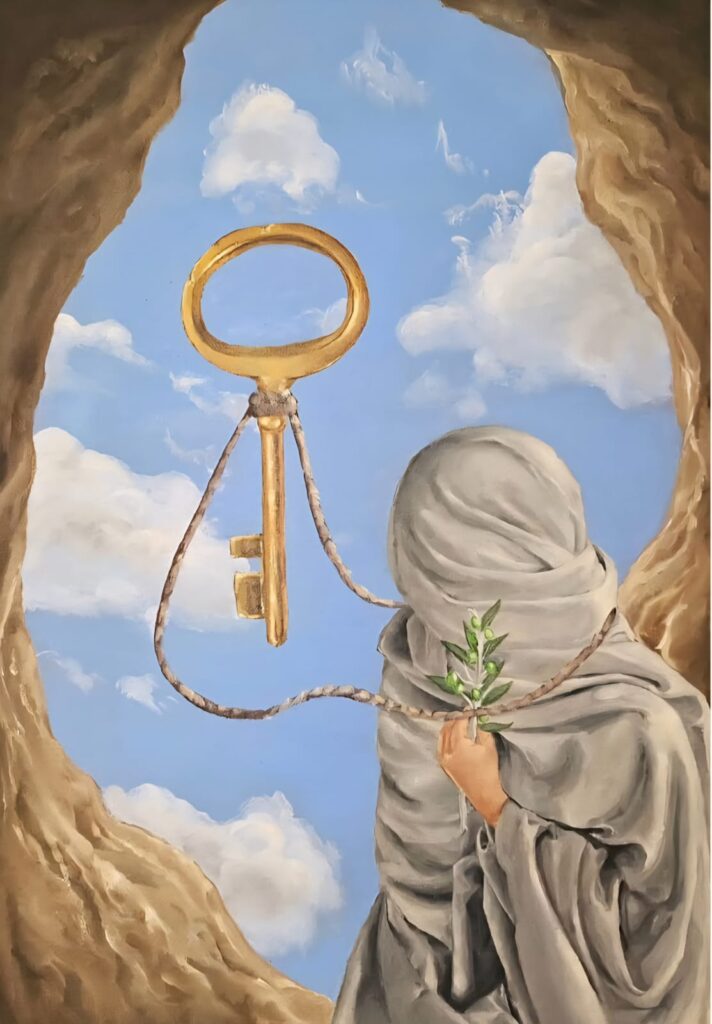
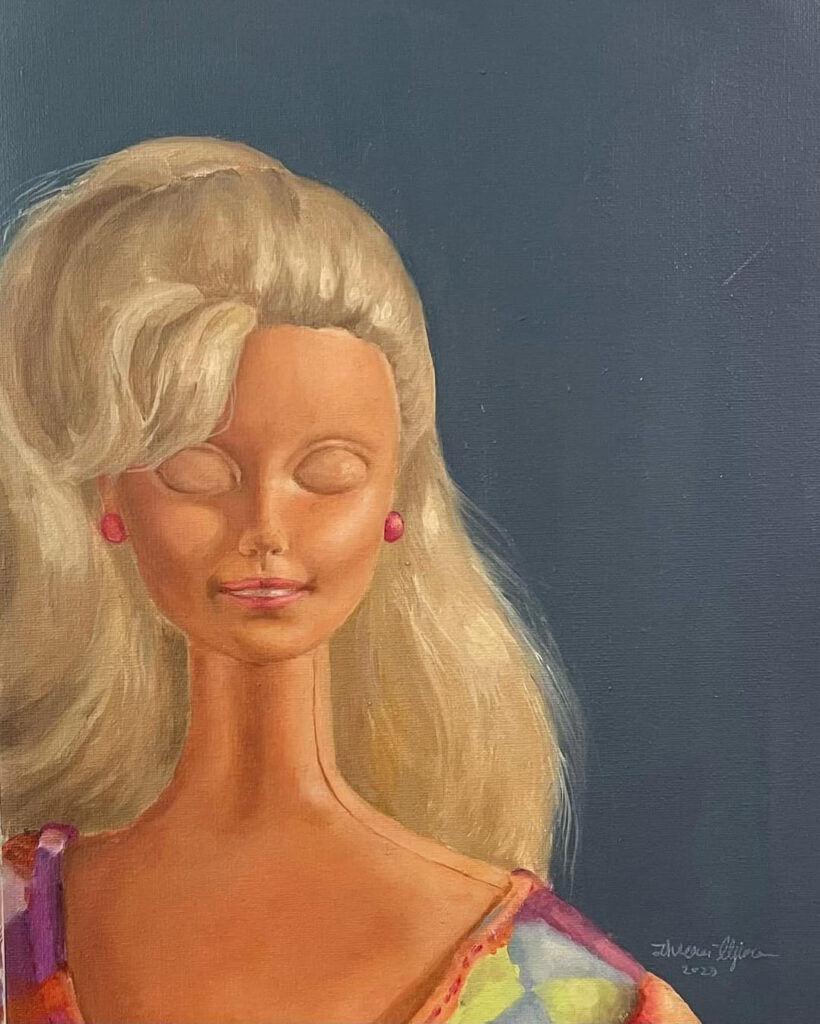
At first, I believed it was untrue that artists must stick to one style. Artists can work in one or several styles. I usually explore two. My main style is realistic surrealism. For me, surrealism is a way to create a fantasy world of your own, with a mysterious story to tell. A human figure in a strange pose is something of a signature in my paintings and sketches, though I cannot explain why. I simply do not know. From my childhood, I was fascinated with Disney characters and anime, so I often like to include them in my art.
How does your background in interior architecture influence your colour, texture, and spatial choices in artwork?
In fact, art came before architecture for me, so the relationship is reversed. My work with colours in art has influenced my use of colours in architecture. Colours are always the joker card, whether in design or artwork. Knowing colour theory is like having magic in your hands but using it correctly is like being a master wizard. Having a specific colour palette in design to guide you is one of the key rules.
Can you walk us through your creative process from concept to completion for a typical piece?
I begin by creating a cosy atmosphere, choosing a favourite cold drink, and getting into the mood. Inspiration may come from films, scenes, issues, or everyday life. From there, I brainstorm and search for references. I sketch and position the elements, then transfer the composition onto a canvas of suitable size, using abstract shapes and base lines. Finally, I begin layering with oil colours.
What materials and mediums do you most enjoy working with, and why?
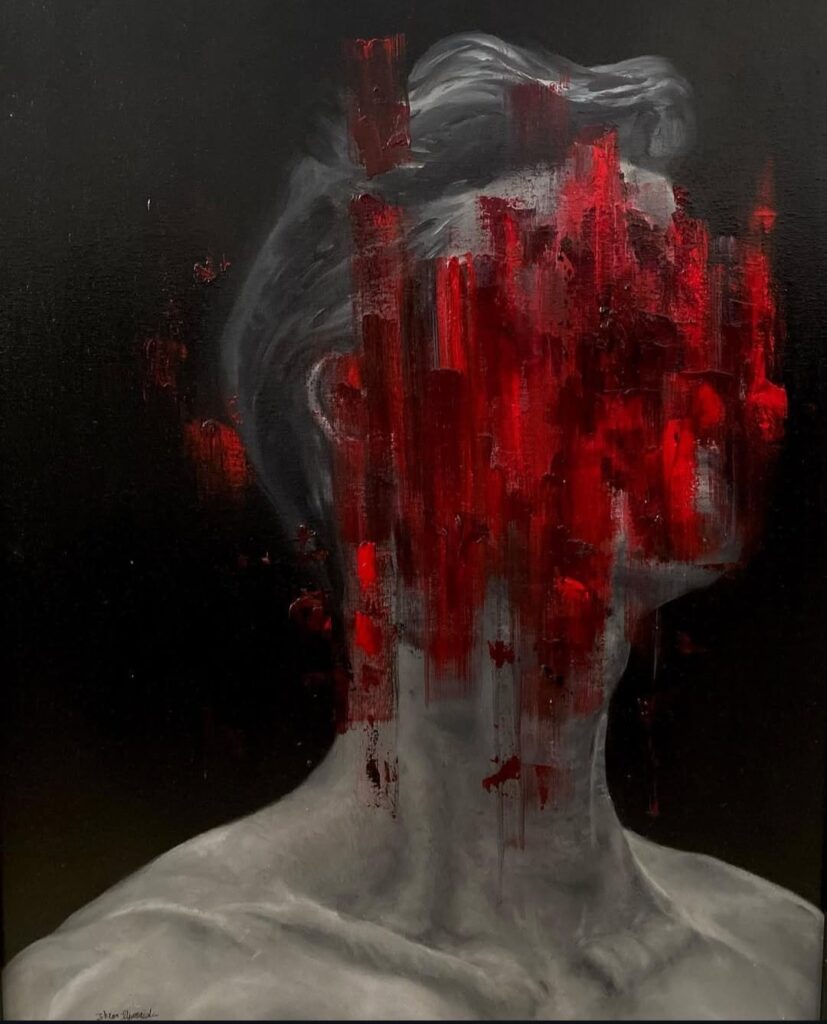
There are several mediums I prefer. I usually use oil paints for my major works, they last long and allow me to create realistic shades. They also give me time to work through the process. I also enjoy using acrylic markers and alcohol markers for lighter, enjoyable moments.
How do you tailor your work to reflect a client’s personality while keeping your signature aesthetic?
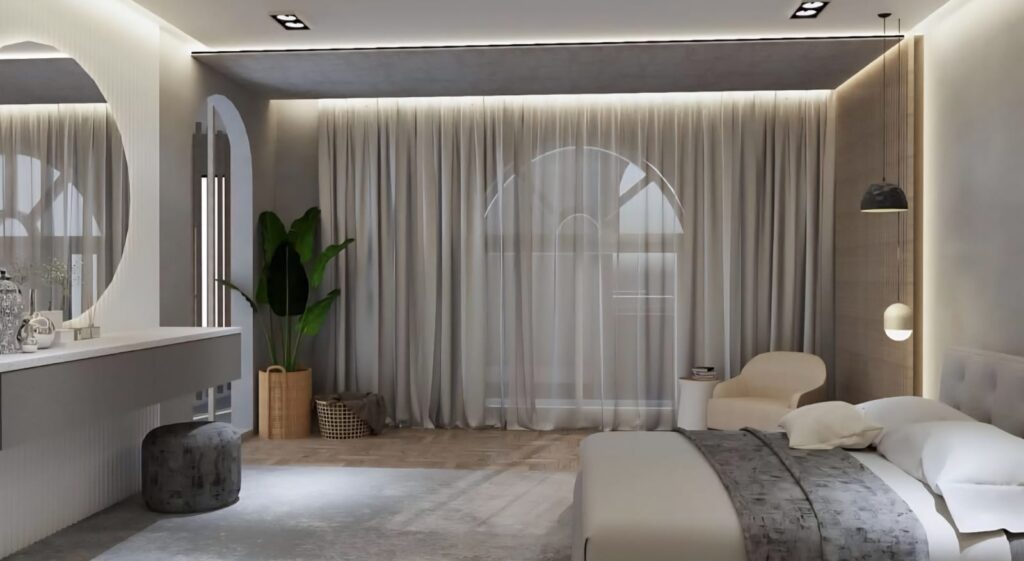
Usually, I remain true to myself because I love what I do. Professionally, I maintain punctuality and ensure there is a flow in my work that reflects my identity. As an architect, I understand that creating a personalised experience that matches each client’s lifestyle is part of the signature aesthetic. Space is not just about form, it is also about function, movement, circulation, atmosphere, and experience.
What’s a common misconception people have about being both an artist and an interior architect?
Perhaps that artists are messier than architects, and therefore cannot be related but in truth, they can.
How do you handle creative blocks, especially when juggling multiple art and architecture projects?
I am not sure if I fully understood the question, but I will answer as best as I can. I rely on having a schedule. Sometimes I step away from social media, because too much information can be exhausting and misleading.
Which project challenged you the most technically or conceptually, and what did you learn from it?
I once had a project in a classic style, which was very challenging as it is not my line of work. I found it difficult, but I mixed the classic style with touches of Kuwaiti heritage. What I learned is to never put myself into projects that feel unwelcome or unnatural for me.
What role does Kuwait’s cultural heritage and environment play in your artistic and architectural choices?
As an artist, I like to include elements of Kuwaiti heritage in my work, sometimes adding a humorous spirit to help Kuwaitis feel connected. As an architect, designing spaces with specific divisions that suit Kuwaitis is a key consideration.
How do you envision the role of an “art addict” in today’s digital and interconnected world?
To me, being an art addict means seeing art everywhere in the world. It means creating art every day, surrounding myself with colours and a sketchbook, and finding an escape from busy life.

What are your other hobbies?
I enjoy working out, running, lifting, and kickboxing are some of my stress relievers.
Your message for us at CP Magazine.
Thank you for having me as a guest. I feel blessed to know you, and I hope you enjoy this interview. I wish you all the best of luck.