
Painting Emotion Through Colour, Culture and Courage.
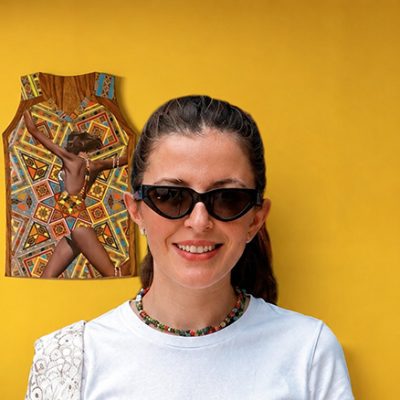
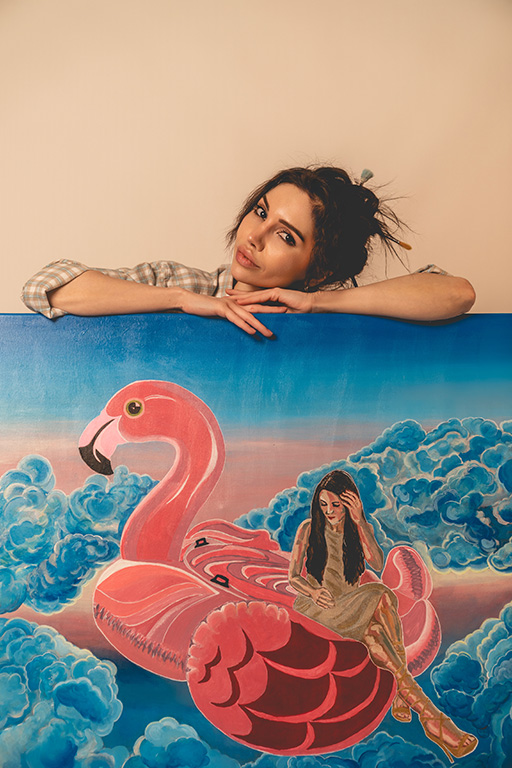
In a world where art often mirrors the emotions of its time, Adel Melibaeva, also known as Lady Adalina is creating work that is both visually striking and deeply expressive. Born in Russia, raised in Uzbekistan, and now based in Kuwait, the artist brings together a rich blend of cultural influences that shape her bold and textured creations. Her paintings are recognised for their vibrant colour palettes, emotional intensity and tactile depth, inviting viewers not only to observe but to feel each piece.
Largely self-taught, Adel has developed her artistic voice through dedication, independent study and continuous experimentation. Working primarily with acrylics, palette knives and textured materials, she transforms canvas into dynamic compositions that reflect beauty, unrest and the complexities of the modern world. Her journey to Kuwait became a defining chapter in her life, reigniting her passion for painting and allowing her creativity to flourish in a new environment.
Beyond the studio, Adel is equally driven by curiosity and growth, balancing her artistic career with academic pursuits and a passion for learning. In this exclusive conversation with CP Magazine, she speaks about identity, inspiration, resilience and the powerful freedom that art can offer.
Could you introduce yourself to our readers and share a little about your journey from Russia to Kuwait?
My name is Adel Melibaeva. I am an ethnic Tatar with Persian roots. I was born in Russia but grew up in Uzbekistan, a wonderful country where European and Eastern souls intertwine so beautifully. Several years ago, I moved to Kuwait alone for work. It was here, in this completely new environment, that I truly fell in love with painting again and began developing seriously as an artist. This move became a significant turning point and a powerful source of inspiration for me.
What first sparked your interest in art, and how early did you realise it would become your career?
My interest in art appeared very early in childhood. I always loved to draw and create things with my hands. I remember that in the apartment building where I lived, neighbours would whitewash the entrance every year, but on my floor they often left it untouched for a long time because they liked my drawings and graffiti that I used to decorate the walls with.
My room during my teenage years was literally covered in drawings from floor to ceiling. I constantly expressed myself through creativity. However, the real understanding that painting was my true calling and future profession came later, already in Kuwait, when I picked up brushes again and started working seriously.
Did you receive any formal training or education in art, or are you largely self-taught?
I am largely self-taught. I do not have a classical fine arts education, but I am constantly developing: I take online courses with professional artists, study university-level literature on drawing and painting, and often collaborate with university lecturers who help me grow. In the future, I plan to enrol in formal art education to deepen my knowledge and skills.
How has your diverse background influenced your artistic style and perspective?
Uzbekistan gave me a profound sense of cultural richness and an incredible variety of colours. The warm sun, vibrant bazaars and ancient history still live deep inside me. At the same time, I have mixed roots, Tatar and Persian. Because of this, my works often combine realism with emotional depth and a special warmth that comes from Eastern culture.
What brought you to Kuwait, and how has living here shaped your work?
Work brought me to Kuwait. I moved here alone several years ago. In this completely new cultural environment, I finally found the space, time and inner freedom for creativity. The light, architecture, people and atmosphere of Kuwait have greatly influenced my art, my works have become more alive, emotional and vibrant. Life here has helped me open up as an artist and move forward.
How would you describe your artistic style to someone seeing your work for the first time?
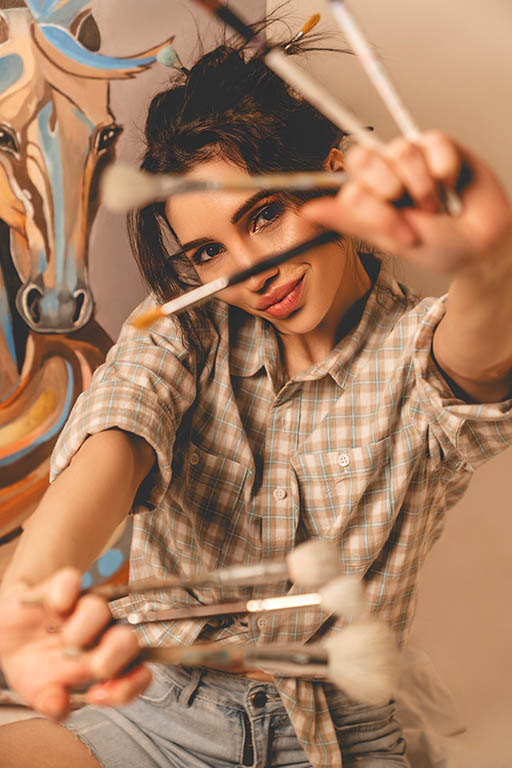
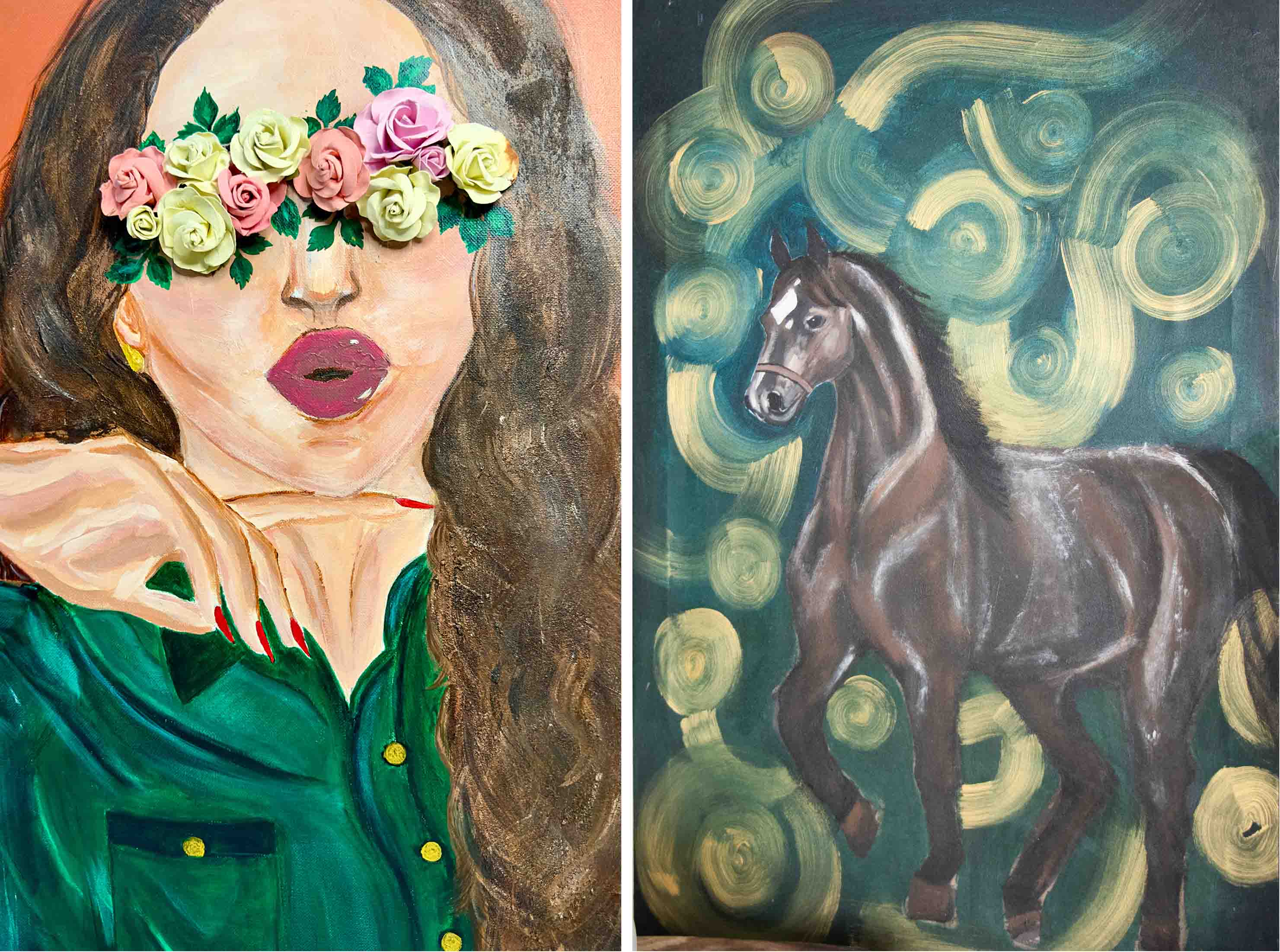
To someone seeing my work for the first time, I would say it is first and foremost a vibrant, colour-rich play. I love experimenting with paint, combining seemingly incompatible shades, searching for unexpected harmonies and constantly trying something new. As a result, my paintings feel energetic, emotional and very much alive. They often have a noticeable texture and volume, creating the impression that the work can not only be seen, but almost touched.
What themes or emotions do you most often explore in your art?
I am constantly searching and do not limit myself to one direction yet, I enjoy trying different styles and themes. I am drawn to strong, profound emotions: inner unrest, the contrast between beauty and anxiety, and what is happening in the world around us. I try to convey complex, ambiguous feelings that are difficult to put into words.
Do you have a preferred medium or technique, and why does it resonate with you?
Yes, my favourite material is acrylic. It is actually quite difficult to work with because it dries very quickly, which demands confidence and speed. But that is precisely its strength, the colours remain bright, clean and saturated.
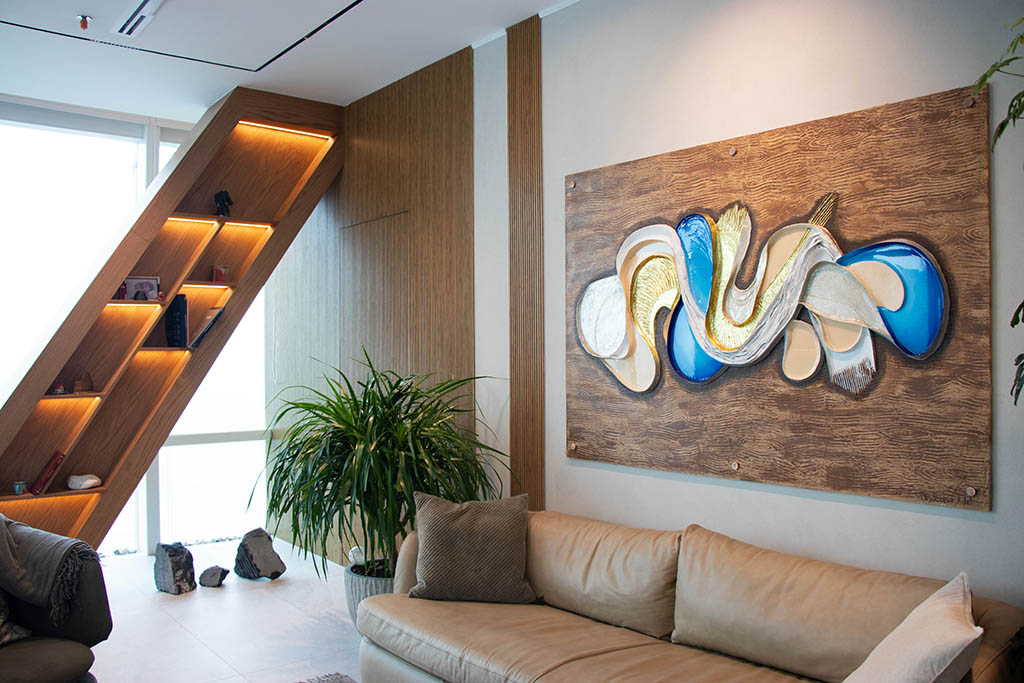
I adore working with bold strokes and often use a palette knife instead of brushes, as it creates expressive, textured relief. I also actively add texture paste, which gives real volume and a 3D effect. Thanks to this, my paintings become not just images, but almost sculptural objects with their own life and depth.
Could you walk us through your creative process from idea to final piece?
Everything begins with the canvas. Sometimes I can place a blank canvas in front of me and simply look at it for several days, ‘listening’ to it. Ideas most often come from emotions, my inner state, and what is happening around me from the news and the feeling of instability in the world.
For example, right now I am working on a painting dedicated to a nuclear explosion. For me, it is not only a theme of destruction, but also a ‘terrible beauty’, the power of colour, light and form that reflects the current anxious atmosphere and the sense of global collapse.
Next, I make sketches and select the colour palette. Often a painting goes through several stages: I can completely repaint it two or three times, or even more, until the combination of colours and overall mood fully satisfy me. I am not afraid to change the work radically, what matters to me is that in the end it truly ‘breathes’.
Are there any particular artists, cultures, or movements that inspire your work?
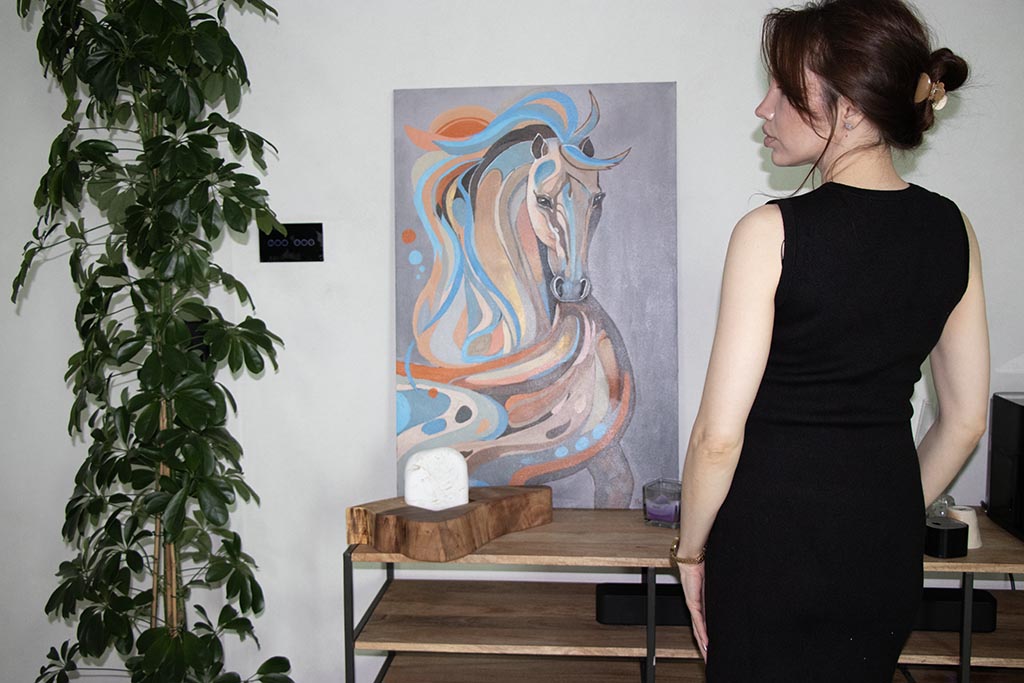
Of course, many masters inspire me. Among the classics, Pablo Picasso stands out for his incredible boldness, constant search for new forms and ability to break conventional boundaries. Vincent van Gogh inspires me with his powerful emotional energy, swirling brushstrokes and extraordinary use of colour. Salvador Dalí inspires me for his imagination, surreal depth and talent for seeing the extraordinary in the ordinary.
From contemporary artists, I am drawn to those who work with vibrant colour, expressive texture and mixed techniques for example, Matthew Wong with his rich, emotional landscapes and dense texture, as well as artists who actively use the palette knife and impasto, such as Tibor Nagy or Brent Cotton.
In addition, I find inspiration in cultures: the richness of Uzbek and Persian traditions with their bright colours and ornaments, as well as European Expressionism and Post-Impressionism with their focus on inner experiences and freedom of brushstroke.
How do you stay creatively inspired, especially during challenging periods?
Interestingly, for me it often works the other way around: it is precisely during difficult periods that I paint the most and feel the strongest inspiration. In such moments I experience a special concentration and depth of emotion.
Art-making acts as real art therapy for me, it helps me process difficulties, release everything that has built up inside, and transform anxiety or pain into something beautiful and meaningful. When life is calm, inspiration also comes, but in challenging times it becomes particularly powerful and sincere. I simply allow the emotions to flow through my brushes and paints.
What role does social media, particularly Instagram, play in your artistic journey?
Instagram plays a very important role in my artistic life. It is not only a platform for showing my work, but also a space for connecting with people who genuinely respond to my art.
Thanks to social media, I find like-minded people, receive valuable feedback, and see how my paintings touch viewers in different countries. It is through Instagram that I receive invitations to exhibitions, commissions, and new connections in the art world. Moreover, by following other artists I continue to learn and draw inspiration.
For me, Instagram is a living, modern extension of my studio that helps an artist avoid feeling alone in the creative process.
How do you balance creating art for yourself versus creating for an audience?
Honestly, maintaining this balance is quite challenging. Sometimes what deeply inspires me and comes from very personal inner experiences does not always resonate with a wide audience. And vice versa works that the public likes and responds to do not always ignite a genuine inner fire in me.
I try to find the golden mean: I create what is truly important and sincere to me, while also thinking about how to make this idea and emotion more understandable and relatable to the viewer.
The most important thing for me is not to betray my own vision for the sake of popularity. If a painting is born from a real feeling, it almost always finds its audience even if it takes time. Balance comes with experience: I am learning to listen to both myself and the audience without sacrificing one for the other.
Have you noticed differences between the art scenes in Uzbekistan and Kuwait?
Yes, the differences are quite noticeable, and each has its own charm.
In Uzbekistan, the art scene is closely connected with rich cultural heritage: traditional ornaments, vibrant colour palettes, national motifs and a deep respect for craftsmanship and decorative arts. There are many young artists actively reinterpreting Eastern traditions in a contemporary context. The atmosphere there feels warmer, more emotional and collective.
In Kuwait, the art scene is more modern, cosmopolitan and oriented towards the international market. There is a stronger influence of global trends, minimalism, conceptual art and new media. The Kuwaiti scene is more open to experiments with techniques and materials, has strong gallery infrastructure, and actively participates in international art fairs.
For me as an artist, this is a wonderful opportunity to combine both cultures: the emotional warmth and colour richness of Uzbekistan with the modern freedom and professionalism of Kuwait. Living between these two worlds greatly expands my artistic thinking.
What has been the most memorable response or feedback you’ve received about your work?
One of the most memorable pieces of feedback I have received several times is that people look at my brightest, most saturated paintings and say they look so perfect and detailed that ‘this must have been made by artificial intelligence, not a human’.
It happened especially often with one of my most vibrant works. At first it surprised me and even upset me a little, but now I take it as a great compliment. It means my technique and use of colour have reached a level where the paintings look almost unreal. For me, this is confirmation that I am moving in the right direction.
Beyond art, what hobbies or interests do you enjoy in your personal time?
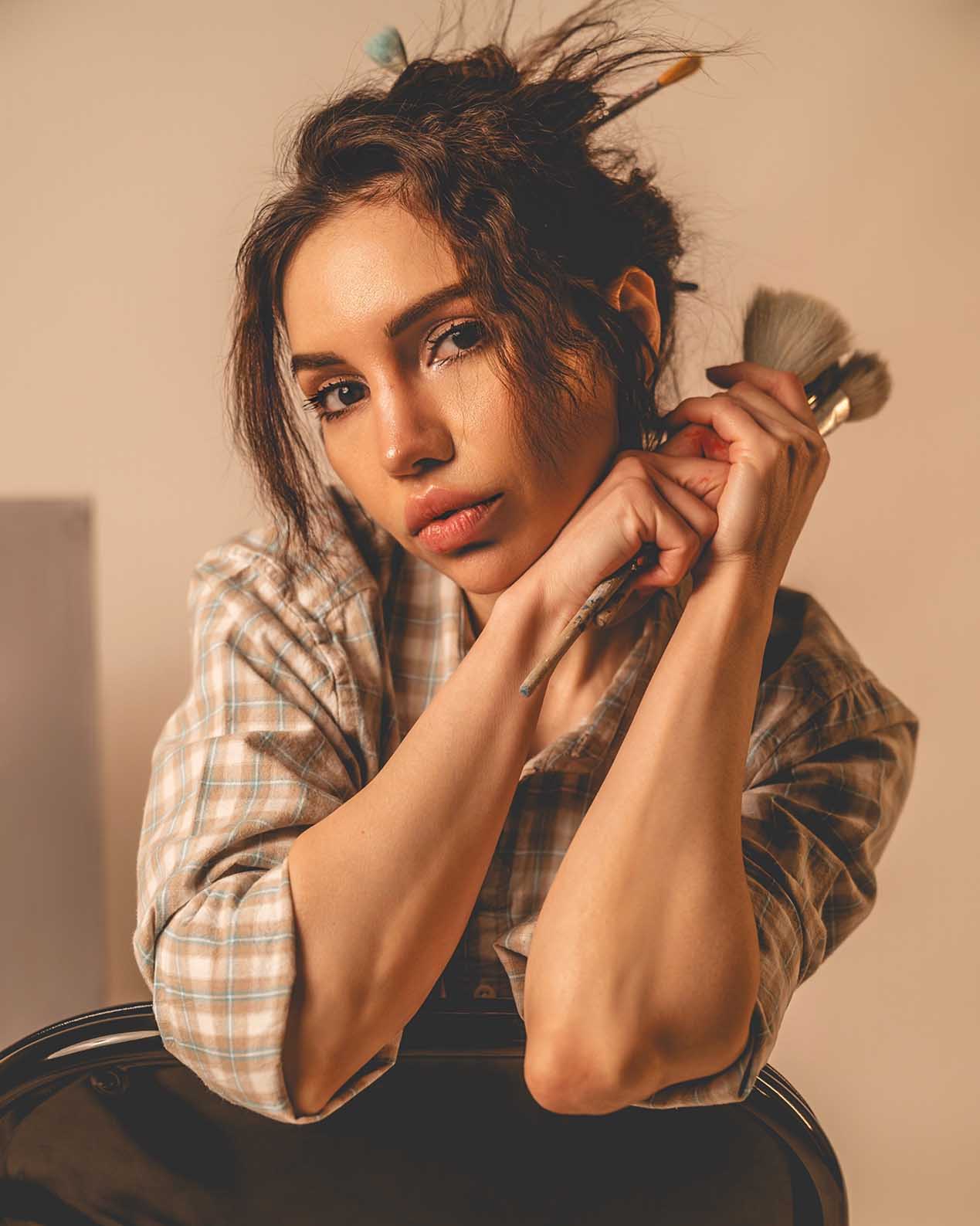
Besides painting, I really enjoy photography, and I also work part-time as a model, it brings me great pleasure. I am constantly learning something new: recently I completed courses in social marketing and SMM because I am interested in understanding how social networks work from the inside.
Currently, I am in my fourth year at university, majoring in Oil and Gas Engineering. In addition, I am actively studying the Arabic language, it is very difficult but incredibly beautiful, and I try to dedicate time to it every day. My interests often change, and this inspires me, I love developing in different directions.
Does travel influence your creativity, and if so, how?
Yes, travel is a real explosion of emotions and a powerful source of inspiration for me. I am especially inspired by nature: its colours, light and textures. I love the sky very much, I have collected a whole series of sky photographs, from perfectly clear and bright to foggy and dramatic. It always fascinates me with its infinity and changeability.
Every journey leaves vivid visual impressions that later find their way into my paintings in colours, mood and the sense of space.
What does a typical day in your life look like as an artist?
My typical day is quite busy but harmonious. It usually starts with a cup of coffee and a quiet moment when I listen to what mood the painting will have today.
I dedicate a large part of my time to painting: working on canvases, experimenting with colour and texture. I always make sure to find time for Instagram, replying to messages, posting new works and connecting with my followers. I also manage to study and learn Arabic.
In the evening, I enjoy reading a book, listening to music or simply looking at the sky. It is important for me to find time for everything: creativity, personal development and a little rest. This rhythm helps me maintain balance and energy.
Are there any unexpected sources of inspiration like music, fashion, nature that influence your work?
Yes, one of the strongest and most constant sources of inspiration for me is the sky. I can look at it and photograph it for hours. Music also inspires me greatly, it sets the mood and helps me enter the right emotional state while working.
Nature in general, its colours, light and textures is always present in my paintings. Sometimes unexpected inspiration comes from fashion or even from the urban architecture of Kuwait.
How do you unwind or recharge when you’re not creating?
When I am not painting, I recharge in quite a simple and human way: with good sleep, silence and a calm atmosphere. Listening to my favourite music, reading a book or simply lying down and looking at the sky helps me a lot.
Sometimes the best reset is a short walk or a trip into nature. The main thing is to allow myself to switch off a little from the constant inner ‘idea generator’.
What challenges have you faced as an artist living abroad, and how have you overcome them?
The biggest challenge for me, as for many artists living abroad, is the language and cultural barrier. When you find yourself in a completely new environment, you have to relearn how to understand people, their values, rhythm of life and even sense of humour. At first it was difficult to make connections and feel part of the local art community.
I overcame this gradually: I actively study Arabic, try to communicate more with local people and openly share my art. Over time, you realise that sincerity and respect for the new culture open far more doors than perfect language skills. Now I feel much more comfortable and see how these difficulties have actually enriched my creativity.
What advice would you give to emerging artists trying to build their identity and audience?
My main advice to emerging artists is to look first for yourself, not for an audience. Do not try to guess what people will like. Instead, try everything: sketching, acrylic, oil, textures, collage, even clay sculptingn anything that sparks even the slightest interest.
Developing your own style is a long but very valuable process. When you finally find what is truly yours, your energy and sincerity will be felt in the work, and the audience will come naturally. The most important thing is not to be afraid to experiment and to remain honest with yourself.
Are there any upcoming projects or collaborations you’re excited about?
Yes, right now I am actively working on a new painting dedicated to a nuclear explosion. For me, this is a very important and emotionally rich work in which I explore the theme of ‘terrible beauty’ and the reflection of the current anxious situation in the world.
In the near future, I plan to present it to the public. I also have several ideas for new series, but at the moment I am fully focused on this painting.
Where do you see your artistic journey heading in the next few years?
In the coming years, I want to delve deeper into depicting people, faces, emotions and inner states. I am increasingly drawn to portrait painting and conveying subtle human experiences.
I want to develop my technique, work with more complex compositions and greater emotional depth. I also plan to continue experimenting with texture and colour, but with a stronger focus on the human figure and psychology. In the long term, I dream of holding more solo exhibitions and participating in international projects.
Finally, if your art could convey one message to the world, what would it be?
I would like to convey that art is emotion, brightness and non-standard thinking. It should not be boring or ordinary. Art has no boundaries or frames, it is free, multifaceted and capable of connecting completely different cultures, experiences and views.
My paintings are an invitation to see the world brighter, deeper and bolder, without fear of being unusual.
Your message for us at CP Magazine.
Thank you for taking the time to engage with my art. I hope my paintings have managed to touch you, even a little, and bring new emotions into your lives.
I wish each of you to keep the inner child who knows how to be amazed by the world and see beauty even in the most unexpected places. Keep dreaming, experimenting and do not be afraid to express yourselves. Art lives as long as there are people ready to feel and create.
May your life be as bright and rich as an artist’s palette.