
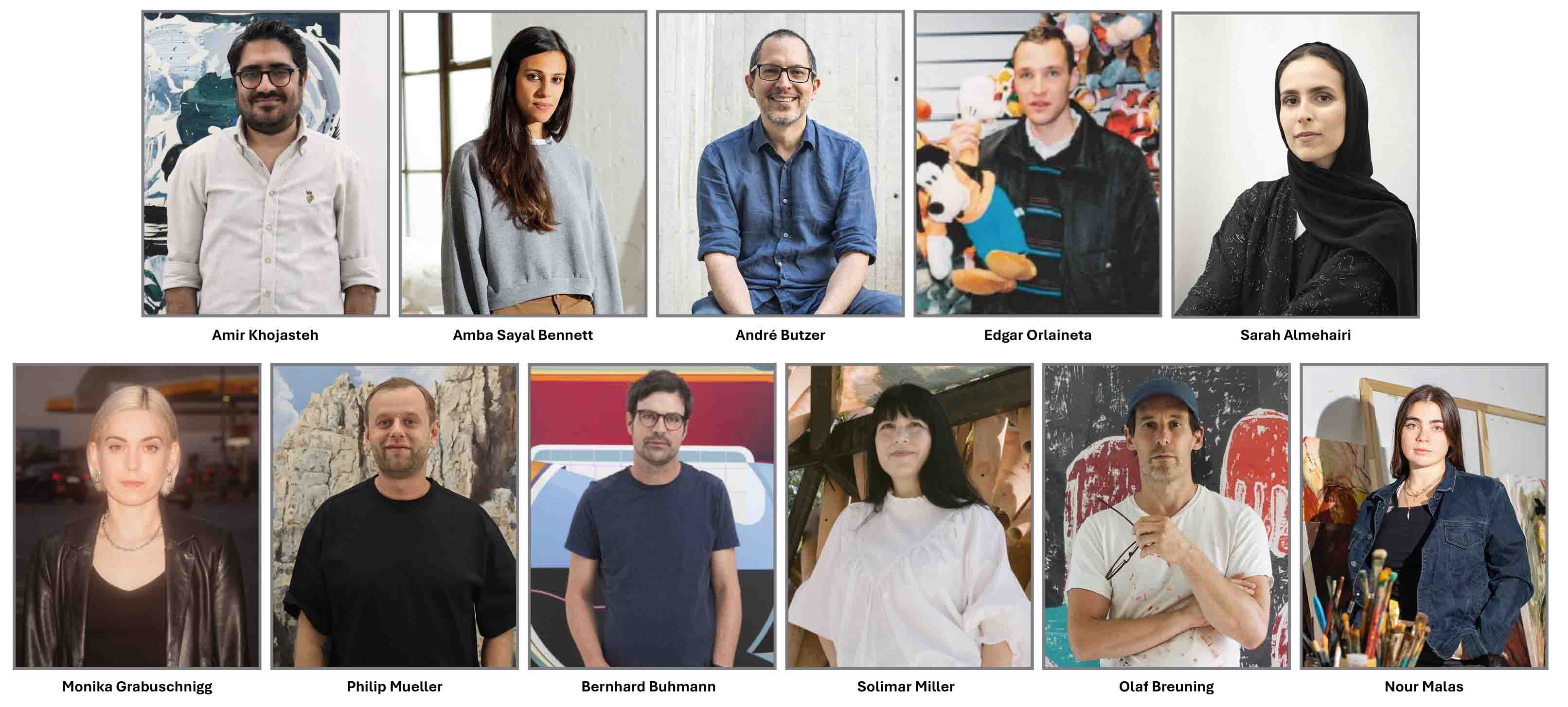
Running from 4 June to 5 September 2026, ‘The Two Walks’ at Dubai’s CARBON 12, widely regarded as one of the Middle East’s leading contemporary art galleries, brings together 14 artists including Sarah Almehairi, Faris Alshafar, Olaf Breuning, Bernhard Buhmann, André Butzer, Nadine Ghandour, Monika Grabuschnigg, Amir Khojasteh, Nour Malas, Solimar Miller, Philip Mueller, Mayar Obedo, Edgar Orlaineta and Amba Sayal-Bennett in a thoughtful exploration of paper as a medium capable of holding memory, emotion and imagination in equal measure.
Most of us think of paper as the place where an artwork begins: a sketch, a note scribbled in the margins, a rough idea waiting to become something larger. The Two Walks takes the opposite approach. Here, paper is not a stepping stone to the finished work; it is the finished work.
There is something deeply human about that idea. Unlike a monumental sculpture or an immersive installation, a work on paper rarely seeks to overwhelm. Instead, it invites us closer. We notice the pressure of a pencil line, the hesitation behind a mark, the trace of a hand moving across a surface. Paper has a remarkable ability to preserve thought almost at the exact moment it takes shape.
What makes this exhibition particularly rewarding is that there is no single theme binding everything together. Instead, 14 artists with distinct practices use the same material to explore very different concerns. As you move through the show, you encounter works that touch on memory, cities, ecology, identity, loss, belonging and personal histories. The result feels less like a tightly controlled curatorial statement and more like a conversation unfolding across multiple voices.
The exhibition’s title, The Two Walks, evokes a passage between worlds, a poetic space where memories, identities and experiences intersect. Throughout the show, paper becomes a vessel for these journeys. Some artists use it to explore personal histories, others to examine social structures, environmental change or the fragile relationship between memory and loss. What unites them is an understanding that some ideas are best expressed through restraint rather than spectacle.
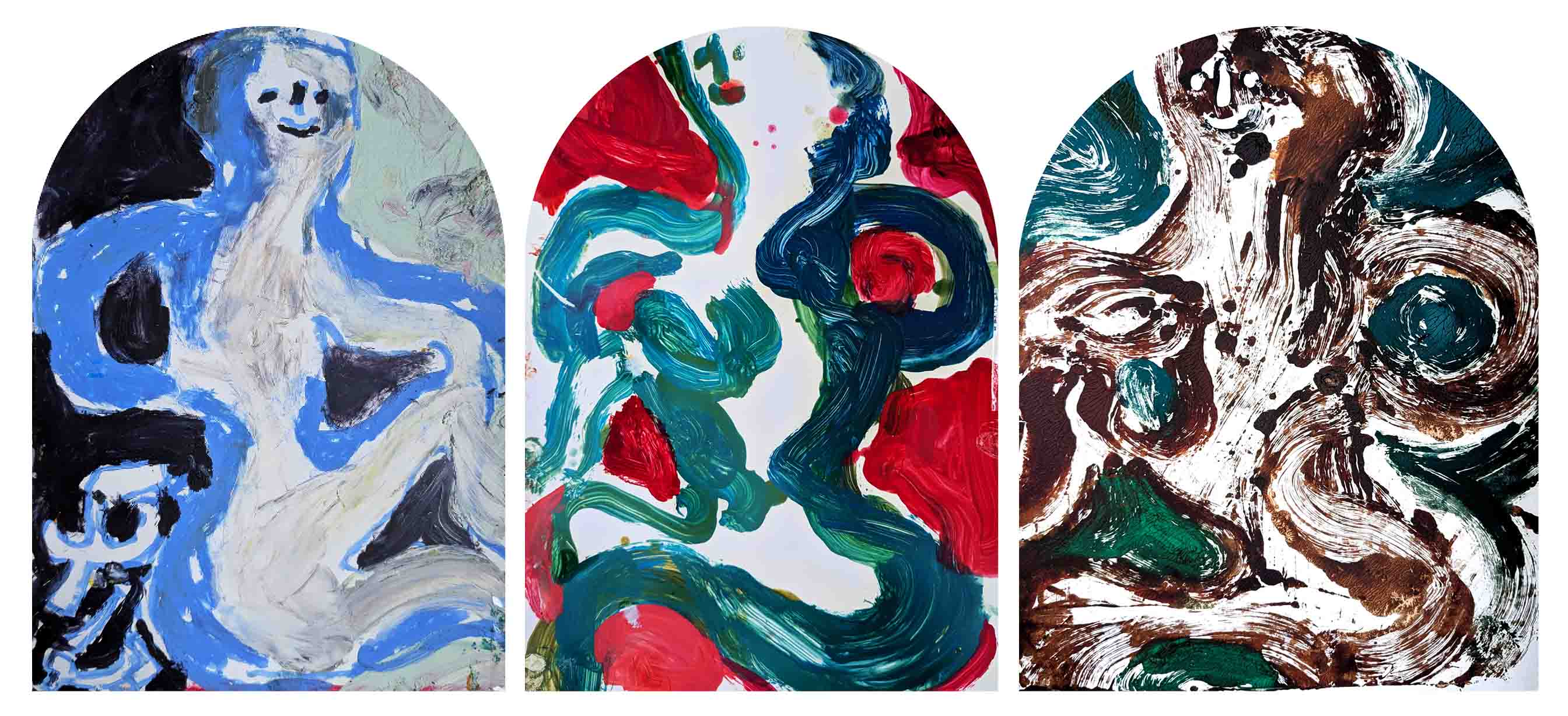
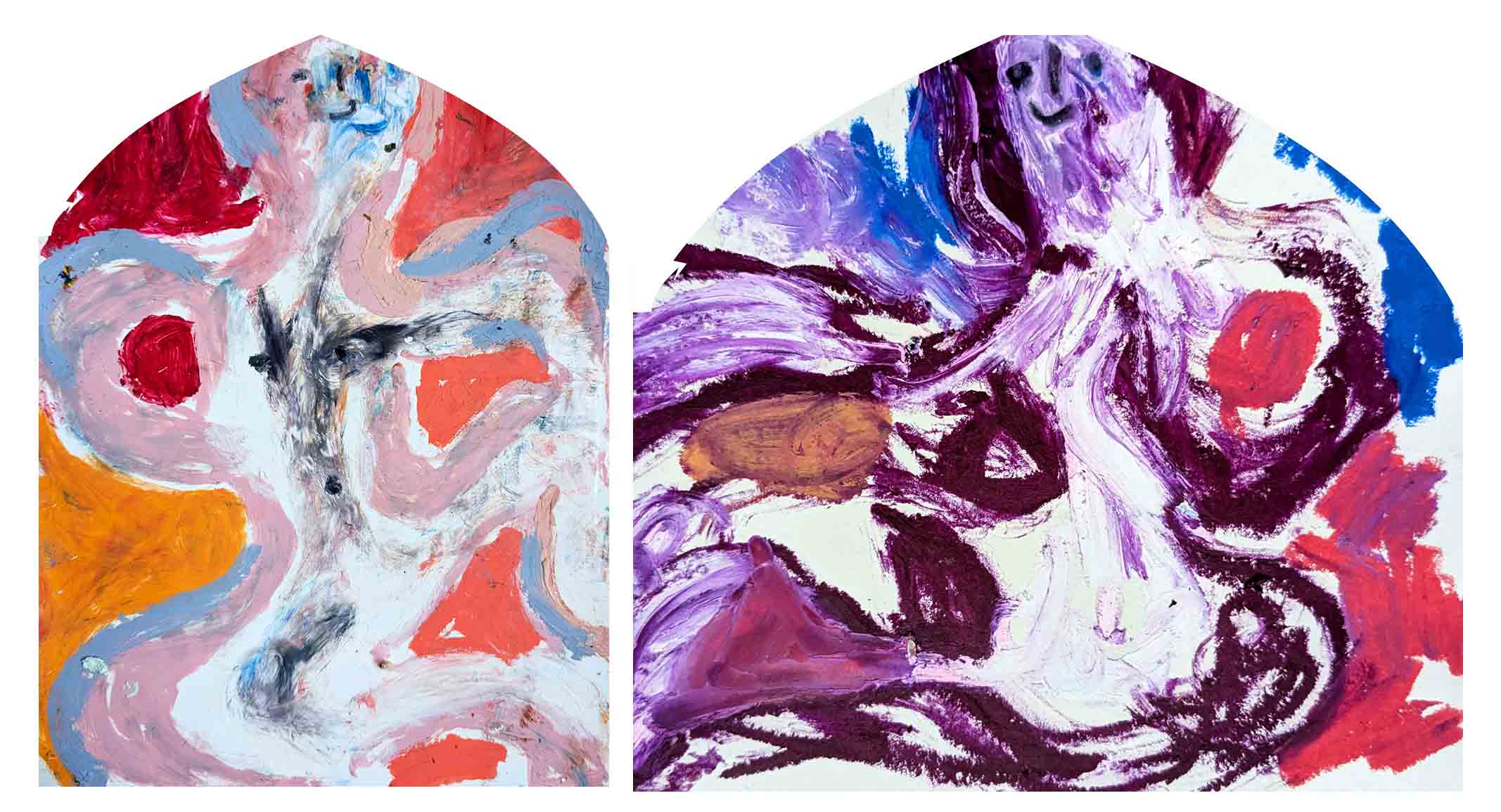
Among the first artists to set the tone is Sarah Almehairi, whose layered collages are built through acts of construction and deconstruction. Her compositions feel simultaneously ordered and unstable, inviting viewers to consider how systems are formed and how easily they can be dismantled. For Faris Alshafar, meanwhile, memory becomes both subject and method. His abstract works transform sensory experiences into rhythms of colour, texture and gesture, capturing the fragmented nature of remembering itself.
A very different energy emerges in Olaf Breuning’s Not Even Drinks Make Us Happy (2005). Characterised by the artist’s trademark wit and understated absurdity, the drawing remains strikingly relevant two decades after its creation. Its humour is immediate, but beneath the surface lies a quietly unsettling reflection on contemporary life and the persistence of human dissatisfaction.
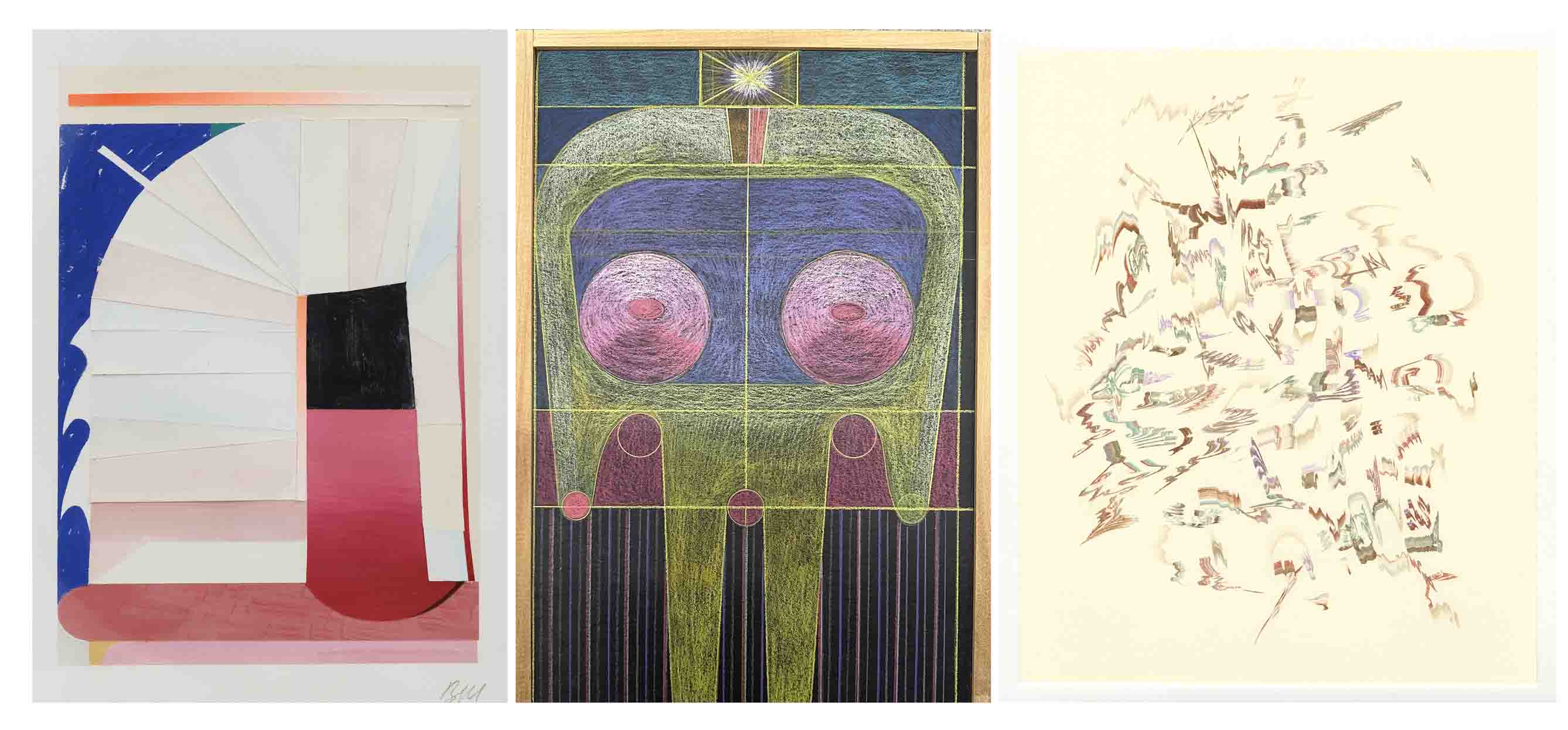
The exhibition also offers the opportunity to encounter a more intimate side of André Butzer’s practice. Best known for his paintings, Butzer presents a pencil drawing centred on one of his recurring female figures. Stripped of colour and theatricality, the work reveals a remarkable tenderness, balancing innocence, melancholy and subtle social commentary.
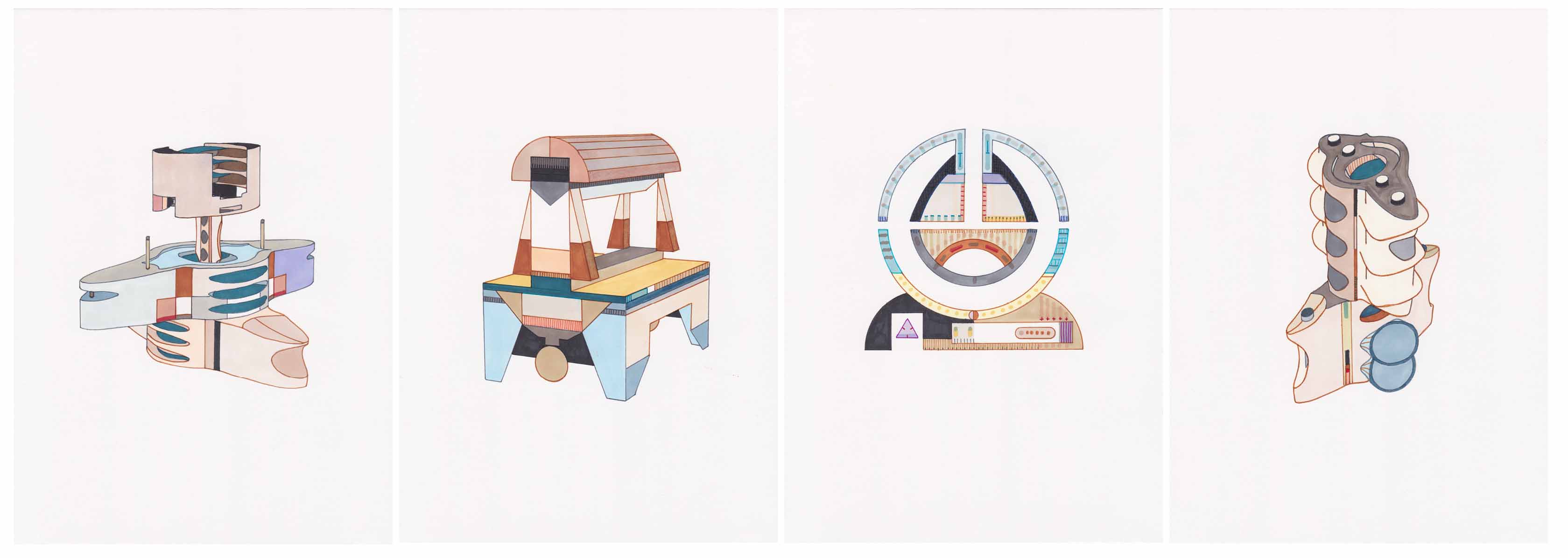
Questions of belonging and individuality emerge in Bernhard Buhmann’s collage Shelter, which examines the tensions between personal identity and collective expectations. Nearby, Nadine Ghandour’s playful yet incisive works draw attention to the absurdities of contemporary urban development. Through fictional architectural scenarios, she transforms rapidly expanding cities into spaces of both humour and critique.
Monika Grabuschnigg approaches the human condition through a quieter lens. Her drawings of elaborate floral arrangements suspended by satin ribbons possess an undeniable beauty, yet they are also meditations on impermanence. The flowers appear caught in the process of fading, reminding us that beauty and transience are often inseparable.
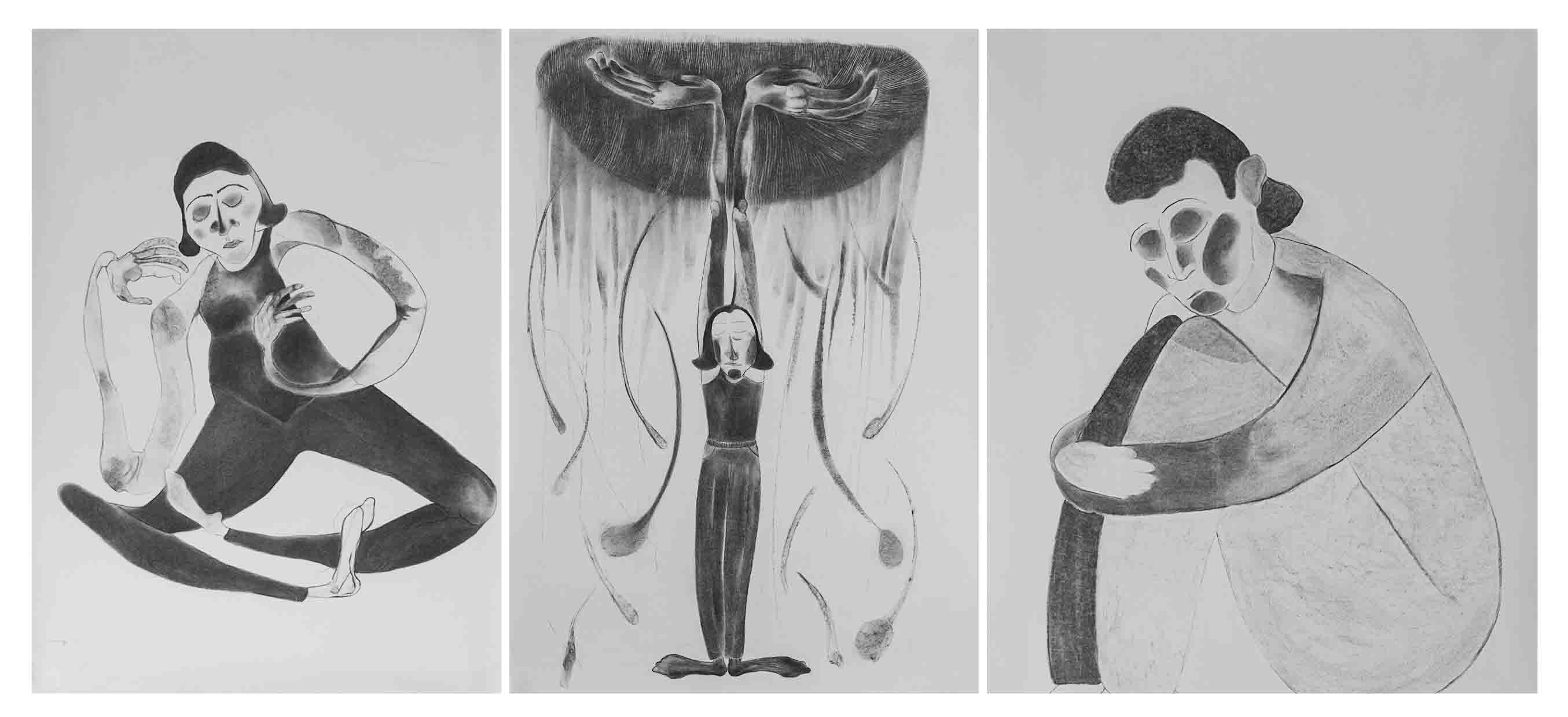
A similar emotional sensitivity can be found in Amir Khojasteh’s series of seated figures. Repeated across multiple works, the motif becomes a vehicle for exploring uncertainty, solitude and introspection. These are not portraits in the traditional sense but emotional states translated into form, reflections on the contradictions and vulnerabilities that accompany everyday life.
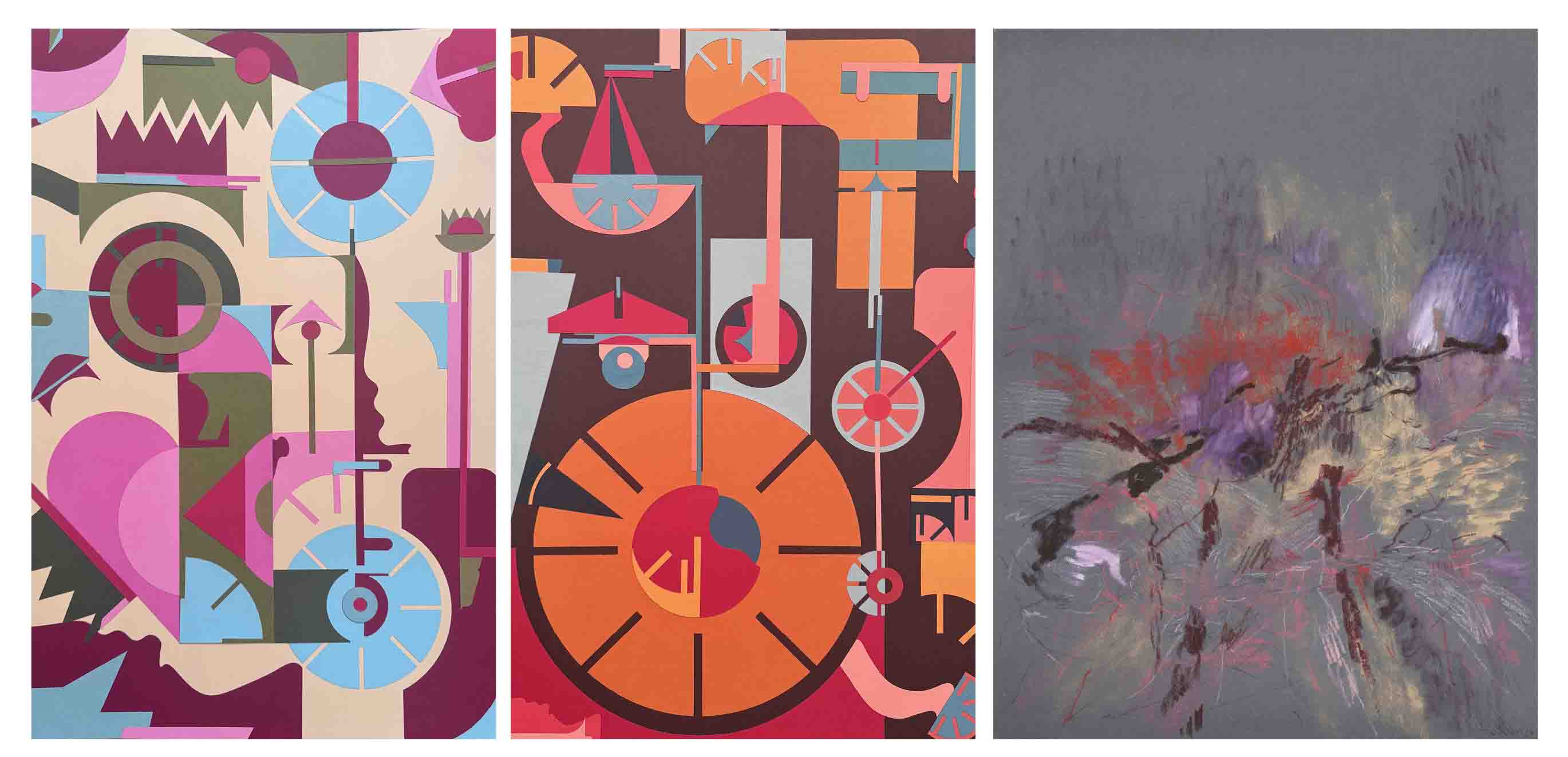
Family history and inherited memory shape the work of Nour Malas, whose gestural drawings move between presence and absence. Her spontaneous marks create spaces where personal narratives unfold without becoming fixed or fully defined, reflecting the complexities of identity, ancestry and belonging.
Environmental concerns surface in Solimar Miller’s practice, which focuses on indigenous flora and fauna within the Gulf region. Her works speak quietly but urgently about ecological vulnerability and biodiversity loss, documenting fragile ecosystems at a moment when climate change continues to reshape landscapes around the world.
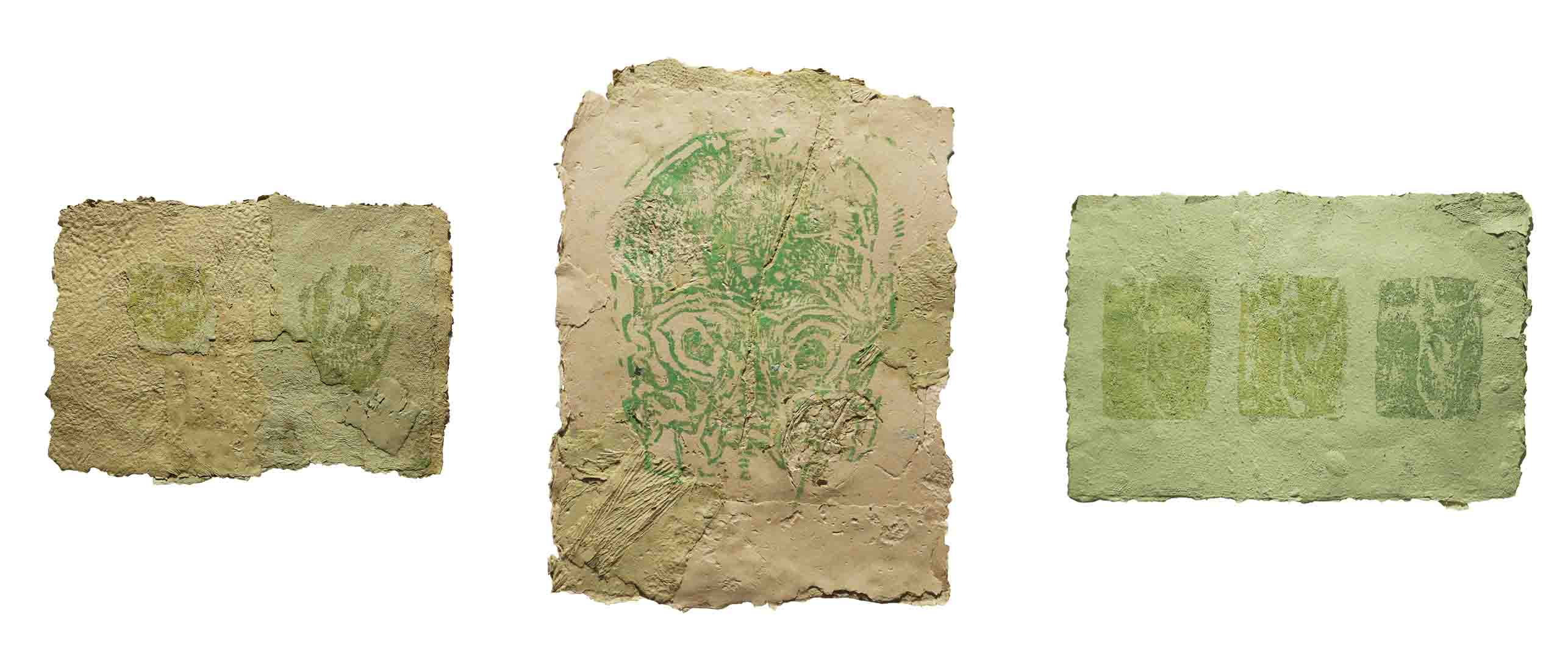
Among the most affecting works in the exhibition are those by Syrian artist Mayar Obedo. Using traditional Aleppo laurel soap to create prints on handmade recycled paper, Obedo produces images inspired by destroyed artefacts and human remains recovered from mass graves. The resulting works feel both archaeological and deeply personal, preserving traces of histories that violence and time threaten to erase.
Elsewhere, Philip Mueller fills his drawings and watercolours with symbolism, mythological references and narrative fragments. His compositions occupy a space where the sacred and the absurd coexist, creating dreamlike scenes that invite viewers to navigate their own interpretations.
Edgar Orlaineta’s Cosmic Craftsman (Woman) introduces yet another visual language. Executed in coloured pencil on a black background, the work draws upon Mexican artistic traditions, modernist ideals and cosmic imagery. The figure appears suspended between multiple references, existing somewhere between folklore, architecture and futurism.
The exhibition concludes with the work of Amba Sayal-Bennett, whose drawings explore the emergence of form itself. Her machinic structures appear perpetually unfinished, not because they are incomplete, but because they remain open to possibility. Meaning here is not fixed; it is something continually unfolding.
Perhaps that is the exhibition’s greatest achievement. By the time you leave, paper no longer feels like a modest medium at all. Through drawing, collage, printmaking and abstraction, these artists reveal its extraordinary capacity to hold memory, emotion and imagination. In an age increasingly defined by speed and spectacle, The Two Walks finds power in something quieter: the beauty of looking closely.
Sarah Almehairi — @sarah.almehairi
Faris Alshafar — @faris.alshafar
Olaf Breuning — @olafbreuning
Bernhard Buhmann — @bernhardbuhmann
André Butzer — @andrebutzerarchive
Nadine Ghandour — @nadine_ghandour
Monika Grabuschnigg — @grabuschnigg_monika
Amir Khojasteh — @amir__khojasteh
Nour Malas — @nourmalas_
Solimar Miller — @solimar_____
Philip Mueller — @philismueller
Mayar Obeido — @mayarobedo
Edgar Orlaineta — @edgarorlaineta
Amba Sayal-Bennett — @ambasayalbennett