


In an age of instant everything, some objects still ask us to slow down. The new TORIC Petite Seconde from Parmigiani Fleurier is one of them – a study in delicate surfaces, patient craftsmanship and the enduring beauty of the human hand.

Fine watchmaking is often measured in fractions of a second. The making of a fine watch can take considerably longer. Parmigiani Fleurier’s new TORIC Petite Seconde Platinum Morning Blue brings that contrast into focus. Its appeal lies in the patience behind its details: a hand-grained gold dial, a manually finished movement and the quiet precision of techniques passed from one generation of artisans to the next.
At the heart of Parmigiani Fleurier is the belief that heritage should not be copied. It should be understood. The philosophy comes directly from founder Michel Parmigiani’s years as a restorer, working closely with historic clocks and watches and learning not only how they were made, but why.
When the first TORIC was introduced in 1996, it translated that philosophy into a watch. Almost three decades later, the Petite Seconde revisits the same idea with a lighter, more contemporary touch. Perhaps its most captivating detail is the dial.
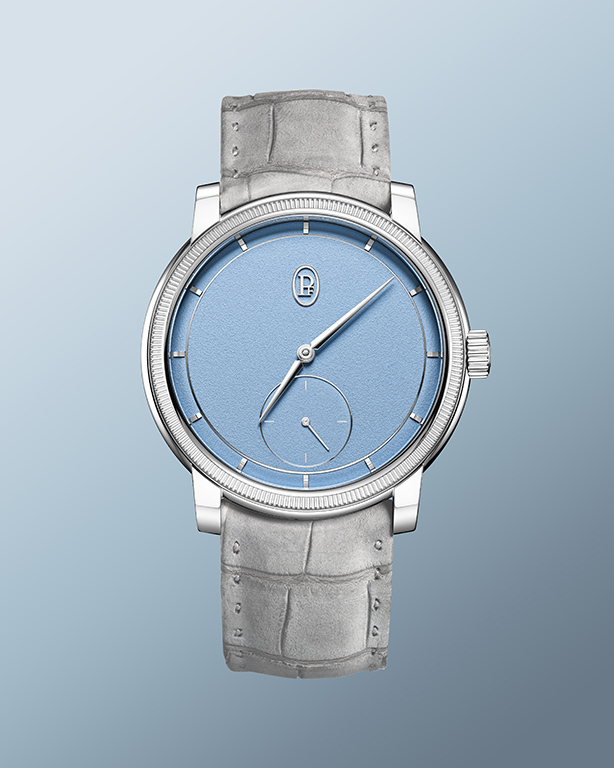
Made from 18-carat white gold, the Morning Blue surface is finished using grenage, an ancient technique that Michel Parmigiani encountered during his restoration work. Its origins can be traced back to the seventeenth century, when dial makers developed ways of creating finely textured surfaces using a mixture of simple materials.
At Parmigiani Fleurier, the process remains remarkably physical. The artisan works by hand, moving specialised brushes across the gold surface in different directions. The work takes place in semi-darkness because of the sensitivity of silver to light. Gradually, almost imperceptibly, the texture begins to form.
There is no perfectly repeatable formula here. The pressure of the hand, the movement of the brush and the artisan’s judgement all influence the final surface. Each dial therefore has its own subtle character.
That is what makes the Morning Blue particularly beautiful. Its colour does not simply sit on top of the dial. The fine grain catches and diffuses the light, so the blue appears to shift as the wrist moves, sometimes cooler, sometimes softer, sometimes almost luminous.
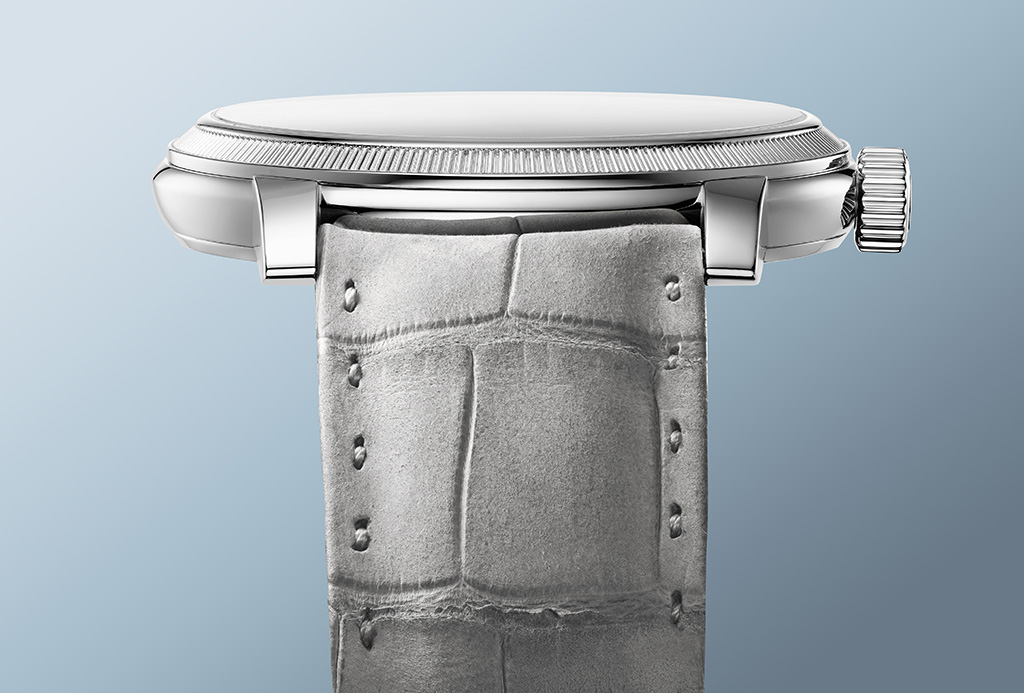
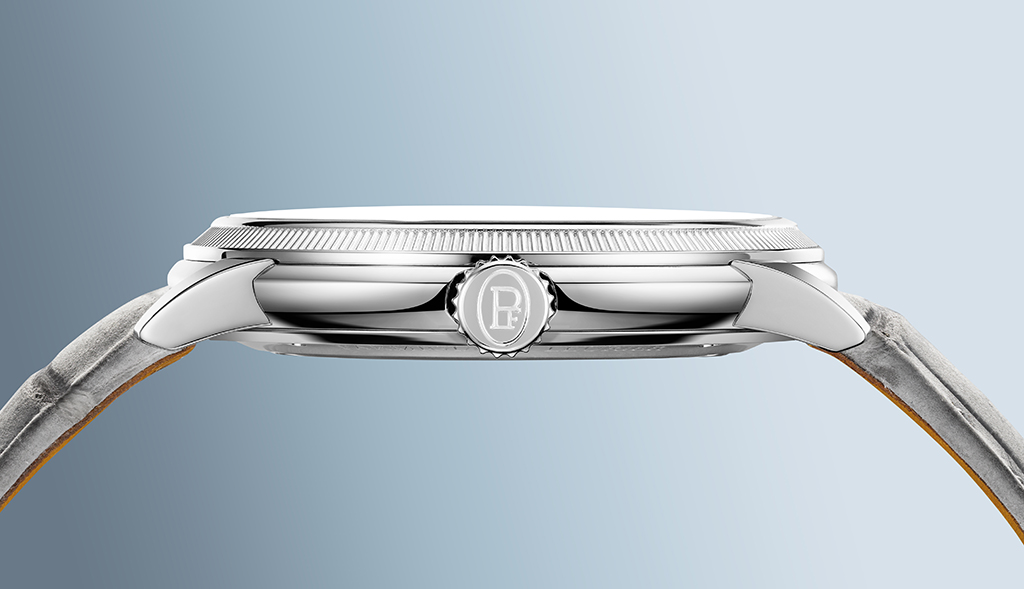
It is a small reminder that perfection does not always mean uniformity. The same sensibility can be found elsewhere. The 40.6mm platinum case is restrained rather than showy, its characteristic knurled bezel giving the watch a rhythm inspired by classical architectural forms. The chevé dial gently falls towards its edge, while slender hands and applied indexes leave plenty of space around them.
Nothing feels added simply for the sake of decoration. Turn the watch over, however, and the quietness of the dial gives way to another kind of beauty. The manually wound PF780 movement is constructed in 18-carat rose gold, with two visible barrels and broad bridges decorated with Côtes de Fleurier.
The decoration itself is produced using an antique cam-operated guilloché machine. It is a process that demands time and sensitivity rather than speed. The bridges are then hand-bevelled, leaving the edges smooth and catching the light.
There is a pleasing contradiction here. The movement is highly sophisticated, yet the experience of wearing it remains wonderfully simple. Wind the crown and you feel the mechanism come alive beneath your fingertips. There is no battery, no screen, no notification, just the quiet resistance of a mechanical movement responding to the hand.
Even the strap follows this philosophy. The Akoya Grey nubuck alligator has a soft, almost velvety appearance that complements the grain of the dial rather than competing with it. Around twenty manual operations and two days of work go into its construction, including hand stitching inspired by the punto a mano tradition of fine Neapolitan tailoring.
These are details that may never be noticed by anyone else. And perhaps that is precisely why they matter. Luxury has become increasingly visible, but there is another kind that remains private. It lives in the quality of a surface, the weight of platinum in the hand, the imperceptible variation of a handmade dial or the knowledge that someone spent hours perfecting something most people will never see.
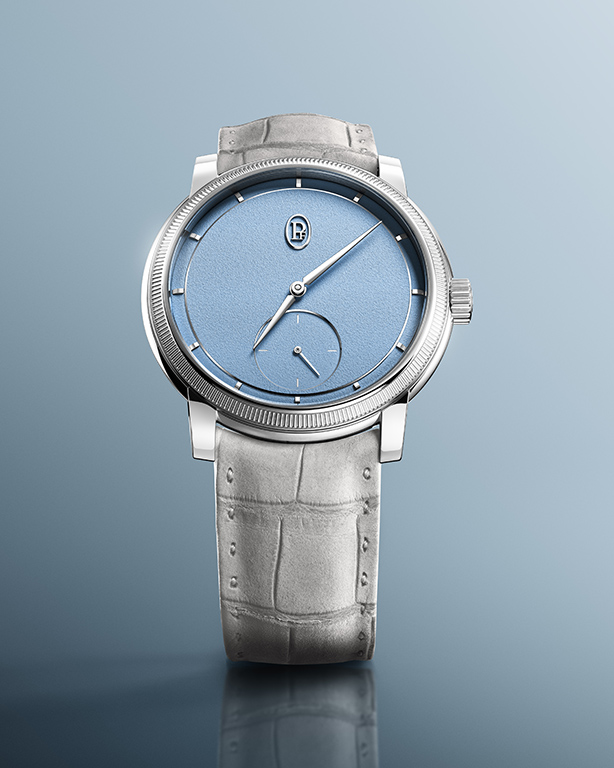
The TORIC Petite Seconde feels designed for that kind of appreciation. It is, technically, a dress watch. But its elegance is no longer tied to an old-fashioned idea of occasion. Beneath a tailored jacket, a cashmere knit or an unstructured blazer, it has the same quiet confidence.
Because ultimately, this is not a watch that needs to tell a story loudly. Its story is in the details and in the time someone took to make them.