
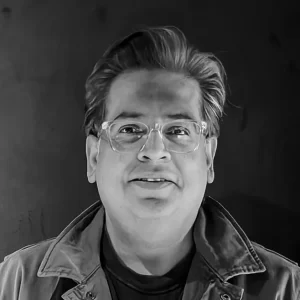
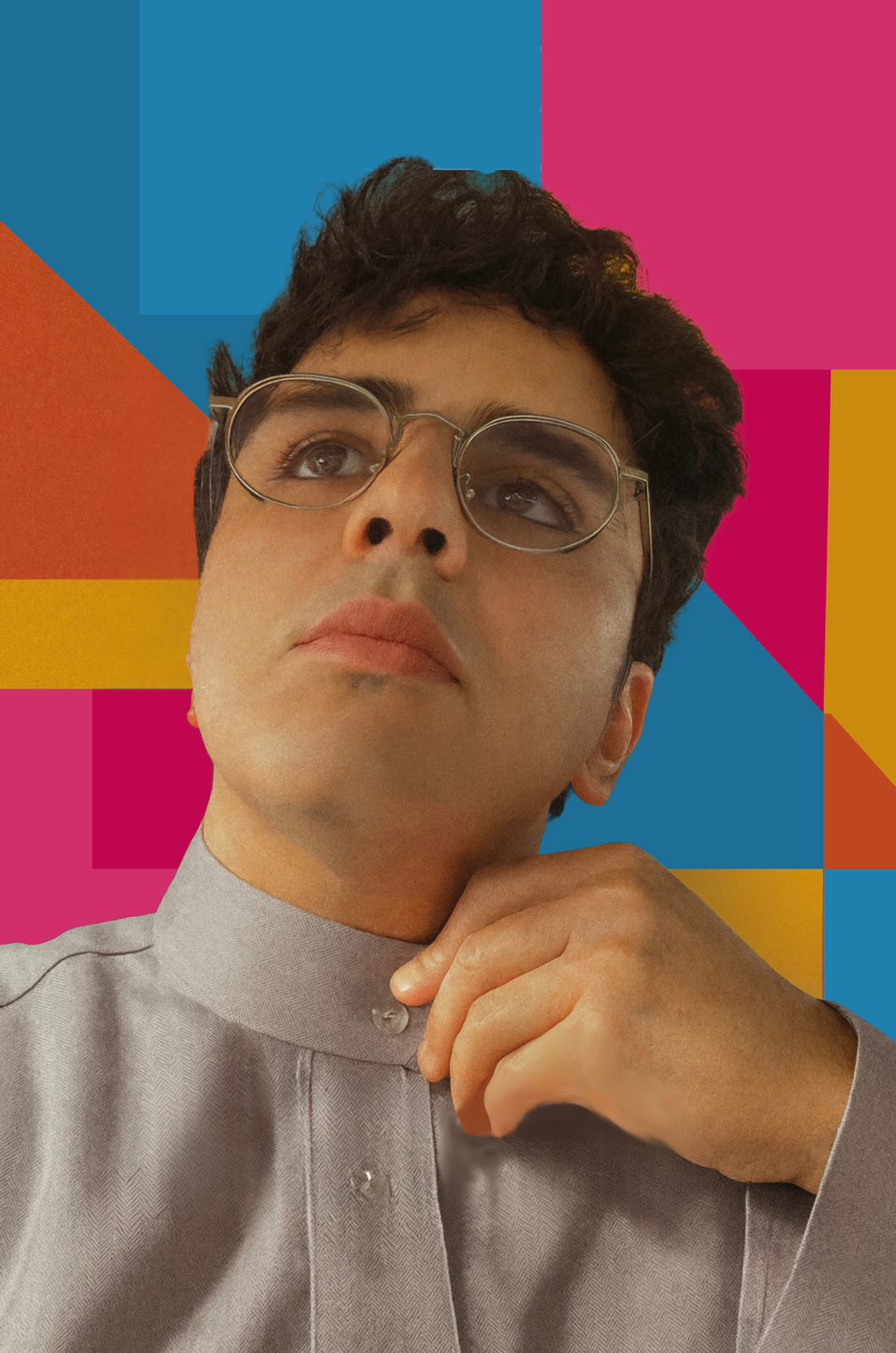
Visual Storyteller, Educator, and Creative Entrepreneur
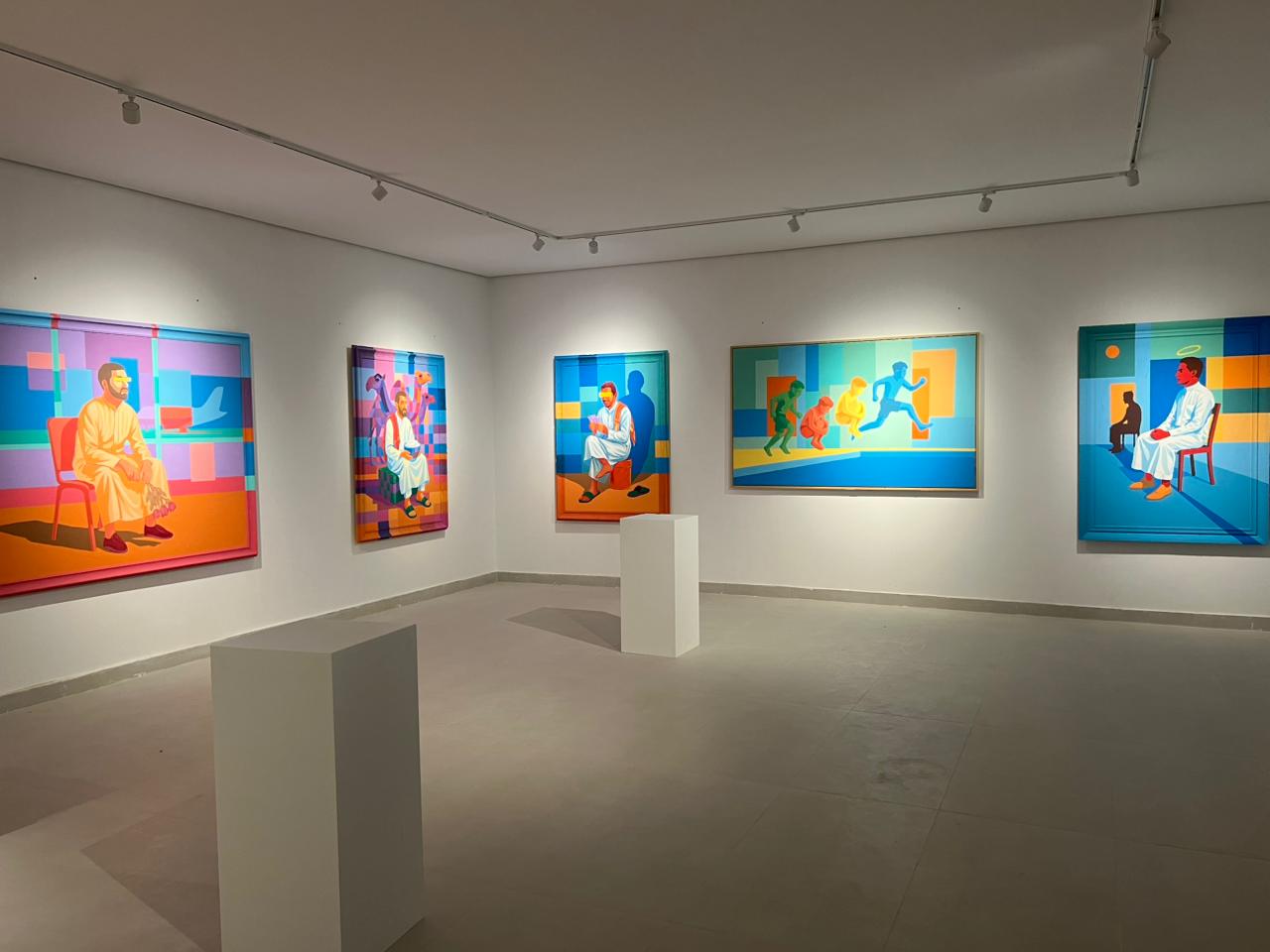
Rooted in memory, shaped by geometry, and guided by quiet emotion, Abdulhadi Abdullah’s work occupies a space where heritage and contemporary expression meet with rare sensitivity. Drawing inspiration from the desert, forgotten places, and everyday acts of generosity, his visual language transforms cultural symbols into modern narratives that feel both intimate and universal. Through camels, shadows, colour, and form, his art invites viewers to pause, reflect, and reconnect with the beauty found in small details.
Beyond the canvas, Abdullah is also an art educator, deeply committed to nurturing curiosity and authenticity in the next generation of creatives. His approach to both teaching and creating is grounded in honesty, observation, and lived experience, qualities that resonate strongly throughout his work.
In this interview with CP magazine Kuwait, Abdulhadi Abdullah reflects on his creative journey, artistic philosophy, and the stories that shape his practice, offering a thoughtful insight into an artist who paints not just what he sees, but what he remembers and feels.
Can you describe the moment when you first realised that art (or creativity) would be a central part of your life?
It wasn’t a single moment, it felt more like a path that kept walking toward me. I first sensed it when I found myself searching for beauty in small things: the shadow of a tea cup, the laughter of children, the lines drawn by the desert wind. I realised then that art was not something I chose; it was something that chose me.
How would you define your artistic style, and how has it evolved over the years?
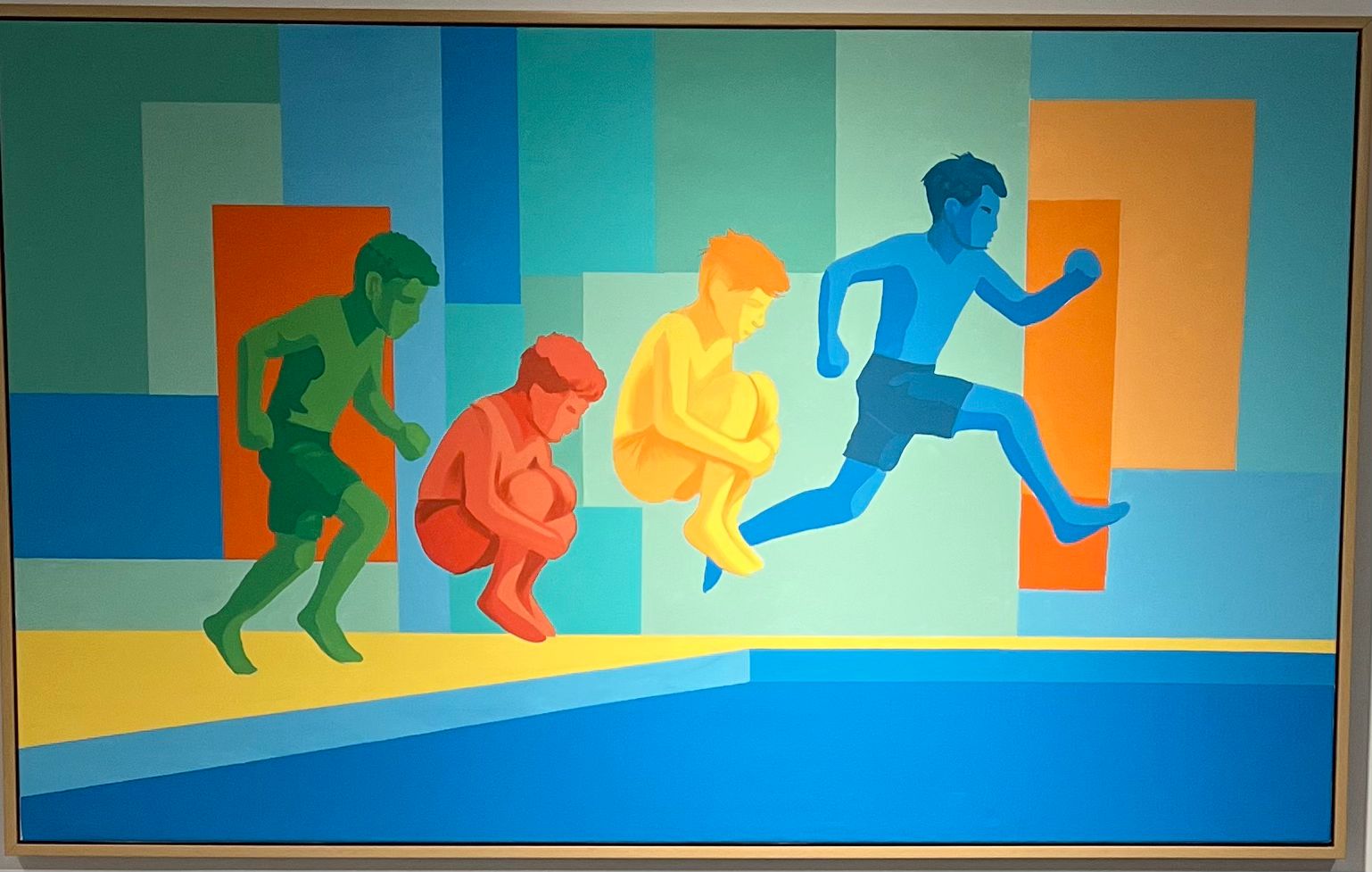
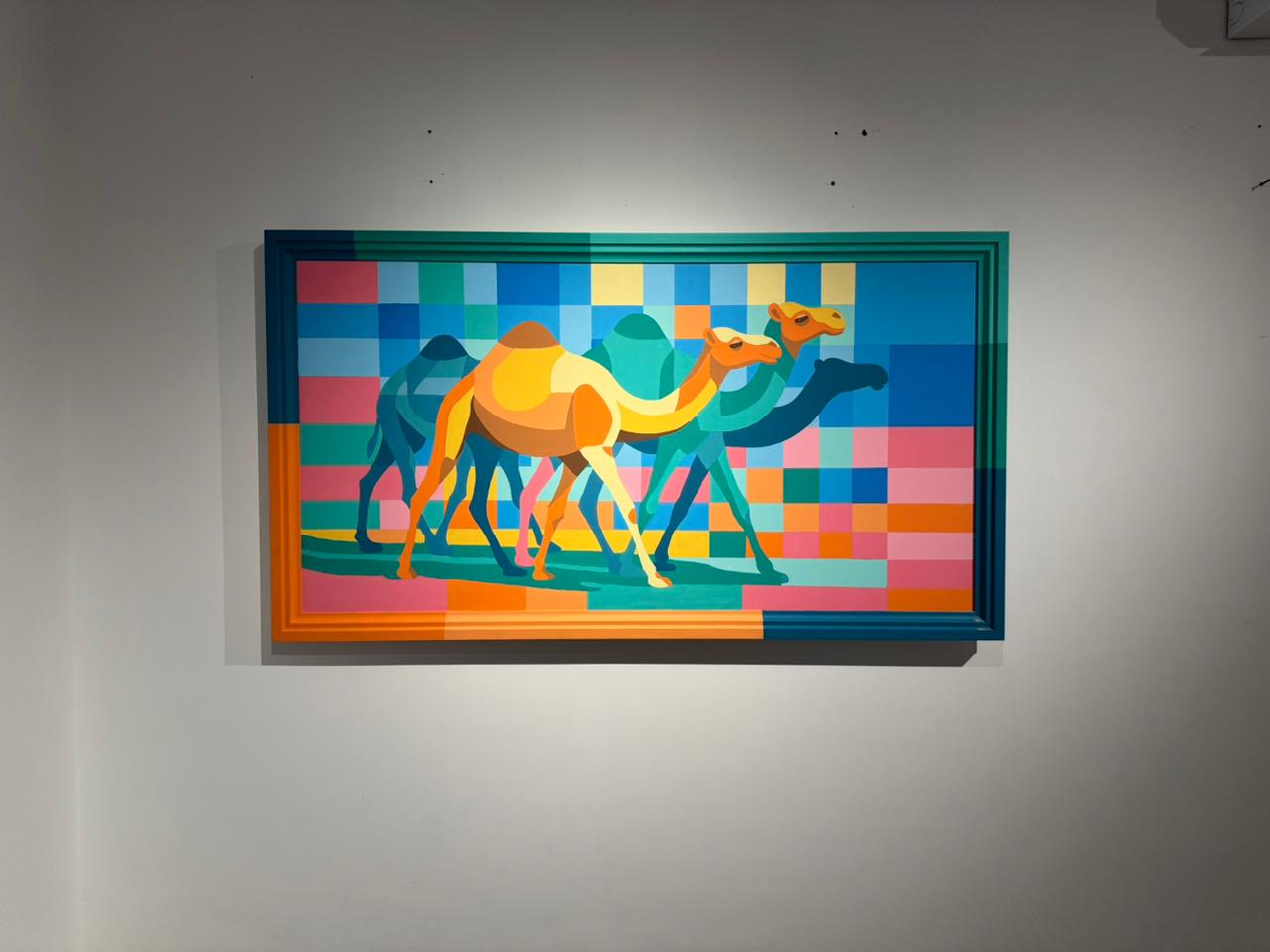
My style is a blend of modern geometry and deep-rooted heritage, a dialogue between the desert and the contemporary world. I began with simple forms, but over the years my work evolved into a geometric–abstract universe filled with camels, Najdi symbols, and elongated shadows. Every year adds a new layer, but memory remains the core.
You’ve said you want your art to “inspire happiness.” What does happiness mean in the context of your work?
Happiness, in my work, isn’t loud or exaggerated. It’s a quiet, healing energy that flows through the painting. When I say I want my art to “inspire happiness,” I mean that moment when a viewer feels the world is still beautiful, despite everything.
Many of your works integrate traditional symbols, how do you balance heritage and innovation in your art?
To me, heritage isn’t a closed box, it’s a language that can be rewritten. I don’t copy it as it is; I reinterpret it in a contemporary form, keeping its soul alive while giving it a new voice.
Could you walk us through your creative process, from concept to finished piece?
I always begin with a question: What does this idea want to say?
From there, I sketch a simple outline, dig through my field notes and memories, then build a geometric structure that carries the message. Coloring is the final stage, it’s the music of the artwork. It can complete the piece… or bring me back to the beginning.
You are known to visit “forgotten places” before creating, what draws you to them, and what do you look for when you’re there?
Forgotten places have raw memory, nothing speaks louder than their silence. I go there to listen: to what the wall says, what an old door remembers, what time left behind. I search for the spark that begins a painting.
How important is field research in your work, and can you tell us about a particularly memorable trip?
Field research is the real fuel behind my work. One of my most memorable trips was to the desert of Al-Qassim, where I saw a man offering camel milk to strangers. That simple act of generosity later became the heart of an entire painting.
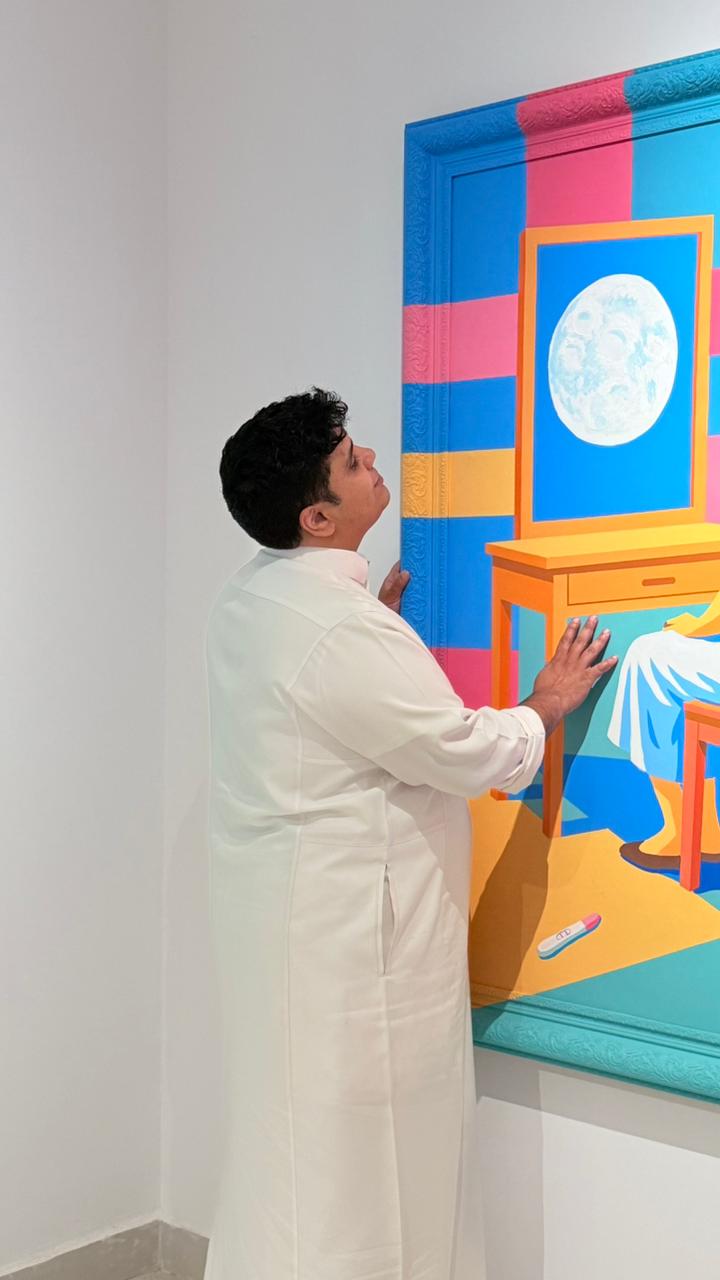
In your painting “Edge of the Universe”, you depict camels and camel milk as symbols of hospitality. Why did you choose those motifs?
I chose camels and camel milk because they represent the essence of Arabian life: generosity, endurance, and calmness. They were perfect symbols to express what I call “cosmic hospitality.”
In “Saint of the People”, there seems to be a tension between holiness and hidden darkness. What inspired this duality?
This painting came from long reflection on human nature. Every person carries a sacred side… and a hidden shadow. I wanted to reveal this honest contradiction between what we show and what we conceal.
As an art teacher, how do your students influence your own creative journey?
My students bring back the wonder of beginnings. Every question they ask awakens something I had forgotten. I learn from them just as much as they learn from me.
When working with students, what do you try to instil in them beyond just technique?
I teach them to see art as a way of living, not just a skill. I want them to trust their hand, their instinct, and to look at the world through the eyes of an artist, not a passerby.
Can you tell us about a piece that challenged you the most to create, and why?
The most challenging piece was “My Shadow Is Taller Than Me.”
It demanded painful honesty. I was essentially painting myself without naming it.
What role does colour play in your art, especially when expressing heritage, memory, or emotion?
Color, to me, is not decoration, it is the soul of the piece. My palette is inspired by children’s toys, Eid mornings, and joyful memories. Color creates the emotional memory before the lines do.
How has growing up (or living) in Saudi Arabia shaped your artistic vision and themes?
Saudi Arabia is a land of quiet details: the sand, the old mud houses, the coffee rituals, the camel paths, the stories of ancestors. I grew up surrounded by these elements, and they became part of my visual identity.
What’s the most surprising reaction someone has had to your art?
Someone once told me, “Your painting brought me back to my childhood, and I don’t even know you.”
That sentence showed me how far art can travel.
What are the biggest challenges you’ve encountered in your artistic career, and how did you overcome them?
The hardest challenge was trusting that my artistic voice was different, yet worth hearing. I overcame it when I decided to paint what I truly feel, not what others expect.
What advice would you give to young artists in Kuwait (or the Gulf) who aspire to follow in your footsteps?
Don’t rush success, your journey is part of the artwork. Look at heritage with new eyes, reinvent it, and never fear being different.
Finally, if there was one message you really hope people take away from your art, what would it be?
That beauty is close. That small details matter. And that art still has the power to heal the spirit.
Your message for us at CP magazine.
Thank you for giving artists in the Gulf a space to share their voices. You are not just publishing interviews, you’re building bridges. It is an honor to appear in your pages.