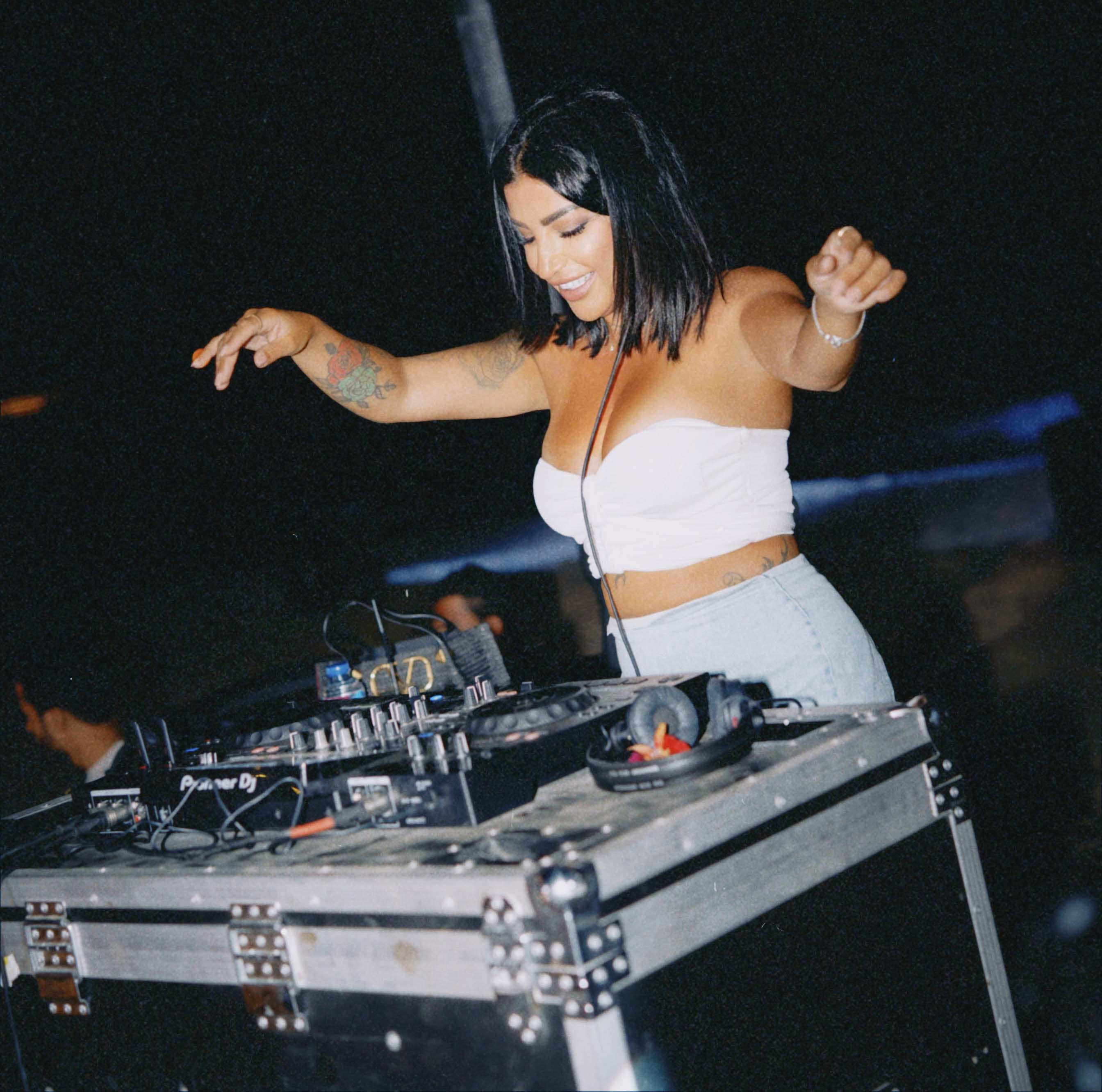

DJ, Producer and curator of high-energy Arabic and international dance-pop experiences
In a region where nightlife and electronic music are evolving at an unprecedented pace, DJ Dalia M stands out as a voice of authenticity, adaptability, and creative confidence. Known for her dynamic fusion of Arabic and international dance-pop, she has carved a distinct space within the Middle Eastern club scene, captivating audiences through her intuitive ability to read the room and shape each performance in real time.
More than a performer, Dalia represents a new generation of artists who understand that music is both a craft and a conversation. From refining her technical approach behind the decks to developing her own edits and remixes, her work reflects a deep respect for musical storytelling and emotional connection. Her presence behind the decks is grounded, intentional, and unmistakably her own.
In this exclusive interview with CP Magazine, DJ Dalia M opens up about her journey, creative process, and the lessons learned along the way. She speaks candidly about navigating a male-dominated industry, staying true to her identity across cultures, and her vision for building experiences that go beyond the stage, offering readers an honest look into the mindset behind the music.
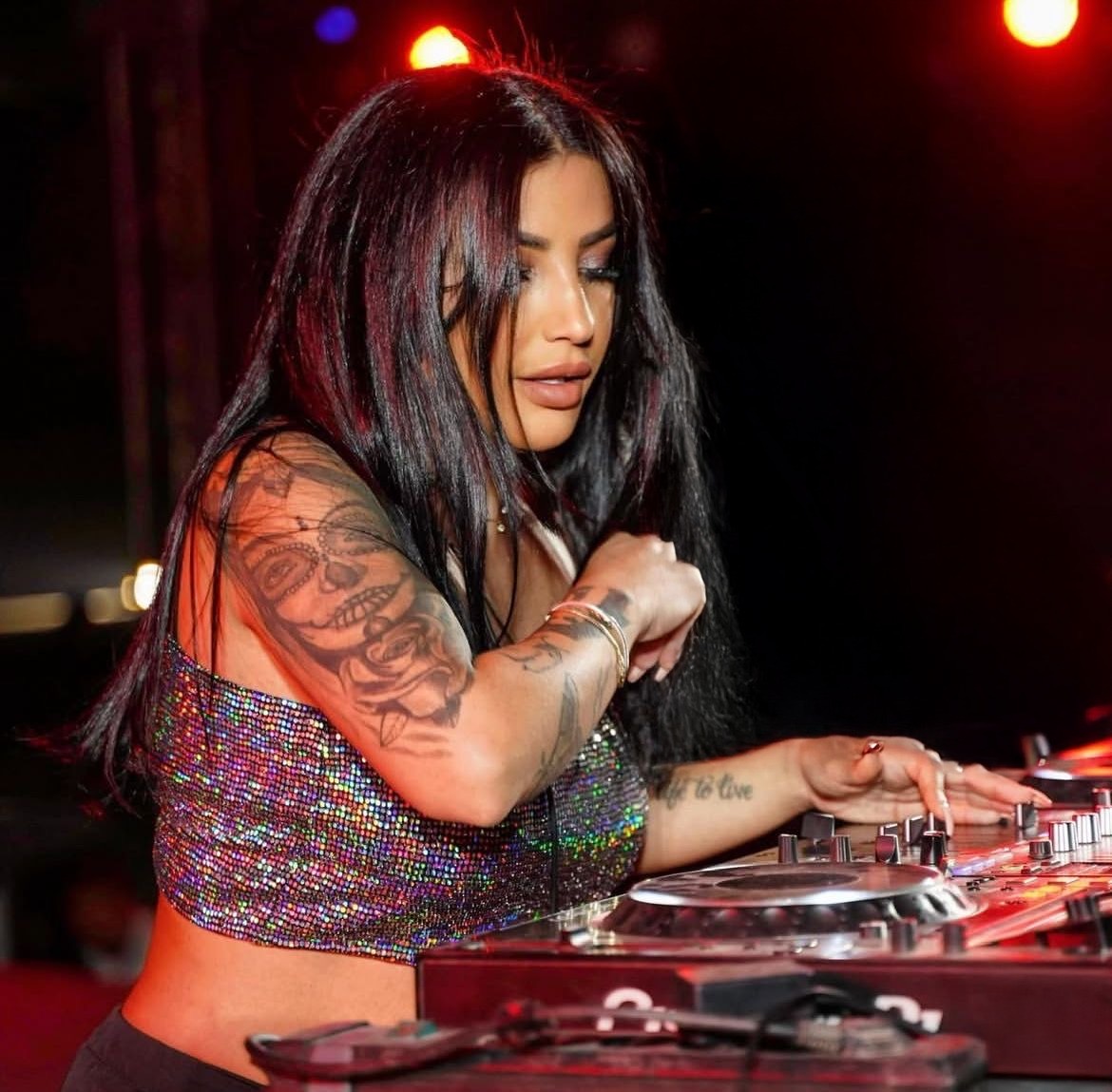
You describe yourself on Instagram as “DJ / Producer”. What was the defining moment when you realised you wanted to move from being a music fan to a creator behind the decks and in the studio?
I’ve always been deeply connected to music, but the shift from being a fan to becoming a DJ and producer happened very naturally. I started paying close attention to how international and well-known DJs built their sets, the transitions, the energy, the storytelling.
So when I got behind the decks, I wasn’t experimenting blindly. I learned the technique, studied their approach, and applied it in my own way. It felt natural, like I already understood the flow. From there, producing became the next step, because I wanted to create my own sound.
Growing up, who were your biggest musical influences (locally and globally), and how did they shape your sound?
Growing up, I really admired Avicii not because my style is similar, as it’s actually very different. I play commercial music, Arabic and English dance-pop, so my sound has a different vibe. But Avicii inspired me through the way he approached music emotionally.
I loved watching how he built melodies and how naturally ideas came to him. For example, the core idea of Wake Me Up was created in just a couple of hours, and seeing that level of creativity showed me that music is really about feeling and instinct.
On the local side, I was influenced by DJs in my scene, listening to how they read the crowd, how they transitioned, and how they built energy. That’s what shaped my actual style. So while Avicii inspired my mindset and love for music, the DJs around me influenced the sound I play today.
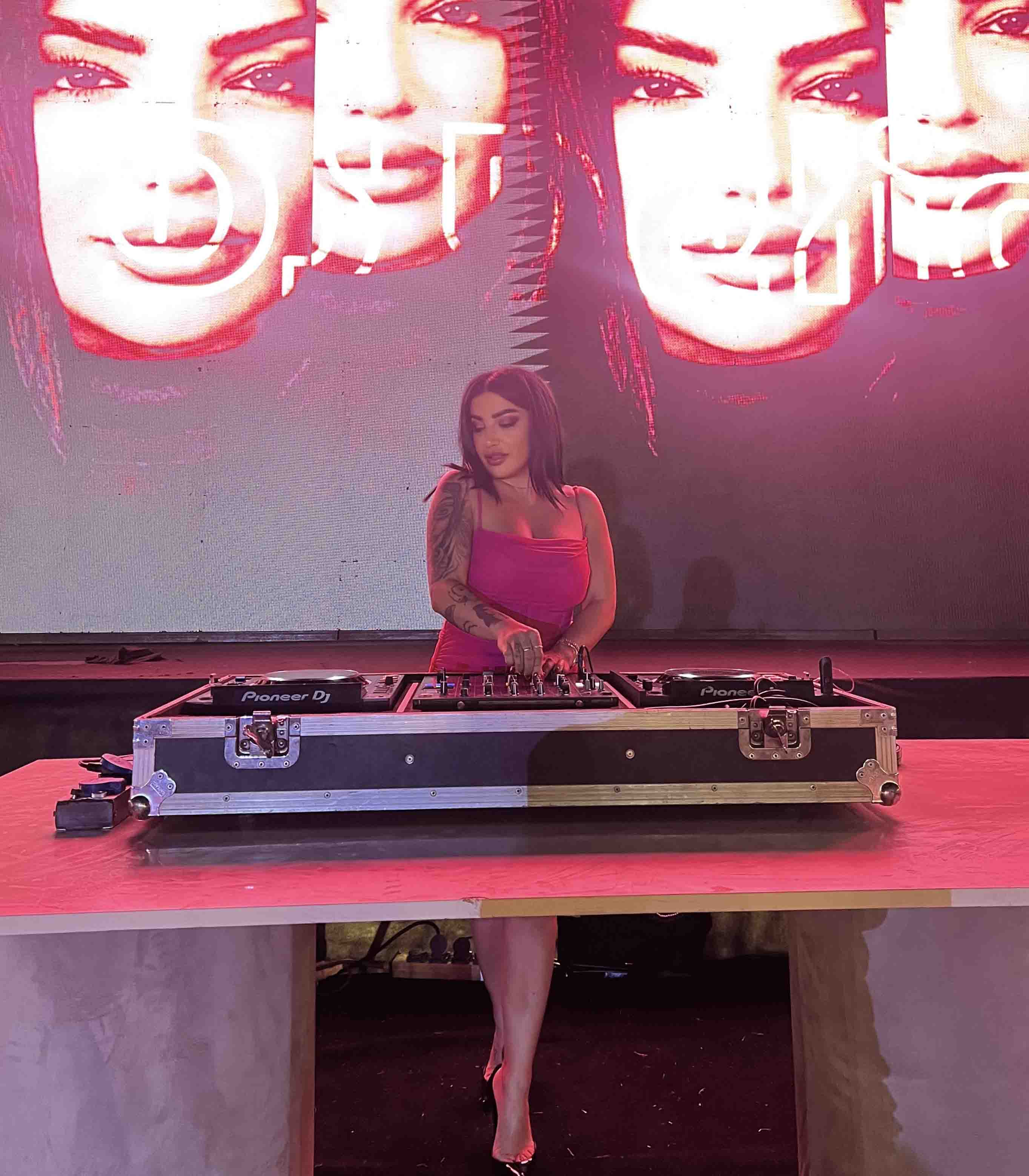
As a female DJ in a male-dominated industry, what have been your biggest challenges, and how have you turned them into opportunities?
As a female DJ, one of the main challenges has been dealing with assumptions. Sometimes people expect you to prove yourself more than others. Instead of letting that discourage me, I used it as motivation to refine my skills and build my own identity behind the decks.
Now, being a woman in this industry has actually become an advantage. It helps me stand out, gives me a different energy on stage, and allows me to inspire other women who want to step into the industry too.
For me, the goal isn’t just to be a “female DJ”, but to be a good DJ, full stop. Every challenge has helped me grow into that.
You’ve performed across different cities and cultural settings, including Byblos and Marassi. How do you approach curating a live set for different cultural environments?
Because I travel and perform in different countries, I never play the same set twice. Every place has its own culture and relationship with music, so I always start by observing the crowd, feeling their energy, and understanding what they connect to.
I mix between Arabic and international dance-pop, but the balance changes depending on the audience. I adapt, edit, and shape the set live so it fits their vibe in that moment. For me, curating a set is about reading the room not just pressing play, it’s about creating a shared experience with the people in front of me.
Can you walk us through your creative process when producing a track, from concept or sample to final mix?
When I work on a remix or edit, I start with a track that inspires me, sometimes even older songs or movie soundtracks. I rework the tempo, fix the tuning, remove parts that don’t fit, and then add my own drums and energy to make it more suitable for the dancefloor.
My goal is always to keep the original feeling of the song, but transform it into something fresh, with my own style, that creates a stronger vibe when I play it live.
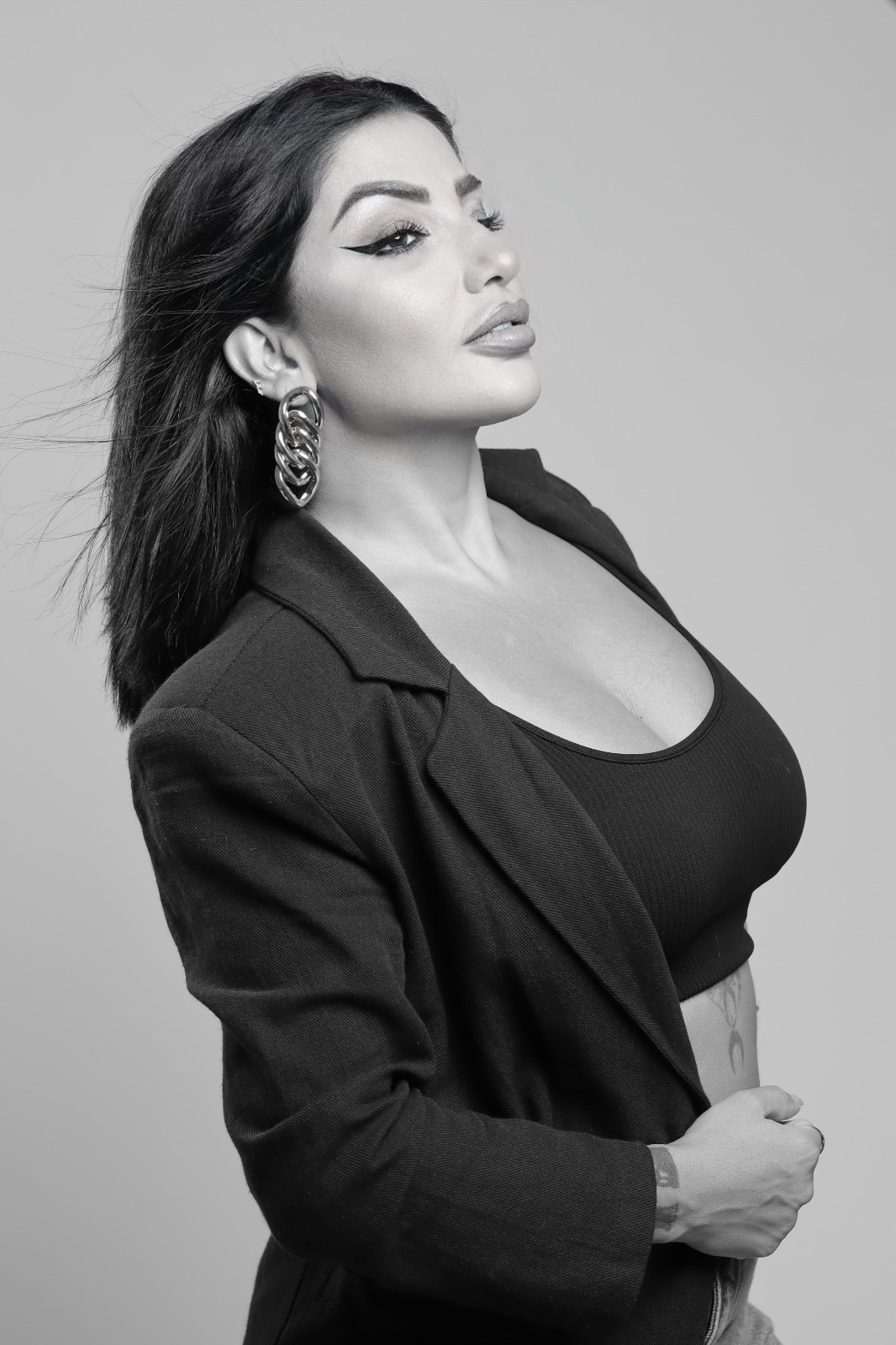
What kinds of gear, software or hardware are you currently using for your DJ sets and production?
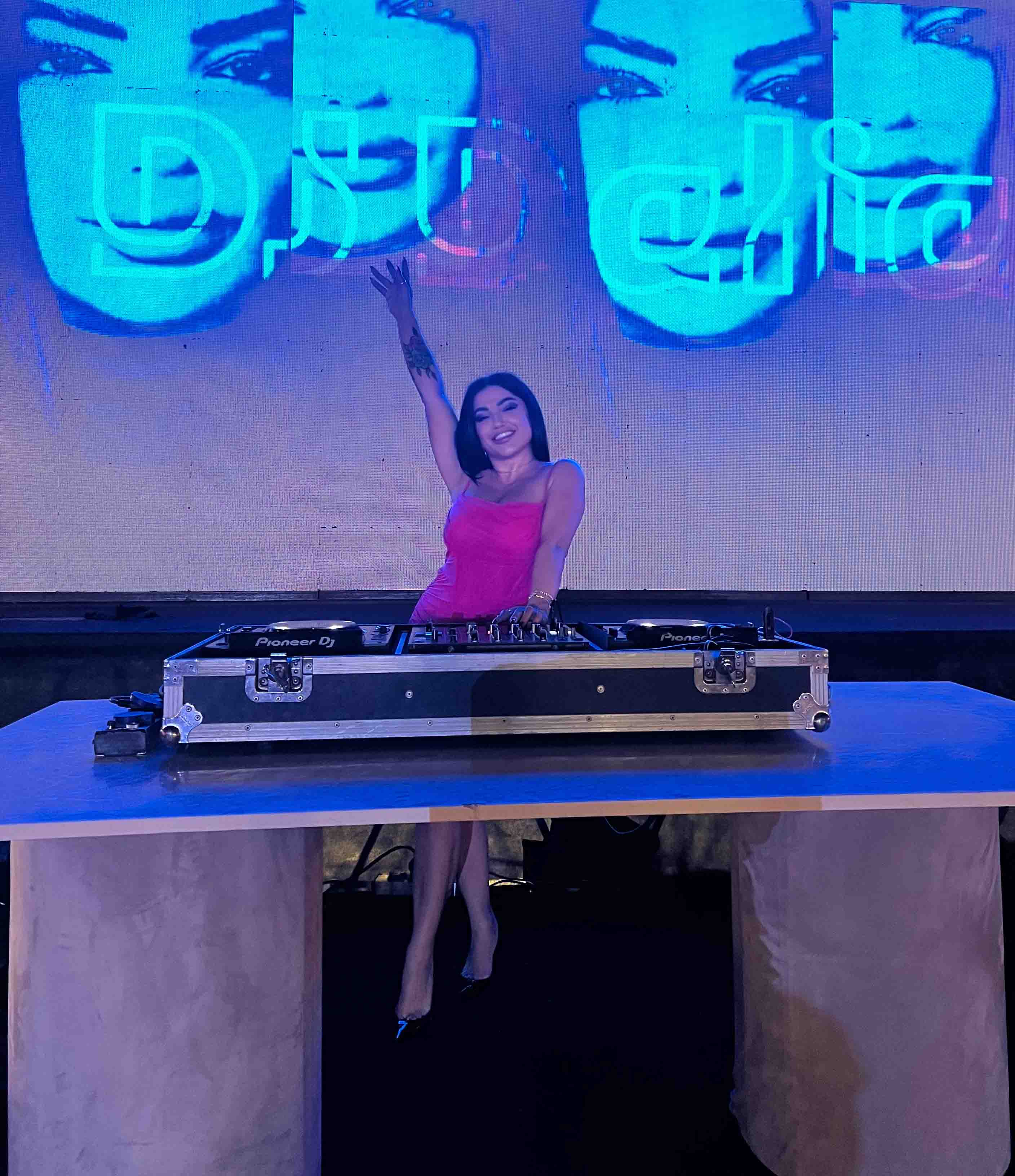
For my DJ sets, I prepare and organise all my music in Rekordbox, and I perform using USBs on Pioneer CDJs. I like this setup because it keeps things efficient and gives me full control in the moment.
For production and remixing, I work in Ableton Live, using a MIDI keyboard and a range of VSTs to shape the sound. This setup allows me to create edits and remixes designed to play smoothly and bring more energy to the dancefloor.
How do you balance originality in your music with reading the dancefloor and what the crowd wants in that moment?
I balance originality by choosing music that fits my style while staying flexible with the crowd in the moment. I don’t rely only on my own remixes, I use them when they add something to the energy.
The rest of the time, I select tracks that match my vibe but still connect with the audience. For me, it’s about feeling the room and guiding the music so it remains personal while keeping the dancefloor engaged.
You often post stylish visuals and event partnerships. How important is branding and image in your career, and how do you integrate it with your music?
Branding and image are important, but I don’t want my presence to be only about the events I play. I also share small moments from my daily life being out with friends, at a restaurant, or just relaxing because I want people to connect with me as a person, not just as a DJ.
For me, the connection starts with being real. When people understand who I am outside the decks, they connect better with my vibe and energy when I perform. So the branding comes naturally, it’s simply an extension of my personality and the atmosphere I create through my music.
Many DJs are expanding into residencies, collaborations, and large-scale projects. What are your ambitions beyond DJing and production?
I already perform internationally across the Middle East, and I want to continue expanding into new markets like Germany, Paris, and the US especially in cities with strong Arab communities. My goal is to eventually build full tours that connect with those audiences worldwide.
Looking forward, I don’t only want to perform. I want to create and organise my own large-scale events and shape the full experience. The vision is to evolve from being on the stage to building the stage.
Can you tell us about a particularly memorable gig, maybe one where something unexpected happened, and what you took away from it?
One of my most memorable gigs was when I was scheduled to perform before a well-known artist who had very strict musical guidelines no Arabic music, and certain commercial tracks were completely off-limits. I prepared my set carefully to respect those instructions.
However, the DJ before me ignored the rules and played exactly the songs the artist had prohibited. When it was my turn, I was told to switch to only English music and avoid all the major hits that had already been played. I had to change my set on the spot. Naturally, the crowd’s energy dropped because the warm-up DJ had already used all the impactful tracks.
It was a challenging moment, but it taught me something valuable: communication and coordination are essential between artists and DJs on a line-up. Now, I always ensure clarity before stepping on stage. I learned to protect the integrity of my set and make sure every performance is aligned so the audience experiences the best possible flow.
How has nightlife and club culture in Egypt and the Middle East evolved in recent years, and what role do you think you’re playing in that evolution?
Over the past few years, nightlife and electronic music culture in Egypt and the Middle East have expanded significantly. We’re now seeing global attention on the region, especially with large-scale events at the Great Pyramids, where major international artists are booked alongside world-class production. These events have positioned Egypt as a serious destination for electronic music.
My role within this evolution comes from a different angle. I work primarily in club environments, where the focus is not just on scale, but on atmosphere, storytelling, and the connection between the DJ and the crowd.
As a female artist based between cultures, have you ever felt pressure to compromise your sound or image? How do you stay true to yourself?
Being between cultures has never made me feel like I need to compromise who I am. I pay attention to the space I’m in and what people connect to, but I always bring my own identity and creative signature.
I don’t adjust myself to fit a country, a scene, or an expectation. My sound comes from me not from pressure. I show up as the same person everywhere I go, and that consistency keeps my work authentic.
Collaboration is key in music. Who would you most like to work with, and what would that project look like?
I don’t have specific names in mind, but I’m interested in collaborating with artists who share my energy. I make commercial pop and dance music, and I’d love to bring in live elements like saxophone or violin to add emotion and depth.
I want to create performances that feel powerful, modern, and truly alive.
When you’re not performing or producing, how do you recharge?
When I’m not on stage or in the studio, I recharge by grounding myself in simple, creative routines. I love cooking, it relaxes me and allows me to create in a different way.
I also make time to exercise, which keeps my mind clear, and I draw and read whenever I need to slow down and reconnect with myself. Those moments refill my energy and inspire me again.
What’s a track, yours or someone else’s from the last 12 months that you love and why?
Recently, I’ve really enjoyed playing Baba and Khatafoni by Amr Diab, and Eh El Youm El Helw Dah by Ahmed Saad, they always lift the energy. I also play my own remix of Kol Marra by Tamer Hosny, which brings something personal to my sets.
On the English side, I love mixing Gimme! Gimme! Gimme! (A Man After Midnight), Fire Fire, and I’m Good (I’m Feeling Alright) they bring a fun dance vibe. I still love adding classics from Aline Khalaf, Nancy Ajram, and Assi El Helani to give the crowd that emotional, familiar touch.
And of course, there’s so much more I add this is just a small sample.
What’s next for you? Any new music, tours or creative directions on the horizon?
There’s definitely more coming. Right now, I’m developing my live performance style further, especially by introducing live elements like saxophone or violin to create a fuller, more emotional experience on stage. I’m also working on new mixes and original material that reflect where I am creatively.
In terms of shows, I’m planning performances in Erbil (Iraq), Muscat, and Egypt, including a new venue. I want these shows to feel special, something new and memorable, not just another performance.
If you could give your younger self one piece of advice, what would it be?
I would tell her to trust her instincts. In the beginning, it’s easy to listen to every opinion and try to please everyone. But the real magic happens when you stay true to your own taste, style, and vision.
I’d say: don’t rush, don’t doubt yourself, and don’t shrink to fit anyone’s expectations. Keep learning, keep practising, and stay confident, your uniqueness is your power.
Finally, outside of music, what legacy do you hope to leave?
I hope to build a legacy of authenticity. I want people to remember that you don’t have to copy others to succeed being true to yourself is real power. Be real, be bold, and stand confidently in who you are.
Beyond music, I want to be remembered for kindness, helping others, supporting people, and moving through life with a good heart.
Your message to CiiN Magazine.
Thank you, CiiN Magazine, for seeing me, hearing my story, and giving me the space to express who I am. This interview means a lot because it’s more than just music, it’s about identity, growth, and the journey behind the sound.
To your readers, I send love and light. May you always stay true to yourselves, bold in your dreams, and kind in your hearts.