
“It’s more like a battle or a dance”
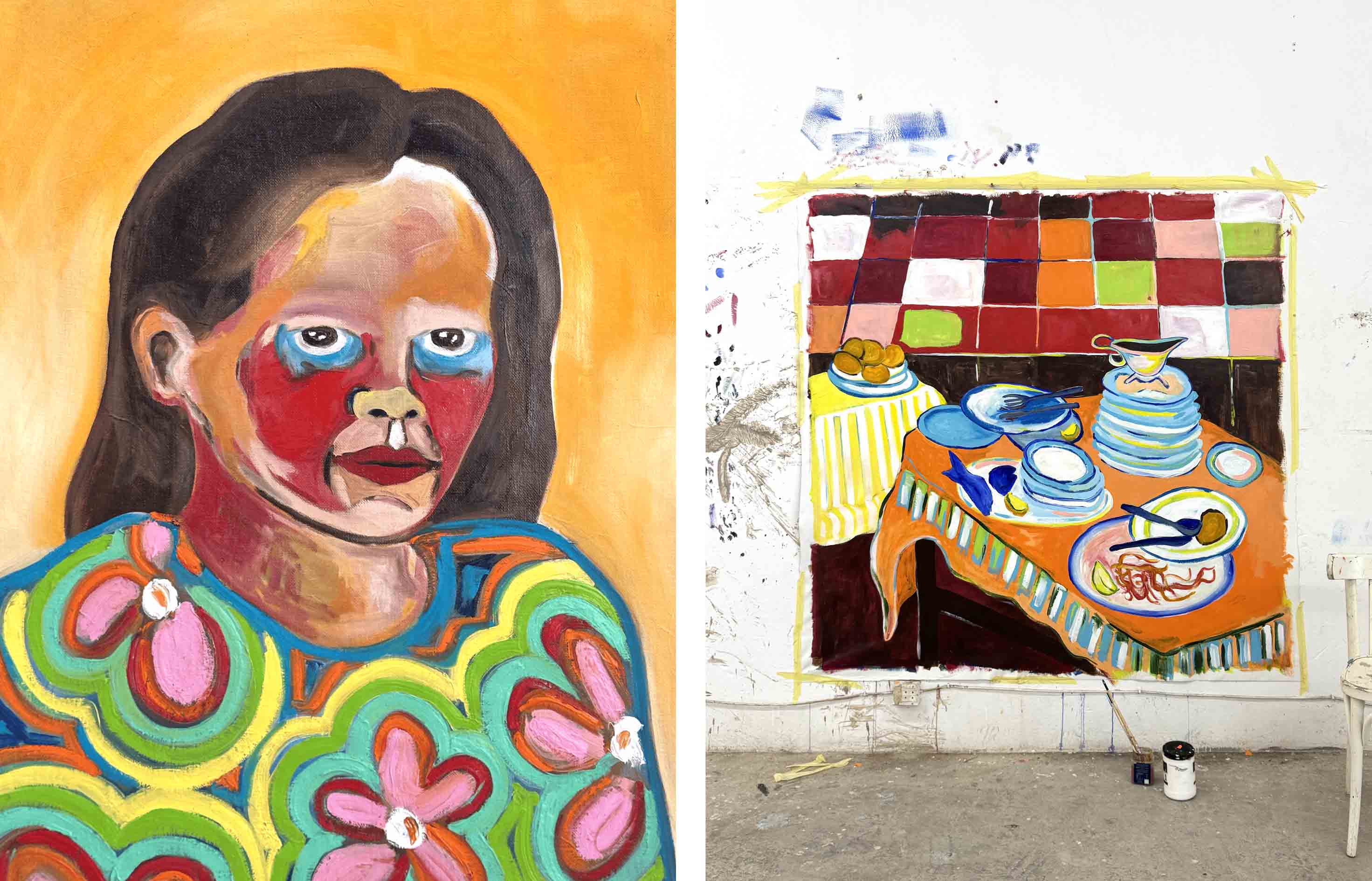
With a vibrant, emotionally resonant style that merges lived experience with layered storytelling, Finnish-Tunisian artist Dora Dalila Cheffi is quickly establishing herself as a bold voice in contemporary art. Working across painting, sculpture, video, and installation, Cheffi’s practice is deeply rooted in the act of observation transforming fleeting, often intimate moments into rich, expressive compositions. Her signature visual language, vivid color, skewed proportions, and loose, playful brushstrokes carries both the exuberance of Mediterranean life and the introspective moodiness of Nordic winters. Navigating themes of identity, memory, and belonging, Cheffi’s work is deeply personal, yet universal in the emotions it stirs.
Cheffi’s career has rapidly evolved since she moved from Helsinki to Tunis in 2018. That cultural shift sparked a creative expansion, inspiring her to embrace the chaos, ritual, and sensory abundance of Tunisian life. Her paintings often resemble snapshots of everyday intimacy: a cluttered breakfast table, a wedding celebration, a quiet domestic corner moments made poetic through her intuitive use of color and form. Her 2022 solo exhibition Prestige, a standout project that explored Tunisian wedding traditions through a personal and feminist lens, marked a significant turning point in her practice. It revealed an artist not afraid to explore vulnerability, beauty, and contradiction in equal measure.
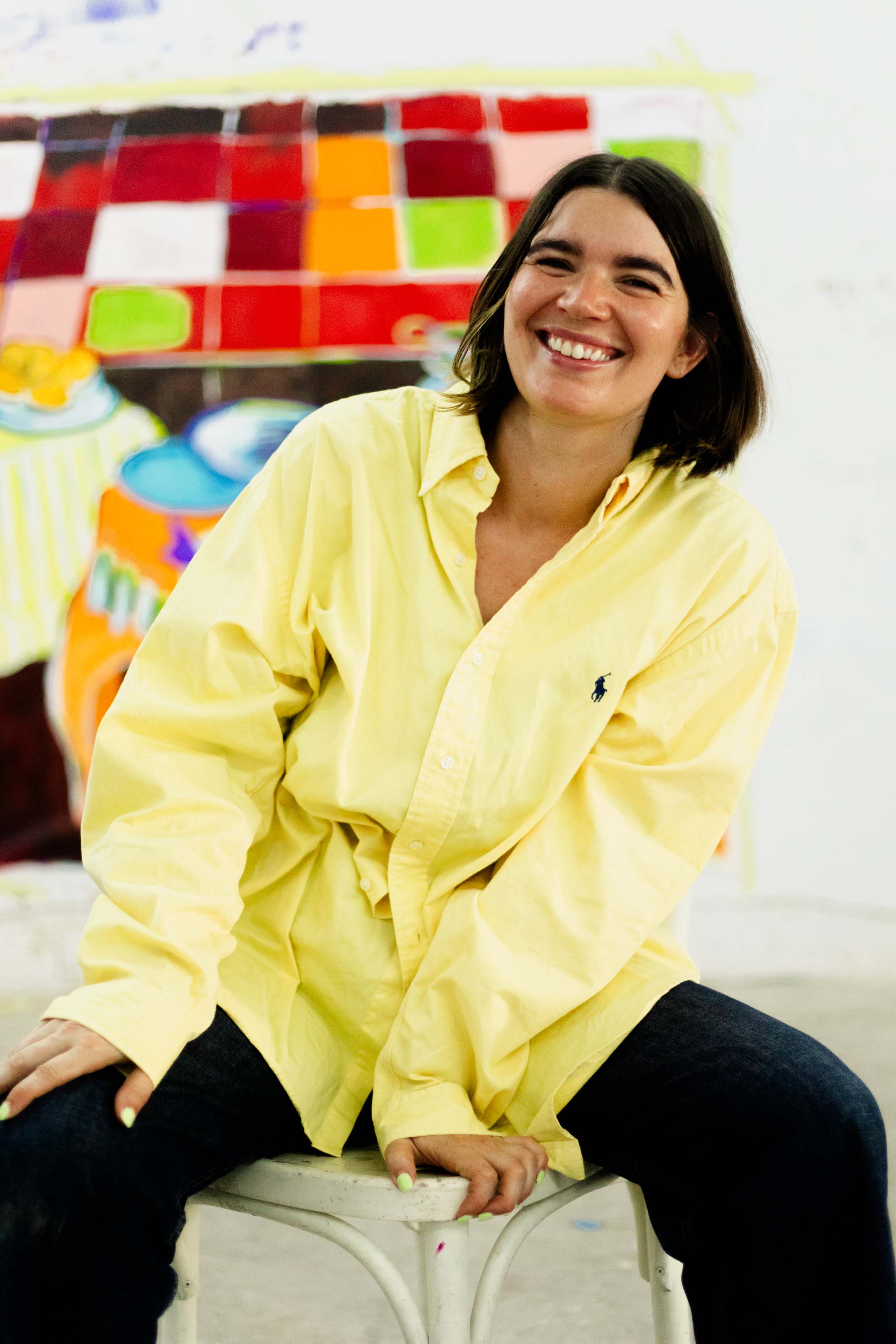
Cheffi’s work has already earned her a place in prestigious collections such as MACAAL and the Finnish National Gallery, as well as recognition through exhibitions across Europe, North Africa, and beyond. But beyond the accolades, it’s her unique perspective, what she calls her nus-nus identity, straddling two cultures that gives her work its powerful, inimitable voice. With each piece, Dora Dalila Cheffi reminds us that contemporary art’s most compelling talents are those who turn their inner worlds outward with honesty, texture, and a touch of joyful defiance.
José Berrocoso, our Lifestyle Editor, sits down with Dora Dalila Cheffi to delve into the vivid colours, personal histories, and intuitive gestures that define her compelling artistic universe.
Let’s start with the basics. You’ve lived between Helsinki and Tunis, two places that couldn’t be more different. How do these contrasting environments shape your artistic practice?
Yes, culturally and environmentally my two home countries are almost the polar opposites which has not always been easy to navigate. Once I’ve learned to appreciate these differences it’s also fun to mix them in my work to create something that takes from both. Technically the environment affects the pieces a lot, for example painting in Finland during the darkest time of the year with almost no daylight is completely different from the Mediterranean sun. It affects the color palette and the general mood of the paintings depending where I paint. Same goes for the videos.
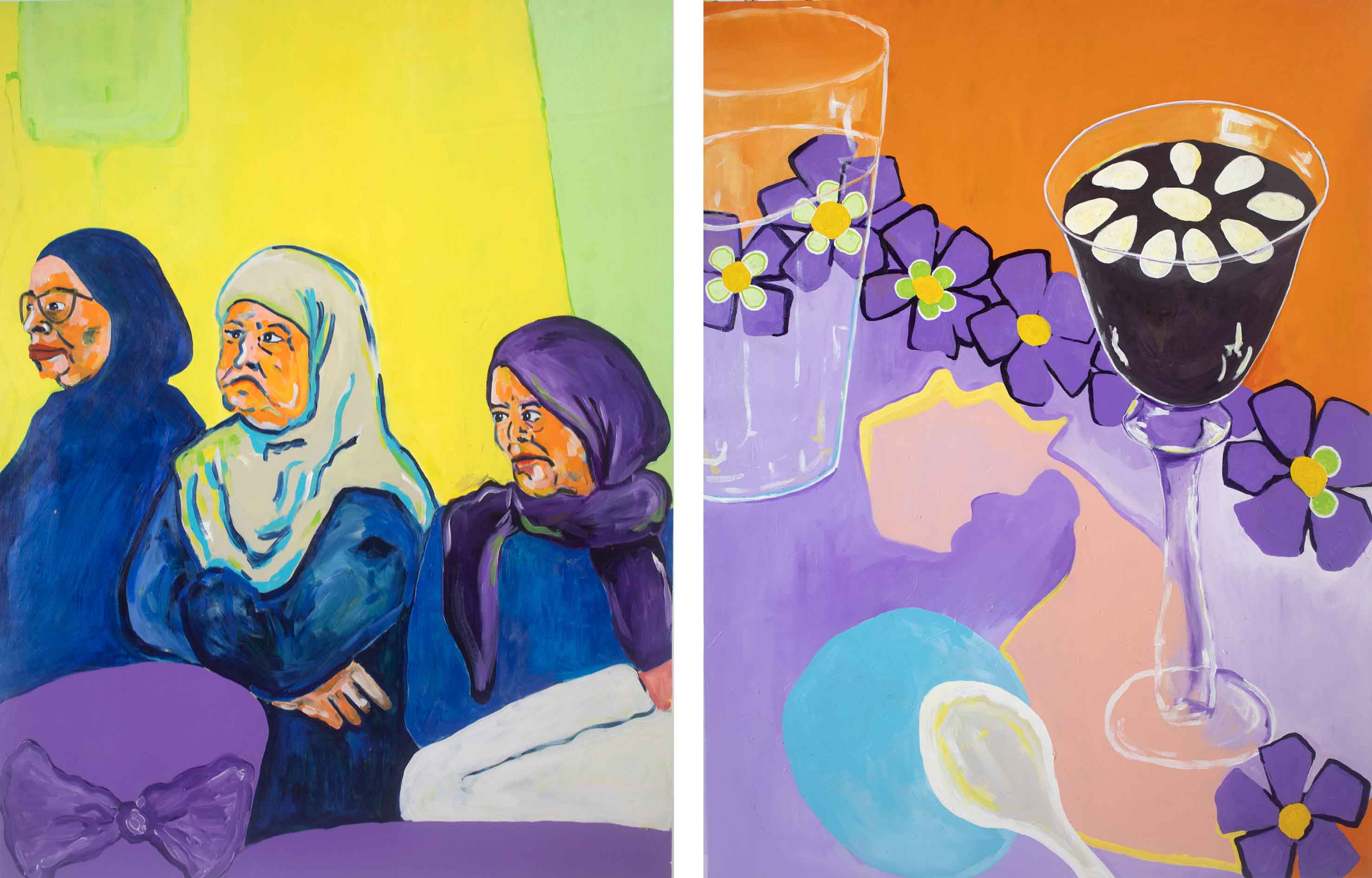
Your work has such a vivid use of colour. What’s your relationship with colour emotionally and symbolically, do you see it as a mood, a language, or both?
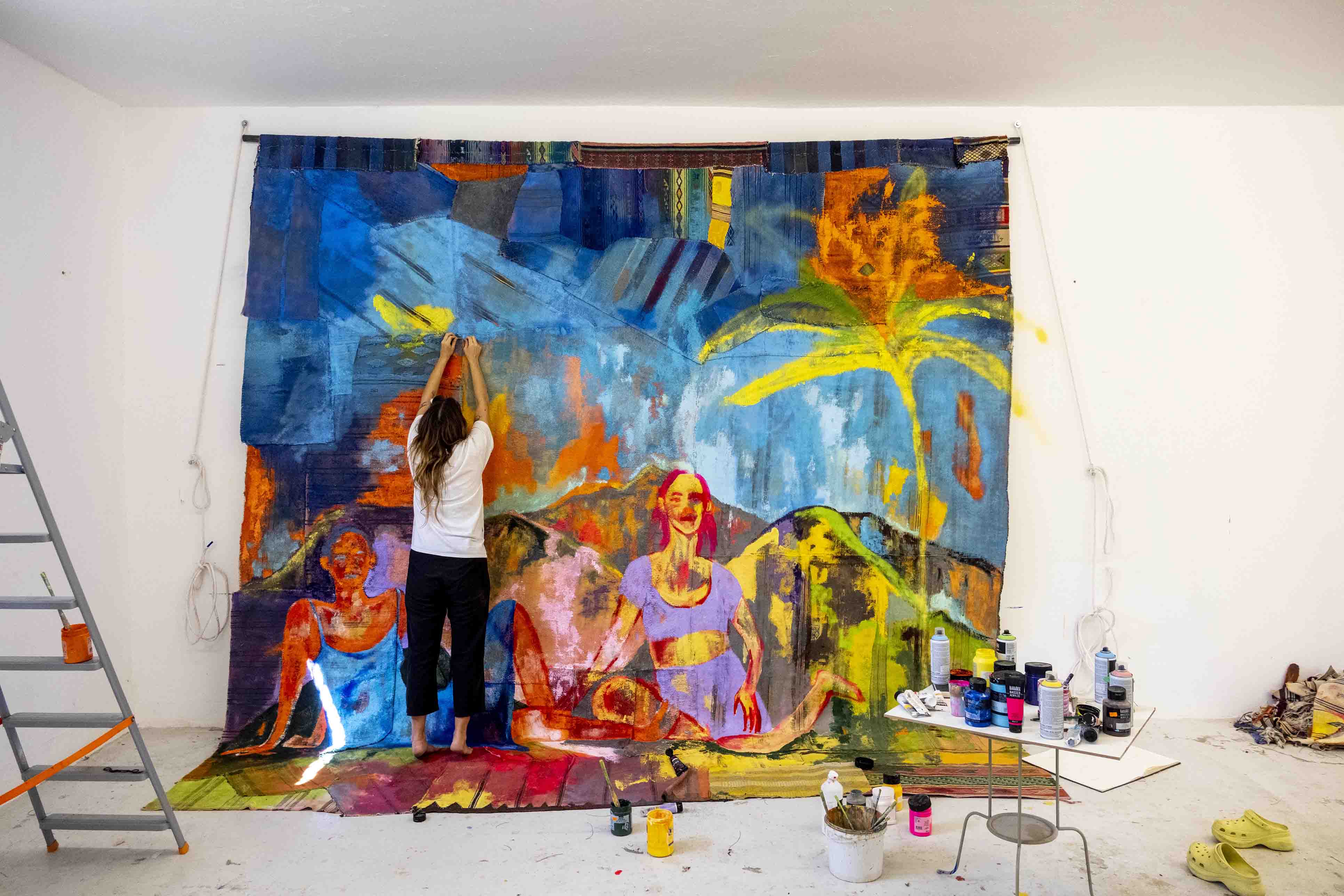
It was never a choice to start using such intense colors, it just happened. I guess not looking back I have always been gravitating towards colors because before I was working in photography I could never shoot black and white images. Moving to Tunisia in 2018 defined my love in colours. I’m sure it was hugely because there is so much color and a type of chaos around that I find very visually pleasing so I started imitating that to the paintings. I rarely think about the colors before I paint. It’s more like a battle or a dance of different colors and textures to create that chaotic balance that I can be happy with.
You once said, “I need to have a story” when painting. Could you share how memory and personal experience find their way into your compositions?
Most of the topics I work with are drawn from my own personal experiences. Maybe memories or something that I’m going through at that moment. It probably comes from my need to document life and process past events, even the hard ones, and turn them into some type of a visual and public experience. I feel like regardless to our cultures and personal lives most humans share the same emotions and looking at art is a great way to relate to each other. It’s also a great way to be challenged by look at something intriguing that makes them feel uncomfortable.
You began with painting but have explored sculpture, video, textile, and installation. What drives you to experiment across mediums, and how do you decide which form best serves a particular idea?
Actually originally I began with photography and after that everything else followed. Although I was never doing art with photographs I felt like it was a path that helped me to think visually and explore other dimensions of image making. I like to play with materials and often take upon things that I have never tried before nor have a clear vision how it’s going to go, but I guess working with different techniques I just have to trust that in the end it will come together and each piece has its purpose and story.
In your solo show “Prestige,” you explored Tunisian wedding culture. What drew you to that theme, and what did the research process teach you about identity, ritual, or belonging?
Prestige came about in a very particular period in my life where I felt like I had just began to understand my career path but still felt pressured to find someone to settle down and have a family with. That show was at the same time a rebellion towards that pressure, a celebration to Tunisian weddings and the beautiful rituals they hold and a certain fear of if I will never have/want that for myself at least I can create a celebration for myself.
Your works often feel like intimate snapshots – a breakfast table, street scenes, quiet gestures. How do you select those everyday moments and turn them into something visually poetic?
I have no other answer to that than «intuition».
In one interview, you compared finishing a painting to falling in love — “You just know.” Has that instinct ever failed you?
Yes because this feeling happens rarely and not with most of the paintings. And when it doesn’t happen,it comes down to deciding, accepting and forgiving the mistakes — which funny enough — also applies to love I think.
Let’s talk about ‘Petra’. The metaphor of fallen metropolises feels both grand and deeply personal. Do you see destruction and beauty as inherently connected in your work?
The way I like to approach art is to make difficult subjects light or visually pleasing but also I enjoy the fact that there is something twisted in them.
You’ve described painting as difficult when you’re not feeling good, yet your art doesn’t shy away from complexity. How do you navigate emotional honesty in your creative process?
Painting is a private process for me. I don’t like anyone telling me how to do or interfering with the unfinished work unless I have asked for the feedback. Often this is because until the very last stroke the paintings changes constantly depending on my mood. After the painting is ready I really don’t care what people think cause I’m sort of already over it and have moved on and need to stand by my own decisions.
Is there a subject or material you haven’t yet tackled that’s calling to you? What might be next in your evolution as an artist?
Yes there is a lot to tackle and a lot to learn. Sometimes I’d like to play with an idea of creating work that is not so personal so maybe the process would be lighter, but let’s see if I will ever manage that. I’m open to anything that there is to come.
Your work has appeared in major international collections and exhibitions. How does it feel to see something so personal enter the public realm? Does that ever change your relationship with the piece?
It feels good to have your work recognized. Sometimes it’s surprising to see a piece succeeding that you didn’t think much of and then the one you really poured your heart into not getting any attention. Then, of course, there is also a little fear of not being worthy of that recognition but honestly art world is such an irrational place that one shouldn’t really think about those things too much.
Finally, for the dreamers and young creatives reading this: What advice would you give to someone who’s still figuring out how to find their voice in art?
This is a cliche but it’s also true; «No one is you and that is your strength, there is space for everyone.