


Crafting Spaces with Rhythm, Soul and Couture Precision
With an eye for elegance and a heart attuned to rhythm, Helen Bygraves, Founder and Director of Hill House Interiors, has redefined the language of luxury design across continents. From her early days as a professional dancer to leading one of the UK’s most celebrated design studios, Helen’s journey is a testament to creativity, resilience and boundless curiosity. Her projects spanning London, Dubai and beyond, exude a signature blend of craftsmanship, balance and theatrical flair, earning Hill House Interiors multiple international accolades, including honours at the International Property Awards and CID Awards MENA 2025. Now with a flourishing Dubai studio and an expanding lifestyle collection, Helen continues to shape interiors that are both artful and deeply personal. In this exclusive conversation with CP Magazine Kuwait, she reflects on her artistic roots, global inspirations and the evolving beauty of modern couture design.
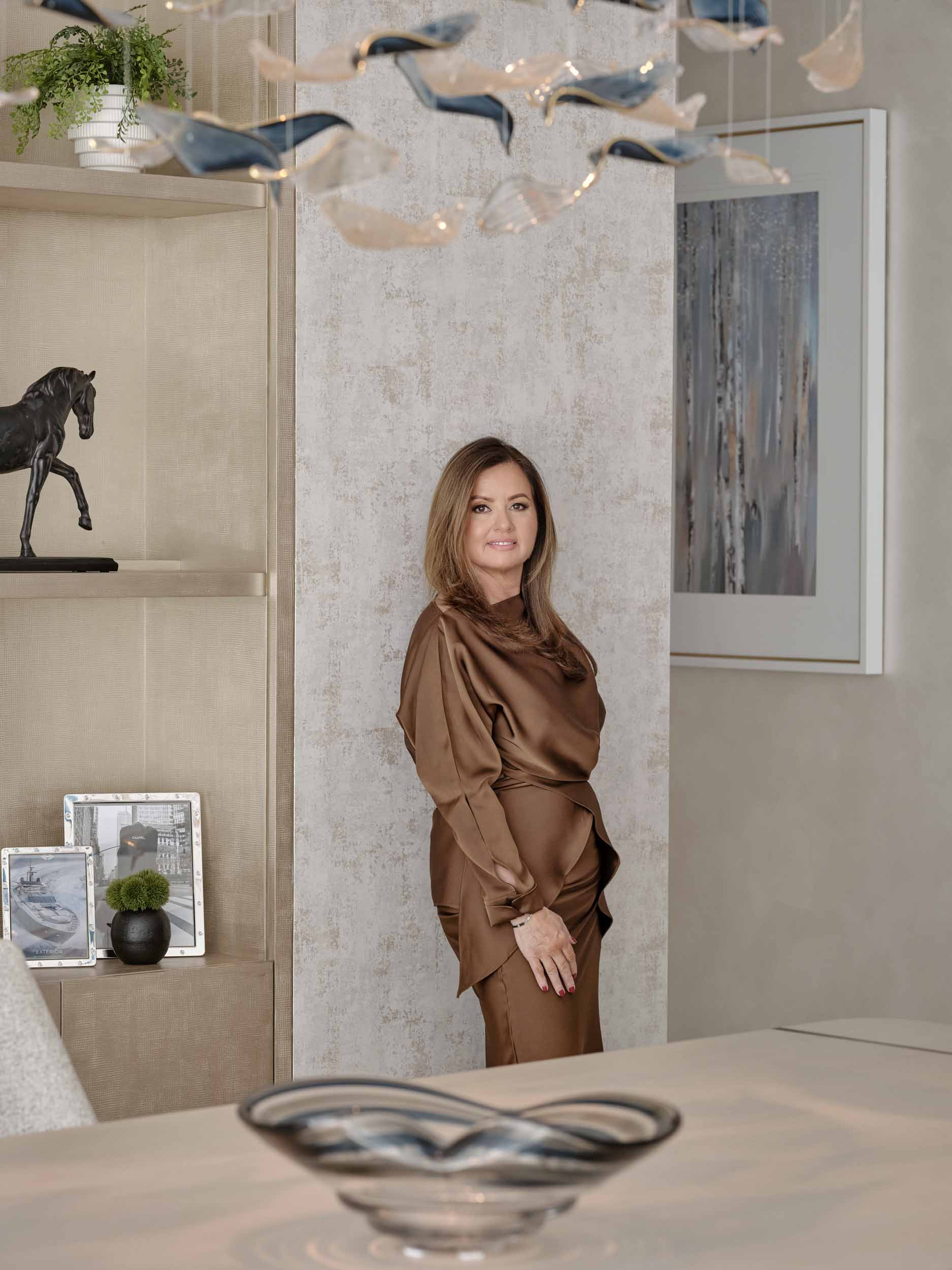
Helen, your journey from the world of dance to interior design is fascinating. How has your background as a professional dancer shaped your design philosophy?
Dance instilled qualities that have carried me throughout my career. The countless hours of training taught me perseverance, discipline, and an appreciation for the quiet work that sits behind any polished outcome. Those values now sit at the heart of my design approach. I’m naturally drawn to balance, atmosphere and the emotional language of a space, which all stem from understanding how small details come together to shape an experience.
It also nurtured a deep sense of adaptability. In the performing arts, you learn to stay composed through constant change, quick decisions and the unexpected. That mindset has translated seamlessly into business. Whether responding to shifting client needs, navigating timelines or embracing new opportunities, the resilience and flexibility I gained through dance allow me to move through challenges with calm focus and a creative, solutions-led outlook.
You often speak about the “movement” within interiors. How do you translate rhythm and flow from dance into spatial design?
For me, rhythm in interiors is about creating a visual journey. Every space needs pauses, accents and harmony. I love using subtle shifts in tone, texture and form to lead the eye naturally from one area to another. Much like choreography, each piece has to complement the next, creating a sense of motion that feels effortless.
There are also so many innovative and beautifully crafted finishes available now, and integrating them thoughtfully adds another layer to that sense of flow. Whether it is a textured wall treatment, a specialist veneer or a sculptural material detail, these elements help guide the mood and movement of a room. It is not about being dramatic, but about shaping a rhythm that feels instinctively harmonious.
You worked in the airline industry early in your career. How did that experience, and your exposure to global cultures, influence your creative outlook?
That chapter of my life gave me a deep appreciation for global style and the importance of communicating with people from a wide range of cultures and backgrounds. I was constantly surrounded by different design languages, as well as the cultural nuances that shape how people live, host and find comfort. It reinforced how personal and culturally influenced taste can be, shaped by heritage, environment and the rhythms of everyday life.
Travel has always been a passion, and that early exposure ignited a curiosity that still guides me. I am forever admiring architecture, textiles and the rituals of hospitality wherever I go, and those observations quietly filter into my work. They keep my perspective fresh and allow me to design with empathy for clients who bring their own diverse experiences, colour palette, lifestyles and expectations to a project.
What do you find most inspiring about designing for clients in the Middle East, particularly in Dubai?
Dubai has such an incredible design energy. There is a deep appreciation for craftsmanship and detail, paired with an openness to innovation and a real enthusiasm for ideas that feel new or unexpected. Clients here are wonderfully visionary. They want homes that feel personal, but also genuinely special, and that creates such a rewarding creative dialogue.
Designing in the region also allows me to explore luxurious materiality in ways that feel climate-conscious and enduring, which adds another layer of intention to each project. Our Dubai studio reflects that balance beautifully: rooted in British design values, yet completely attuned to the rhythm, warmth and ambition of the Middle East and our clients’ heritage.
It is a place where you can truly push boundaries. If you can dream it, you really can bring it to life.
The Royal Atlantis Residence project has earned remarkable acclaim. What was the design vision behind that space?
This project was especially meaningful, as it was our third for this client, and they wanted the residence to feel like a true home-from-home. That long-standing relationship gave us the freedom to design with genuine understanding and sensitivity to how they live. Bringing the DNA of their existing residences into this one created a seamless continuity of style and comfort, ensuring a familiar design language carried effortlessly across continents.
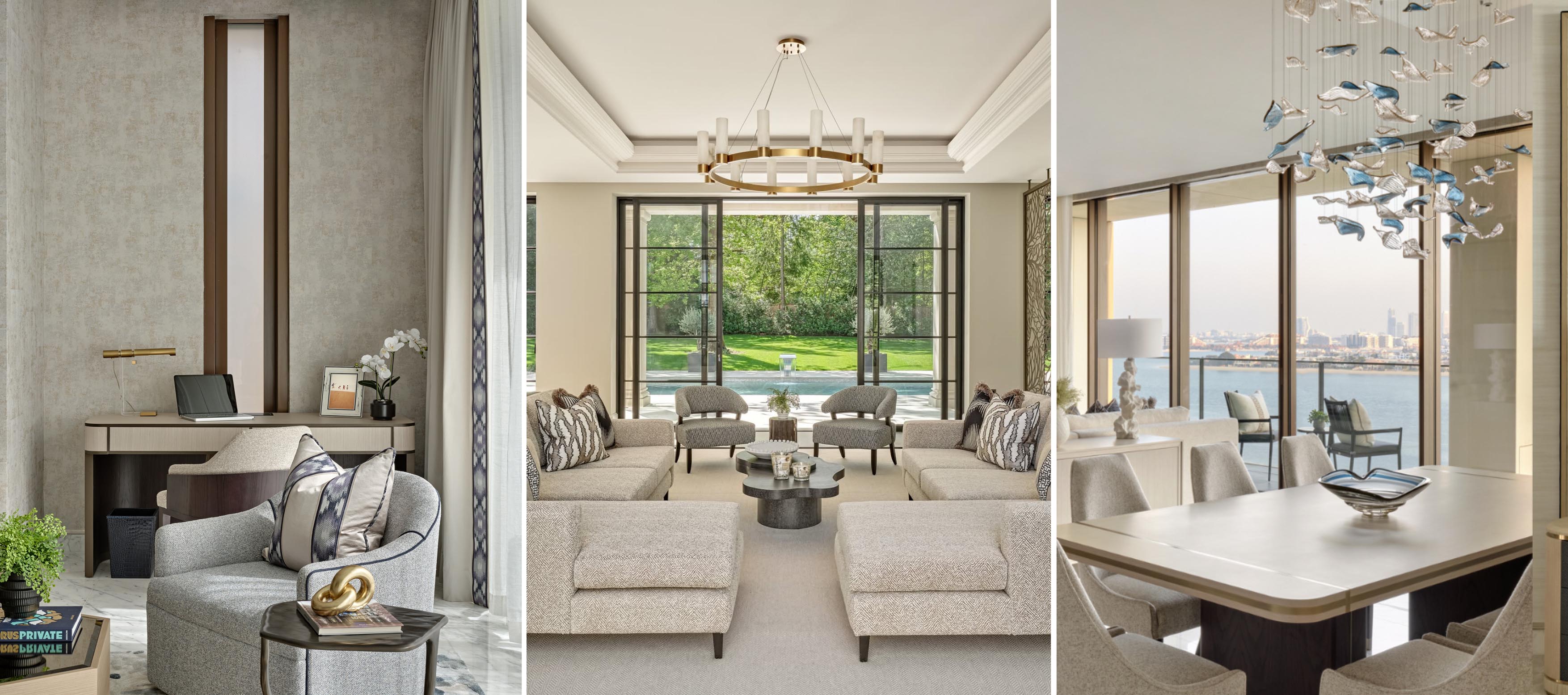
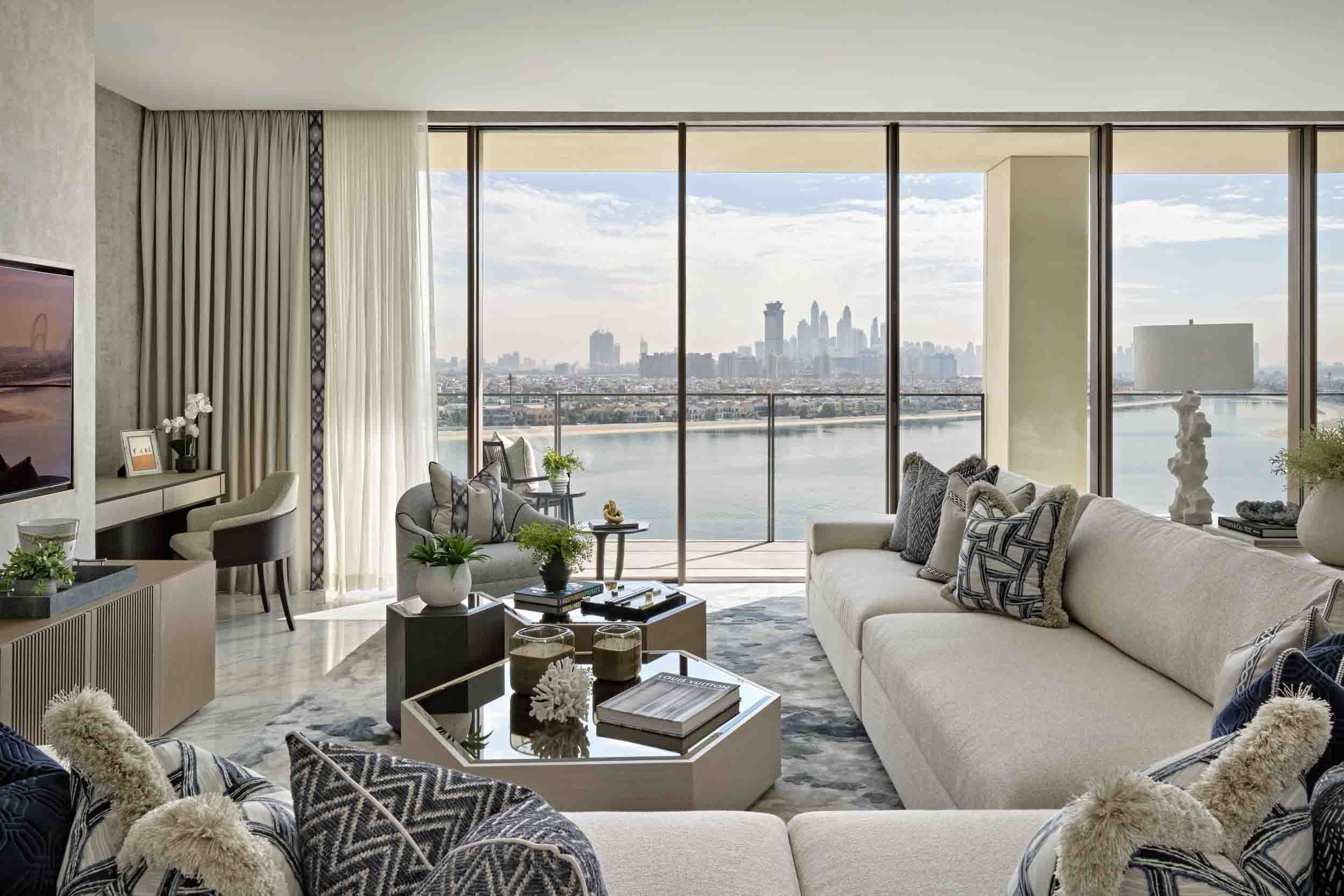
Although the property was newly built, many of the original finishes didn’t align with their taste, so we focused on refining and adapting what was already there. The apartment scheme is shaped by its panoramic views of the Persian Gulf, and we drew both palette and detailing from the surrounding landscape, using soft sands and layered blues to reflect the shifting seascape. One of my personal favourite elements is the bespoke chandelier of cascading blue glass that anchors the dining area, subtly echoing the movement of the waves outside. Its presence sets the tone for the home’s calm, contemporary spirit, allowing each room to unfold with an ease and understated luxury that suits such an extraordinary setting.
Could you share some of the challenges and rewards of working on a project within such an iconic development as Atlantis The Royal?
We have worked on some incredible residences over our 28 years in business, but there is something particularly special about designing a home within an iconic and forward-thinking development like Atlantis The Royal. We were fortunate not to face any major challenges, though the enhanced security protocols did create moments of restriction. Even so, everything was entirely manageable with good planning and communication. The reward was seeing it come to life; it’s a project that truly reflects Dubai’s spirit of ambition and artistry.
If at first you don’t succeed, try and try again!! . Hill House manta,
Hill House Interiors has received multiple awards this year, including the International Property Awards. How do these recognitions reflect your design journey?
Awards are always a wonderful acknowledgement of the passion and commitment that go into our work, but for me they are really a reflection of the collective spirit behind Hill House. The International Property Awards were particularly meaningful because they recognise design on a global platform, which mirrors the path our studio is taking as we continue to grow in both the UK and the Middle East. Being shortlisted for the CID Awards in our very first year of entering was another highlight. The calibre of designers and studios recognised in those categories is exceptional, and to be named alongside them felt like a genuine privilege.
You’ve recently expanded with a beautiful new office in Dubai. How does this reflect your growing presence in the Middle East and beyond?
Our Dubai studio is both a milestone and a reflection of the relationships we’ve built in the region. It allows us to offer clients a truly turnkey experience, supported by local expertise and British design heritage. We’ve always believed in being close to our clients, and having a base here means we can be present, respond quickly, and ensure every detail is delivered seamlessly. Three years on, we’re incredibly proud to have built a talented, multi-cultural team of twelve, and establishing a permanent base in the UAE feels like a natural and meaningful progression for the studio.
You often describe your approach as “couture design.” What does that term mean to you in the context of interiors?
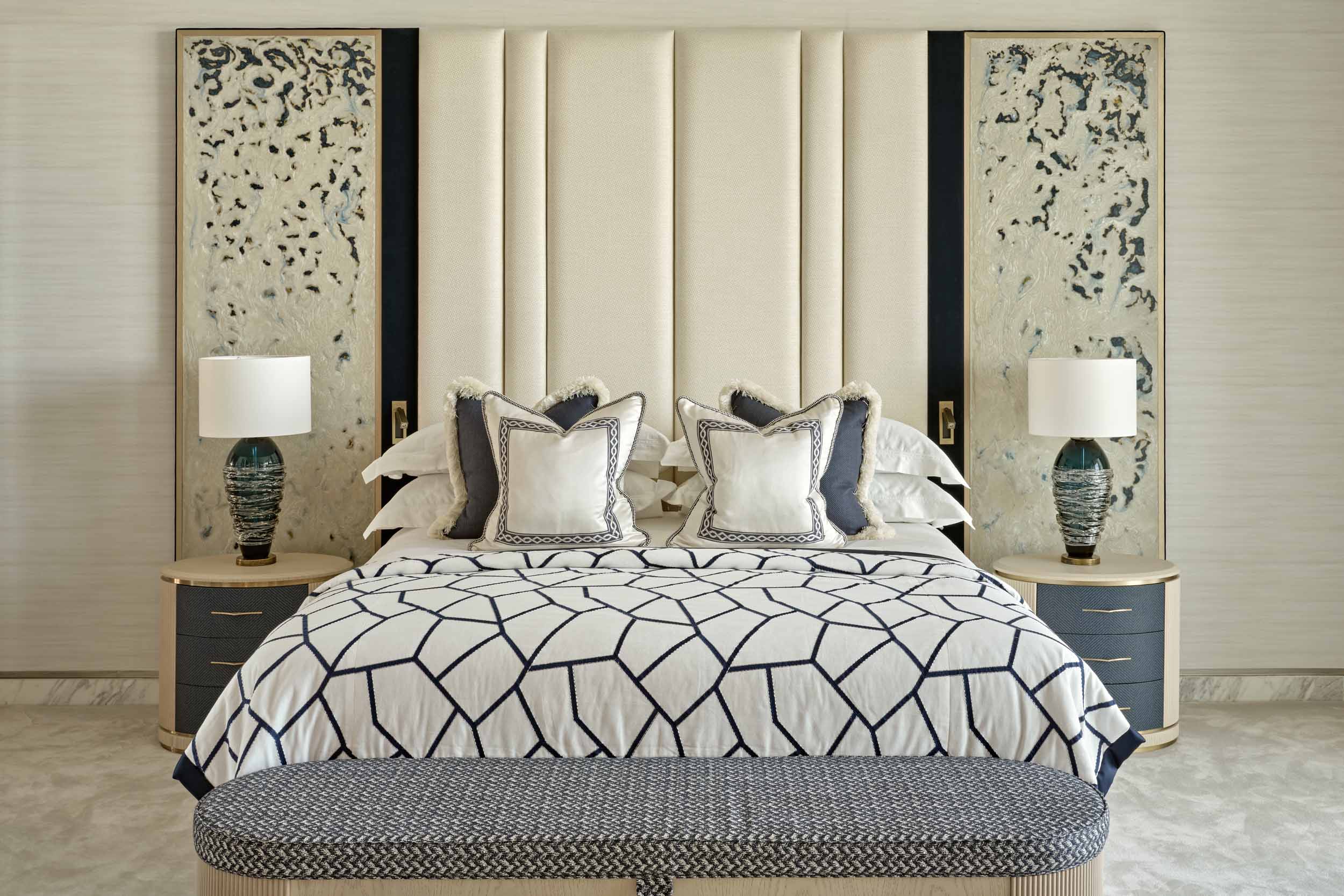
For me, couture design is rooted in individuality. Much like a couture garment is made to measure, every interior we create is crafted entirely around the client – their lifestyle, their tastes and the way they truly live. It isn’t about extravagance, but about thoughtful tailoring. From bespoke furniture to hand-finished details, each project is treated as a one-of-a-kind piece. When you design at this level, you can weave in every nuance the client wishes to embrace, resulting in spaces that feel deeply personal, unique and utterly their own.
Collaboration has always been at the heart of Hill House. Tell us about your partnership with Jenny Weiss and how your creative dialogue has evolved over 25 years.
We began simply as two friends who shared a love for creating beautiful homes, and that foundation has shaped everything that followed. What makes our partnership so special is that we each bring our own style and strengths to the table, yet our core values are completely aligned. We both care deeply about surpassing client expectations, nurturing our team and ensuring every project feels personal and meticulously considered.
Over the years, our creative dialogue has only grown richer. We work closely across every area of the business, constantly bouncing ideas, challenging each other and pushing the boundaries of what we can achieve. The trust between us means we can create fearlessly, and that sense of shared inspiration is something we never take for granted.
Many of your designs are described as layered and tactile. Could you explain how texture and materiality play a role in creating atmosphere?
I love working with finishes that invite you to engage with them, whether through touch or sight. Texture is never just about how something feels to the touch; it is equally about visual depth and the mood it creates. Even in a neutral palette, the right combination of materials can completely transform a room. Rich contrasts bring a quiet complexity that makes a space feel alive.
Layering lighting is another essential part of this. Ambient, task and accent lighting each introduce their own form of texture, shaping atmosphere throughout the day and giving a room its emotional rhythm.
How do you approach designing for different cultural contexts while maintaining Hill House’s distinctive aesthetic identity?
The key is empathy and curiosity. I always start by listening and understanding what comfort and luxury mean within each culture. In the Middle East, there’s a deep appreciation for hospitality and family connection, so spaces tend to flow around those principles. I adapt our aesthetic language without compromising on craftsmanship or detail. The DNA remains the same, but the expression becomes tailored, respectful, and resonant with place.
You’ve spoken about the “uplifting effect” of living in a beautiful space. Could you elaborate on the emotional impact of design?
A thoughtfully designed space can genuinely enhance your wellbeing. It calms, inspires and supports the rhythms of everyday life. When light, proportion and texture are in harmony, you feel it immediately. It is almost physical, a quiet lift in your mood that makes you feel more grounded yet more energised.
I often think of the Coco Chanel quote, “An interior is the natural projection of the soul.” It captures the magic of home so beautifully. When a space reflects who you are and how you want to live, it sparks joy, gets the endorphins flowing and encourages you to share your home with others. That emotional connection is what I aim to create in every project.
Sustainability and longevity are increasingly important in luxury interiors. How does Hill House integrate these values into its work?
Sustainability starts with quality and longevity. When interiors are crafted with exceptional materials and a timeless aesthetic, clients simply do not feel the need to update them for many years. We prioritise responsibly made fabrics and wallcoverings, and reduce waste wherever possible. Bespoke joinery also plays an important role. Designing cabinetry and furniture specifically for each space ensures both function and style are thoughtfully considered, which naturally limits the need for future changes.
A recent villa project demonstrated this perfectly. We first designed the home 15 years ago, and on returning to refresh it, many original pieces were still in excellent condition. Reupholstering and refinishing them gave the space new life, proving that investing in quality from the beginning is one of the most sustainable choices we can offer.
We’re genuinely inspired by the innovative ways our trusted suppliers are introducing eco-conscious materials, from rugs woven with recycled fibers to beautifully crafted recycled glass. Watching these ideas come to life has made thoughtful, sustainable choices feel more accessible than ever for our clients.
What role does craftsmanship play in your projects, particularly when blending British heritage with Middle Eastern opulence?
Craftsmanship sits at the heart of everything we do. It’s where artistry and precision meet. I love pairing the refinement of British bespoke joinery with the decorative richness so celebrated in the Middle East. Our artisans bring extraordinary skill to each project, from intricate marquetry to hand-finished metals, allowing us to create interiors that feel deeply personal and enduring – rooted in heritage yet alive with contemporary spirit.
Personally, I feel a real responsibility to champion these craftspeople and nurture their creativity. Their talent is invaluable, and it’s essential that we protect and support it so that this level of artistry continues to thrive.
The studio also offers Hill House Lifestyle, an extension into furniture and décor. What inspired you to create this line?
Hill House Lifestyle was a very natural evolution for us. We have always been driven by a desire to create more, explore more and refine the details that make a home feel truly considered. Creating our own collection has allowed us to design furniture that feels authentically “Hill House” in every sense. It gives us the freedom to work creatively with trusted artisans, develop timeless silhouettes and ensure each piece reflects the quality and sensibility we bring to our interiors.
We also created our “Elegance” furniture collection for those who may not be working with an interior designer but still want access to a curated, customisable palette of finishes and pieces they can trust. It offers that gentle safety net – refined, harmonious designs that sit beautifully within a variety of homes. And we never take it for granted when someone chooses to bring one of our pieces into their space. It feels like they are taking home a small part of our story, and we are genuinely grateful for that.
How do you maintain creative freshness and avoid repetition after decades of success in the industry?
I think creative freshness comes from staying endlessly curious. We make a point of exploring new ideas constantly, whether that is through attending design shows in Milan, Paris or Dubai, or spending time with artisans and makers who are developing remarkable new materials and finishes. There is always something innovative emerging if you are willing to look for it. I also enjoy finding unexpected ways to use familiar materials, rethinking how a texture, finish or form can be expressed. That spirit of experimentation keeps our work evolving. After so many years in the industry, it’s this blend of discovery, exploration and genuine passion for design that ensures no two projects ever feel alike.
What trends or design directions do you see shaping the luxury interiors landscape in 2025 and beyond?
Looking ahead, I see luxury design moving toward a calmer and more intentional aesthetic, particularly in the Middle East where lifestyle and climate shape so many decisions. There is a growing appetite for subtle, layered luxury rooted in natural materials, sculptural lighting and serene palettes that feel deeply connected to the landscape. Here in Dubai, we are also seeing many homeowners move away from traditional sand-toned exteriors in favour of fresher off-white renders that feel lighter and more contemporary.
Wellness is another defining direction, and I believe it is here to stay. With our increasingly busy lifestyles, having dedicated spaces for self-care at home has become invaluable – a serene sanctuary designed for moments of calm amidst the pace of everyday life. Gym suites, spa-inspired bathrooms and wellness rooms are now seen as essentials, and there is a rising demand for more advanced features such as infrared saunas and cryotherapy chambers.
Mentorship seems close to your heart. How do you foster creativity and growth within your team?
Mentorship is incredibly rewarding. I love seeing young designers grow into their own confidence. We encourage open dialogue, creativity, and collaboration. No idea is too small, and everyone’s perspective matters. Jenny and I believe in leading by example, showing that hard work, resilience, and kindness can coexist beautifully in this industry.
You’ve been involved in presenting awards such as the Asian Achievers and Arab Women Awards. What does supporting entrepreneurship and women in business mean to you personally?
It means a great deal to me. I understand how challenging it can be to carve out your own path in business, particularly as a woman, and I feel passionately about recognising and uplifting those who are doing remarkable things. Celebrating others’ achievements creates momentum, connection and a sense of shared purpose. The Arab Women Awards, in particular, showcase extraordinary stories of resilience and innovation. I’m constantly in awe of how strong, intelligent and articulate these women are. Being part of a platform that honours their contributions feels both humbling and incredibly energising.
What advice would you give to aspiring designers who wish to create spaces that are not only visually stunning but emotionally resonant?
Design from the heart. Take the time to truly understand your client, listen closely and let those insights guide every decision. It is easy to focus purely on aesthetics, but the most memorable spaces are the ones that reflect someone’s life, values and aspirations. Trust your instincts, remain open-minded and stay open to the emotional story a room can tell. If you can create a space that feels comforting, uplifting and deeply personal, then you have achieved something far more meaningful than visual beauty alone.
Finally, your message for us at CP magazine.
Thank you to everyone at CP Magazine for your ongoing dedication to showcasing excellence and innovation within the Middle East. It has been a privilege to share our perspectives and to engage with your insightful platform.