


How APT Teams are Targeting Kuwait and the World
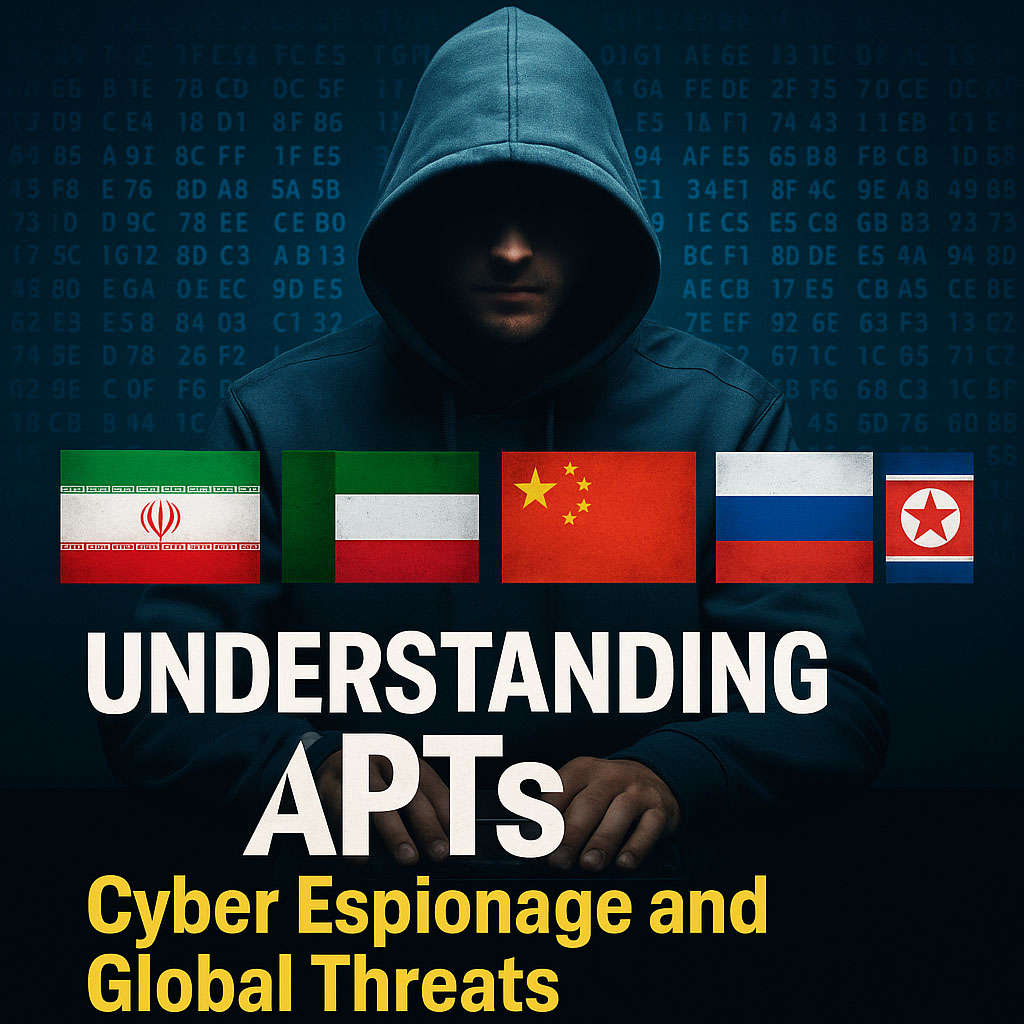
In a world that is more digitally connected than ever, cyberattacks are no longer the work of lone hackers in basements. Instead, they are being carried out by highly trained, statesponsored teams known as Advanced Persistent Threats (APTs). These teams operate quietly, strategically, and persistently, their goal is to infiltrate, spy, and sometimes sabotage. And yes, Kuwait has already been in their crosshairs.
What is an APT?
An Advanced Persistent Threat (APT) is a stealthy and prolonged cyberattack where a group gains unauthorized access to a system or network and remains undetected for an extended period. These attacks are typically backed by governments and intelligence agencies and are aimed at stealing sensitive information, disrupting operations, or laying the groundwork for future conflicts.
How Do APTs Operate?
APT teams typically use:
• Spear phishing emails to trick individuals into revealing access credentials. These emails often look like they come from someone you know or trust, such as a bank, colleague, or government agency. They may include links that lead to fake websites designed to look real, asking you to enter your password or other sensitive details. Some even copy the design of legitimate emails or ask you to download infected attachments that give the attackers access to your device.
• Zero-day exploits that target unknown software vulnerabilities. These are security flaws in software that developers don’t know about yet, so there are no fixes available. APT teams discover or buy these hidden vulnerabilities and use them to break into systems without anyone noticing. For example, they might find a weakness in a popular app or operating system and quietly exploit it to install spyware or steal data before the software maker even realizes the flaw exists.
• Custom malware designed for long-term surveillance. This is malicious software created specifically to spy on a system for months or even years without being noticed. Once installed, it can record everything the user does,like logging keystrokes, capturing screenshots, recording conversations through the microphone, or even watching
through the webcam. The goal is to gather sensitive data slowly and quietly.
• Command-and-control servers to manage infected networks and extract data. These are remote servers controlled by hackers that communicate with the malware secretly. Once a device is infected, it sends information back to these servers. The APT team can then give commands—like downloading more tools, spreading to other systems, or stealing documents—all without the user knowing.
They target:
• Government ministries.
• Critical infrastructure.
• Banks, all kind of businesses and financial systems.
• Energy and telecom sectors.
Common Cyber Threats: Malware, Ransomware, RATs, and DDoS
Malware is short for ‘malicious software.’ It’s any software that’s designed to harm, spy on, or steal from your computer or phone. This includes viruses, worms, and spyware. It often sneaks in through links, downloads, or infected apps, and once it’s inside, it can steal your personal info, slow down your device, or even spy on your activities without you knowing.
Ransomware is a type of malware that locks your files or system and demands money (a ransom) to unlock them. It’s like a digital kidnapper—your photos, documents, or entire computer become unusable unless you pay. Often, even paying doesn’t guarantee you’ll get your files back. Ransomware usually spreads through email attachments, bad links, or unsafe downloads.
RAT (Remote Access Trojan) is a kind of malware that allows a hacker to take control of your device from a distance. Once installed, the hacker can see everything on your screen, move your mouse, type on your keyboard, and access your files—just like they’re sitting in front of your computer. It often hides in fake software or disguised downloads.
DDoS (Distributed Denial of Service) attacks flood a website or service with so much traffic that it crashes. Imagine thousands of people trying to walk through one door at the same time—the system becomes overwhelmed and shuts down. Hackers use this to take down government websites, banks, or company servers temporarily.
APT Attacks on Kuwait
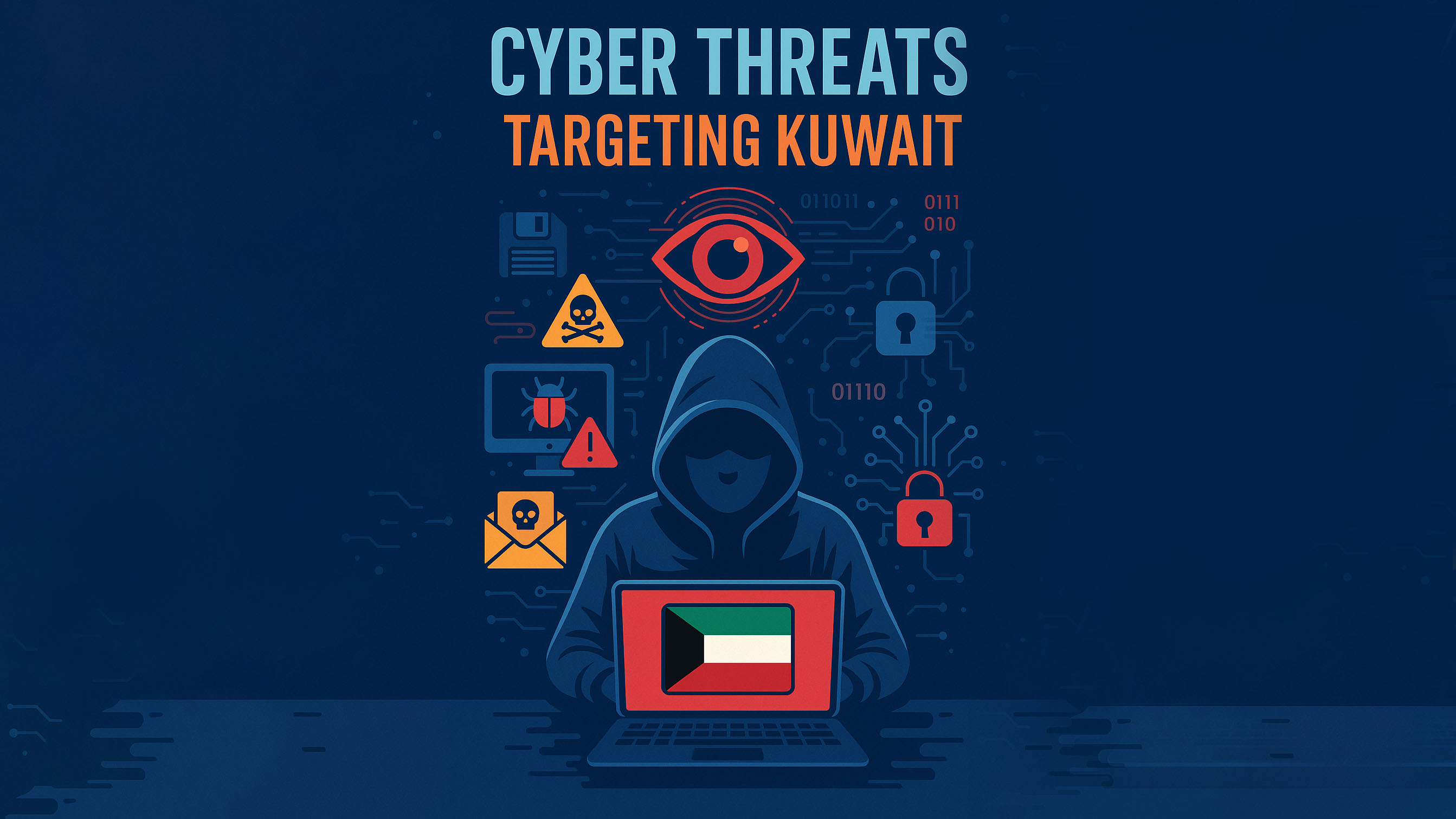
Kuwait has been significantly targeted by foreign APT groups. Notably:
1. Chafer APT (Iran, linked to IRGC intelligence cyber warfare)
Date: 2018–2020
Sector: Air transportation & government
Method: Custom-built backdoors & spyware
Source: Bitdefender Report
2. MuddyWater (APT34) (Iran, linked to IRGC intelligence cyber warfare)
Date: Active since 2017
Sector: Telecommunications & government
Method: VBS-based implants & phishing
Source: Kaspersky APT Trends Q3 2019
3. xHunt Campaign (Likely Iranian-linked)
Date: 2019
Sector: Shipping & transportation
Method: Malware like BumbleBee & Hisoka
Source: Palo Alto Networks – Unit 42
4. Lazarus Group (APT38) (North Korea, linked to the Cyberwarfare Unit in North Korea)
Date: 2019 (UN Report)
Sector: Financial institutions
Method: SWIFT banking system compromise
Source: Arab Times – UN Report
Top Global APT Groups and Their Sponsors
1. APT28 (Fancy Bear) — Russia
Linked to Russian military intelligence (GRU)
Targeted France, Germany, Ukraine
Source: BBC on Macron Hack
2. APT31 (Judgment Panda) — China
Backed by China’s Ministry of State Security
Infiltrated Czech government networks in 2022
Source: Financial Times
3. Charming Kitten (APT35) — Iran, linked to IRGC intelligence cyber warfare
Focused on Middle Eastern political and academic targets
Source: Microsoft Security Blog
4. Lazarus Group (APT38) — North Korea
Operates for the Reconnaissance General Bureau
Responsible for Bangladesh Bank cyber heist ($81M)
Source: SWIFT Banking Hack – Wikipedia
5. Stealth Falcon & Project Raven — UAE, linked to the government intelligence unit
Targeted activists, journalists, and rival governments
Used advanced surveillance and spyware tools
Source: Reuters – Project Raven Investigation
Cyber Warfare Before the First Shot
APTs are often used before a ground war even begins. They serve to:
- Map out critical infrastructure
- Plant digital “time bombs”
- Cause economic disruption
- Influence media and public opinion
This form of hybrid warfare has already been seen in the Russia-Ukraine conflict, where cyberattacks preceded military action.
How to Protect Yourself & Your Organization
For Individuals
- Use strong, unique passwords
- Enable two-factor authentication
- Keep your devices and software up to date
- Be cautious with links and email attachments
For Businesses
- Invest in cybersecurity infrastructure (firewalls, EDR, monitoring)
- Conduct regular employee training on phishing and social engineering
- Audit and patch systems frequently
For Governments
- Build national cybersecurity strategy
- Invest in threat intelligence and rapid response teams
- Collaborate internationally to track and expose APT groups
Cyberwarfare is no longer a concept of the future. It is here. For countries like Kuwait, building cyber resilience is not optional—it’s a national imperative. Understanding who the adversaries are, how they operate, and how we can protect ourselves is the first line of defense.
Stay safe. Stay alert and aware.