
Writing Beyond Boundaries: Voice, Freedom and the Courage to Be Heard
In a world increasingly defined by speed, noise and conformity, few writers possess the courage to explore the quieter yet more profound questions of identity, belonging and self-expression with the honesty and sensitivity of Nejoud Al-Yagout. An accomplished novelist, poet, essayist and columnist, her work traverses genres while remaining deeply rooted in humanity, curiosity and compassion.
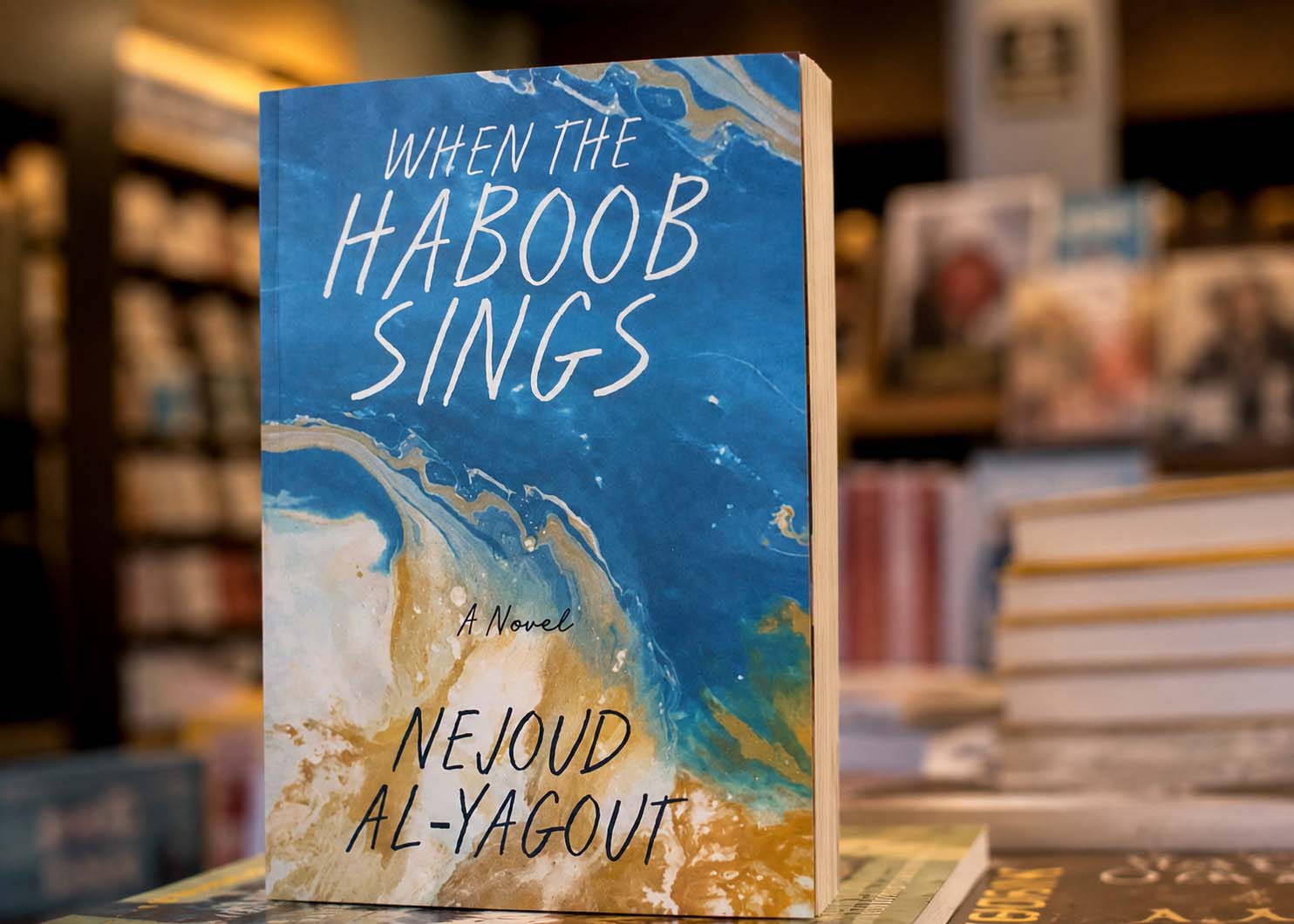
Her latest novel, When the Haboob Sings, invites readers into a powerful and thought-provoking narrative centred on censorship, freedom of expression and the sacrifices individuals make in pursuit of their authentic voice. Through the journey of its protagonist, Dunya Khair, the novel challenges assumptions, embraces complexity and shines a light on those who often find themselves on the margins of society.
In this exclusive interview with CP Magazine, Nejoud reflects on her literary journey, the inspirations that shape her writing, the symbolism woven throughout her work and the enduring importance of storytelling in helping us better understand both ourselves and one another.
For readers meeting you for the first time, how would you introduce yourself and your journey as a writer?
The journey appeared on its own. And, as a result, I was led, willingly and at times unwillingly, to writing.
Looking back, what first inspired your love of writing, and when did you realise it was something you wanted to pursue seriously?
It started when I was an early teen, an awkward teen. I used to write cringeworthy pop songs which I shared with two or three people. Thankfully, nobody else heard them!
You have worked across novels, poetry, essays and opinion writing. How does your approach differ between these various forms of expression?
With novels, essays and opinion pieces, you have to follow a structure, edit, cross-check and verify. With poetry, particularly free verse, there is way more freedom. And I adore freedom! Funnily, when it comes to reading, I adore both, but I’m more of a sucker for novels.
Nature and landscapes seem to play an important role in your life and inspirations. How do hills, forests, birds and quiet spaces find their way into your work?
The savannah, the desert dunes, the vast expanse, and even a falcon have all found their way into my writing. And yes, quiet spaces: particularly the voice within us that does not speak.
What lessons did writing your first novel, Motorbikes and Camels, teach you that you carried into your second novel?
I learned I have no choice but to surrender to the command to write. I never thought I would write novels, although one of my sisters predicted I would. When the consequent command arose, I wrote and wrote and wrote until my fingers stiffened. And the book was born. The second novel was an unplanned pregnancy as well.
The title When the Haboob Sings is both evocative and memorable. What inspired the title, and what does the haboob symbolise within the story?
I wanted to incorporate an element of the desert. The haboob, a dust storm, represents the protagonist Dunya Khair and the way her presence thrusts itself upon society.
Without revealing too much, how would you describe the heart of the novel to prospective readers?
It revolves around censorship and how far Dunya will go to express herself. And she goes far, too far.
The opening chapter immediately places readers in a prison cell filled with mystery and tension. Why did you choose to begin the story at such a pivotal moment?
It started out as a thought. I can’t recall whether it was an image or words or both. At first, I thought: Oh, here comes verse, a novel in verse to be precise. But then, it unexpectedly turned into another novel. See how I have no choice?
The novel explores themes of expression and personal freedom. Why were these themes important for you to examine?
They are themes that swim in my veins. The themes are important because they invite me to address issues that resonate in my beating heart such as inclusivity and the plight of expatriates. It is disheartening to watch the surge of xenophobia across the globe. Writing gives me a platform to show solidarity. I am drawn to minorities. And being a minority myself, as an Arab and as a woman, perhaps I am also giving a voice to myself. Yes, I am indeed.
Your protagonist appears to carry a deep emotional burden beneath the surface. What drew you to exploring this complexity?
Sometimes we need to venture away from our conditioning to understand the other. By doing so, we can embrace the ostracised and the so-called wayward. We are all complex, but we fear the judgment of others. What will it take for us to accept one another and ourselves?
Were any of the characters inspired by real people, experiences or observations from life?
Dunya represents anyone who is condemned for their courage rather than celebrated.
The novel touches on emotional and psychological realities that many readers may recognise. Was authenticity an important consideration while writing these scenes?
Yes! Authenticity is the core of the novel. People prefer conformists. But we have so much to learn from non-conformists. All the leaders we look up to today were once shunned by society. Something to ponder.
Every writer leaves a part of themselves within their work. Which part of When the Haboob Sings feels most personal to you?
Dunya and I are opposites in terms of upbringing and experiences, but the novel is personal because we are both writers who live to express ourselves.
What conversations or reflections do you hope readers take away after finishing the novel?
We are all connected, but we each waltz with life in unique ways. When we are in touch with our innate curiosity, we can bask in the wonder of diversity.
How have readers responded to the book so far, and has any feedback particularly stayed with you?
The response has been beyond positive; and the best feedback I received was to keep writing. The fact that someone, anyone, would want to read anything I write makes my tail wag! The thrill never wavers. And connecting with others in the creative paradigm is a highlight.
As a Kuwaiti author writing for an international readership, how do you balance cultural specificity with universal themes?
In both of my novels, I share, maybe even overshare, facets of our culture that people abroad may not grasp. At the same time, global readers will discover that beyond our cultures, we share the same struggles and yearnings, identical highs and lows. It is bizarre that we still pretend to be different. We are one, even while we shudder at the thought of it. We are one. One.
Who are some of the authors, poets or thinkers who have most influenced your writing style and worldview?
Oh! Emily Dickinson, Rumi, Ramana Maharshi, Rabindranath Tagore, Kurt Vonnegut, Naguib Mahfouz, Nawal El Saadawi, Egon Schiele, Édouard Manet, Mary Cassatt, The Beatles, and everyone I have ever connected with, for that matter. Ain’t the collective grand?
Your poetry collection This is an Imprint showcases a different side of your voice. Do poetry and fiction nourish one another in your creative process?
Yes, they do. Perhaps I could describe it best by saying poetry is my native language, and fiction is my second language.
In today’s fast-paced digital world, what role do you believe literature and storytelling continue to play in helping us understand ourselves and others?
Without literature and storytelling, the world would lose meaning. Even sacred scriptures are the written word. It breaks my heart that many young people these days do not read books or do not lose themselves (or shall I say find themselves) in bookshops or libraries.
Finally, what can readers look forward to next from Nejoud Al-Yagout, and are there any new projects currently taking shape behind the scenes?
After a hiatus, I am thrilled to return to visual arts again. Poetry videos, collaborative projects. Stay tuned!
Your message for us at CP Magazine.
My gratitude goes to Jameel Arif and the CP team for providing a platform for artists and writers. The CP team reminds us that we shine by shining light on others. After all, we are all in this together.