
Shaping Architecture Through Culture, Clarity, and Purpose
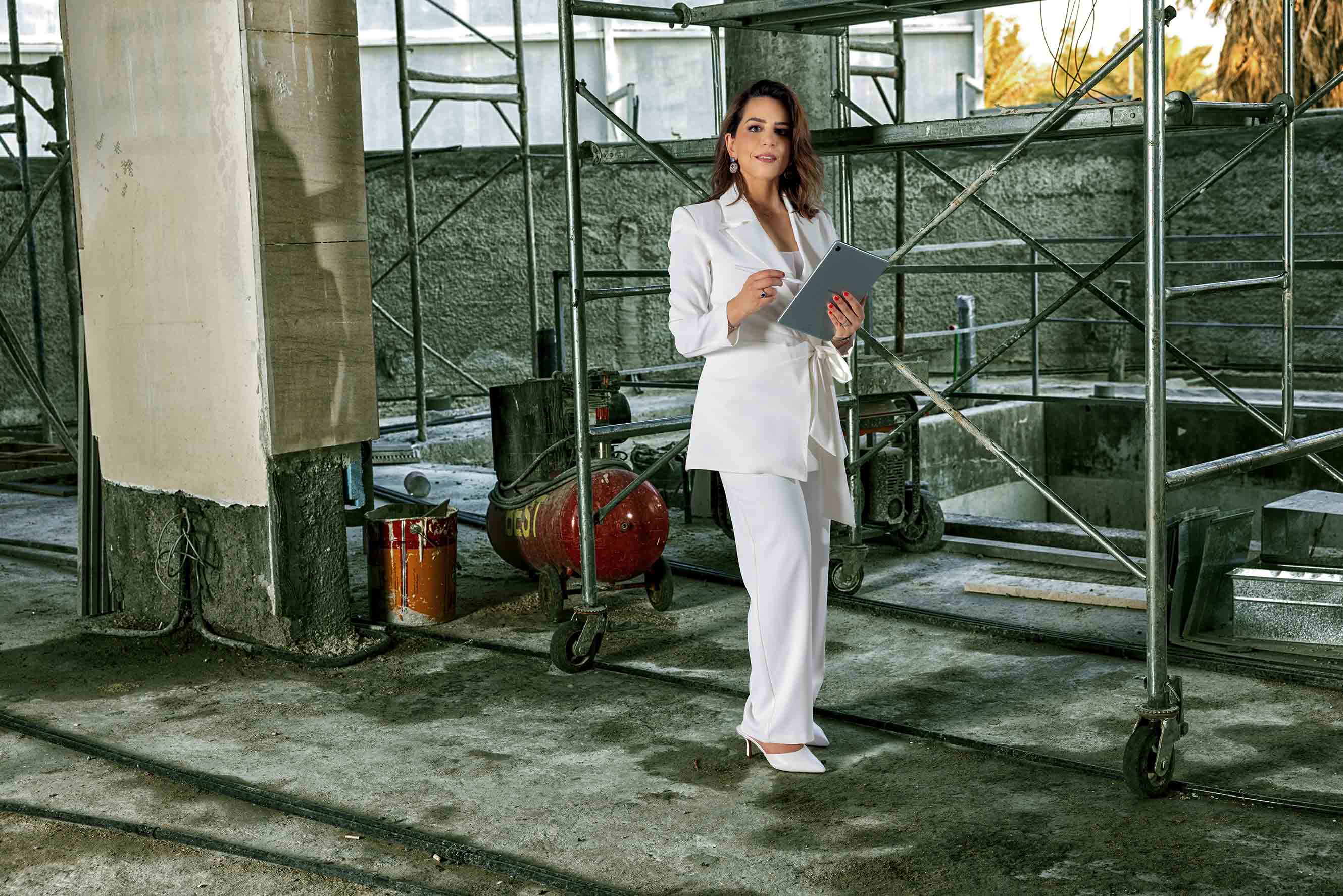
Architecture in the Gulf region is increasingly defined by voices that blend cultural depth with contemporary vision—and among them, Architect Noorah W. Hadeed stands out for her refined approach and unwavering dedication to meaningful design. As the CEO and Founding Partner of M2H Design Studio, based in Kuwait, Noorah has cultivated a practice that thoughtfully bridges tradition and innovation, always with an emphasis on environmental sensitivity and human experience.
Educated at the renowned Rhode Island School of Design, her professional journey spans key cities across the GCC, including projects in Qatar, Bahrain, and the UAE. Through M2H Studio’s diverse portfolio—which includes standout works like the Beveled House, Lantern House, and Sabeel Al-Duaij—Hadeed consistently demonstrates a commitment to design integrity, contextual relevance, and enduring aesthetics.
In this exclusive interview with CP Magazine, Noorah shares insights into her creative origins, the evolution of M2H Studio, and the challenges and triumphs of leading a boutique architectural firm in a region rich with tradition and opportunity.
Can you share with us some memories from your childhood that ignited your passion for architecture and design?
I believe I inherited a love of design from my mother’s side, as we have several artistic talents amongst my cousins. My parents enrolled me in watercolor lessons with the well-known Palestinian artist Mrs. Tamam Shamout back in the mid-nineties. I was the youngest pupil in the group, probably around 14 or 15… and I remember the enjoyable moments I had with the more mature ladies in Mrs. Tamam’s house in Jabriyah (forgive me if the location is wrong, it’s been a while, I forgot!). That experience made me feel more confident in my creative abilities for sure.
Who were some of your early role models or influences when you were growing up, whether in architecture or in other fields?
My earlier role models probably are my architecture professors at the Rhode Island School of Design, such as Kyna Leski and Michelle Fornabai. They taught me that to be an architect means opening your mind to every possible piece of worldly knowledge available to you. One must have a very heightened sense of curiosity about life to think and produce as a creative individual.
What was the moment or experience that made you decide to pursue architecture as a career?
It wasn’t really a moment but rather the logic of combining my interest in art with, at the same time, a practical profession close to the field of engineering.
You studied at the Rhode Island School of Design in the US. How did that education shape your creative vision and career path?
RISD was a very challenging environment academically for me, but at the same time I made some beautiful friendships and fun memories with students from all over the world. Specifically in the Department of Architecture, we pretty much had to work around the clock to reach the AHAAAAA moments in the design process.
What were some formative experiences during your architectural studies that still influence the way you design today?
The experience I gained from my years at RISD made me realize that beautiful design is achieved through detaching yourself from your own ego and mental limitations and instead drawing inspiration from the richness of nature, people, and life around you.
After graduation, what were the biggest challenges you faced in entering the professional world of architecture?
Picking up on the 3D modelling software is my personal challenge, and as every other designer would tell you… “meeting client budget vs. expectations”! My studies did not prepare me for that!
Your career journey took you across Middle East. How did working in such diverse environments influence your approach to design?
I spent time living in Qatar and Bahrain and am working from our office in Kuwait now for a project in Abu Dhabi, UAE. I was lucky to meet some clients of the highest educational caliber; it felt exciting and fulfilling to work on their homes because of the strong desire the clients have to own exceptionally designed homes that are true to the original architectural concept.
What inspired you to co-found M2H Design Studio in 2009, and how did you and your partners come together to start the firm?
My husband Khalid inspired me to start M2H Studio in 2009 when we got married because we moved to Qatar and he encouraged me to have the flexibility of being my own boss!
Launching a design firm can be challenging. What hurdles did you overcome in the early days of M2H, and what kept you motivated?
The hurdles don’t stop, honestly, and most of the pressure I feel is because I am the main owner of a small business. Therefore, the best trait I think that helped me through this is to be calm and accepting that life can give you blessings in disguise, and not everything will be as you expect it. Just try to stop being engulfed by negative thoughts and move on. Also, my relationship with my family has given me the much-needed grounding to strengthen me in the mostly male-dominated work environment of design and construction in the GCC.
M2H’s portfolio includes notable projects like the Beveled House and Lantern House. Which project are you most proud of, and what makes it special to you?
I am proud of all our designs, to be honest, because each project has its own unique story. But you can say the most enjoyable design process was the Sabeel Al-Duaij project in Souq Mubarkiya because it had an experimental nature and because it is a public, community-serving project, which I love to do.
How would you describe your signature style or approach in architecture, as seen through the projects you’ve led?
I wouldn’t say it’s a style, but rather a thinking process in which we make our houses personal to their owners’ characters while at the same time prioritizing general human well-being throughout all our work. This can be seen in our clean spatial lines and circulation routes, ample sunlight, thoughtful design details, and strong relationship with the outdoors, as well as our straightforward and calm exterior look and feel. We like to keep it beautiful and real.
Can you tell us about a project that pushed your creative boundaries or taught you an important lesson?
A fun story in which my boundaries were pushed is my thesis project at RISD. I designed a theoretic dance school in Salmiya. For this, my professor, Mrs. Fornabai, pushed me to educate myself about a dance notation language called Labanotation. I was so hesitant to learn something as new to me as that! But somehow, I picked up on the basic idea and started notating different Kuwaiti dance movements. Based on the way that the movements were marked and spaced on paper, I followed suit in the architectural design language, impacting the distance between the columns and wall openings and steps around the dance hall. It ended up getting good feedback from the viewers and critiquing professors! I was so incredibly relieved and proud, too, that I managed to submit a solid concept.
M2H’s philosophy emphasizes creating architecture that responds to cultural heritage and environmental context. How do you bring these values into your designs?
At M2H, we believe that the environmental and cultural constraints can be used to the advantage of the design. A lot of times, projects that have a lot of constraints end up being the most beautiful because it pushes the designer to come up with very creative and unexpected solutions.
At M2H, we realistically recognize global temperature increases due to climate change. We are diligent in doing an environmental analysis at the beginning of each design, setting the basis for the architectural layout. Similarly, we highly recommend our clients to invest in greater wall thicknesses for insulative factors and high specs when it comes to window glazing or exterior claddings.
Sustainability appears to be an important value at M2H. How do you incorporate energy efficiency and environmental responsibility into your creative process?
We like to educate our clients on the available options when it comes to energy efficiency, especially due to the increasing price of electricity in the region. Investing in a highly insulated house will help lower the electricity bill because it reduces the AC consumption! Also, there are increasing local vendors that provide solar panels on household rooftops at reasonable prices. We will see more of this becoming common practice in Kuwait soon, Insha’Allah.
Walk us through your typical creative process. How do you take a project from initial concept to the final design?
The best projects start with a deep understanding of the client’s needs and expectations, so we really put time into a comprehensive project brief. This is followed by a site visit and environmental analysis and establishing the project constraints. From then, we set the basis of the architectural concept and design language to be consistent from the facades to the interior spaces.
M2H’s team includes architects, designers, and engineers. How do you foster collaboration and creativity within your multidisciplinary team?
M2H is a boutique design office, so we really operate as a close team. We always share ideas and each of us completes the other; which is even better when we have different strengths to begin with. I am a strong supporter of teamwork because it really does push up the quality of the final result.
Having worked across Kuwait, Qatar, and Bahrain, how do you adapt your design approach to respect each country’s cultural traditions and climate?
That’s not actually as difficult as it sounds because the GCC countries are quite similar in their cultural traditions and climate. Still, I did notice that homeowners in other GCC countries do have a more balanced and logical way to do budgeting or allocation of resources for the construction process because the residential land there is more affordable and not inflated as it is in Kuwait!
As a successful female architect and CEO in the Middle East, what unique challenges have you encountered, and how have you addressed them?
I have faced many different challenges, but the one that agitates me the most is when I feel that my opinions on the design direction are not taken seriously by the individual I am communicating with because of my gender. This used to pressure me sometimes to seek the intervention of a male colleague. As I mature over the years (20+ now in the workforce) and gain confidence, I am learning to be less doubtful or apologetic and more straightforward in expressing how I feel to people, so they understand and respect my knowledge regardless of my gender.
How do you see the role of women in architecture evolving in the region, and what advice would you give to young female architects starting out today?
I see that female artists and architects in the GCC are growing in numbers and influence across the board! This makes me feel so proud and optimistic. My best advice would be to reach out and learn from each other’s experiences. This can be said to creatives in general. I think we need to be stronger as a sector by collaborating and brainstorming solutions and challenges faced in our fields together, not always individually.
How do you see emerging digital technologies (such as BIM, AI, or smart building systems) influencing your work and the future of architecture in the Gulf region?
Eventually, these emerging technologies will expand to be a presence in every design office; though personally I think we need to be cautious not to use them in a way which turns off our human ability to think and create uniquely. Too much of a good thing can easily turn into a bad thing.
Your message for us at CP magazine.
It was a pleasure being selected for this interview! I loved how CP magazine made me dive back into memory lane and think of what M2H DESIGN STUDIO has been able to achieve in the last 15 years! Thanks so much for your time and I am truly honored!!!
m2hstudio
Styling: FATIMA AL-JUTAILI (@f_jay23)
Creative Director: JAMEEL ARIF (@jameelarif)
Photographer: NAVAS (@navas_foto)
Hair & Makeup: MARIYA MATVEYCHUK (@mariya_matveychuk) at (@beautybarmm)