

Transforming the Ordinary into Monuments of Memory
In the evolving landscape of Saudi contemporary art, Rashed AlShashai has emerged as a transformative figure, turning the ordinary into works of profound visual and conceptual power. Born in Al Baha in 1977 and raised in Mecca, his formative years instilled a deep connection to cultural heritage, which he seamlessly fuses with contemporary artistic discourse. Over the course of his career, AlShashai has developed a practice that interrogates identity, consumerism, and spirituality, using everyday industrial materials plastic pallets, neon lights, and reclaimed objects to craft installations that resonate far beyond their physical presence. His work embodies a dialogue between tradition and modernity, offering both a reflection on the past and a vision of Saudi Arabia’s cultural evolution.
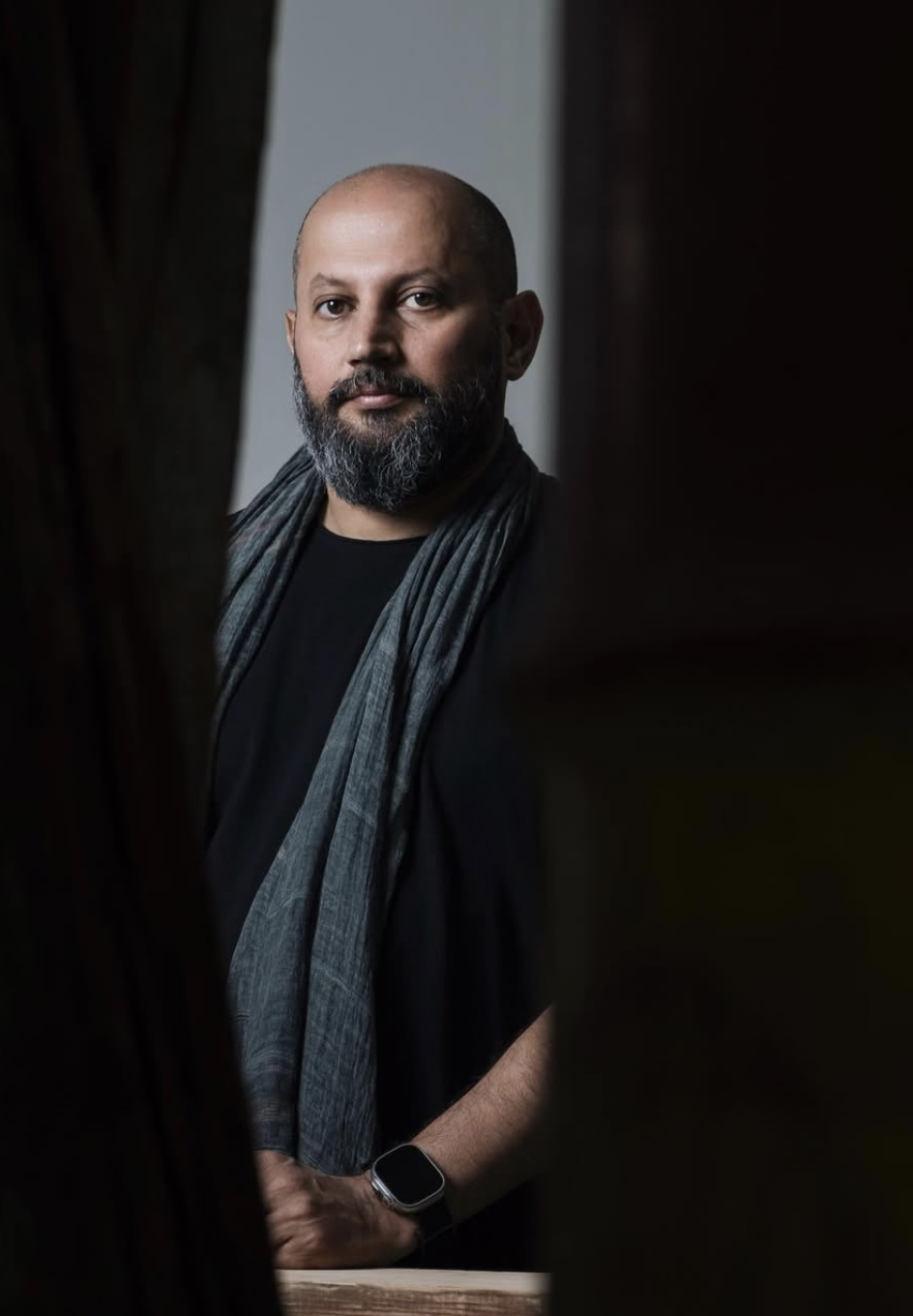
Educated in visual arts and committed to nurturing talent, AlShashai has played a pivotal role in shaping the nation’s art scene. As a founding member of the Saudi Arabia Fine Arts Society and the Art Education Society, he has created platforms where experimental ideas can flourish. In 2009, he established the Tasami Centre for Visual Arts in Jeddah, a space dedicated to bold, boundary-pushing projects and a hub for emerging Saudi talent. Through teaching, mentorship, and curatorial work, he consistently demonstrates that artistic practice can be deeply rooted in local culture while achieving universal relevance. AlShashai’s trajectory underscores a vital lesson for young creatives: your heritage is not a limitation, but a springboard for imagination and innovation.
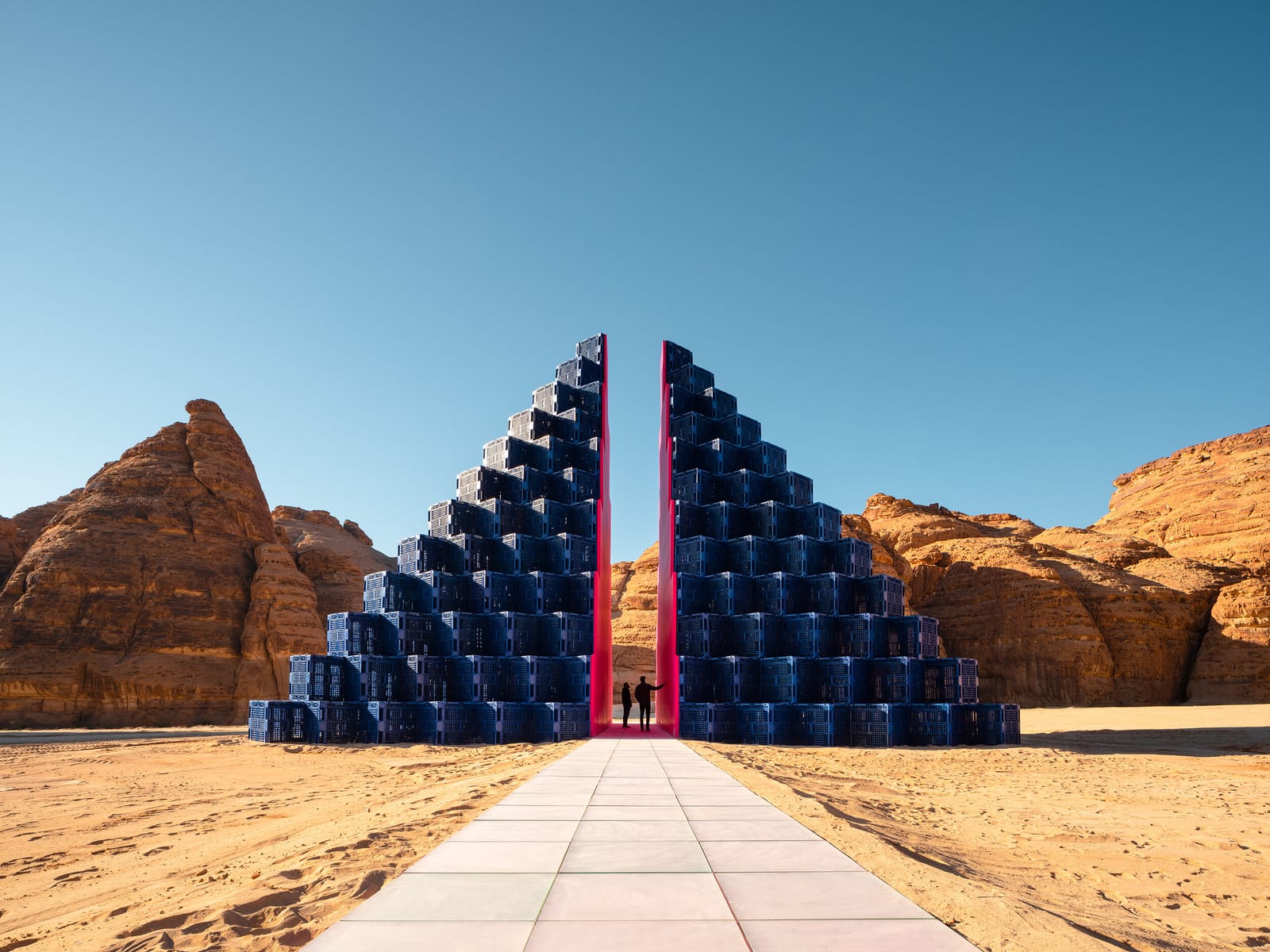
Projects That Transform Space and Perception
Two of Rashed AlShashai’s most celebrated projects, Desert X AlUla (2020) and Noor Riyadh (2024), exemplify his extraordinary ability to transform industrial materials into works of profound cultural and aesthetic resonance. In Desert X AlUla, he created a striking pyramid from blue plastic pallets, a structure that simultaneously honours the ancient heritage of AlUla and interrogates contemporary practices of production and consumption. The pyramid’s form reflects the region’s historical importance as a hub along the Incense Trade Route, while the choice of discarded industrial pallets emphasises the tension between the permanence of human endeavour and the transience of modern material culture. The installation’s vivid colour and austere geometry create a dialogue with AlUla’s natural sandstone landscapes, offering a contemplative space in which viewers are invited to consider continuity, memory, and the movement of both objects and ideas across time.
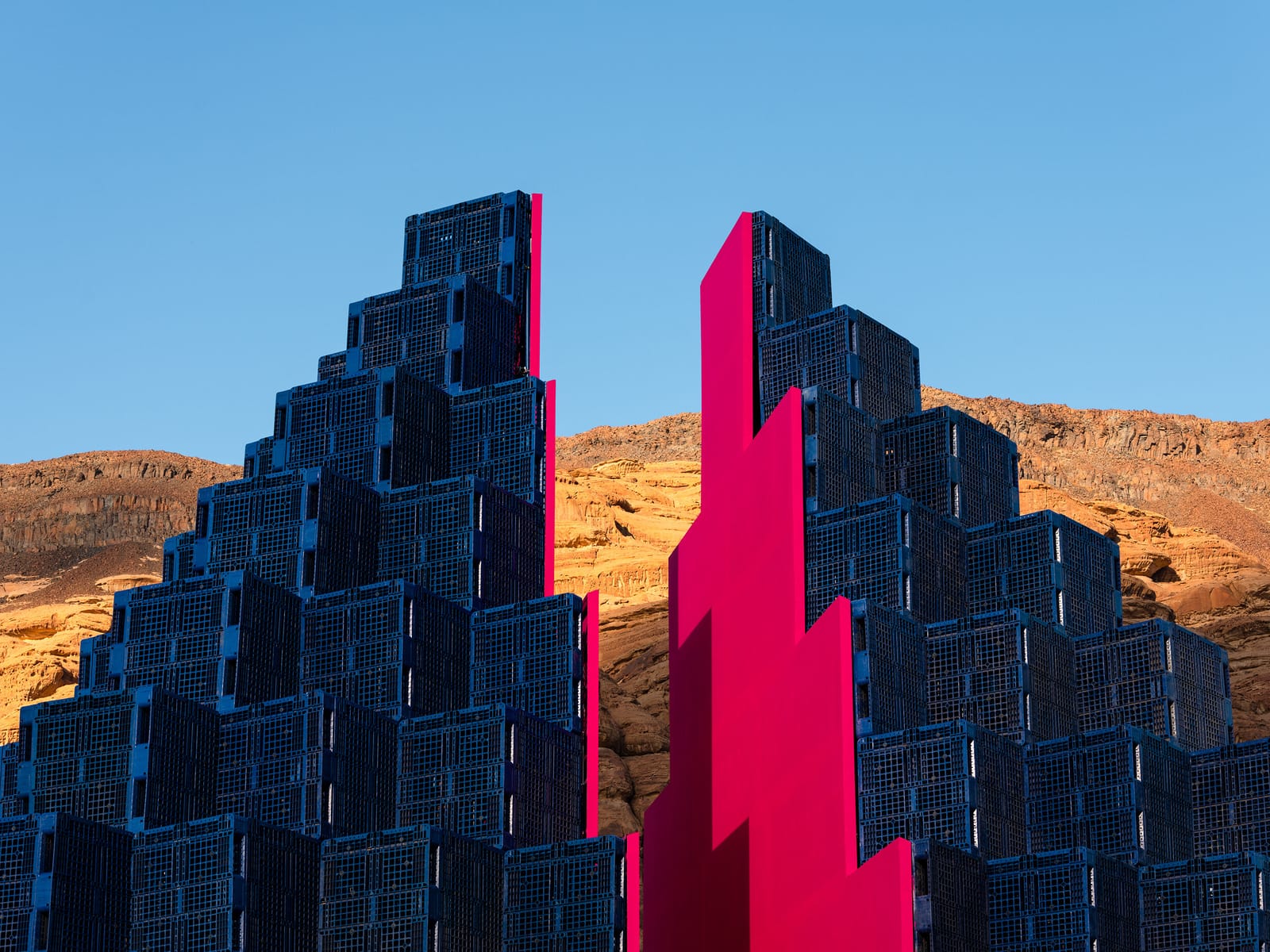
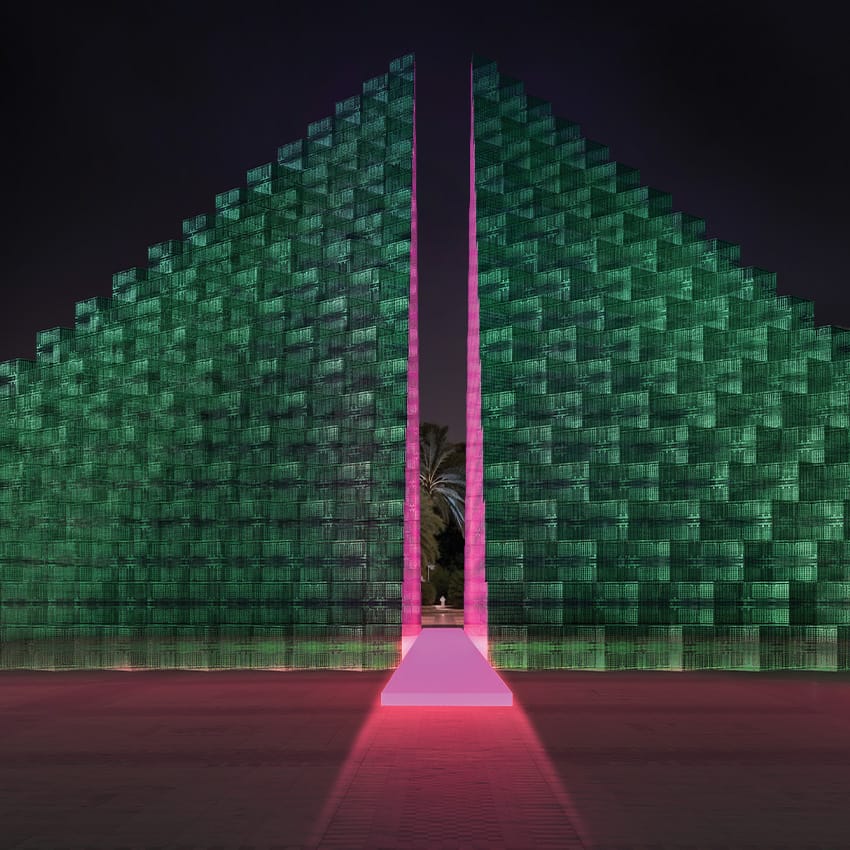
In 2024, at Noor Riyadh, AlShashai returned with a monumental, deconstructed pyramid crafted from petrochemical pallets, punctuated by a luminous fuchsia pathway. Here, the work engages with Saudi Arabia’s ongoing cultural and environmental transformations, symbolising the nation’s shift from a fossil-fuel-dependent past towards a future shaped by creativity, innovation, and sustainability. The installation’s interplay of industrial rigidity and vibrant, almost ephemeral colour transforms the urban space into an immersive experience, encouraging reflection on the coexistence of tradition and modernity. The project demonstrates AlShashai’s exceptional sensitivity to context: the placement, scale, and materials are orchestrated to create an encounter that is both visually striking and intellectually compelling, bridging the physical and conceptual realms.
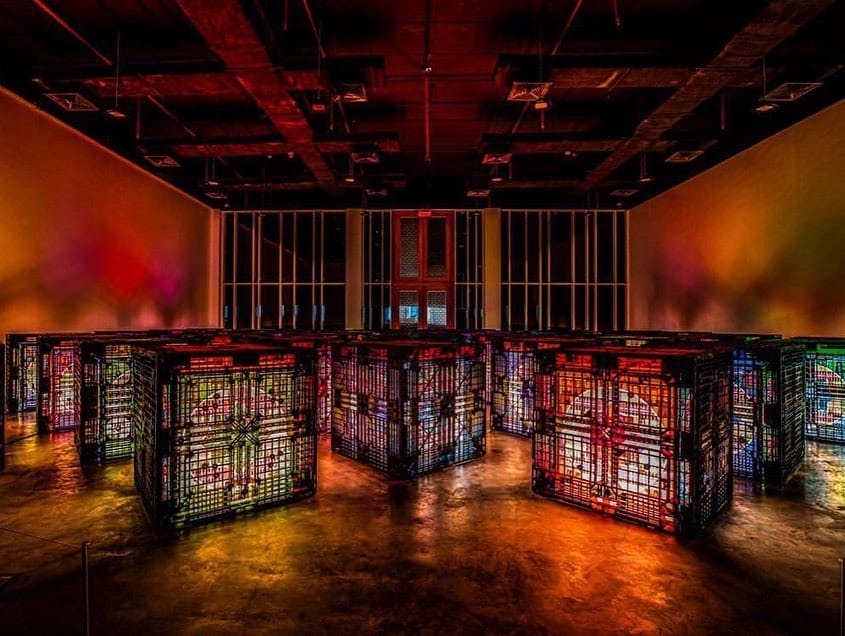
Both projects reveal AlShashai’s meticulous attention to detail, materiality, and spatial dynamics. Every choice the arrangement of pallets, the intensity of colour, the interaction with light and landscape is deliberate, allowing each installation to act as a vessel of cultural memory and philosophical inquiry. These works are not merely aesthetic objects; they are immersive narratives that invite audiences to reflect on history, identity, and the evolving dialogue between human society and its environment. Through these monumental interventions, AlShashai demonstrates how ordinary materials can be transformed into extraordinary markers of social commentary, cultural continuity, and artistic innovation.