

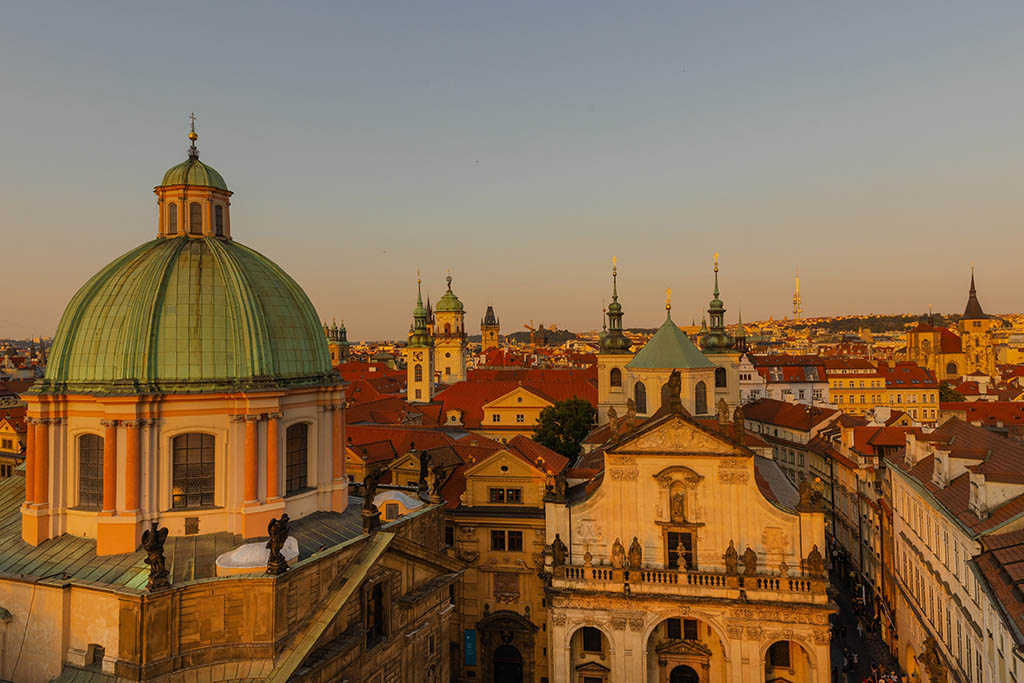
Imagine spending the night within eight centuries of history, with the quiet of a working monastery beyond your door and all the considered comforts of a five-star hotel around you. This is Augustine Hotel, one of Prague’s most singular places to stay, set within a 13th-century monastery in the atmospheric streets of Malá Strana, moments from Charles Bridge and beneath Prague Castle. Ancient cloisters, secluded gardens and vaulted ceilings lend a remarkable sense of place to a city-centre retreat where history remains part of everyday life.
Prague has never been short of beautiful places to stay, but Augustine Hotel offers something rather harder to find: a genuine connection to the life of the city. Its seven historic buildings form part of a monastery complex that has stood here for centuries, and the Augustinian monks who continue to live on the property are not simply part of its story. They are part of its present.
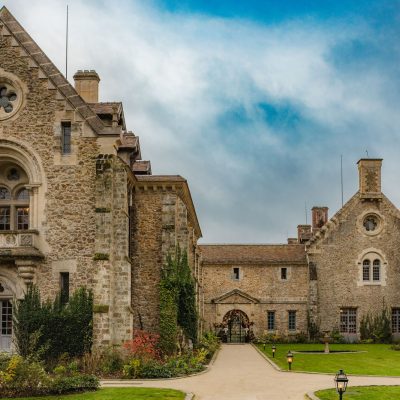
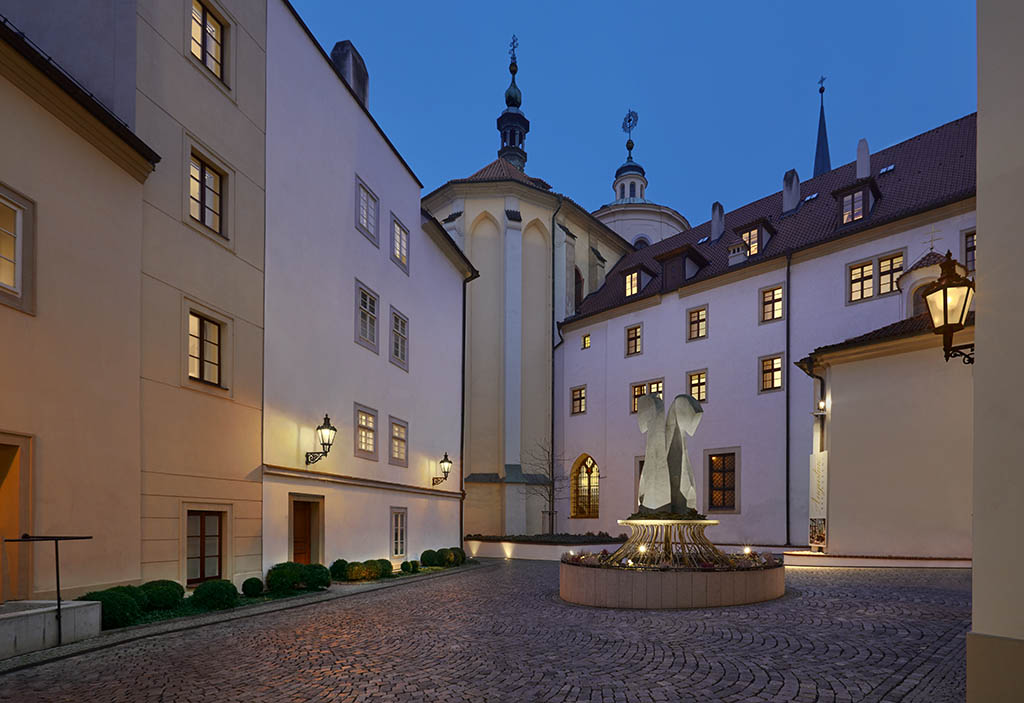
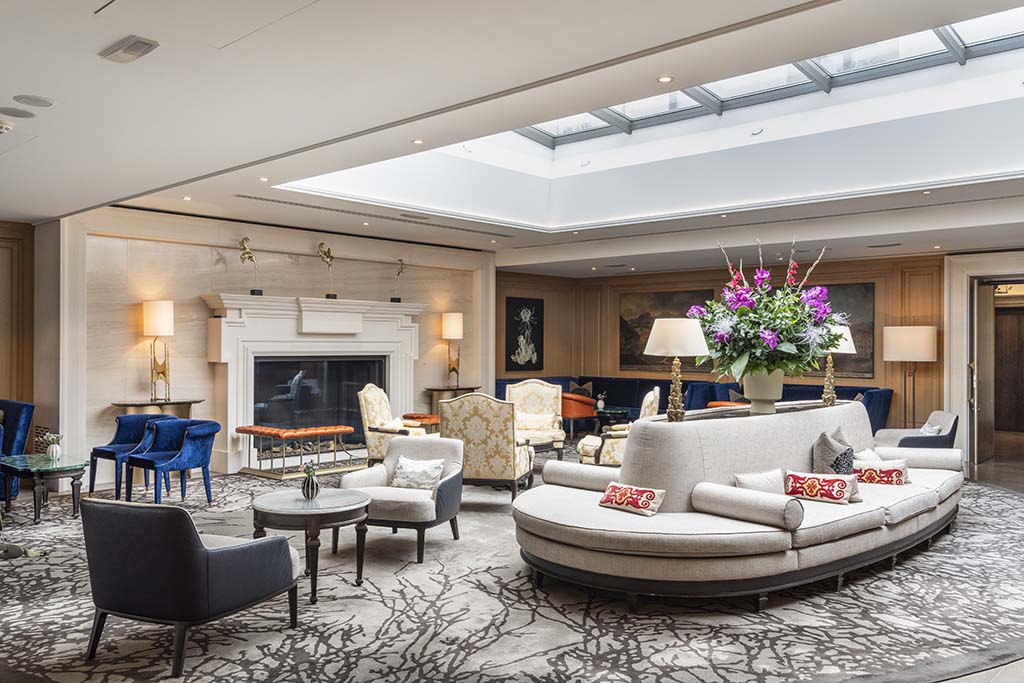
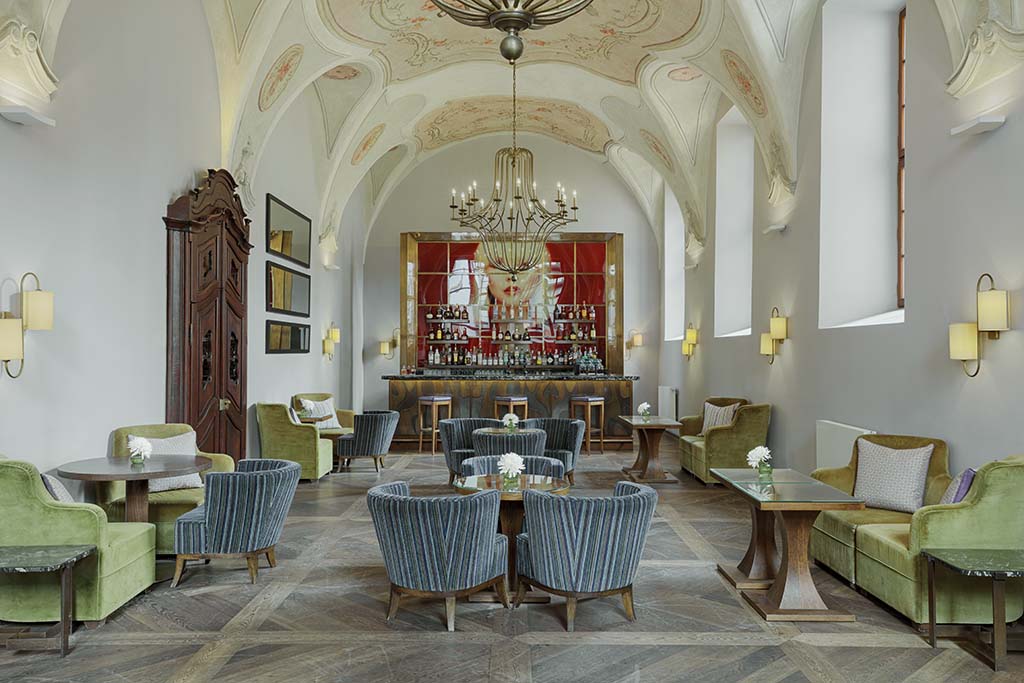
The origins of the complex stretch back to the 13th century, and its layers of history are visible throughout the property. Cloisters lead into quiet courtyards, ancient vaulted ceilings reveal the age of the buildings, while Baroque details and original architectural features sit comfortably alongside contemporary interiors. The result feels neither like a museum nor a hotel designed to imitate the past. Augustine has simply allowed its history to remain visible.
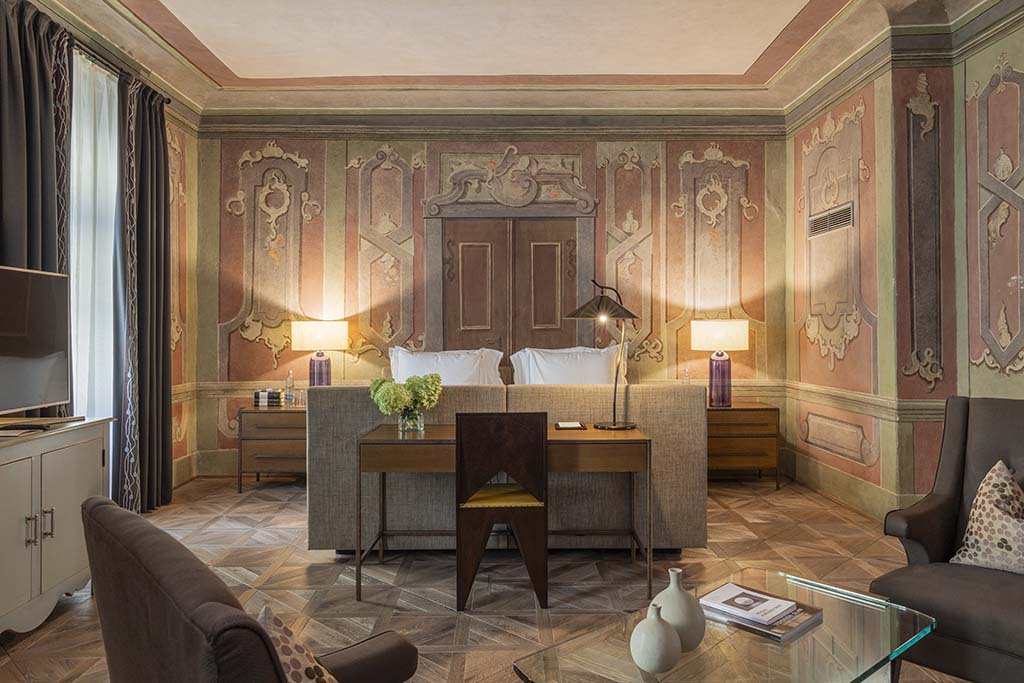
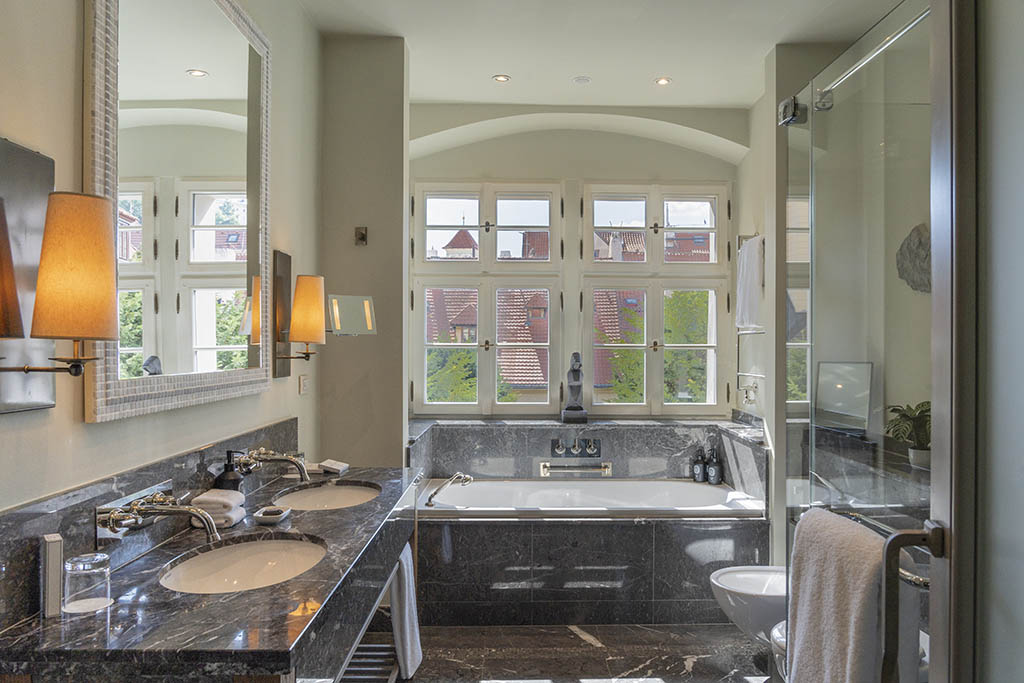
The 101 rooms and 20 suites bring a softer, more contemporary mood. Designed by Olga Polizzi, the interiors draw on Czech Cubism while introducing rich fabrics, warm earthy tones, wooden floors and elegant furniture. References to Prague’s design heritage appear throughout, including pieces inspired by Pavel Janák and Adolf Loos, while subtle details in the textiles and colour schemes nod to the building’s monastic origins. The property is now managed by Kempinski, one of Europe’s most established luxury hotel groups, whose approach to hospitality brings a new chapter to Augustine while respecting the extraordinary architectural heritage of the site.
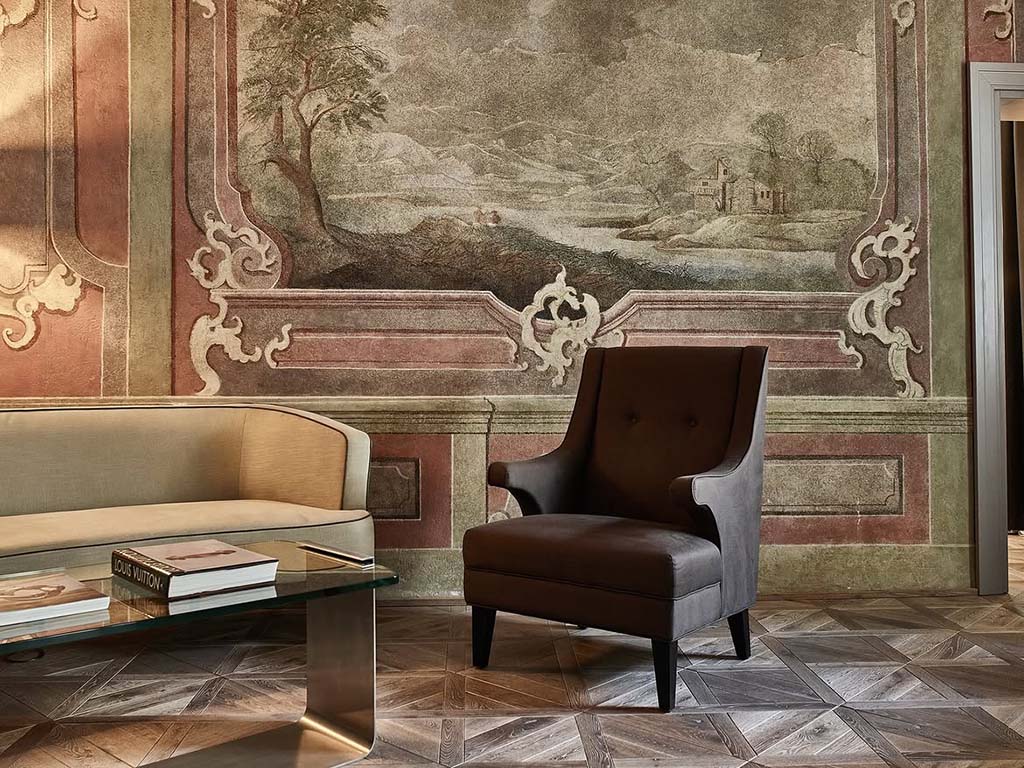
No two rooms are quite alike, and the most characterful spaces retain traces of the buildings’ former lives. The Monastic Rooms take inspiration from the original monks’ cells, while some suites feature vaulted ceilings, original wooden beams and historic doors. The Fresco Suite is framed by 18th-century murals, while the Tower Suite occupies a former astronomical observatory and rises across three floors linked by a spiral staircase. Its elevated position offers sweeping views across Prague’s rooftops and church spires.
A MODERN CZECH TABLE
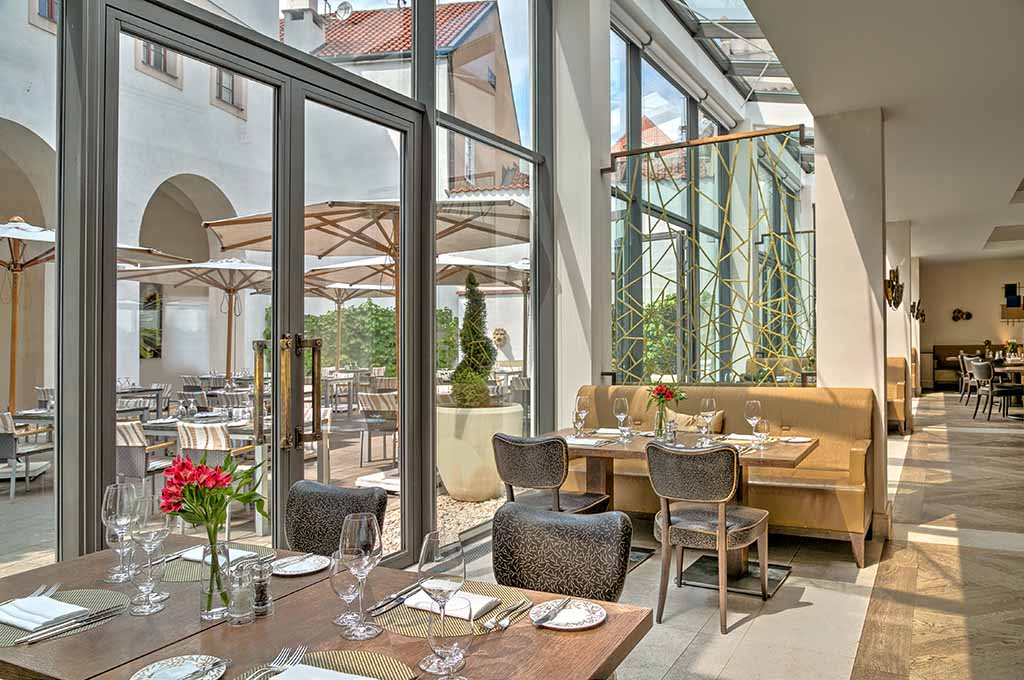
Food is another part of the Augustine experience, with the restaurant bringing a contemporary interpretation of European cuisine to the former monastery. Czech flavours appear throughout the menu, often with a modern touch: veal tartare comes with caraway oil, veal consommé jelly and watercress, while the modern Czech kulajda combines mushroom velouté, chanterelles, a poached egg, dill oil and crisp potato. A butter-poached white asparagus with pickled green strawberries and wild garlic flowers offers a lighter expression of the kitchen, while a summer tomato salad pairs heirloom tomatoes with quark from Krasolesí Farm.
The main courses continue that dialogue between local tradition and contemporary technique. The St Thomas Beer Braised Lamb is served with a beer sauce, cardamom-carrot purée and Czech dumplings, bringing the monastery’s brewing heritage directly onto the plate. There is also a traditional veal schnitzel with parsley potatoes and pickled cucumber, alongside black cod with wild garlic soufflé, charred baby leeks and mussel beurre blanc. For those looking beyond meat and fish, the morel mushroom risotto uses Vialone Nano rice, fresh local mushrooms, aged mountain cheese and marjoram.
The menu also reflects a close relationship with Czech producers. Local ingredients appear alongside more international influences, while the selection of steaks includes Czech Wagyu from Wagyu Farm Muller. Even the monastery’s brewing history finds its way into dessert: the St Thomas Beer Cake combines honey sponge, a sweet beer reduction, dark chocolate ganache and caramel ice cream. Other desserts take a lighter, more summery direction, such as strawberry and basil pavlova with lime Chantilly and basil sorbet.
For a more relaxed evening, The Refectory Bar is hidden within the 13th-century monastery, offering classic cocktails and St Thomas beer in one of the property’s most atmospheric spaces. During warmer months, the Sundial Garden provides another setting for dining, with tables surrounded by greenery and historic Baroque architecture. Together, the restaurant, bar and garden make food feel like a natural extension of the Augustine experience: rooted in Prague and its traditions, but with enough contemporary detail to keep the story moving forward.
THE MONK’S TOUR: A JOURNEY THROUGH LIVING HISTORY
The hotel’s most extraordinary experiences begin when guests are invited beyond the spaces usually open to visitors. The Monk’s Tour is a rare opportunity to explore the monastery accompanied by Father William, an Augustinian monk in his nineties who still lives within the complex. Rather than simply recounting dates and architectural details, Father William offers a deeply personal perspective on a place he has known and inhabited, bringing its history to life through stories, memories and a connection to the monastery that few others could offer. Guests can discover secluded cloisters, the chapel and ancient vaulted brewing cellars, while hearing stories that have remained within the monastery walls for generations. It is an experience that changes the way you see the hotel afterwards: suddenly, the corridors, courtyards and quiet corners have another layer of meaning.
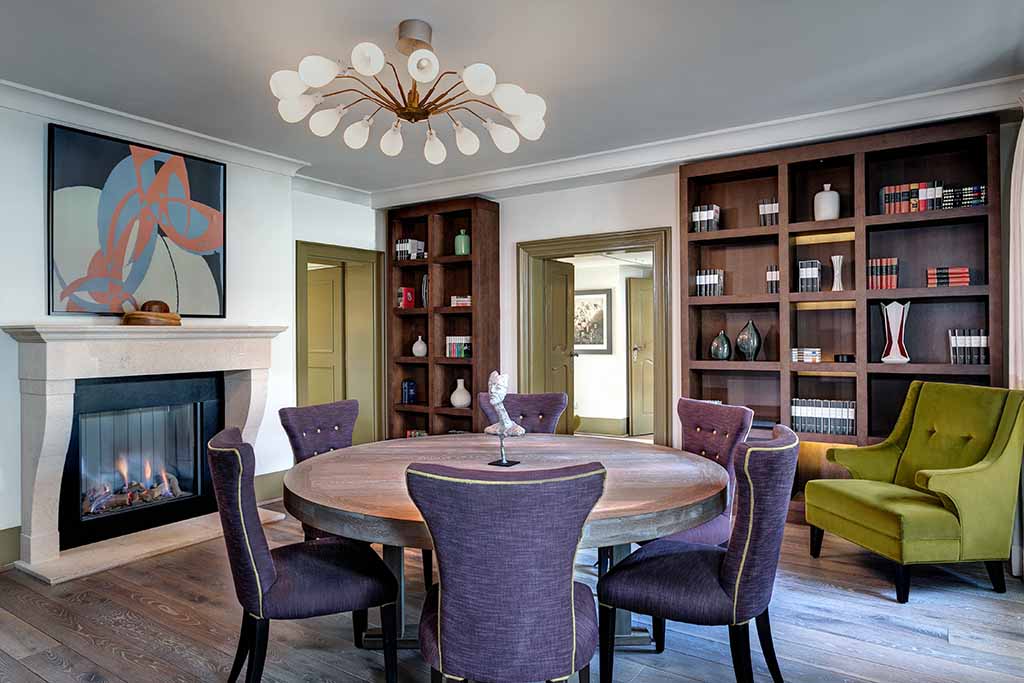
The Augustinian Library is perhaps the most evocative of these hidden spaces. Dating back to the 13th century, it preserves centuries of monastic scholarship, with original manuscripts, antique globes and Baroque architectural details. Access is arranged privately through the hotel’s concierge, offering guests the chance to experience this remarkable room away from the crowds and conventions of traditional sightseeing. There is a particular intimacy to discovering a library that was created as part of a living religious community rather than as a tourist attraction. The objects inside tell a story of learning, faith and intellectual life, while the room itself has retained an atmosphere of quiet contemplation.
The monastery’s history continues underground at the St Thomas Brewery. Established by Augustinian monks in the 14th century, the brewery once supplied beer to the monastic community and Prague Castle. Today, beer inspired by the original monastic recipe is served in the atmospheric brewery bar, housed within the historic vaulted cellar. Private brewery experiences can be arranged through the concierge, giving guests an opportunity to explore the brewing heritage of the monastery and sample the beer in its atmospheric surroundings. It is one of those experiences that feels inseparable from the place itself – a small piece of Prague’s past that can still be enjoyed in the present.
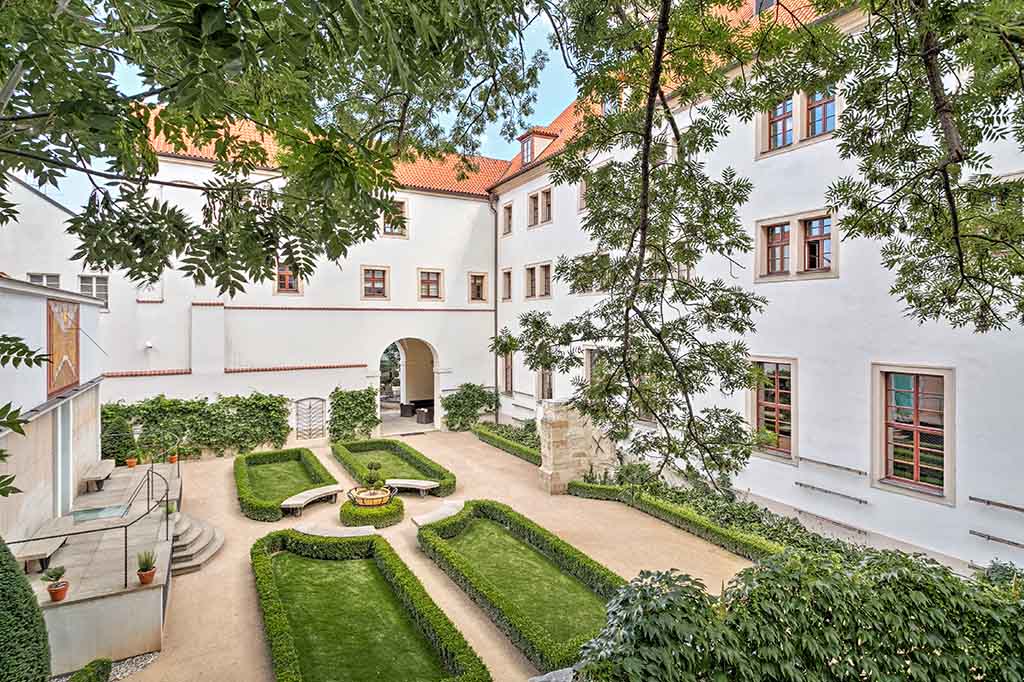
Above ground, the Sundial Garden provides a quieter expression of the hotel’s character. Enclosed by historic Baroque architecture, this secluded courtyard offers a welcome pause from the energy of the city. During the warmer months, it becomes an intimate setting for open-air dining, with seasonal cooking served among the greenery and historic façades.
Outside the hotel gates, Malá Strana unfolds as one of Prague’s most atmospheric neighbourhoods. Charles Bridge is only a few minutes away on foot, while Kampa Park, the Franz Kafka Museum and St Nicholas Church are close by. Prague Castle rises above the district, and the elegant Wallenstein Garden sits next door. Cross the river and the Old Town is easily reached on foot, making Augustine an ideal base for exploring the city without sacrificing a sense of retreat.
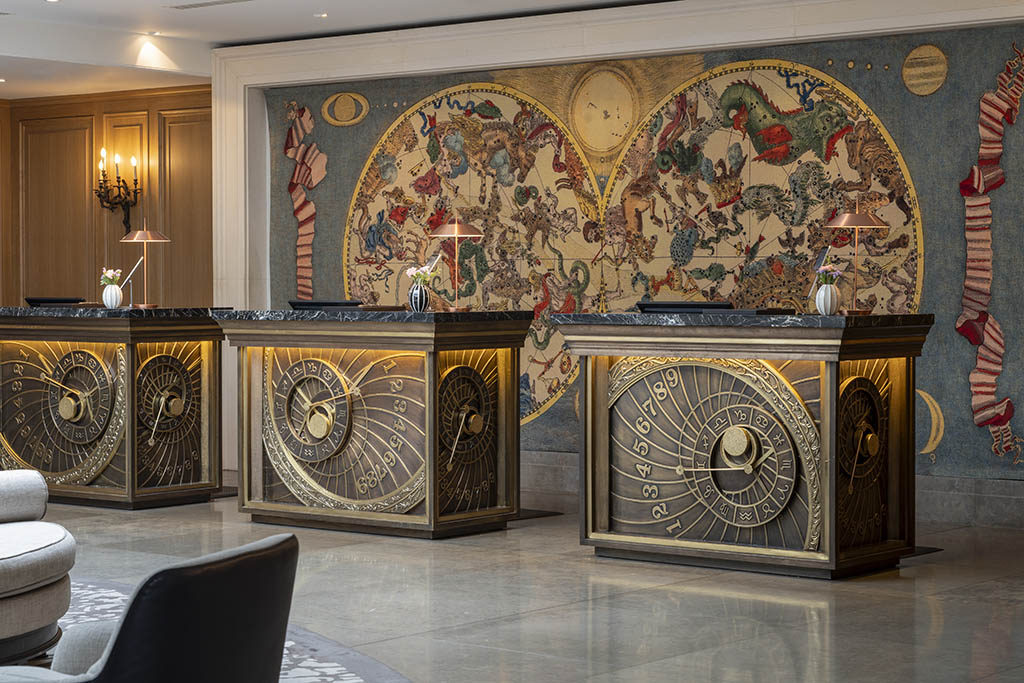
That balance is perhaps the hotel’s greatest charm. A morning can begin quietly in the former monastery, followed by a walk across Charles Bridge, an afternoon spent exploring galleries and historic streets, and an evening back behind the monastery gates. Prague feels close, but the atmosphere changes almost immediately once you return.