

Cybersecurity doesn’t have a technology problem; it has a human problem.
Organizations continue to invest billions in tools, platforms, and frameworks, yet breaches keep rising, critical systems remain vulnerable, and leaders struggle to translate technical risk into meaningful business decisions. The issue is no longer capability alone, but a weakness from the very foundations of cybersecurity.
The $302 billion industry is still searching for answers, and Jim West has emerged as a pioneer working at the intersection where cybersecurity breaks down and technology fails to secure.
Where most subject matter experts operate within a singular discipline, West is a multi-domain expert with 35 years of experience integrating cybersecurity, engineering, architecture, governance, risk management, and emerging technologies into a unified approach for solving intricate problems in global mission environments. These complex problems often require multidisciplinary expertise that most professionals lack. Where others see a single viewpoint, West sees multiple perspectives of a system, and that distinction changes everything.
Today’s cybersecurity challenges are no longer isolated technical problems. Quantum computing threatens the foundations of encryption. Artificial intelligence is accelerating both attack and defense capabilities. Cloud adoption and global interconnectivity continue expanding the attack surface faster than organizations can secure it.

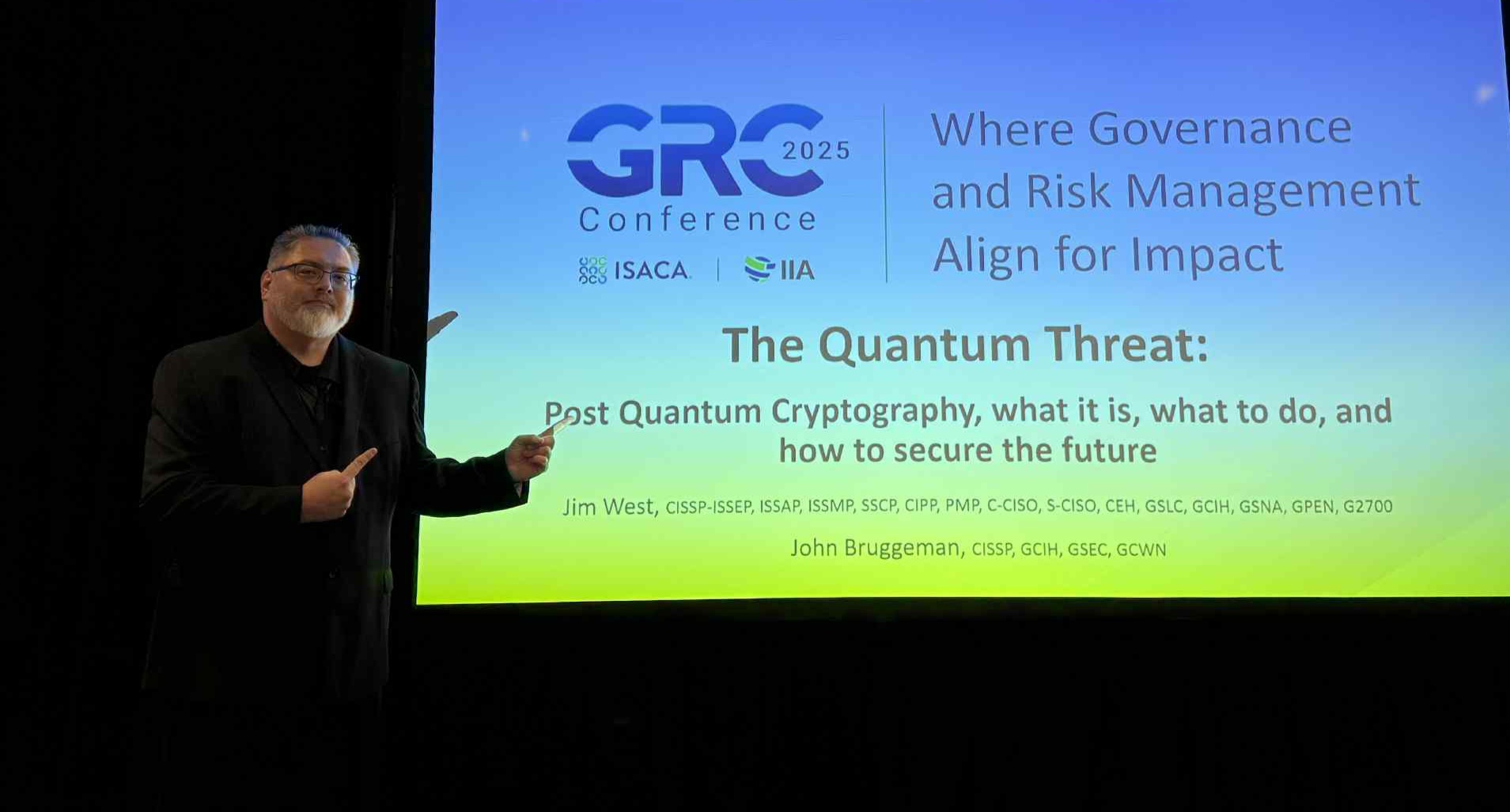
Since 2017, West has spoken globally about the greatest threats facing the digital world in the coming post-quantum era. Quantum computing has the potential to render much of today’s public-key cryptography obsolete, placing financial, healthcare, government, military systems, and infrastructure at risk. While many organizations remain focused on present-day vulnerabilities, West has spent nearly a decade warning about harvest-now, decrypt-later attacks by championing crypto-agility and layered security architectures that can withstand the next technological disruption.
Rather than waiting for future solutions, West advocates designing resilience into systems now to prevent being caught flat-footed later. His work applying NSA Commercial Solutions for Classified (CSfC) principles toward broader cybersecurity environments reframes security as a proactive architectural discipline rather than a reactive process. For West, cybersecurity must be engineered, not bolted on.
As one of the few professionals to hold all three ISC2 concentration credentials, the ISSAP, ISSEP, and ISSMP, West has also earned the Certified Systems Engineering Professional (CSEP) from INCOSE and joined the elite ranks of those who have achieved the OMG SysML Advanced certification. Together, these converge into something the industry rarely produces: a professional who can see, shape, and secure the full lifecycle of complex systems. In a world where complexity itself has become the adversary, that capability is no longer a luxury; it is a necessity.
What earmarks his mastery is the ability to integrate many frameworks, processes, and disciplines. His approach embraces Model-Based Systems Engineering (MBSE), TOGAF, DoDAF, DevSecOps, Agile, SAFe, NSA Security Engineering, RMF, NIST Cybersecurity Framework, COBIT, Lean Six Sigma, PMP, and numerous other engineering, process, and governance disciplines. West seamlessly brings all of this together into a unified methodology, creating a blueprint for solving problems that most organizations don’t yet know how to frame. West not only distinguishes between following and implementing the frameworks but also determines what to do next when they fall short. Unlike specialists operating in a single framework, he moves seamlessly across them.
This deep expertise, mastery of numerous frameworks, and unshakable commitment to perpetual learning have enabled West to develop an exceptionally rare cross-domain capability. Recognized for an extraordinary commitment to continuous learning, he completes approximately 400 hours of continuing education annually and has earned hundreds of professional certifications. Peers describe him as a true polymath, an “N of 1” professional whose blend of engineering, architecture, leadership, and educational expertise is virtually impossible to replicate.
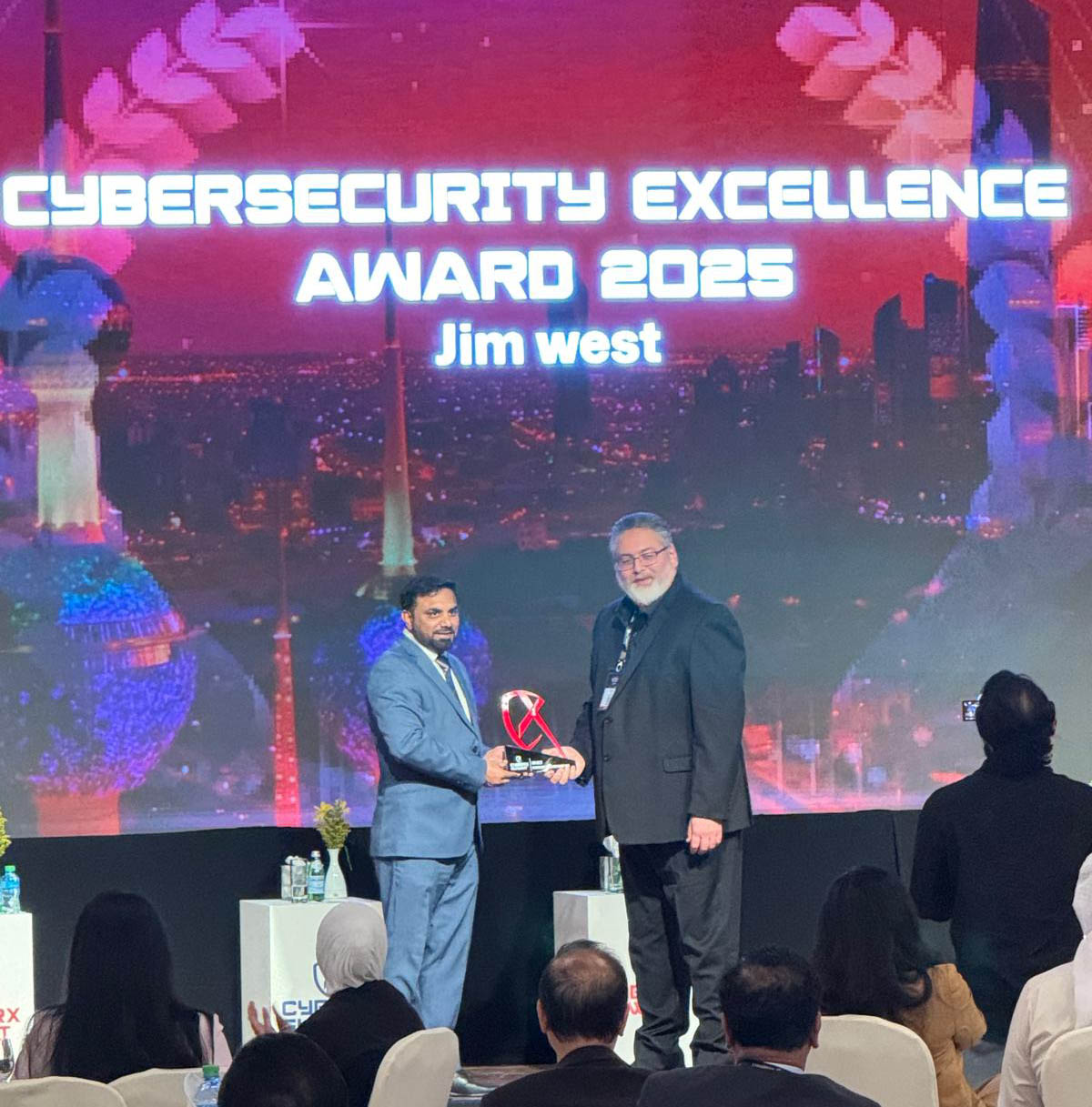
West’s influence reaches well beyond certifications and technical achievements. In 2026, he was named Cyber Security Advocate of the Year, and was previously honored as Cyber Personality of the Year and Cyber Leader of the Year. His work has also earned finalist and shortlist recognition from ISC2, ISACA, EC-Council, CyberX, the EU Cybersecurity Awards, and the American Cyber Awards.
Whether advancing post-quantum security strategies, developing future cybersecurity leaders, publishing thought leadership, speaking at international symposia, or helping organizations strengthen their security posture, West’s honors reflect a consistent pattern of impact that reaches far beyond any single role or organization.
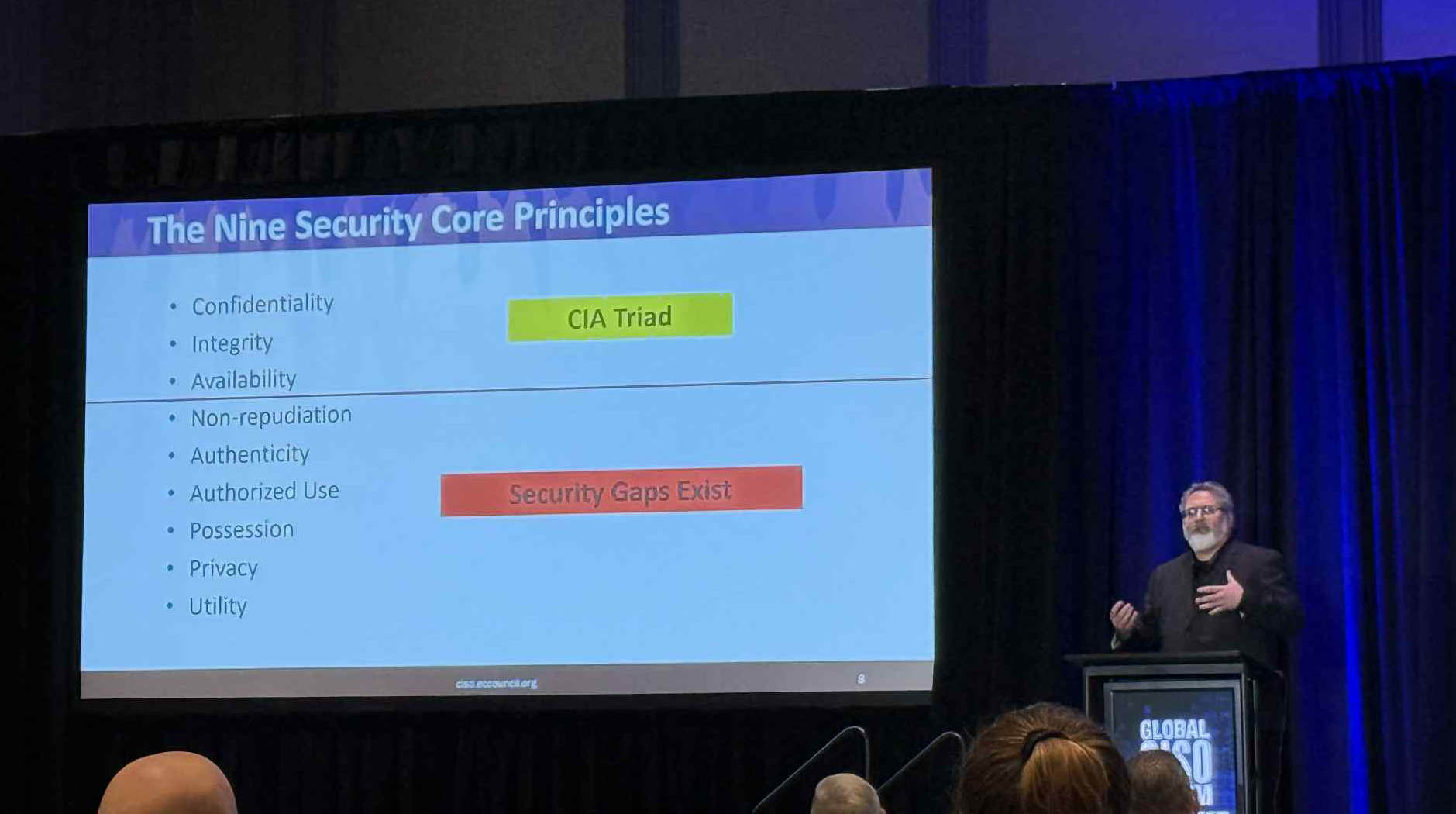
Credentials and awards alone do not accurately reflect West’s true influence. For decades, cybersecurity has relied on the CIA Triad: Confidentiality, Integrity, and Availability. West argues that modern systems require broader thinking, incorporating authenticity, possession, utility, privacy, authorized use, and non-repudiation into a more complete understanding of digital assurance. His expanded nine-principle model represents a fundamental shift from a limited-protection focus toward dynamic resilience and strategic risk engineering. This encompassing perspective marks a significant shift in cybersecurity thinking aimed to permeate the industry’s foundation.
Yet his greatest contribution is not technological; it is human. Through TopCyberPro, West has helped train and mentor more than 150,000 aspiring and experienced cybersecurity professionals worldwide to tackle the global workforce shortage. He continues to make highly complex cybersecurity concepts understandable to both technical and non-technical audiences through books, podcasts, conferences, and training initiatives.
Cybersecurity does not simply need another tool, vendor, or acronym. It needs talented individuals capable of integrating multiple disciplines, technologies, and human understanding into a strategy for the future. The future of cybersecurity cannot be secured by technology alone. It will require leaders capable of uniting innovation, engineering, governance, and workforce development into a single vision that will enable true resiliency strong enough to withstand the challenges ahead.
In an industry buckling under the pressures of foundational fragmentation, complexity, artificial intelligence, and the coming post-quantum era, Jim West represents something exceptionally rare: a multi-domain thinker operating at the exact intersection where cybersecurity is beginning to break down, and where its survival must be forged. When the moment arrives to defend an increasingly connected world, Jim West may very well be the man who can save it.