
AN EXHIBITION AGAINST EASY READINGS
Opening Carbon 12’s new season, The Task of the Mythologist positions Anahita Razmi as one of the most incisive artistic voices engaging with the politics of meaning today. Developed over an extended period and in close dialogue with the gallery, the exhibition does not announce rupture so much as a deliberate return: to earlier works, materials, and questions that are reactivated rather than resolved. Drawing its title from Roland Barthes’ Mythologies, the exhibition unfolds as a slow, considered inquiry into how symbols operate, mutate, and acquire authority in a world shaped by acceleration, polarization, and algorithmic logic.
Razmi’s practice moves fluently across sculpture, textile, sound, video and found objects, bringing together references that oscillate between the sacred, the commercial and the digital. Britpop logos, talismanic garments, obsolete sound technologies and declarative language coexist in a carefully paced installation that resists fixed readings. Rather than exposing myths as singular ideological constructions, Razmi reveals their instability how meaning is inherited, fragmented and endlessly re-coded across cultures and contexts. The inclusion of a work by Peyman Shafieezadeh further expands this field of inquiry, opening the exhibition to other authorships and modes of abstraction shaped by repetition, reuse and displacement.
At its core, The Task of the Mythologist asks what it means to read images and objects in 2026, and who gets to author meaning in an era of relentless legibility. Razmi does not offer answers so much as conditions: for hesitation, ambiguity and attentiveness. The exhibition proposes myth not as a relic of the past but as an active, material force one that continues to shape belief, power and desire even as we imagine ourselves critically literate. In doing so, Razmi asserts ambiguity not as evasion, but as a necessary form of resistance.
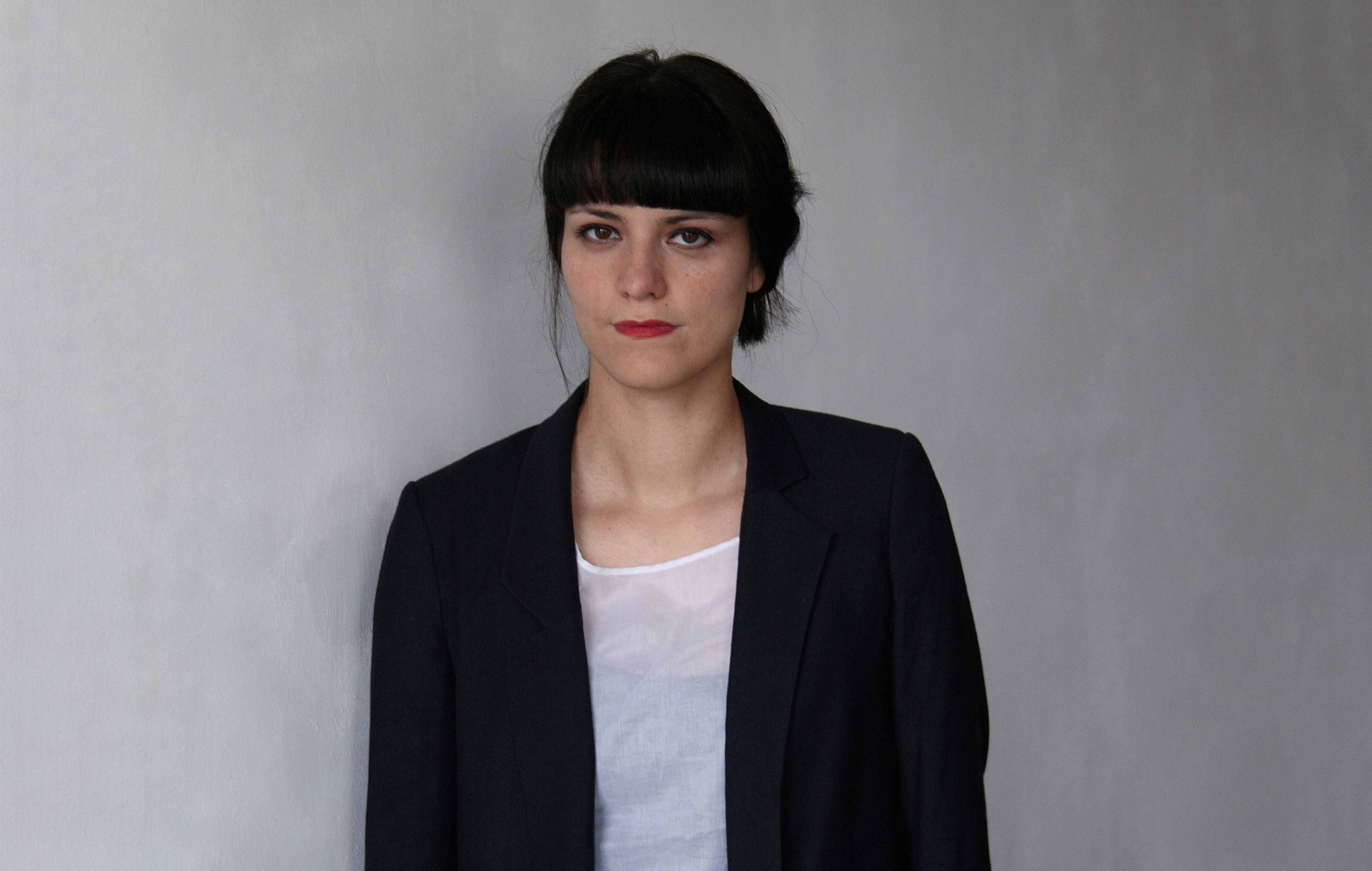
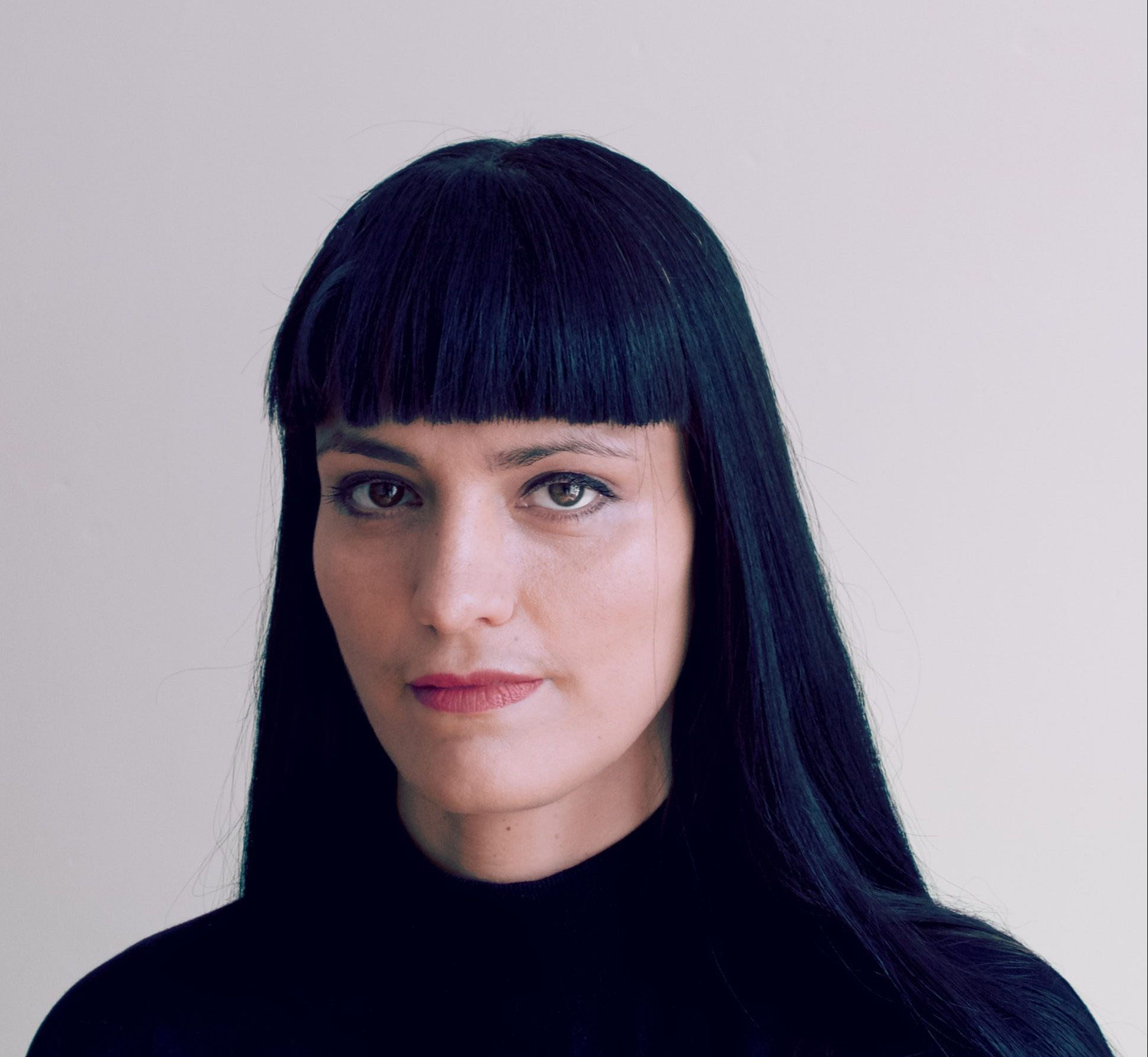
In conversation with Lifestyle Editor José Berrocoso, Anahita Razmi reflects on memory, material culture and the quiet stories embedded in her work.
The Task of the Mythologist marks the first exhibition of the season at Carbon 12. What does it mean to open the programme with this body of work, and how do you see this exhibition situating itself within the current cultural moment?
The exhibition is developed over a long period of time and in conversation with the fantastic team at Carbon12, and it also continues previous work cycles rather than proposing a clean break. Works such as WORLD MUSIC or Talismanic Polarities deliberately return to earlier material questions — sound, language, talismanic objects — but are reworked and re-situated. Instead of pretending everything to be ‘brand new’ or current, I am interested in actively relating to older works and histories, and also in inviting things that are not my own.
The artist Peyman Shafieezadeh contributed an amazing work titled “Black Square on White Ground”, which opens up new conversations about how meaning is constructed and circulated, and how abstraction can emerge not as purity, but through processes of fragmentation, repetition, and reuse.
In a moment defined by ideological binaries and polarization, accelerated media cycles, and algorithmic filtering, I think there’s an urgency in slowing down how we read signs and symbols — something that is also present in the pacing of the exhibition itself, moving between garments, metal plates, images, and video.
What does it mean to “read” an image or an object today? Who authorizes meaning, and who inherits it? And how do cultural myths continue to operate even when we believe ourselves to be hyper-aware or critically literate? What is “the task of the mythologist” in 2026?
The exhibition title references Roland Barthes’ Mythologies. How has Barthes’ thinking shaped your approach to symbols, signs and the everyday languages of power in this show?
In 1957 Barthes wrote, “The task of the mythologist is to show the ideological abuse hidden in what appears to be innocent speech.” I believe this to be quite an important task in the now.
Barthes gives language to something I have been intuitively circling for a while: the idea that myths are not relics of the past but active systems of meaning embedded in the everyday. What I find most compelling in Mythologies is his insistence that myth disguises itself as nature — as something inevitable, neutral, or self-evident.
When it comes to contexts beyond the “West”. Edward Said took this mode of deconstructing myths further in Orientalism and in related writings.
As these are not new writings at all, I am interested in asking where we materially stand in relation right now. Also, looking at the canonical nature of these texts: can the act of deconstruction itself become mythologized?
In the exhibition, I’m less interested in exposing a single myth than in showing how myths mutate across contexts — for instance, how a Britpop logo in OA SIS shifts when it becomes a weird feminist talisman, or how declarative language in Heavy Metal hardens into something that looks authoritative but remains unstable.
You frequently work with objects and motifs that oscillate between the sacred, the commercial and the digital. What draws you to these unstable symbols, and why do you think ambiguity has become such a potent artistic tool today?
Things refuse to stay in one place. A talisman can become a souvenir; an emoji can function as spirit, irony, or code; a band logo can operate as identity, nostalgia, or commodity — as is very explicit in works like OA SIS or Talismanic State. These oscillations might reveal how belief, capitalism, and technology overlap rather than exist separately.
Ambiguity matters to me because clarity and single meanings are often imposed from above. In a world that increasingly demands legibility and clarity — for markets, for platforms, for governance — ambiguity might become a form of resistance. But it’s also vulnerable, because as soon as I say “Yes and No” I immediately seem weaker than the one who says “Yes” or “No” — a tension that is materially present in
the Heavy Metal series. How much ambiguity can a symbol hold before it collapses, gets co-opted, or before one reading takes over? I believe that as artists and cultural workers, we should hold onto that unstable space, particularly as it is disappearing elsewhere.
As an Iranian-German artist working internationally, how has your own cultural and geographic background informed your sensitivity to context, translation and misinterpretation?
Growing up in-between cultural frameworks taught me that meaning is never stable. Something that feels irrelevant in one context can be meaningful, charged, or misunderstood in another — something that becomes very apparent when works like Talismanic Polarities are shown in different geographies. The first part of the series will be shown in an exhibition in Germany from March 2026.
Rather than trying to resolve these tensions, I often work with them testing out what happens when a symbol refuses to translate cleanly.
In works such as Talismanic Polarities, historical Islamic garments are paired with contemporary linguistic devices like “YES”, “BUT” and “NO”. How do you navigate the ethical and conceptual tensions between heritage, authorship and reinterpretation?
These works are neither about quotation nor about dismissing heritage and existing meanings. The talismanic shirts that are central to the work — and that I bought from a collector — carry histories of protection, spirituality, and craftsmanship, while the linguistic elements introduce narrative logic, hesitation, and contradiction. I’m interested in how these systems speak to each other without collapsing into harmony.
The question for me is always: am I opening something up, or am I closing it down or covering it up? Reinterpretation becomes a problem when it claims authority or finality. So I try to work in ways that emphasize incompleteness, uncertainty, and openness, hoping to activate the existing objects and their inscriptions anew.
Several works in the exhibition interrogate Western pop mythology, from Britpop references to emojis. Do you see these symbols as sites of resistance, complicity, or both?
Absolutely both. Pop culture is seductive; it operates through pleasure, familiarity, and affect. It can normalize power just as easily as it can undermine it. In works like OA SIS or WORLD MUSIC, I’m interested in how these symbols circulate and how they can be de-coded and re-coded along the way.
Your practice moves fluidly across media — sculpture, textile, video and sound-based works. How do you decide which medium best serves a particular idea, and has that decision-making shifted over time?
My practice started out with moving image and digital works, but over the past years has increasingly included analogue media, objects, and textiles — from brass plates in Heavy Metal to obsolete sound recording film in WORLD MUSIC. Each material carries its own history, expectations, and limits. Sometimes an idea demands weight and physical presence; sometimes it requires time, duration, or movement. I often think of media as language — each with its own grammar.
Over time, I’ve become less interested in mastery or formal cohesion and more interested in what feels right. What does an idea need in order to come across? And what happens when a medium resists the concept it’s meant to carry?
Context and framing appear central to your work, particularly the role of the gallery as a meaning-producing space. To what extent do you see the exhibition itself as an active participant in the narrative you are constructing?
The gallery is not a neutral container — it is tied to its location, and it frames, authorizes, and hierarchizes. I recently watched an interview with Danh Vo in which he speaks about the white cube as a space that ‘decapitates meaning’ and how that gives the objects in it an immense potential. I agree with that.
I also think a lot about how works speak to each other spatially — how Flying Carpet sits in proximity to talismanic objects or pop artefacts, how movement through the space produces meaning, and how the viewer’s body becomes part of that. Rather than offering a linear narrative, I try to think of the exhibition as a field of relations.
And when the work relates to Islamic histories and objects, this relation obviously manifests itself differently in the Middle East than in Europe.
There is a recurring tension in your work between seriousness and irony, critique and play. How conscious is this balance, and what do you hope it allows the viewer to access emotionally or intellectually?
I like this tension; it opens space for engagement without demanding immediate agreement. I need to stress that all my work at its core is serious and, in these times, often quite disheartened. But for me that doesn’t mean it needs to look serious or dark.
Humour is an interesting form of critique, a joke is always ambivalent to some extent, otherwise it’s not funny. And I’m interested in how viewers move between these different registers. Can seriousness coexist with humour without becoming cynical? Can play be a form of critique? And how do emotional responses shape intellectual understanding?
Looking back, how does The Task of the Mythologist extend or depart from your earlier practice, and what does it reveal about where you currently find yourself as an artist?
“The Task of the Mythologist” feels like a continuation of long-standing concerns — symbolism, power, translation — but with a sharper focus on mediation and instability. Many of the questions I’ve been working with for years reappear here, but in more reduced or distilled forms. There’s perhaps more restraint, more attention to how little needs to be said or shown for meaning to emerge, and more trust in the viewer’s capacity to sit with uncertainty.
You are increasingly engaging with themes of virtuality, mediation and algorithmic culture. How do you see these concerns evolving in your future work?
I am interested because this is how our world is shaped in 2026. Digital systems are no longer a separate layer that we can step in and out of; they structure how we see, relate, decide, and remember. Because of that, I see these themes becoming less representational and more structural in my work. Rather than simply using the digital, I’m interested in how it shapes perception, attention, and belief. Algorithms don’t just organize content — they organize desire, fear, and value. They produce hierarchies, rhythms, and feedback loops that often remain invisible, yet deeply affective. In works like WORLD MUSIC or Talismanic State, I’m already trying to think about how such systems can be thought of anew.
I’m also increasingly drawn to the idea that digital environments generate their own forms of myth and ritual. We might not name them as such, but they function in similar ways: they offer orientation, reassurance, repetition, and a sense of belonging or exclusion. What kinds of myths and rituals are emerging — consciously or unconsciously — in digital life? And how might artistic practice engage with these formations without simply reproducing them?
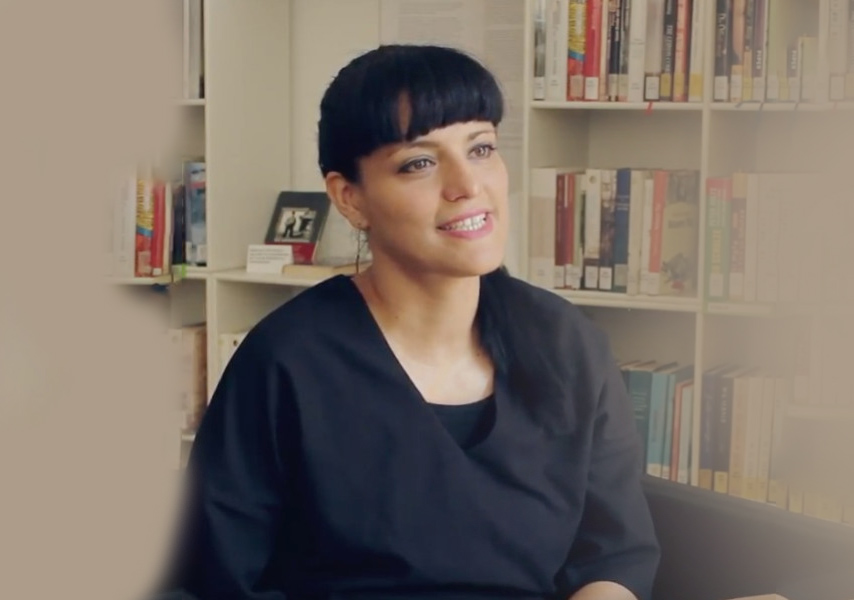
Finally, as you look ahead to upcoming projects and exhibitions, what questions or territories are you most eager to explore next?
I have had a busy but also immensely tough year full of emergencies, and I hope to be able to pause for a bit. Many of the works in The Task of the Mythologist already circle questions of hesitation, interruption, and refusal — from the declarative but unstable language in Heavy Metal to the unresolved propositions embedded in Talismanic Polarities. In that sense, the exhibition itself already points toward a need to slow down.
I also feel it is necessary to think more carefully about the political implications of work — both inside and outside of artistic practice. About how work circulates (or not), where it is shown (or not shown), who it speaks to, and what kinds of structures it inevitably participates in. What does it mean to work with symbols that carry heavy historical and ideological weight, and to place them into institutional contexts? At what point does critique risk becoming aestheticized, neutralized, or absorbed? How can work remain open, ambiguous, and speculative, while clearly refusing relativism or co-option? How do we stay with complexity without turning it into ‘oh yeah, it is complicated’? And how can we think about care — for materials, for histories, for audiences — without turning care itself into a token or claim of innocence? How to remain accountable — to the work, to its contexts, and to the world it enters — without foreclosing the possibility of doubt?