
Exploring the Space Between Memory, Identity and Infinity
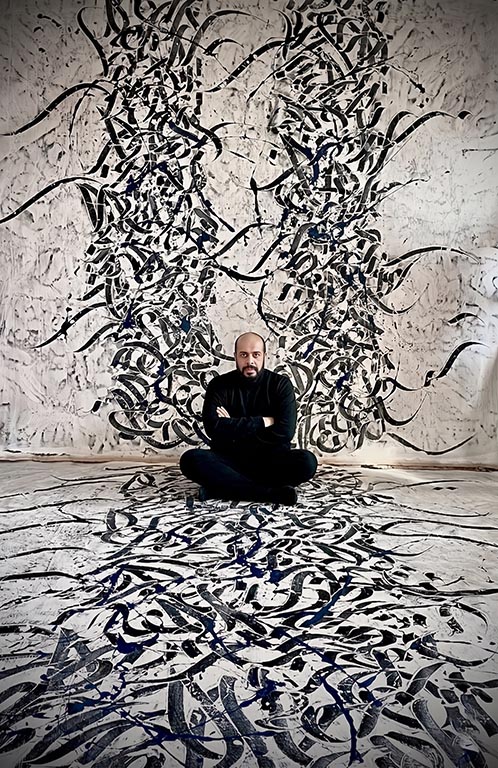
In an age dominated by speed, noise and fleeting attention, the work of Akil Ahmad invites us to pause, reflect and look beyond the visible. Born in Aleppo, Syria, and now recognised internationally for his thought-provoking artistic practice, Akil has built a career that transcends geography, politics and conventional artistic boundaries. From his globally acclaimed projects addressing war, displacement and human experience to his more recent explorations of consciousness, infinity and spirituality, his work continually challenges audiences to question what lies beneath the surface of reality.
Deeply influenced by memory, identity, poetry, music and the rich cultural heritage of the Arab world, Akil’s artistic journey is as much an inner exploration as it is a visual one. His evolution from politically charged narratives to abstract and contemplative works reflects a profound search for meaning, belonging and the unseen dimensions of existence.
In this exclusive conversation with CP Magazine, Akil Ahmad reflects on his roots in Aleppo, the impact of displacement, the role of art in uncertain times, and the questions that continue to shape his creative vision. The result is an insightful and deeply personal dialogue with an artist whose work speaks as much to the soul as it does to the eye.
We’d love to learn more about your background and early beginnings.
My relationship with art began in childhood. For me, drawing was less about creating something aesthetically pleasing and more about trying to understand the world around me. I grew up in Aleppo, a city layered with immense history, spirit and contradiction, and that had a profound influence on my visual sensibility from an early age. Over time, art became a space where I searched for meaning and explored the relationship between humanity, memory, spirituality and existence. My artistic practice today is an extension of that ongoing search.
You were born in Aleppo and later built your career abroad. How has displacement shaped your identity as an artist?
Displacement changed my relationship with everything, not just with place. When a person is uprooted from their environment, they begin to view the world from a different perspective, one that is both more fragile and more aware. For me, painting became a space to rebuild the inner self and to explore the meaning of belonging, memory and identity. Perhaps this is why my work gradually moved towards abstraction, calligraphy and spiritual exploration; I was searching for an inner homeland that could never be lost.
What memories of Aleppo remain most vividly present in your visual language and artistic practice?
I believe Aleppo is present in my work even when it does not appear directly. There is a clear influence from its architectural rhythm, its light, its ancient sounds, and its unique blend of tranquillity and chaos. Even my relationship with Arabic calligraphy is connected to the spirit of the city to its chanting, Eastern music, and that profound feeling that history is still breathing within its walls and alleyways.
Your work often addresses themes of war, borders and power. Do artists have a responsibility to engage with political issues?
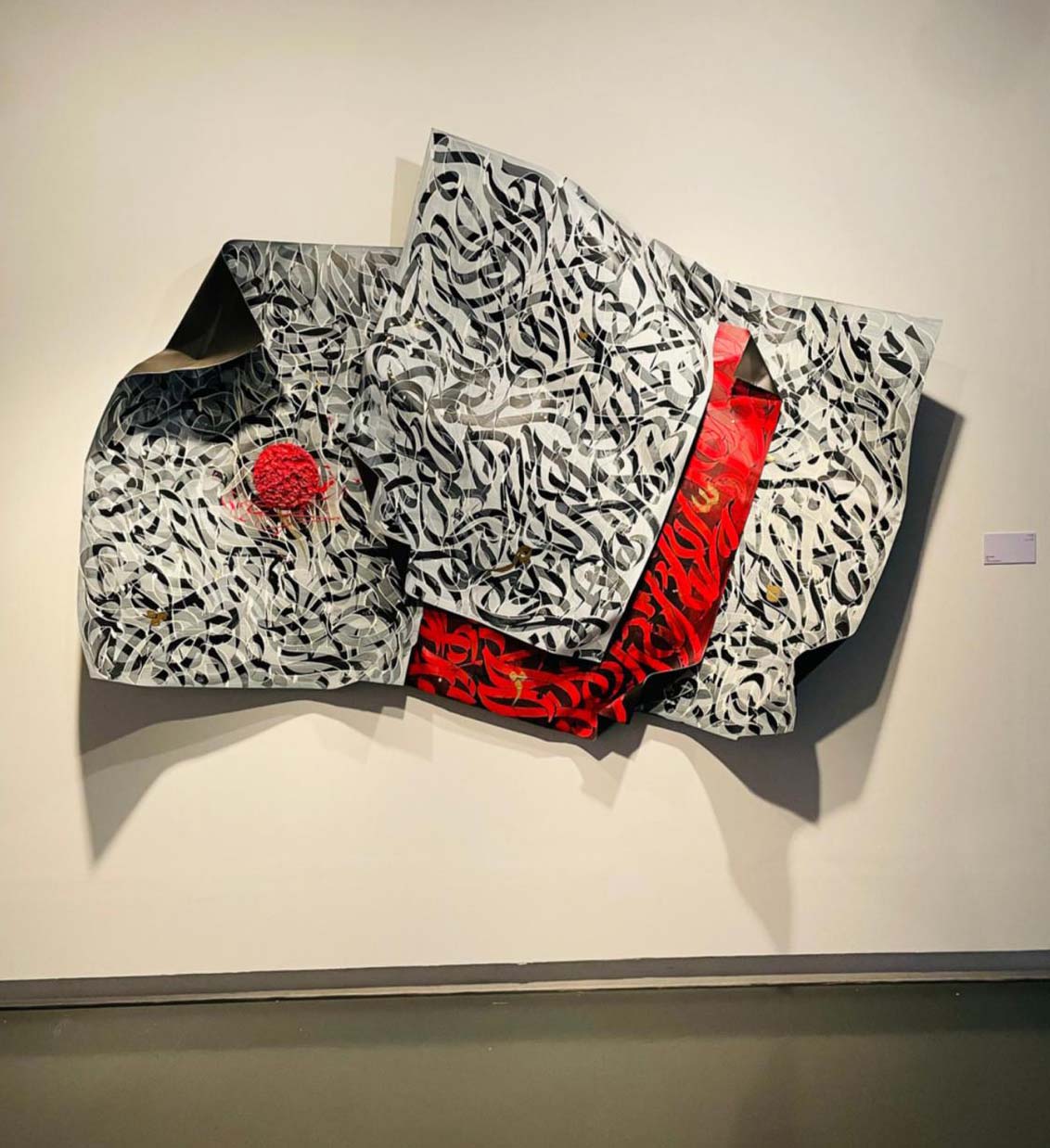
I believe a true artist cannot be separated from their time or from the human suffering around them. However, I do not see the role of art as simply presenting slogans or direct political statements. For me, art is a space for asking questions and revealing human vulnerability rather than providing ready-made answers. Sometimes the most politically honest work is the work that reminds us of our shared humanity.
Who or what has been the greatest source of inspiration throughout your artistic journey?
For me, inspiration is not a single person or reference point. Music, Sufism, poetry and moments of inner contemplation have all had a significant influence on my work. The experience of moving between places and cultures has also shaped my vision profoundly. I draw inspiration from silence as much as from imagery, and from emotion more than from direct ideas.
Why do you think that particular project resonated so strongly with audiences around the world?
I believe the reason was the human honesty within the work. When a project emerges from a genuine and deeply personal experience, it has the ability to transcend cultural and linguistic boundaries. People do not respond only to the visual form; they respond to the energy, emotions and questions carried within the work. Perhaps that is why so many people felt a personal connection to it, regardless of their background.
Your recent paintings explore concepts such as infinity and consciousness. What drew you away from more direct political themes?
I do not believe I moved away from politics entirely; rather, I moved towards a deeper layer of it. After years of engaging with pain, borders and conflict, I began to feel that the real question was not only what is happening around us, but also what is happening within human consciousness itself. My focus today centres on existence, time and infinity, and on attempting to capture those spaces that the mind cannot fully explain.
Do you see abstraction as a form of freedom?
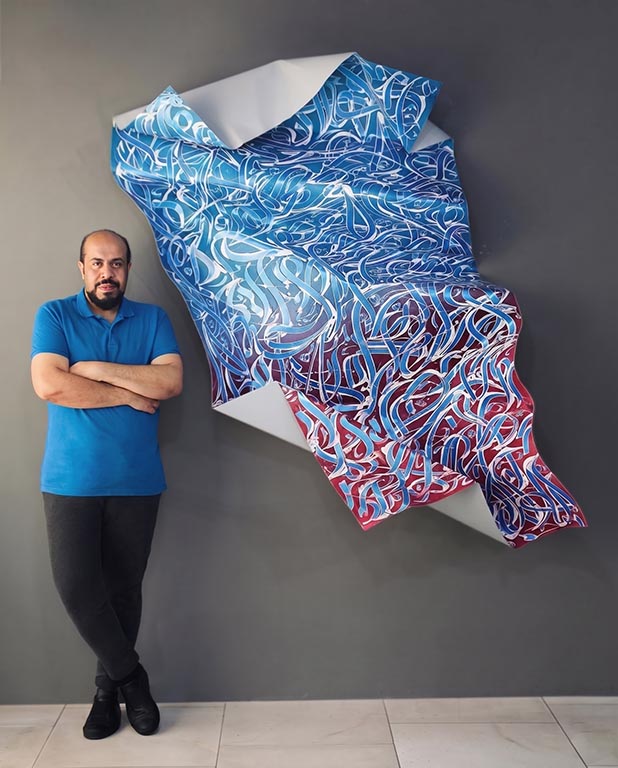
Absolutely. Abstraction gives me the freedom to move beyond direct representation and the limitations of language and traditional form. It creates an open space for contemplation and feeling. In abstract art, meaning can remain fluid and unresolved, and that is precisely what attracts me to it because it reflects the nature of consciousness itself.
When creating, are you guided more by instinct or by intention?
I usually begin with an inner feeling rather than a clearly defined idea. There is always room for intuition and surprise during the creative process. Sometimes I feel that the painting gradually reveals itself and that my role is simply to listen to what it wants to become. Vision is present, but it is never fixed; it evolves with every layer and every movement within the work.
You have spoken about the limits of thought and consciousness. Can painting express what language cannot?
Yes, and perhaps that is one of art’s most important functions. Language attempts to explain, whereas a painting can communicate an entire state of being at once, an emotion, a tension, a silence or a spiritual presence that cannot be reduced to words. Sometimes I feel that the things closest to truth are precisely those that cannot be fully explained.
What does silence mean to you within your studio?
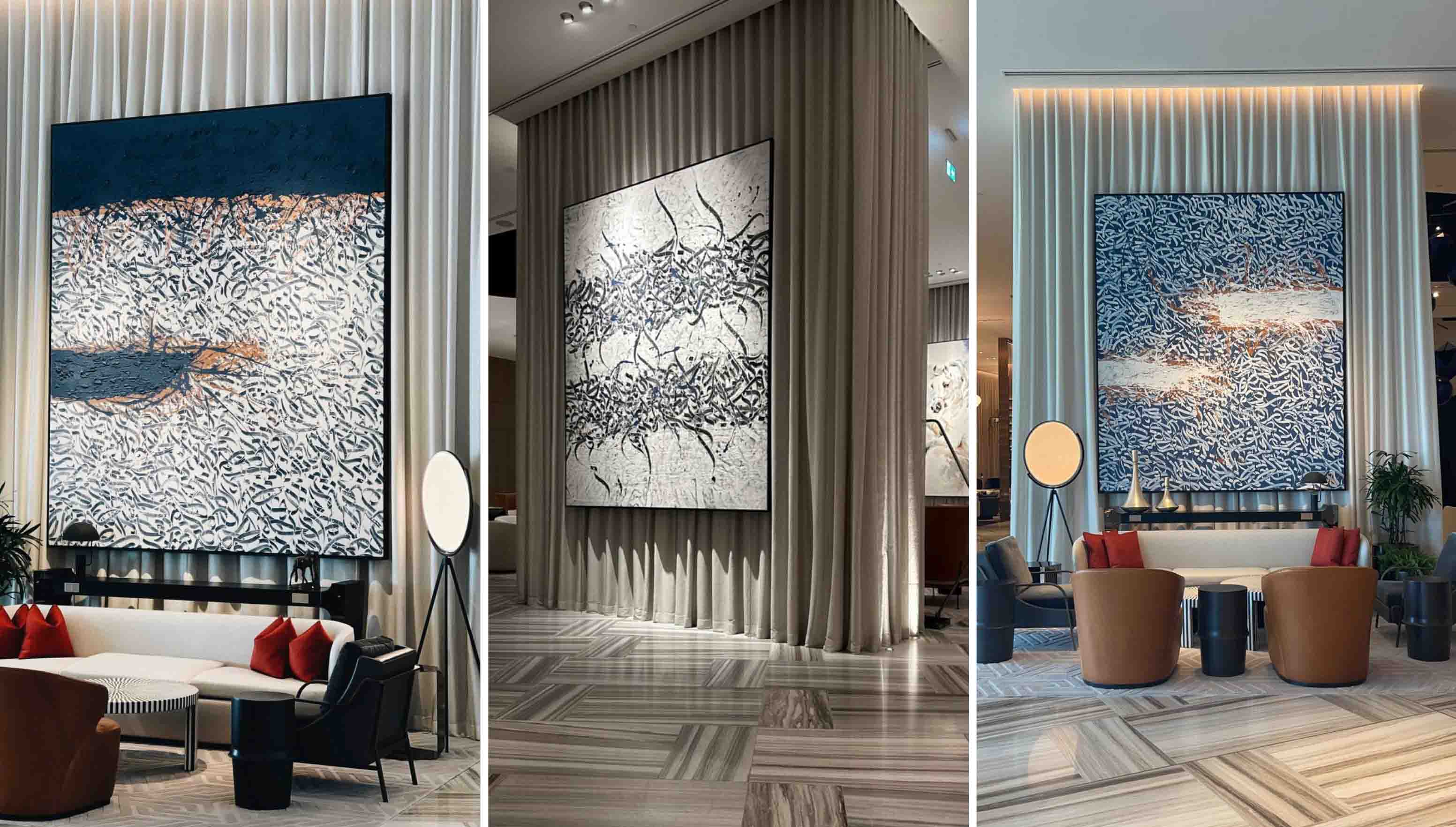
Silence is not the absence of sound; it is a state of presence. In the studio, I need silence in order to listen to what is happening within me. In silence, details become clearer and my relationship with the work becomes more honest. At times, I feel that paintings are born more from silence than from ideas.
Do you think social media helps artists build genuine connections, or does it pressure them into becoming content creators?
It is a double-edged sword. On one hand, it has given artists the opportunity to reach a global audience and engage in direct dialogue with people. On the other hand, there is the risk that artists become constant producers of content at the expense of depth and reflection. I believe the challenge today is preserving the authenticity of the artistic experience amidst the speed and noise of the digital world.
What has been the most difficult chapter of your artistic career so far?
The most difficult periods were those in which I felt the external world collapsing while I was trying to preserve my inner voice. The experience of war, displacement and starting over was not easy, either personally or artistically. Yet at the same time, it pushed me to redefine my relationship with art and with what it means to create beauty in the midst of chaos.
What question are your artworks trying to answer at this stage of your life?
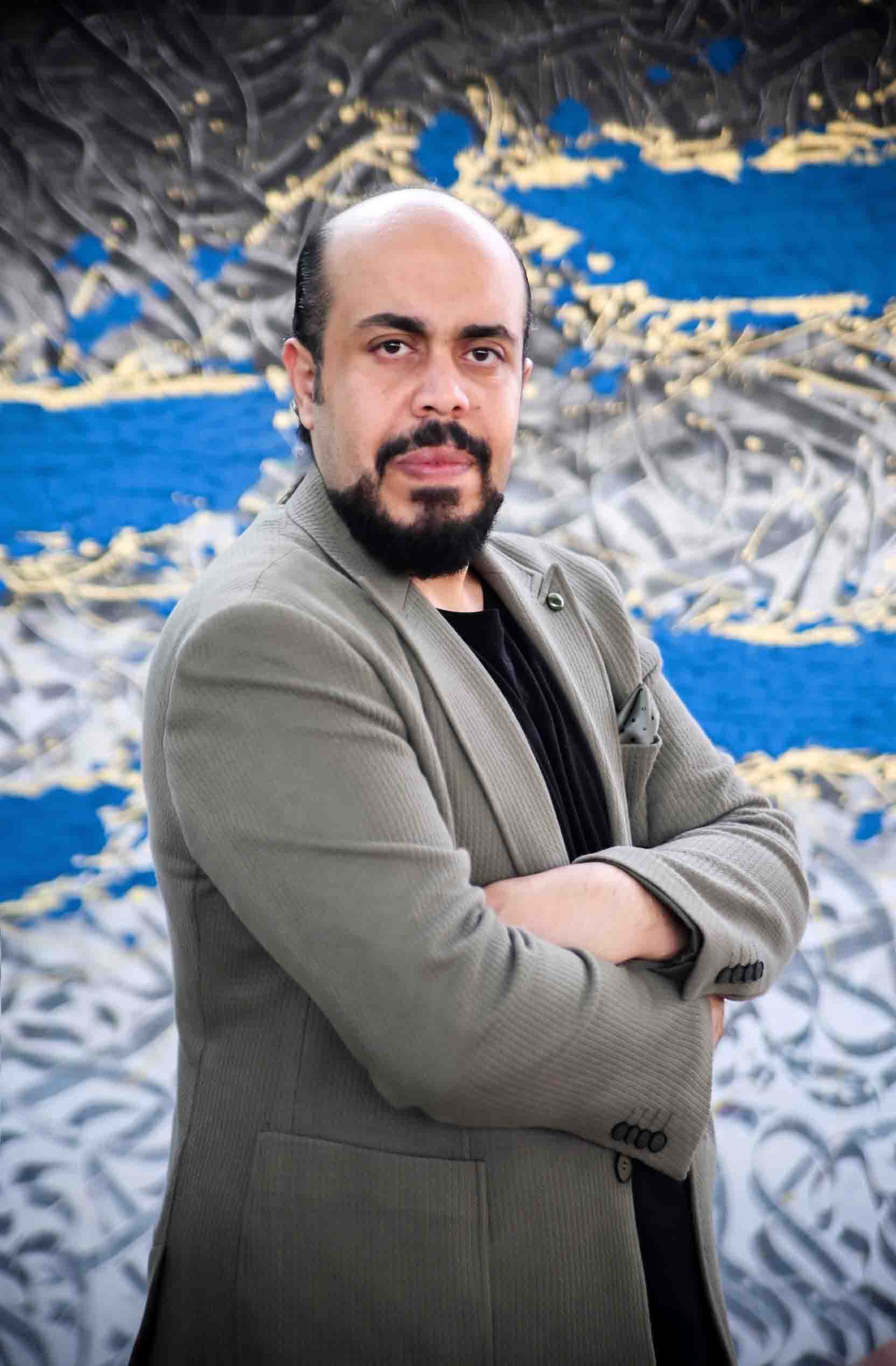
I believe the question that occupies me today is: How can a human being touch the absolute while living within a finite world? My work seeks to approach that distance between the visible and the invisible, between matter and spirit, between time and infinity.
When someone encounters your work for the first time, what feeling do you hope stays with them afterwards?
I hope they experience something beyond direct explanation, a moment of contemplation, stillness or inner wonder. I do not want viewers simply to understand the work; I want them to experience it emotionally and feel that a door has opened within them, even if only for a brief moment.
What message would you like to share with us at CP Magazine?
I believe art is a human necessity today more than ever because it reminds us of what lies beyond division, noise and fear. My message is that we should preserve our ability to reflect and to listen to the human and spiritual dimensions within ourselves. True beauty is not a luxury, it is a form of survival.