

When the summer heat has faded and the Sierra Nevada begins to sharpen against the sky, Granada becomes one of Andalusia’s most rewarding city escapes. Few hotels capture the character of the city quite like Palacio de Santa Paula, where a 14th-century Moorish house and a former 16th-century convent have been transformed into an elegant retreat in the historic centre.
Autumn is particularly rewarding in Granada. The fierce heat of summer has softened, the days remain bright and the city becomes wonderfully walkable. On clear mornings, the Sierra Nevada provides a dramatic backdrop to the rooftops of the old town, while the changing light brings a different mood to the Alhambra. Winter has its own appeal, too: snow on the mountains creates one of the most beautiful contrasts in southern Spain, with the possibility of skiing in Sierra Nevada less than an hour and a half from the city.
The Alhambra, of course, remains Granada’s great masterpiece. Declared a UNESCO World Heritage Site in 1984, the extraordinary Nasrid palace-fortress is one of Spain’s most remarkable monuments, a complex of palaces, courtyards, gardens and defensive walls shaped over centuries of Islamic and Christian history. Its finely carved stucco, geometric decoration, water features and views towards the mountains can easily occupy half a day and still leave you wanting to look a little longer.
But Granada is much more than its most famous monument. This is one of Andalusia’s most characterful cities, where Moorish heritage remains woven into everyday life. In the Albaicín, whitewashed houses climb the hillside in a maze of narrow streets, while hidden cármenes, traditional houses with enclosed gardens offer glimpses of a more private Granada. Old aljibes, churches, Renaissance buildings and Baroque façades reveal the successive layers of the city, while the Sacromonte introduces another side of Granada, with its hillside caves, flamenco traditions and views back towards the Alhambra.
There is also a distinctly contemporary Granada. Independent restaurants, stylish bars, rooftop terraces and creative spaces have brought new energy to the historic centre without erasing what came before. And then there are the tapas bars, an essential part of the city’s social life: in Granada, ordering a drink can still mean that something small to eat arrives alongside it, making an afternoon of wandering unexpectedly easy to extend.
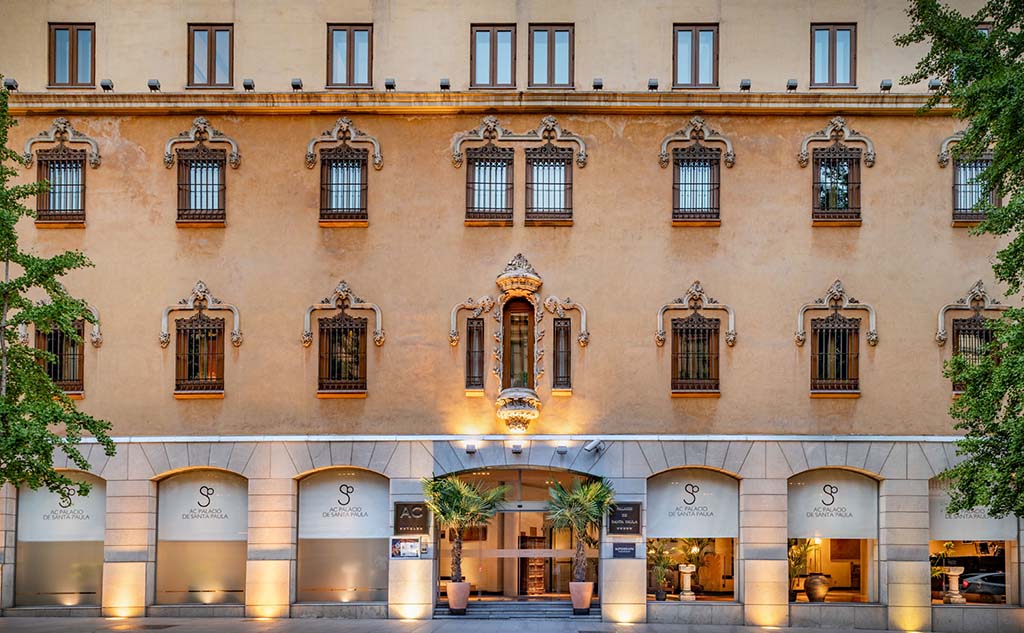
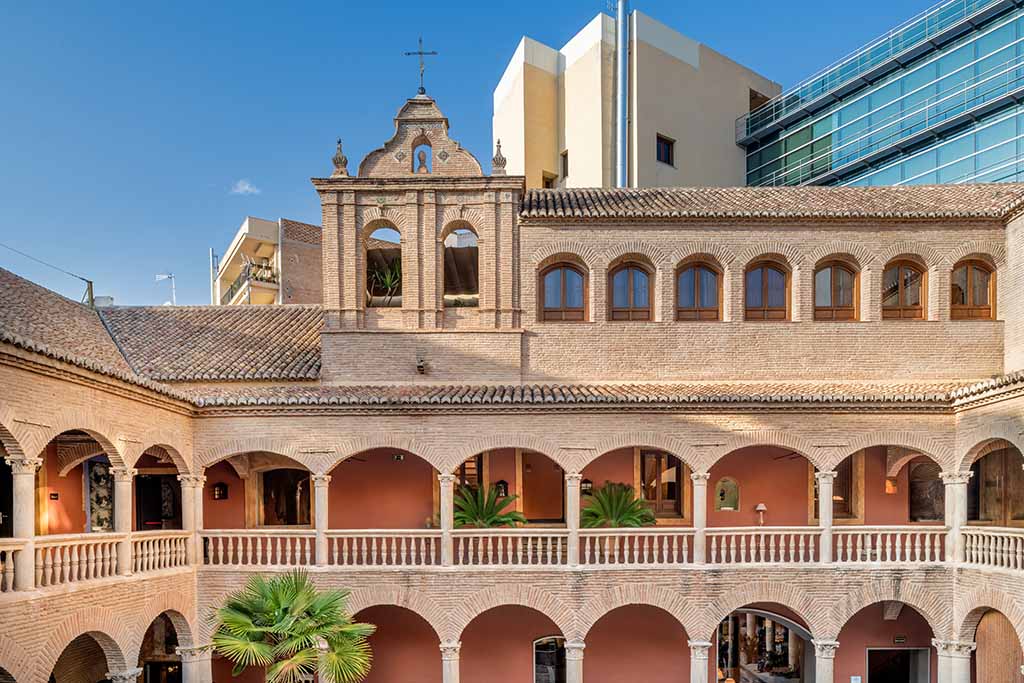
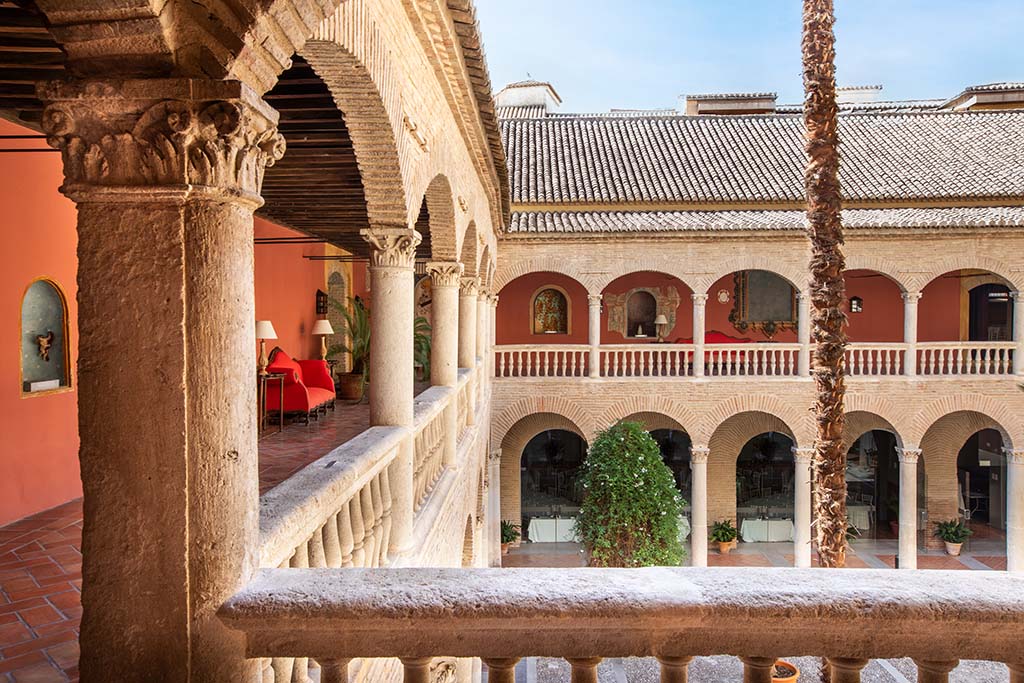
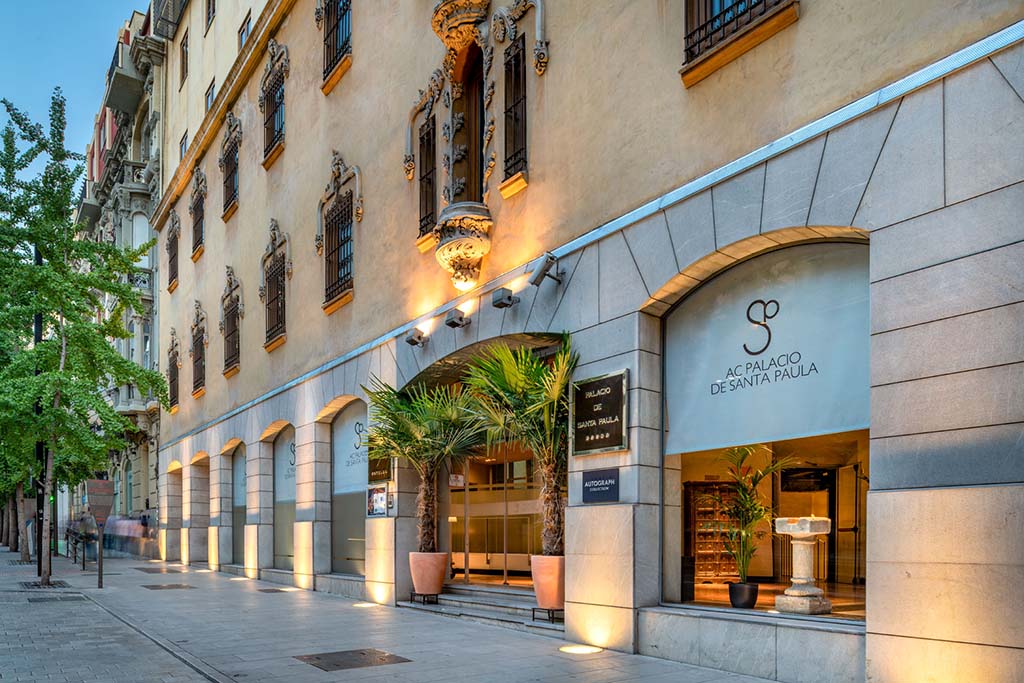
For a stay that connects naturally with all these layers, Palacio de Santa Paula is particularly compelling. Located in Granada’s old town, the hotel occupies a building declared a historic and artistic monument, comprising the former Convent of Santa Paula, dating from the 16th century, and a Moorish house from the 14th century. It is an unusual proposition in modern hotelkeeping: rather than recreating a sense of history, the hotel allows you to stay within the history itself.
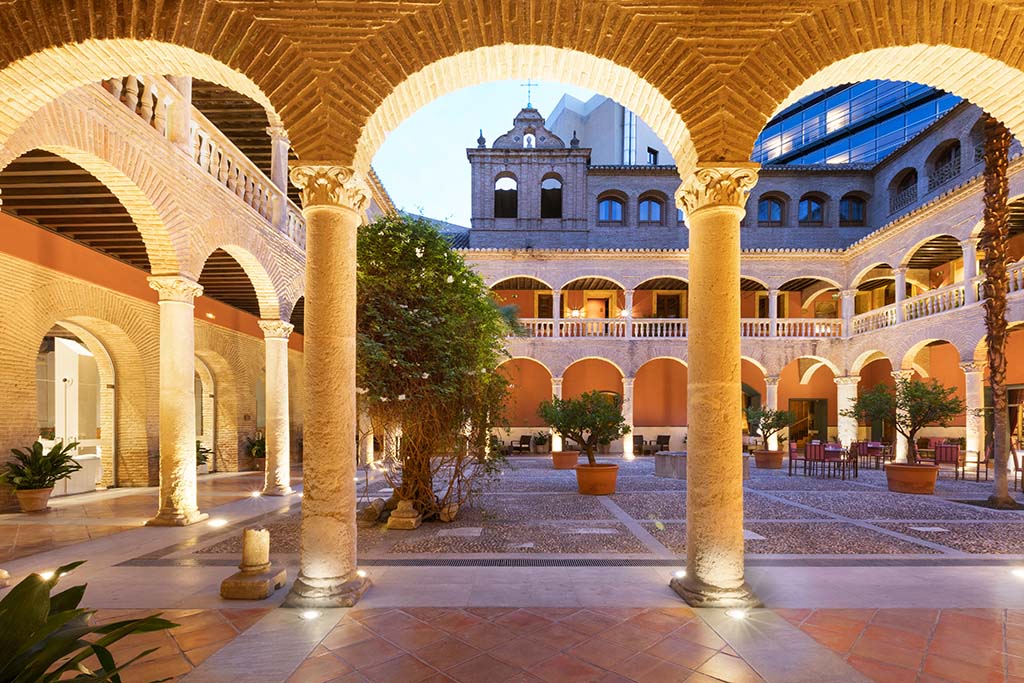
The building opened as a hotel in 2001 and has now undergone a substantial renovation, following an investment of approximately €5 million. Reception, the lounge, El Claustro restaurant and kitchen, together with all the bedrooms, have been renewed, with the work focused on restoring and highlighting the architectural character of the property.
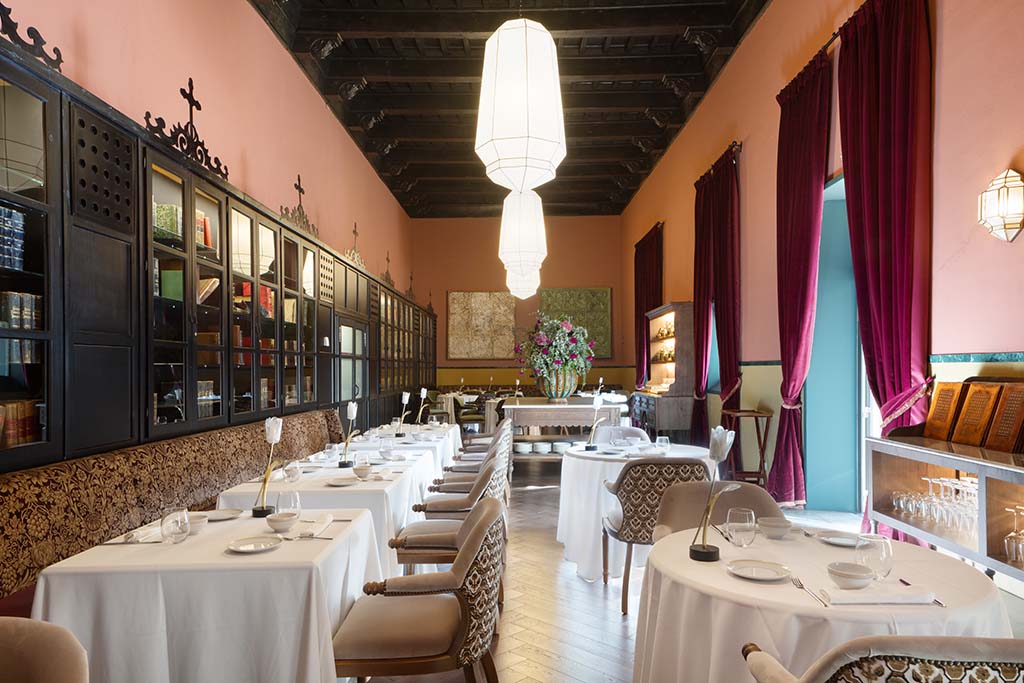
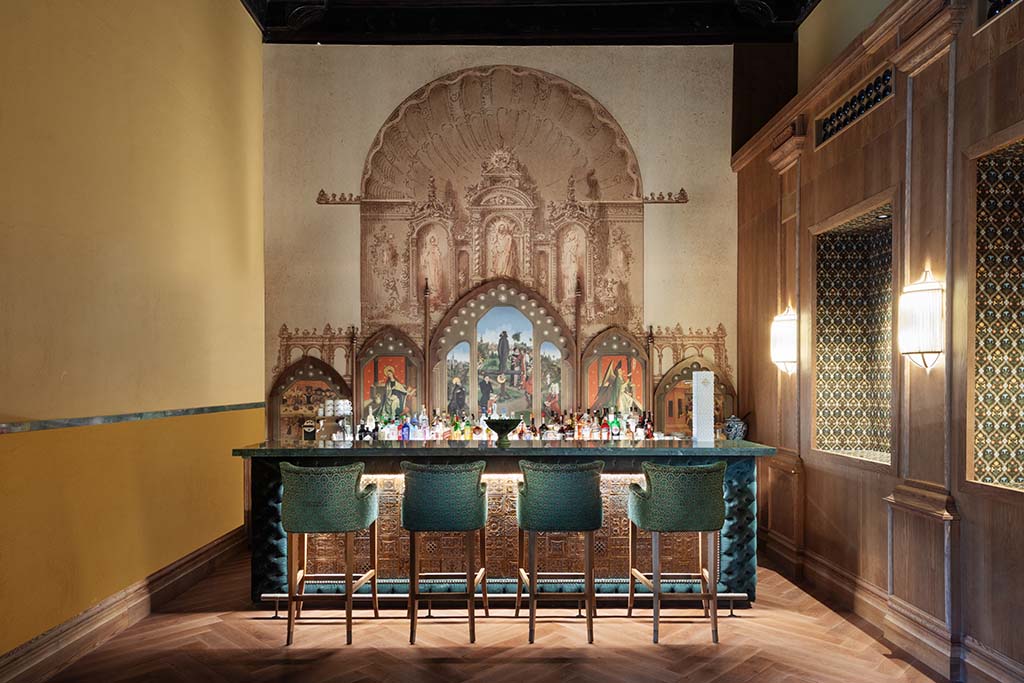
The result feels deliberately quieter and more monastic. The interiors draw inspiration from the building’s religious past, with references to ecclesiastical paintings, saints, wooden imagery and traditional church craftsmanship. A wooden choir-inspired structure forms part of the restaurant seating, while the bar takes its visual language from an altar, with frescoes and a retablo creating an atmospheric focal point. Floral details inspired by convent and church ironwork appear in the balustrades, while timber, rich fabrics and carefully chosen upholstery bring warmth to the spaces.
The references are theatrical enough to be noticed but restrained enough to feel authentic. Nothing needs to shout for attention. A carved wooden detail, an old architectural proportion or the filtered light of the cloister can say more than an elaborate decorative gesture.
ROOMS & SUITES
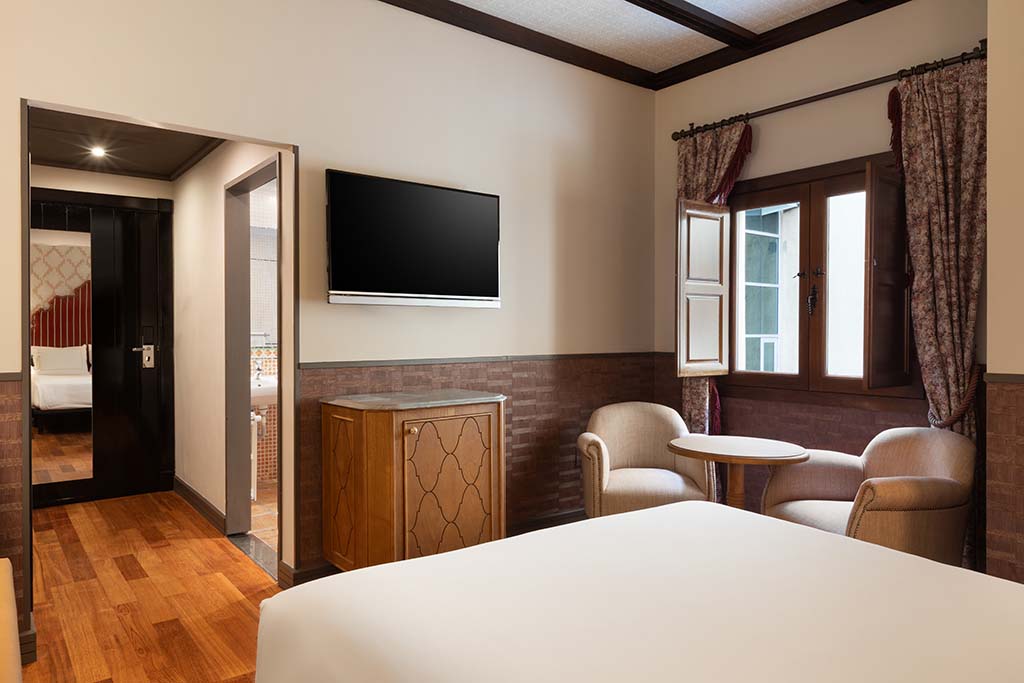
The hotel has 72 rooms and suites, each designed to balance the character of the historic building with the expectations of a contemporary five-star stay. Warm tones, natural fabrics and considered furnishings create a calm atmosphere, while many rooms look towards either Gran Vía or the quieter cloister.
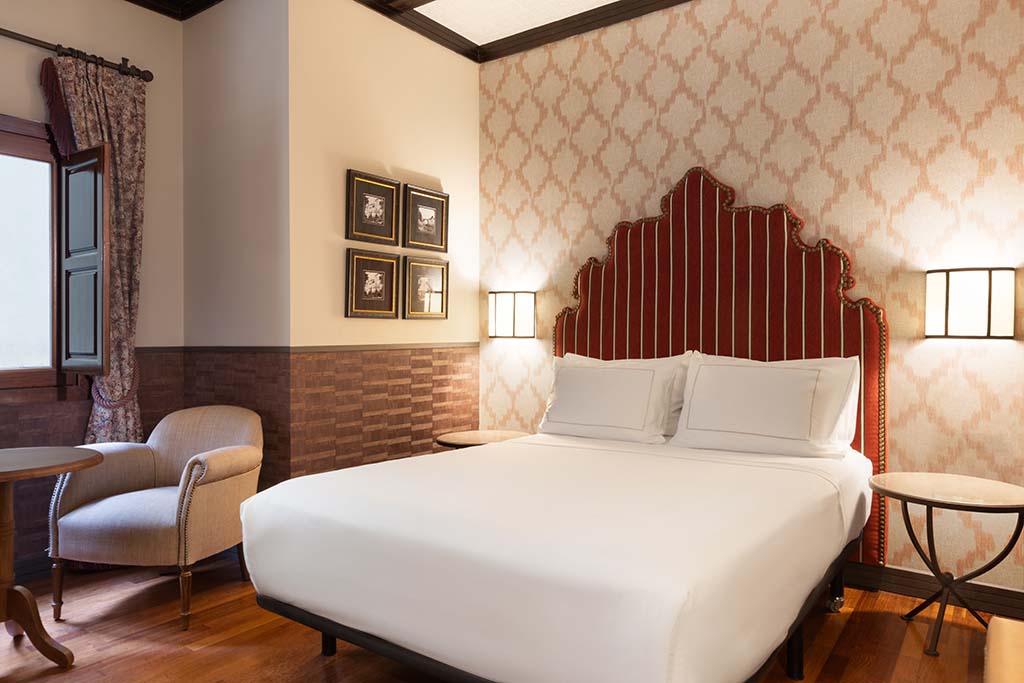
The Suite del Obispo is perhaps the clearest expression of the hotel’s philosophy. Original architectural features meet a generous sitting room, refined furnishings and modern comforts, creating a space that feels less like a conventional hotel suite and more like a private residence within the old convent. It is a useful reminder that historic hotels work best when their history is not treated as decoration. Here, the building determines the mood.
A TASTE OF GRANADA
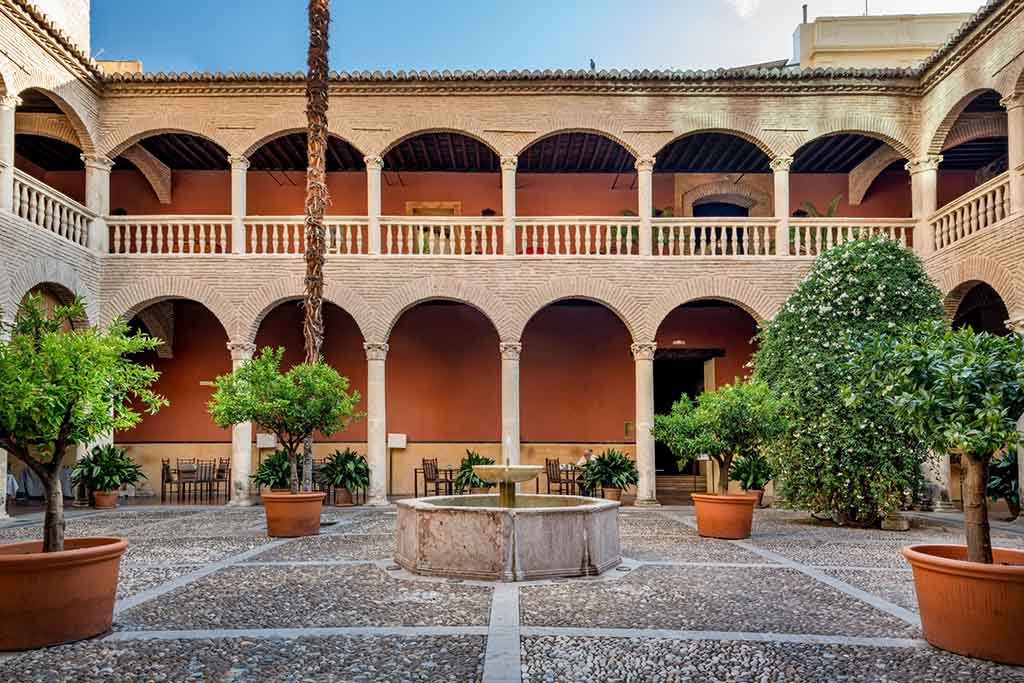
At El Claustro, lunch comes with a strong sense of place. The restaurant occupies the former refectory of the convent at Palacio de Santa Paula, with the adjoining cloister providing one of the most atmospheric settings in central Granada. The food follows the same philosophy as the building: rooted in the city’s history, but firmly looking towards the present. At the helm of the kitchen, Luis Miguel Luque takes Granada’s culinary heritage as his starting point, working with produce from the Vega, the Costa Tropical and the Sierra to create a contemporary interpretation of the province’s cooking.
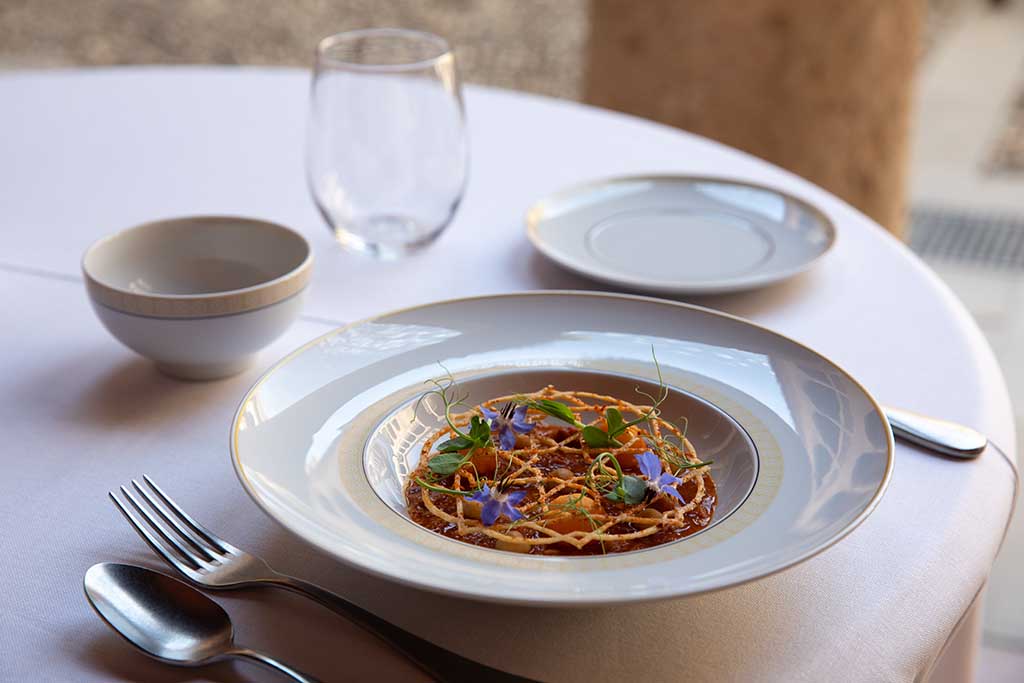
That connection with the territory is also recognised by the Guía Repsol, one of Spain’s leading gastronomic guides, which includes El Claustro among its recommended restaurants in its 2026 edition. The distinction reflects a kitchen built around seasonal produce, local ingredients and a clear sense of identity, rather than elaborate technique for its own sake. Andalusian and traditional Granadian recipes are reinterpreted with a contemporary approach, allowing the ingredients to remain at the centre of the plate.
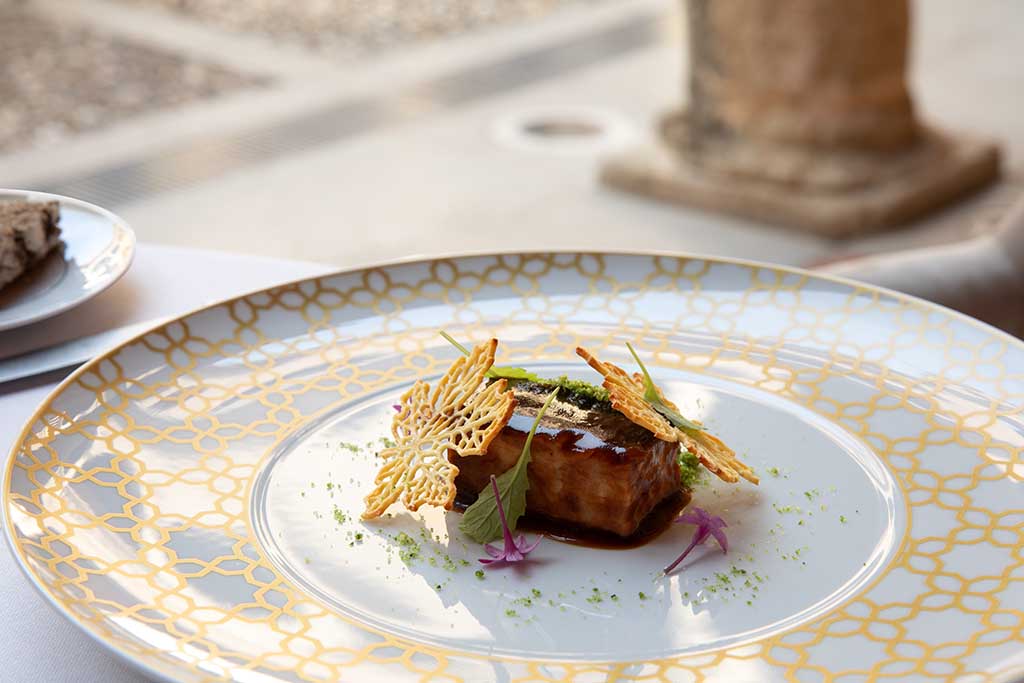
The menu moves comfortably between Granada’s culinary traditions and a more contemporary style. The bacalao kokotxas al pil pil brings a classic Andalusian preparation to the table, while the grilled fish of the day with vegetables places the emphasis firmly on the quality of the produce. Among the more indulgent options, the carrilleras crujientes glaseadas al Pedro Ximénez, served with Padrón peppers and kimchi, add a modern touch to a deeply comforting dish. For dessert, the caramelised torrija with meringue-milk ice cream and almond crumble offers a particularly satisfying nod to Spanish tradition.
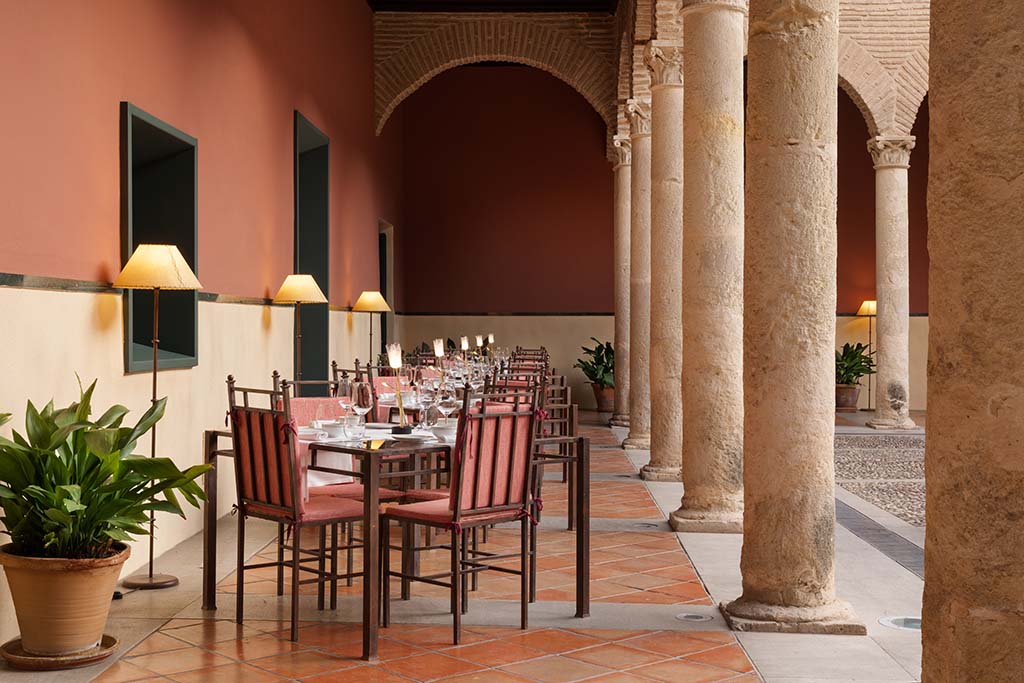
What makes El Claustro special, however, is the way the meal becomes part of the hotel’s wider sense of history. After a morning exploring the Cathedral, the Albaicín or the Alhambra, sitting beneath the old arches of Santa Paula feels wonderfully removed from the city outside. Here, architecture, memory and contemporary Granada meet around the table, with the kitchen providing perhaps the most delicious way to understand the place.
EVENTS WITH A SENSE OF HISTORY
For celebrations, private gatherings and corporate events, Palacio de Santa Paula offers something few hotels can replicate: the opportunity to meet, dine and celebrate within centuries of Granada’s history. Its distinctive architecture and collection of historic spaces have made the hotel a popular choice for families, companies and private hosts looking for an event with a stronger sense of place than a conventional ballroom can provide.
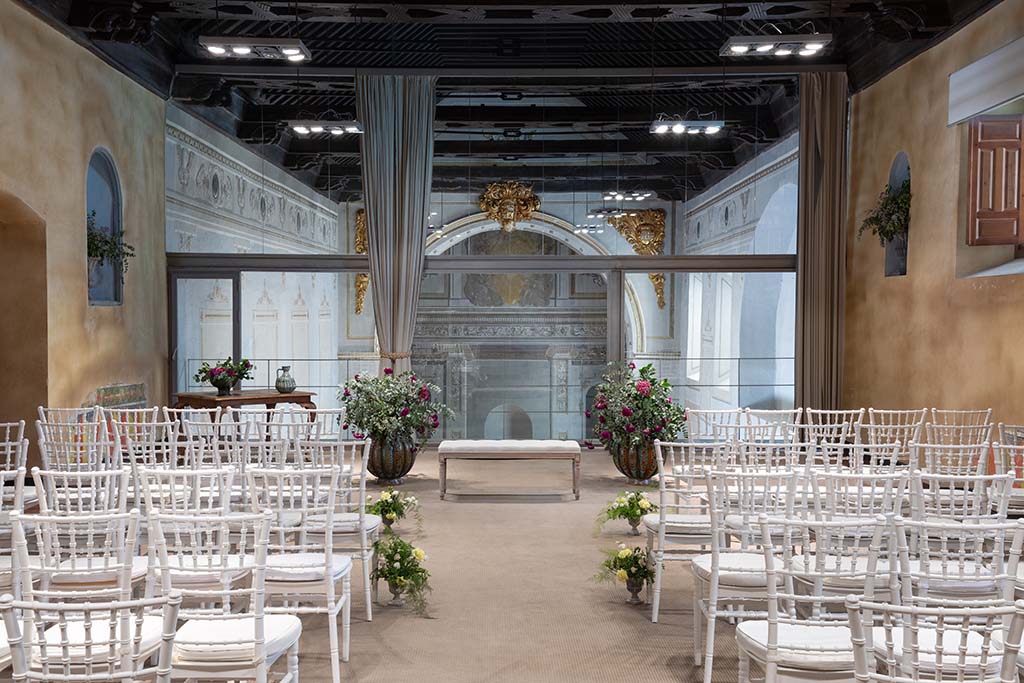
Four event spaces offer different possibilities, from the 181-square-metre Capilla, which can accommodate up to 200 guests, to the more intimate Consejo, a 17-square-metre room designed for private meetings and discreet gatherings. The Coro, with its 111 square metres, and the Atrio, at 85 square metres, provide flexible settings for receptions, presentations and larger occasions. Modern audiovisual technology, high-speed Wi-Fi and personalised business services ensure that the practical side is every bit as polished as the surroundings.
Weddings are particularly evocative here. The historic architecture, arches and former convent spaces create a setting that feels naturally romantic without the need for elaborate decoration, while the cloister provides an atmospheric backdrop for receptions and candlelit dinners. Bespoke banqueting brings Andalusian flavours and local ingredients to the table, with menus designed around the character and scale of each celebration.
For outdoor occasions, the hotel’s historic courtyard offers another distinctive setting, whether for an evening cocktail, a private dinner or a celebration beneath the Granada sky. It is this combination of architecture, intimacy and service that sets Palacio de Santa Paula apart: events here are not simply hosted in Granada, but become part of its history.