
What if the most revealing portrait of Kuwait City is not found in its skyline, landmarks or celebrated architecture, but in a discarded pole, a broken bin, a traffic cone or a security guard’s tea break? For Kuwaiti artist and architect Hamad Almuzaini, these seemingly insignificant details offer a different way of understanding the city, one shaped not only by masterplans and infrastructure, but by the people who quietly adapt, negotiate and leave their mark on the spaces around them.
This idea lies at the heart of Precarious Beings, Almuzaini’s debut solo exhibition and UAE debut, presented by Tashkeel in Dubai. Working across photography, drawing and sculpture, the artist looks at Kuwait City through the details most of us have learned to overlook. His starting point is the city that emerged from the 1951 modern masterplan, but his interest lies less in its architectural ambitions than in what happened afterwards: the improvised repairs, abandoned objects, altered uses and everyday gestures through which a planned environment gradually becomes a lived place.
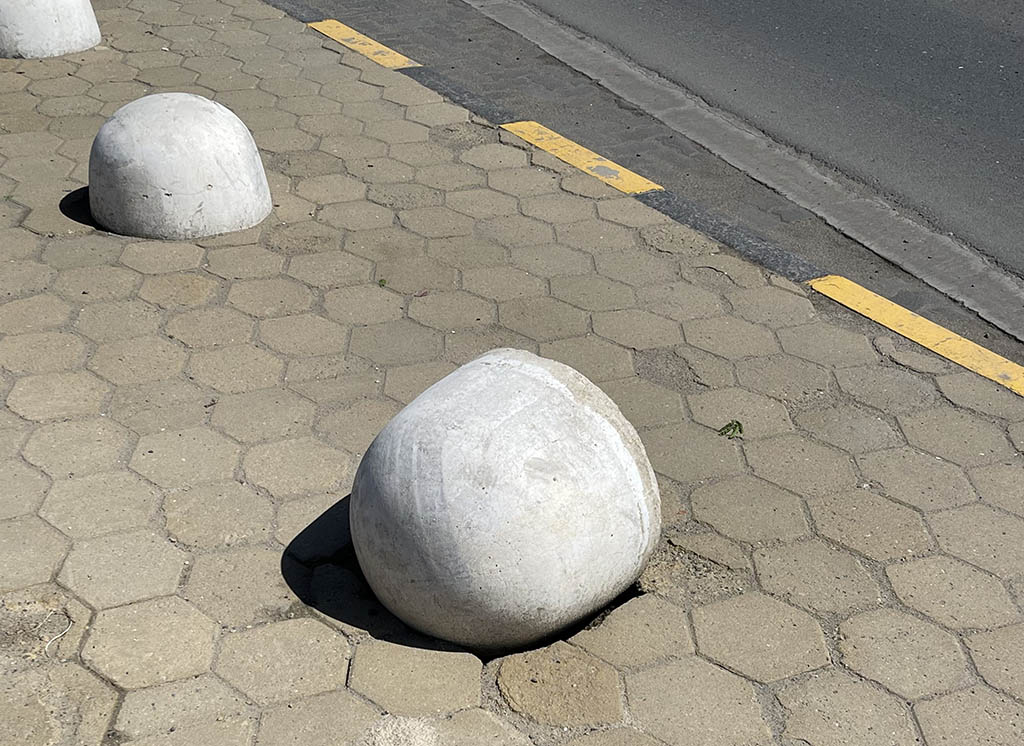
There is a particular intimacy to Almuzaini’s gaze. Born in Geneva, raised between Kuwait and Seattle and trained as an architect in the US, he returned to Kuwait with the distance of someone looking at home both from within and from slightly outside it. His practice turns that distance into a form of attention. A collapsed rubbish bin can become a study of collective authorship; a cup and tea bag can evoke the unseen routine of a security guard; a discarded object can reveal something about how inhabitants negotiate the systems designed around them.
Perhaps that is what makes Precarious Beings so engaging: it asks us to slow down. Beneath the humour and apparent absurdity of Almuzaini’s subjects is a more profound question about how cities acquire memory, identity and meaning. In the following conversation, the artist discusses his relationship with Kuwait City, the architectural thinking behind his work, and why the mundane may sometimes tell us more about a place than its most recognisable monuments.
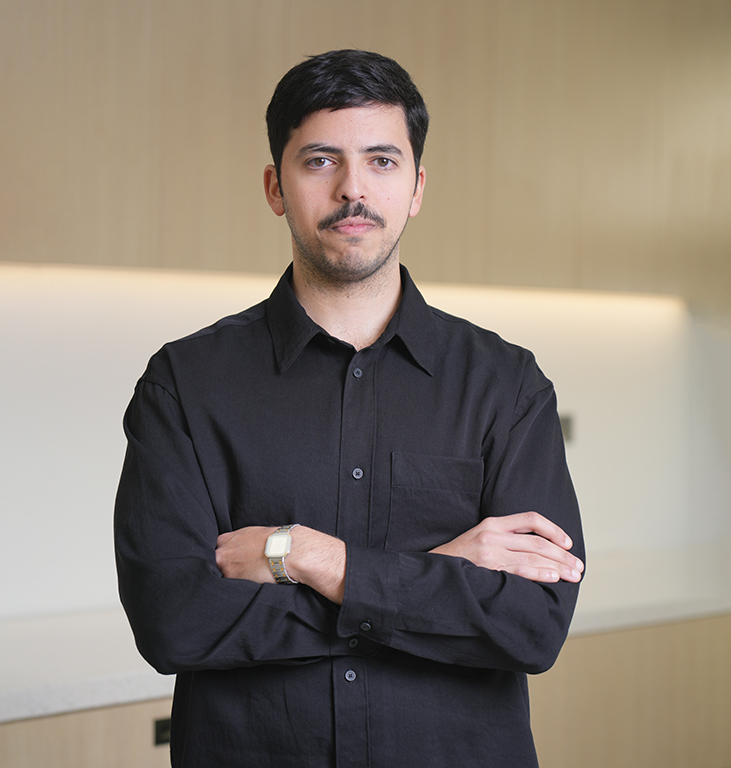
José Berrocoso, our Lifestyle Editor, sits down with Hamad Almuzaini to discuss his relationship with Kuwait City, the stories hidden in its everyday details, and the ways in which architecture, memory and human behaviour shape our sense of place.
Precarious Beings marks your first solo exhibition and your UAE debut. What does it mean to present this body of work in the UAE, particularly when its subject is your own city, Kuwait City?
Changing the context of an observation made in an urban environment into a body of work in a gallery setting is an effective way of amplifying these mundane objects and infrastructures. I believe exhibiting work about Kuwait outside of Kuwait allows a wider audience to relate to the work and consider how it might pertain to their own home, uncovering universal themes rather than seeing the works as specifically tied to Kuwait alone.
What was the starting point for Precarious Beings? When did you begin to realise that your observations of Kuwait City could become an artistic body of work?
I would always photograph different moments across the city. These images were never really complicated; they’d depict something really simple, almost too simple, but their banality elicited a response each time I shared them. People would engage with these images through laughter, a moment of reflection, or a question. I noticed there was room to engage with people’s perceptions of ordinary settings. I’ve always found the mundane quite magical and full of wisdom if you allow it to be, and these reactions encouraged me to continue playing with this idea of perception.
Rather than focusing on Kuwait’s iconic architecture, you turn your attention to broken poles, discarded objects, improvised repairs and other details that most people would probably overlook. What do you see in these things?
I see openings to explore collective authorship through the lens of objects and infrastructures. Within the built environment, we have so many systems at play, whether it’s how traffic is mitigated, areas are zoned, or electrical boxes and poles are placed. I look at broken, discarded, and improvised moments specifically because it’s in these moments that urban planners and inhabitants of a city begin to collaborate in shaping a sense of place. It’s when urban plans veer from their intended purposes that I see a more active role emerge from the inhabitants.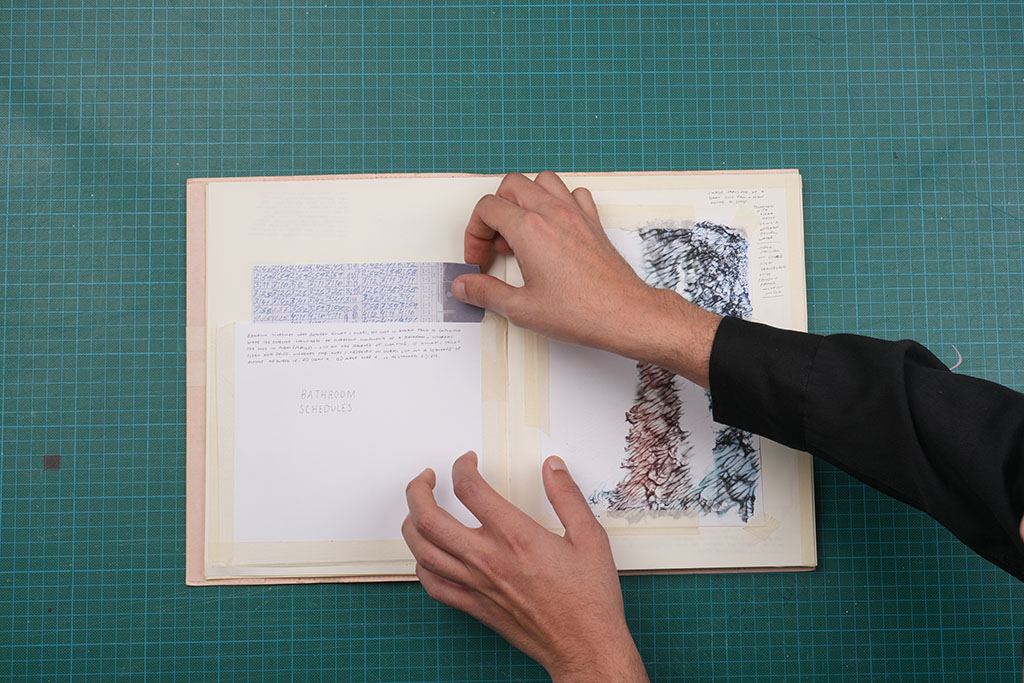
Even if a pole remains discarded on a sidewalk for decades, I view the act of discarding it and retaining its position as an active choice in authorship rather than a passive act of forgetting. It’s continuously participatory, continuing to layer and shape our experiences of a city.
You describe your practice as an investigation into how we construct and negotiate ‘place’. What can these small, everyday interventions tell us about the people who inhabit Kuwait City?
There are really interesting moments beyond just interventions that show this negotiation taking place. Sometimes it’s the very presence of a person in a public space that crafts this sense of place. I’ll give you the example of Trash Receptacles, which shows a series of trash cans that have collapsed to the ground from poles in a coop (supermarket) parking lot in Kuwait.
These trash cans were designed to hang from these poles, but have clearly failed over time. With their failure, I noticed that the stewards of this parking lot assumed the role of repositioning the trash cans, allowing them to lean against the poles, constantly tending to these plastic bins as a gardener would to his flowers.
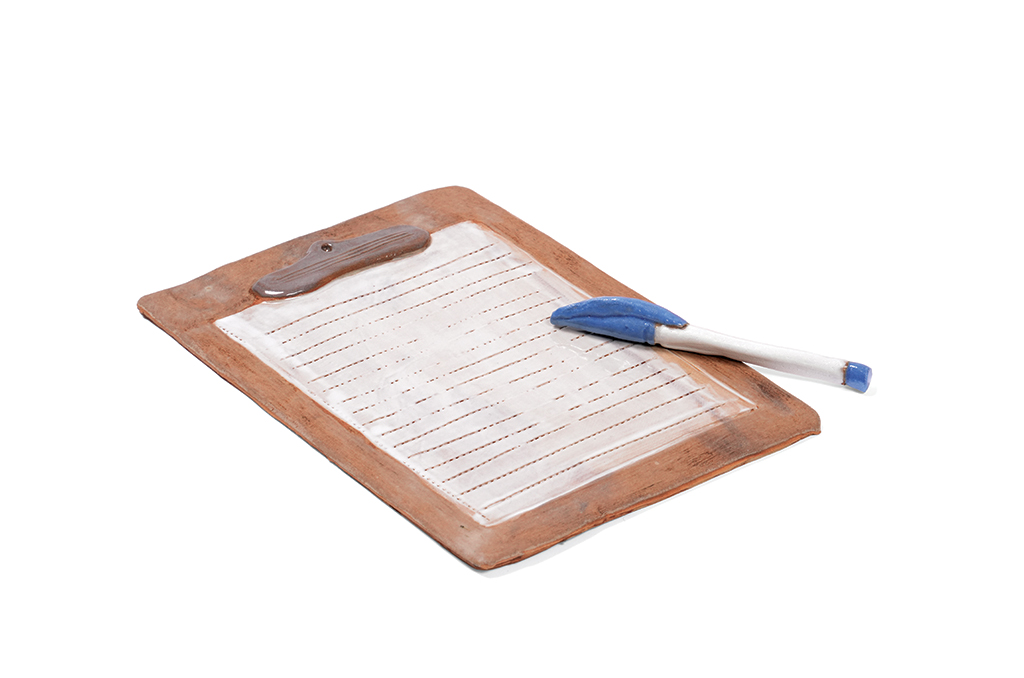
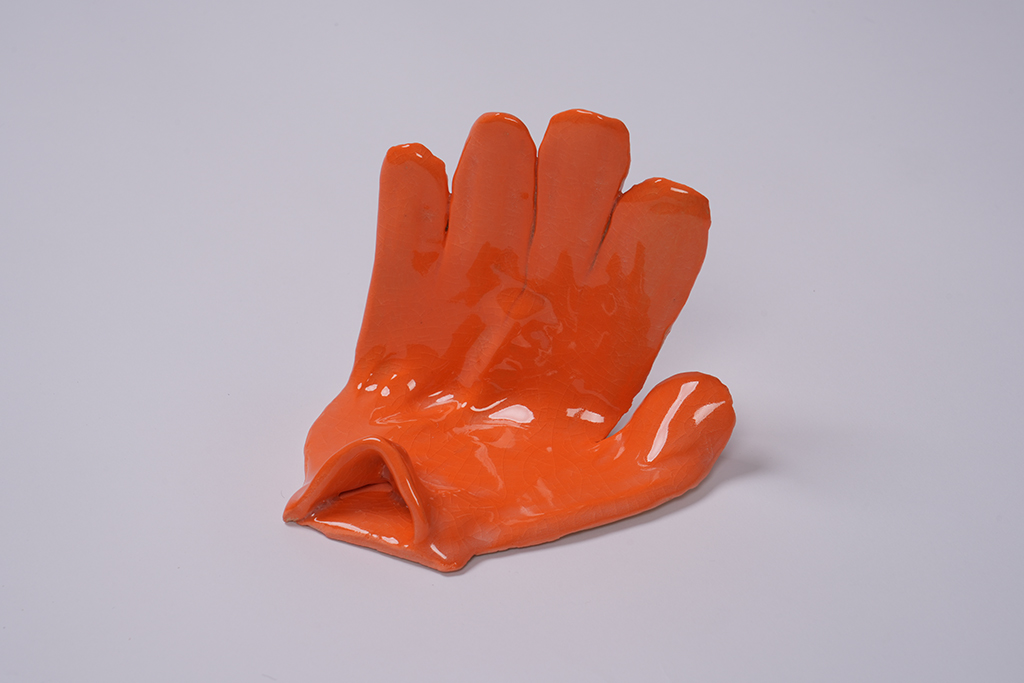
Secondly, I also have Styrofoam Cup and Tea Bag, which alludes to a parking lot security guard I’ve seen over the years, inseparable from his tea breaks, which he seems to have countless times throughout the day. These objects have become inseparable from my experience of entering the parking lot. Along with Casio Watch, Cigarette, and Wedding Band and Guard’s Shoulder Badge, they form a constellation of sculptures that hint at the presence of a security guard.
The exhibition looks at Kuwait City following the introduction of the 1951 modern masterplan. How does that history inform the way you see the city today?
The masterplan introduced a series of infrastructures, zoning logics, and a general layout that shaped Kuwait City as it appears today. Referencing the 1951 masterplan is important in demonstrating how layered the built environment has become. Its implementation produced a ripple effect that continues to shape the city today. The most obvious example is the formation of Kuwait City itself, which was once a mixed residential and commercial area and is now primarily commercial.
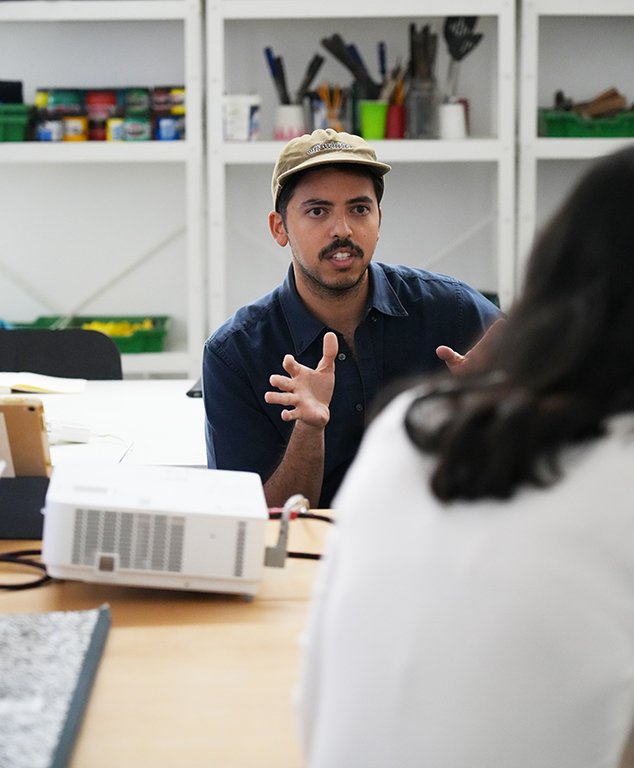
There is a fascinating tension in your work between what a city is deliberately designed to be and what its inhabitants actually make of it. What happens in that space between planning and lived experience?
What happens in that space is its transformation to place. Urban plans without these daily negotiations with inhabitants, is a space with no collective memory or associations to revert back to. A space could have coordinates but difficult to recollect, adrift with no particular characteristics. When we adapt or circumvent, we are claiming that this space is important, and its time for it to transcend into a place. A place is imbued with meaning, memories, and lived experiences. Most times we don’t consciously and proactively carve out a place to inject with meaning, life just occurs and it organically takes on a much larger role.
You suggest that acts of circumventing, negotiating and adapting to the city eventually become so familiar that we stop noticing them. Do you think your role as an artist is partly to make people notice again?
Absolutely. Its a large part of my practice. Precarious Beings asks for a slowness and attentiveness that we are gradually losing as a people. These observations are so simple – yet relatable – that we typically dismiss them as not having much to show. I choose to look at these mundane settings to find deep insights on people and their behaviors across public places.
Sometimes the simplest details could reveal the most, especially because they’ve been disregarded from how mundane they seem at first.
Some of the things you document can initially appear humorous or almost absurd, yet they raise much deeper questions about governance, autonomy and human behaviour. How important is humour to your artistic language?
At times, to see all the moving parts that come together to shape a sense of “place” might be overwhelming, and at times even existential. It requires you to breakup the fabric of reality into all of its disparate pieces, and understanding all the systems at play. From the streets and sidewalks, to the curbs that line those sidewalks and their colored stripes, to the information that’s being delivered by those very colors. It’s a constellation of information (delivered via infrastructures) and how we behave towards or against it all.
Although I don’t lead with humor, I relish in it. The subjects I’m looking at are so simple and mundane, it goes into an absurdist realm. That humor allows the work to be approachable, relatable, and human; I never want to produce work that’s exclusionary, but instead having degrees of intimacy that gives agency to an audience choosing how serious or humorous it can all be.
You trained and worked as an architect before developing your practice across photography, drawing and sculpture. How has architecture influenced the way you make and look at art?
My background and professional experience in Architecture focused mostly on prefabricated and modular construction; this attention to not only details, but patterns in construction methods, made me attuned to systems beyond architectural drawings. I felt a sensitivity towards all patterns and rhythms, and ways in which they break, across the built environment. This sensitivity, paired with my return to Kuwait, made me want to understand home at a different capacity. To understand the foundation of the city, but ways in which we have adapted to it over time, as chaotic as it may appear at times.
Why was it important for you to explore Precarious Beings through three different approaches, Subjects, Situations and Simulations?
I see placemaking as having a scalar relationship, starting from the most minute details, to overarching infrastructures, but also more intangible associations we actively construct with objects and their components. The exhibition begins with Subjects, looking at how infrastructures are arranged but also depart from their intended plans. Situations move beyond infrastructures and their arrangements, and goes into specific observations encountered in Kuwait City. From there, Simulations showcases a constellation of stewards and their objects (ie. security guard and traffic cone, casio watch, lipton tea bag, etc.) to really highlight the breadth of placemaking, and how we are only scratching the surface when describing a particular place.
What happens when something that normally exists unnoticed on a Kuwait City street is reconstructed or represented inside a gallery? Does its meaning change?
Of course. To change a fleeting observation into a graphite drawing immediately embeds a sculptural quality to something that goes unnoticed. By repositioning these objects and infrastructures within a gallery setting, you are immediately amplifying their noteworthiness and presence. These symbols of placemaking take on a different life; they are no longer a backdrop that facilitate your everyday movements, but something worth taking note of.
As a Kuwaiti artist, does looking at Kuwait from outside Kuwait and presenting it in the UAE, change your own relationship with the city?
There is a constant longing for Kuwait within my practice – not only to return to it, but to understand it, and observe it even further. Observation naturally requires some sense of detachment, to look from a bit of distance rather than living “in it”. By creating this body of work, I found myself reconnecting and bridging that distance through my perspective, and what I deem special about “home”. To present this in the UAE only further solidified the significance of Kuwait within my practice. Although most of the subjects explored in this exhibition are quite universal and relatable to all people who live in cities, my inspiration and starting point continues to be anchored to Kuwait.
After walking through Precarious Beings, what do you hope visitors will notice the next time they walk through a city whether that is Kuwait City, Dubai or somewhere else?
To walk around with a sense of wonderment, curiosity, and stillness. There is much yet to discover about a city – these findings will only bring about wisdom about people.