
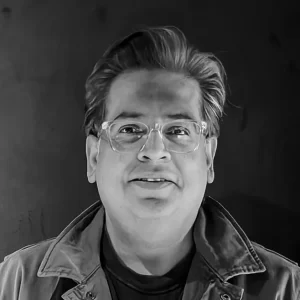
Building meaningful collections that challenge narratives and inspire change.
In the evolving world of contemporary art, where collecting reflects both cultural responsibility and aesthetic vision, Laura del Arco represents a new generation of forward-thinking patrons. As founder of Del Arco Collection and PRIOR Art, she has built a practice rooted in curatorial insight, long-term artist support, and a commitment to amplifying historically overlooked voices. Her interests centre on feminist frameworks, symbolic power, and artists who challenge established narratives through bold expression.
Moving between Barcelona and Abu Dhabi, del Arco brings an international perspective shaped by dialogue between cultures, histories, and emerging creative landscapes. For her, collecting extends far beyond acquisition; it is about building meaningful relationships, creating opportunities, and contributing to conversations that shape the wider art world.
Through PRIOR Art, she furthers this mission by supporting underrepresented talent through exhibitions, residencies, advisory work, and curatorial initiatives. In this exclusive conversation with CP Magazine Kuwait, Laura del Arco shares her views on collecting, representation, and how thoughtful patronage can help shape culture for generations to come.
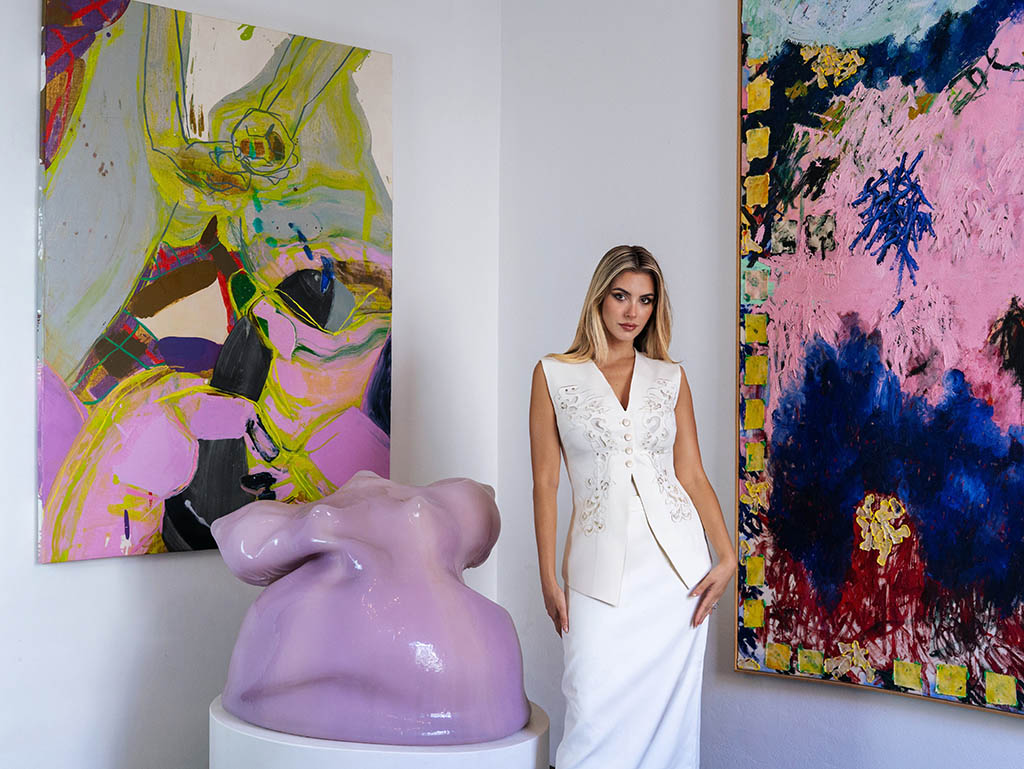
Please briefly introduce yourself to our readers.
I’m Laura del Arco, founder of Del Arco Collection and PRIOR Art. I am a creative director and art collector with a strong focus on curatorial research and feminist frameworks, particularly artists who are redefining symbolic power. My practice moves between Barcelona and, more recently, Abu Dhabi, and combines long-term cultural support, art advisory, and curatorial forecasting.
What first pulled you into collecting contemporary art?
My passion for art began as a lived experience. My first memories are of my mother painting at home, and that early sense of connection stayed with me. When I lived in Shanghai, I began visiting galleries and exhibitions every weekend to better understand the culture around me. Through that immersion, I realised that art could help me understand my own place in the world.
I became especially sensitive to how women are represented and misrepresented in visual culture. Collecting contemporary art became a way of engaging with those questions of identity, belonging, and self-representation. It was never just about acquiring pieces, but about curating my own experiences through their voices.
Do you remember the first artwork you bought and why it mattered?
Yes. What mattered wasn’t the name or the price. It was the shift in responsibility. The moment you acquire a work, you enter into a relationship. You are not just a buyer; you become part of the artist’s trajectory. That realisation changed how I approach collecting forever.
What does “Del Arco Collection” stand for in one sentence?
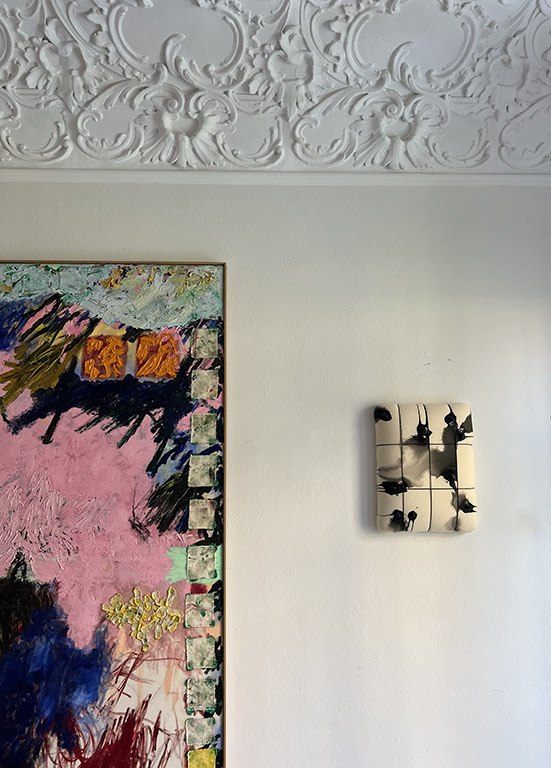
Del Arco Collection stands for long-term, strategic support of artists who reshape cultural narratives through symbolic depth.
Why was 2018 the right moment to found the collection?
2018 was the year I went to China for the first time. That experience shifted everything. Being immersed in a completely different cultural and artistic ecosystem made me want to start collecting seriously. I wasn’t yet thinking about building a collection in a strategic sense. I simply felt the urge to engage, support artists, and begin acquiring works.
When you see a work, what’s the instant “yes” signal?
When it fits within the focus of my collection but still destabilises me slightly. If the piece offers a new perspective or challenges my existing understanding, that is usually a yes.
What’s your personal rule for saying “no”, even to a beautiful piece?
If it does not add conceptual value to the collection, I do not buy it. Beauty alone is not enough. Every acquisition must strengthen the narrative of the collection.
How do you balance emotion and strategy when acquiring art?
Emotion is the entry point. I trust my intuition deeply, but I verify it through research. The most powerful acquisitions happen when instinct and long-term thinking align.
What role does research play vs pure intuition?
Intuition selects. Research validates. I genuinely enjoy the research period that follows a strong gut feeling, and I would never collect without both. I also have a “sleep on it” rule. If I wake up the next morning still thinking about the piece, it is usually the right choice.
What do you feel is still misunderstood about collecting women and queer voices?
It is often seen as limiting or excluding, as if focusing on women and queer artists narrows the perspective. For me, it does the opposite. It broadens representation and visibility beyond a single, linear narrative that has dominated the art world for decades.
Supporting these voices is not about exclusion. It is a conscious and personal choice. As a woman, I feel understood and reflected in many of the questions these artists raise. Their work resonates deeply with me and inspires me. At the same time, it requires responsibility, patience, and long-term conviction.
What kind of representation gap in the art world bothers you most today?
Intersectional representation. There has been progress, but there is still not enough structural redistribution.
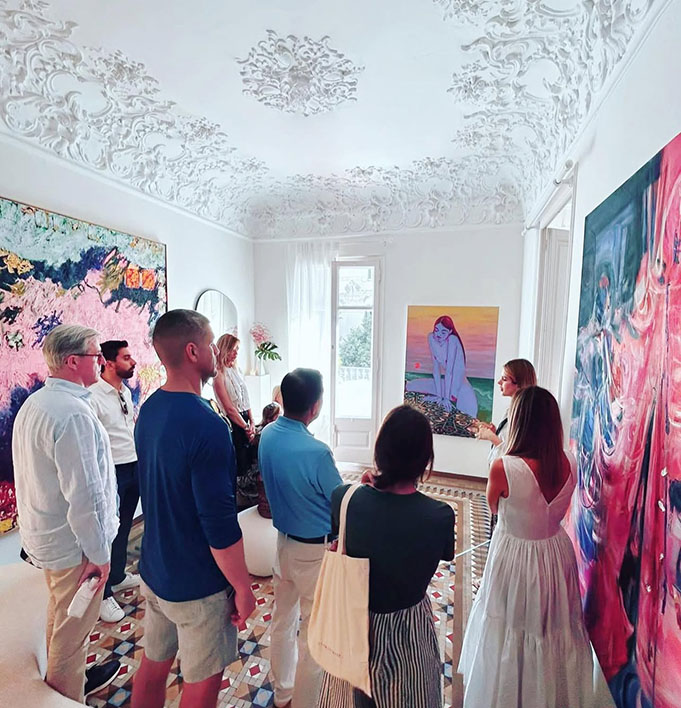
What does long-term support look like for you beyond buying works?
Studio visits, strategic introductions, institutional placements, loans to exhibitions, meaningful conversations, and visibility. Support means being present throughout different phases of an artist’s career, not just at the moment of acquisition.
How do you build trust with artists and galleries over time?
In a space where artists, galleries, and collectors are all exposed in different ways, trust is everything. For me, it is built through transparency, empathy, and responsibility. It lives in the quiet decisions, integrity, and intention shown over time.
What is PRIOR Art trying to offer that traditional institutions often miss?
PRIOR was founded in 2020 with a clear intention: to support the visual arts and give voice to internationally and historically underrepresented artists.
We develop different lines of action, including artistic residencies, exhibition programming, curatorial projects, and strategic art advisory, all designed to promote and support new voices.
Traditional institutions often validate artists once they are already established. PRIOR is interested in engaging earlier, working closely with artists during moments of research, experimentation, and growth. That proximity allows for deeper dialogue and a more agile response to the cultural landscape.
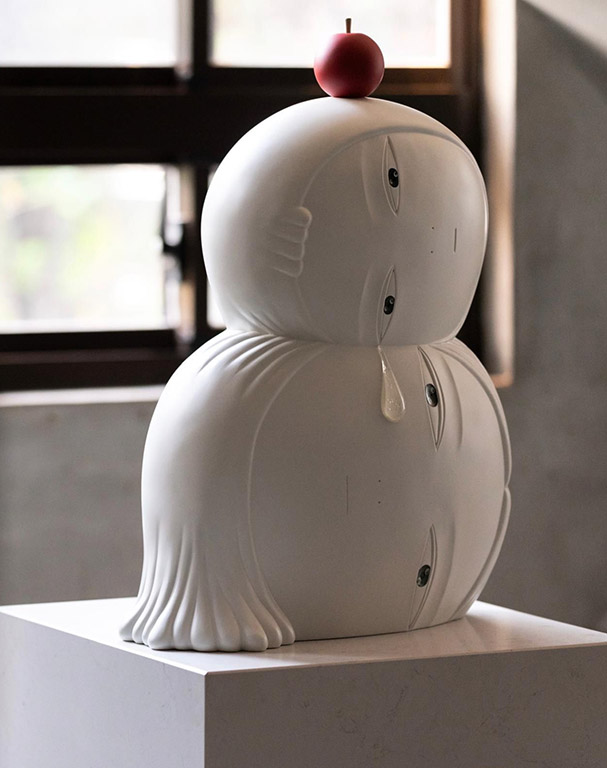
How do Barcelona and now Abu Dhabi shape your curatorial eye differently?
Barcelona keeps me connected to my roots, to materiality, to the body, and to a sensibility that feels intuitive and tactile. There is something grounded and human about working there.
Abu Dhabi sharpens my perspective differently. It introduces a cross-cultural dimension to my thinking. The dialogue between tradition and rapid transformation here pushes me to view art through a broader lens.
One keeps me rooted in embodiment. The other expands my horizon.
How do you think about storytelling when you install the collection in a space?
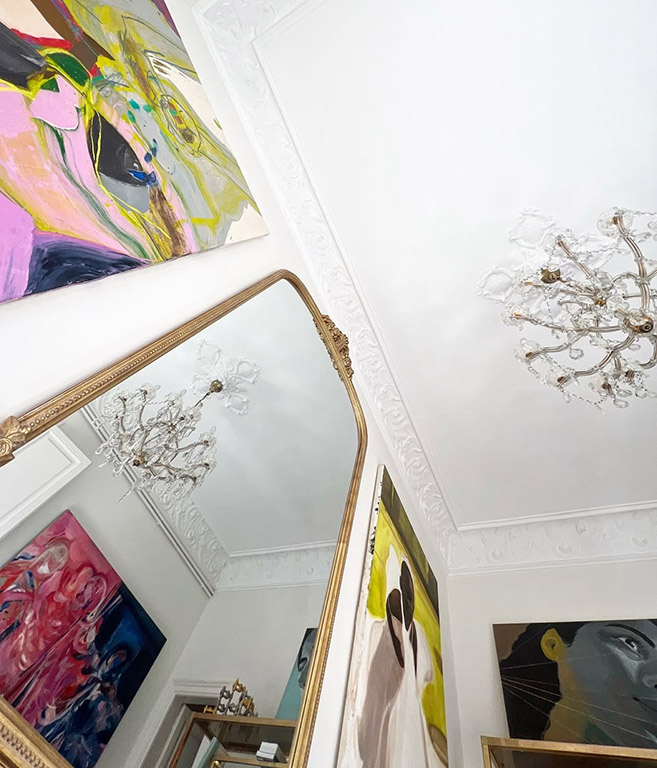
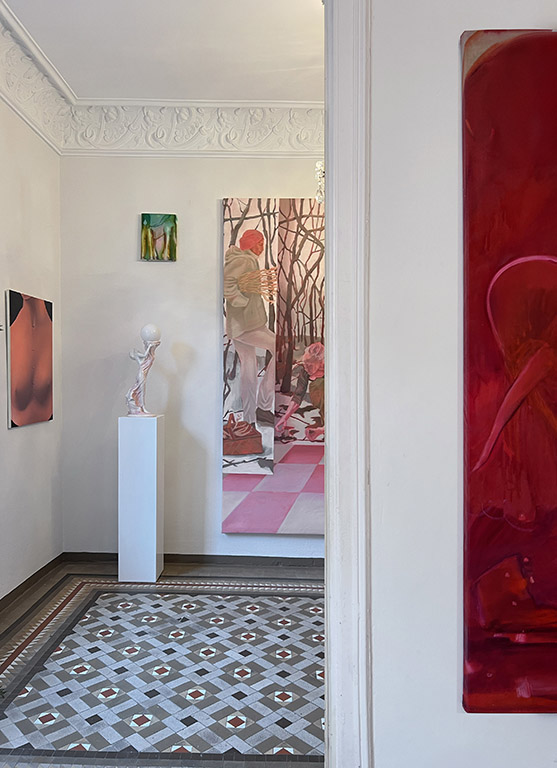
I enjoy curating around different ideas and letting them quietly unfold through placement. Installation is never random. It is always an intentional composition. Sometimes the message is not loud. It is hidden in the dialogue between two works, in the distance between them, in a subtle tension.
I want the works to speak to each other and to the viewer. What fascinates me most is that once the installation is created, the narrative no longer belongs only to me. It is always interesting to hear how others interpret it and what connections they discover.
What do you want a visitor to feel in the first 30 seconds at PRIOR?
Presence and awareness. A sense of having entered a space that invites them to slow down and reconnect with themselves.
Your background is in creative direction. How has that shaped your taste?
Creative direction trained me to understand visual hierarchy, narrative clarity, and balanced composition. But what shaped my taste most is the search for conceptual depth beyond aesthetics alone.
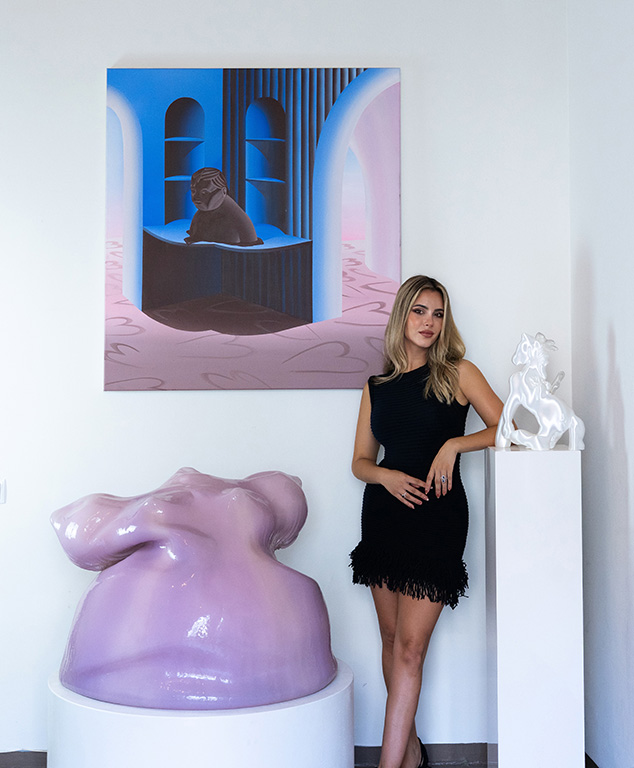
What’s the most valuable lesson you learned as a young female collector?
To trust my intuition and never apologise for ambition.
I understood early on that conviction is essential, but so is knowledge. I made it a priority to understand structures and market dynamics as well as anyone in the room. Confidence backed by competence changes everything.
Which voices or regions do you think the global art market still overlooks most?
For me, it is less about specific regions and more about narratives.
I would, for example, like to see greater visibility given to diasporic experiences and identities. The complexity of belonging to more than one place and carrying layered histories is incredibly rich. Yet these stories are often simplified or framed through a single lens. The art world still has room to better support and understand diasporic perspectives as lived and evolving realities.
Your message for us at CP magazine?
Thank you for creating space for these conversations. Giving room to reflect and express ideas beyond the market is important. Platforms like yours help broaden the dialogue, and that truly matters.