

Hidden among the rolling vineyards and forested foothills of Georgia’s Kakheti region, where the Caucasus Mountains meet one of the world’s oldest wine landscapes, Lopota Lake Resort & Spa feels quietly removed from the rhythm of modern travel. What began as a small lakeside guesthouse has evolved into one of the country’s most compelling retreats, where considered design, sustainability and a deep respect for the surrounding land shape every detail. Earth-toned interiors echo the colours of the landscape, while vineyards, orchards and solar-powered systems reflect a thoughtful commitment to living in balance with nature. Days unfold slowly between the lake, the spa and long lunches under wide Georgian skies. The result is a destination where aesthetics, atmosphere and authenticity come together in effortless harmony.
There are places where the landscape quietly dictates the pace of life. Lopota Lake Resort & Spa, tucked into the foothills of the Caucasus Mountains in eastern Georgia, is one of them. The drive from Tbilisi takes just over two hours, yet the transition feels far greater. As the road begins to climb and wind through forested hills and farmland, the air shifts, the horizon expands, and the sense of arrival is marked not by a grand entrance but by the slow reveal of water, vineyards and mountains layered one behind the other.
At the heart of the property sits a broad, tranquil lake, its surface often broken only by the occasional ripple of wild geese or the soft sound of frogs after dusk. Around it stretches a 60-hectare estate where vineyards, olive groves and woodland merge into the wider Kakheti countryside. The effect is less that of a hotel complex and more of a self-contained rural village, one where architecture, landscape and daily life seem deliberately interwoven.
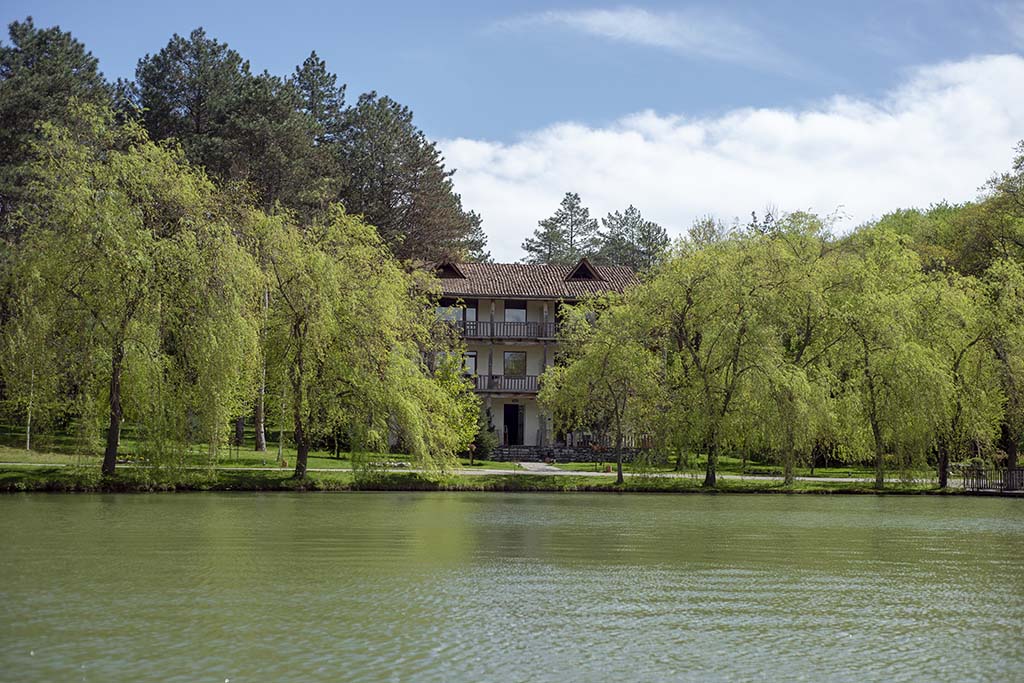
What began in 2008 as a modest seven-room guesthouse has evolved into a substantial resort with more than 300 rooms spread across sixteen buildings, yet it has managed to avoid the anonymous feel that often accompanies growth. The structures appear scattered rather than imposed, chalet-like houses, contemporary pavilions and low stone buildings stepping gently around the shoreline. Walking through the estate rarely feels like navigating a resort; it feels closer to wandering through a quiet lakeside settlement.
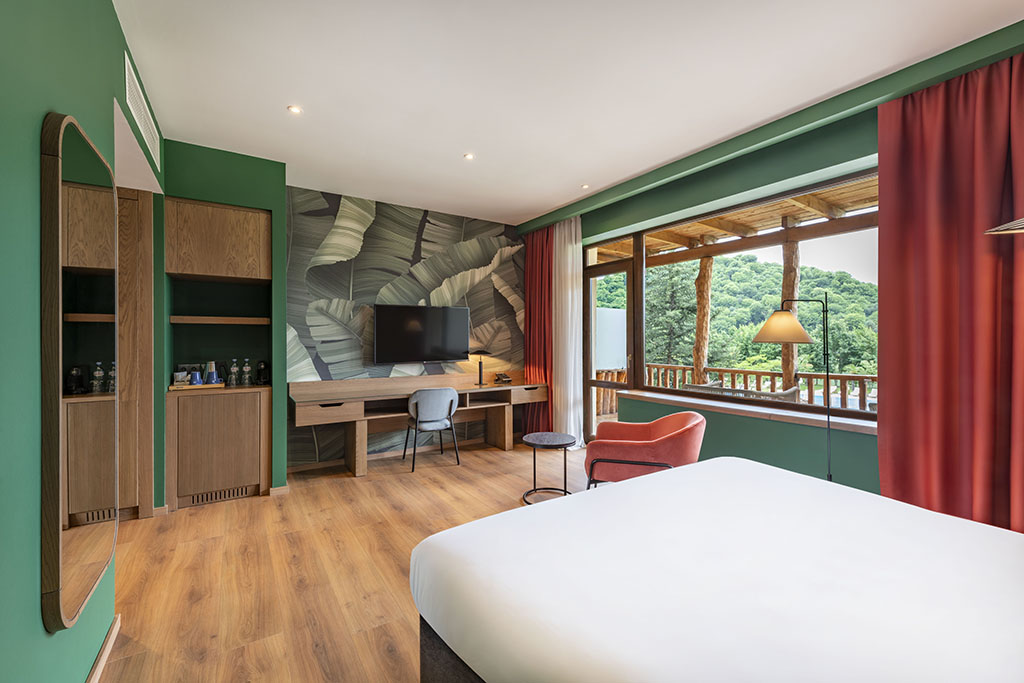
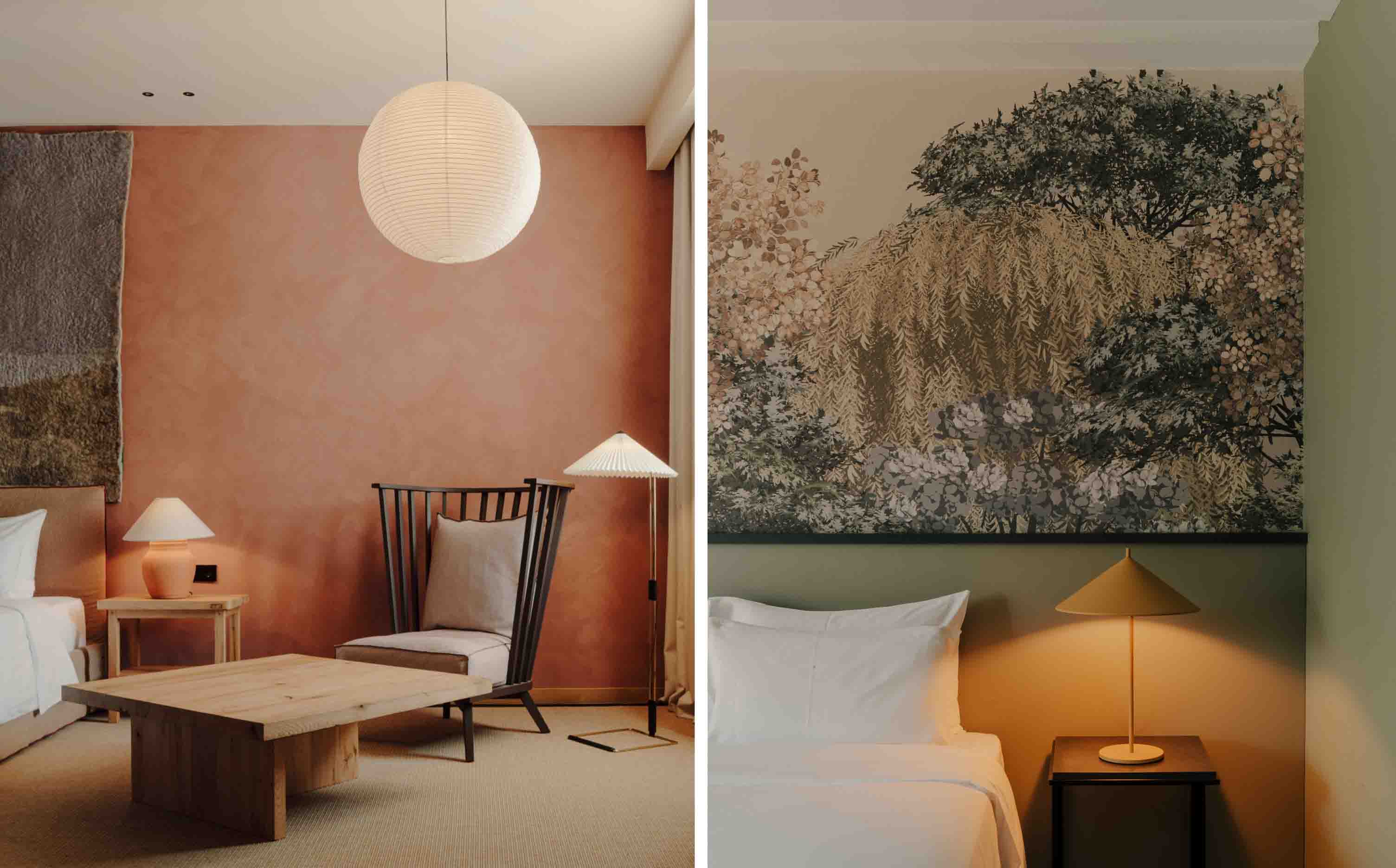
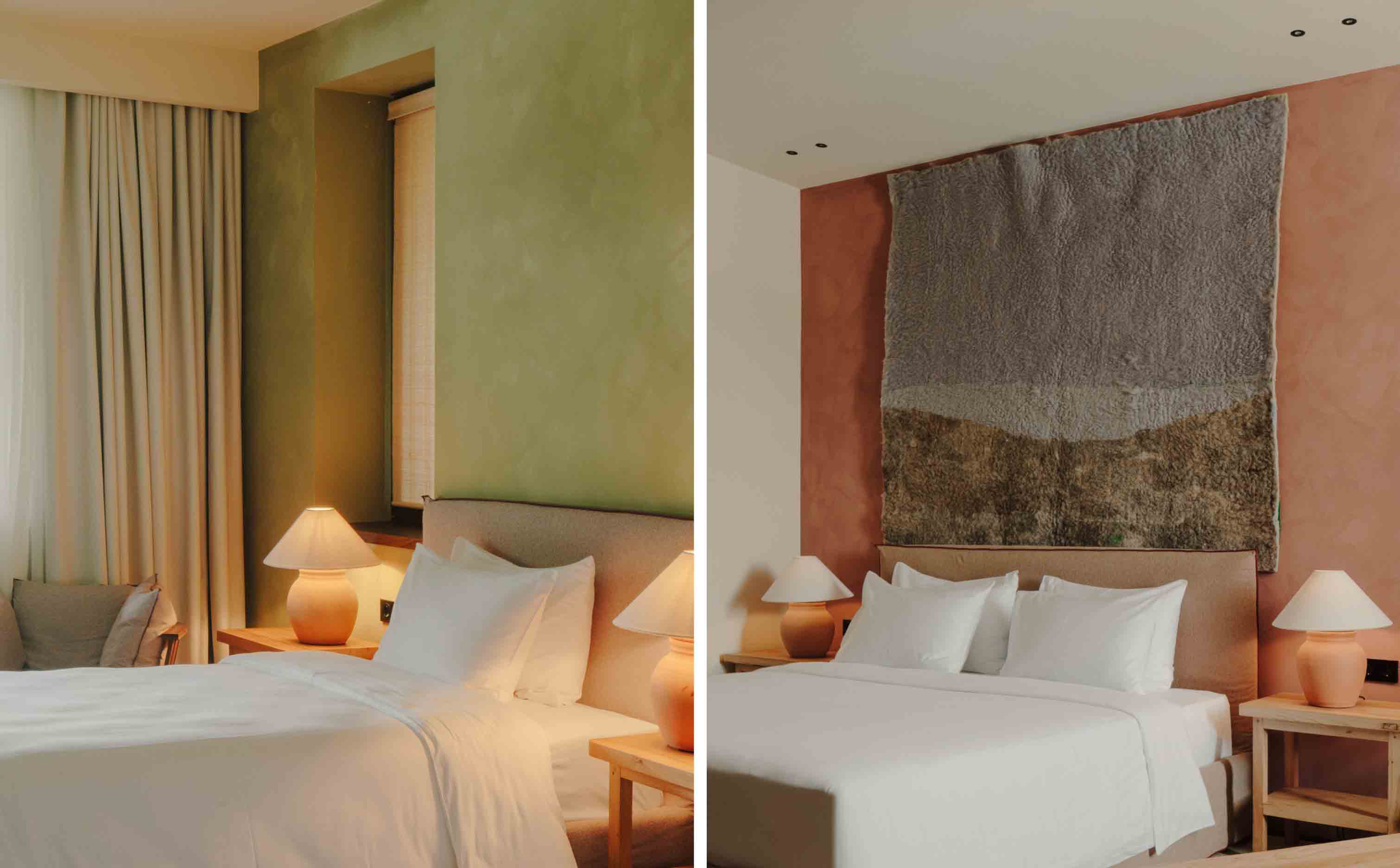
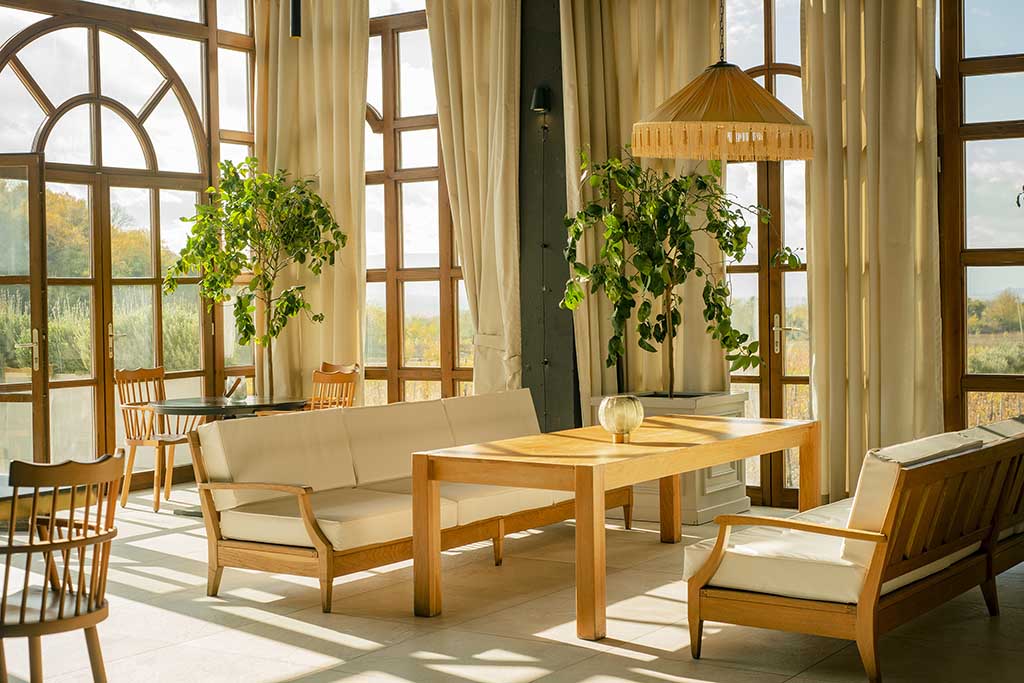
Recent renovations have sharpened the design identity without losing that sense of place. Interiors created by the Tbilisi-based studio 10:10 Interiors draw directly from the surrounding landscape, using natural materials such as clay, wood, linen, felt and woven straw, to create spaces that feel calm, grounded and quietly tactile.
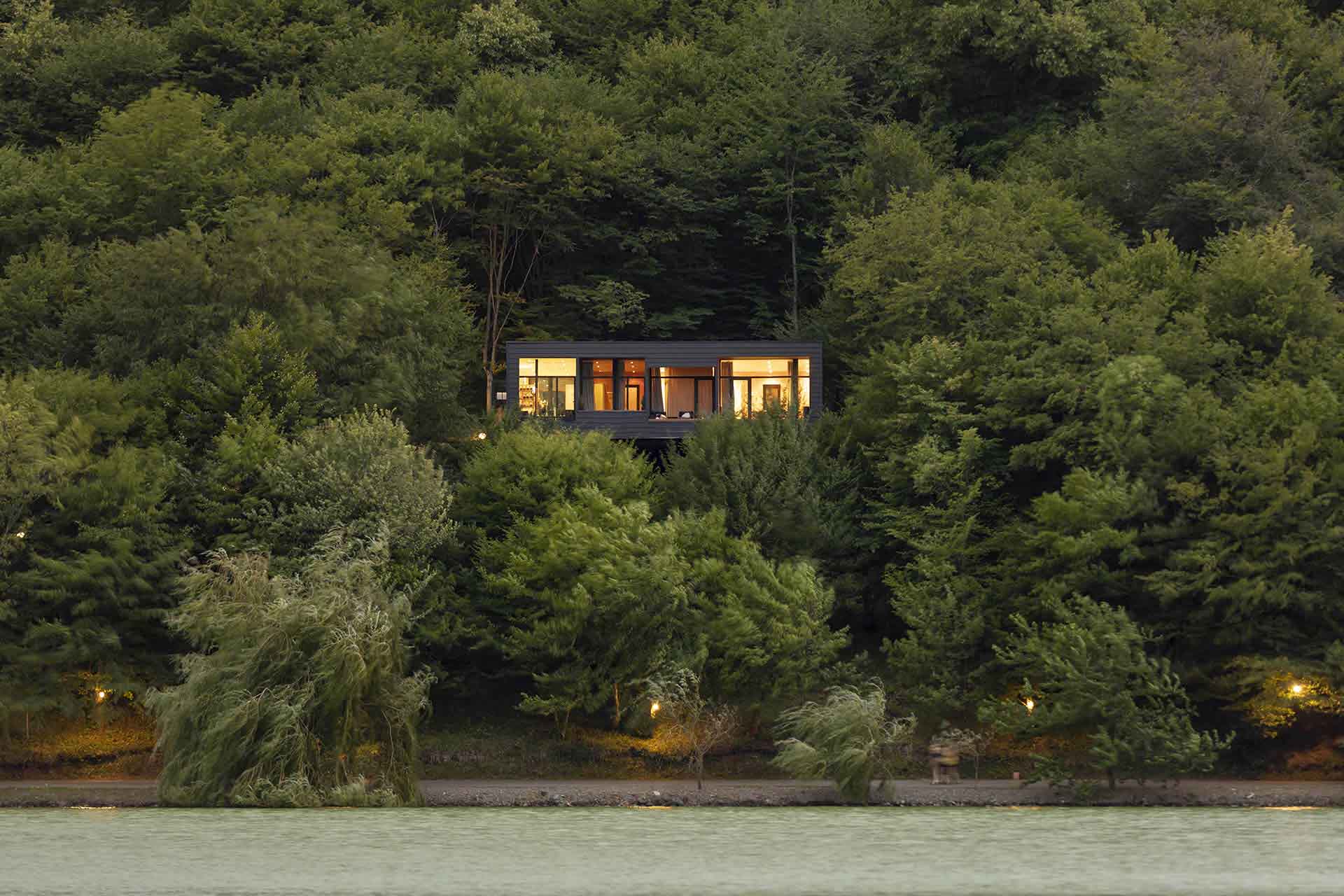
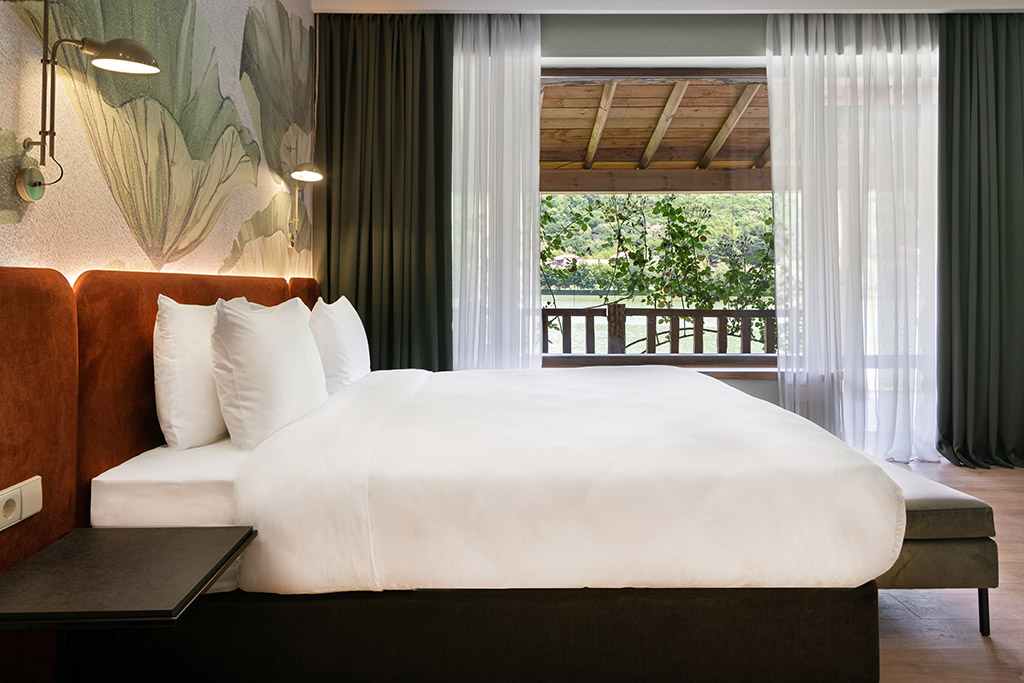
The palette is particularly thoughtful. Some rooms carry a warm, earthy clay tone reminiscent of traditional Georgian ceramic vessels, while others are finished in soft pistachio greens that echo the vegetation surrounding the lake. These colours are not decorative gestures so much as reflections of the environment outside the window. Almost every room opens onto a private balcony overlooking the gardens, vineyards or distant mountain ridges, reinforcing the sense that the outdoors is never far away.
Furniture blends Georgian craftsmanship with a few quietly elegant international pieces. Honey-coloured wooden floors are softened by hand-woven jute rugs; textured felt artworks by local artist Mariana Chkonia bring warmth to otherwise pared-back walls. The overall effect is one of understated comfort rather than overt luxury spaces designed less to impress than to make staying in them feel instinctively easy.
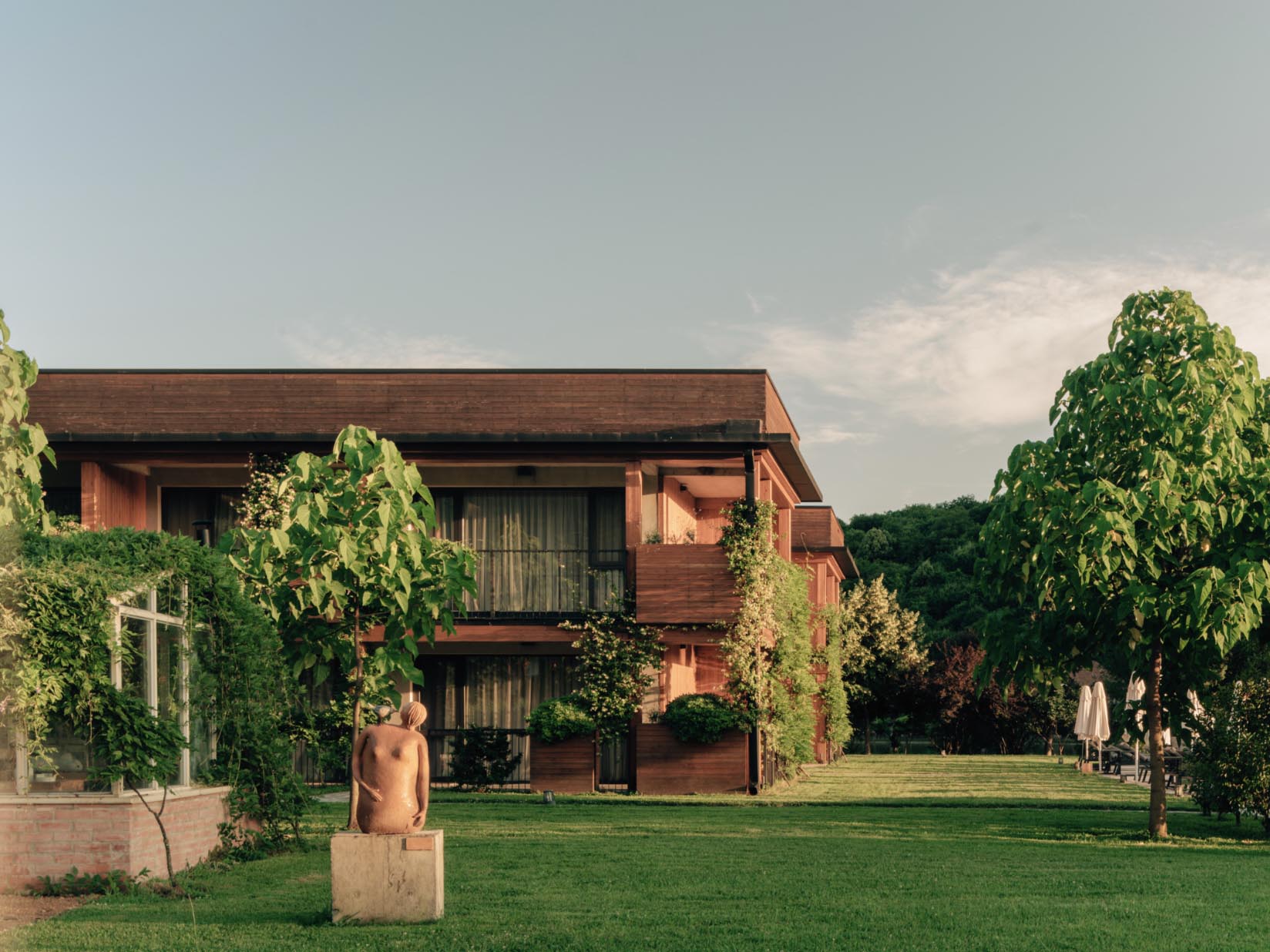
Outside, the resort unfolds slowly. Paths lead past orchards, vegetable plots and beehives producing the honey served at breakfast. Solar panels generate roughly a quarter of the estate’s energy needs, while much of the produce served in the restaurants is grown within the property’s own fields and gardens. Sustainability here is not presented as a slogan; it simply feels built into the rhythm of the place, part of a wider commitment to maintaining the landscape rather than overwhelming it.
Food is a central part of the experience. The estate’s restaurants range from relaxed family-style dining to more polished evening venues, though the most memorable meals tend to be the simplest. At Khaketian Corner, a traditional restaurant positioned beside the lake, long wooden tables fill with generous platters of regional dishes: skewered meats cooked over open flame, pillowy khachapuri bread oozing with molten cheese, dumplings bursting with savoury broth and sauces thick with walnuts or plums. Dinner often stretches long into the evening as the sun fades behind the Caucasus peaks.
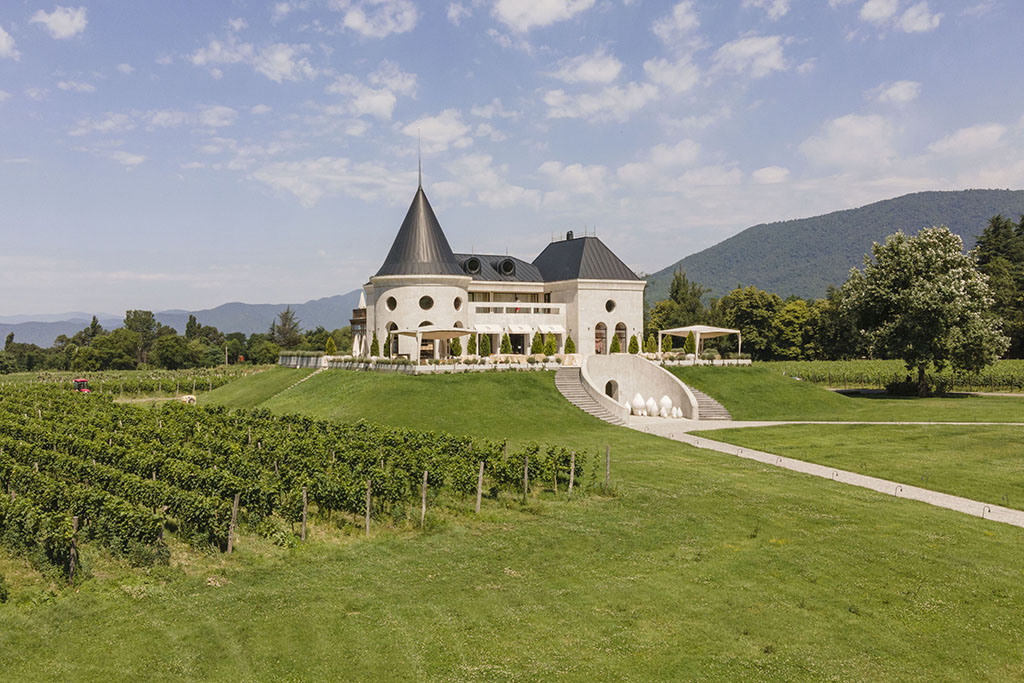
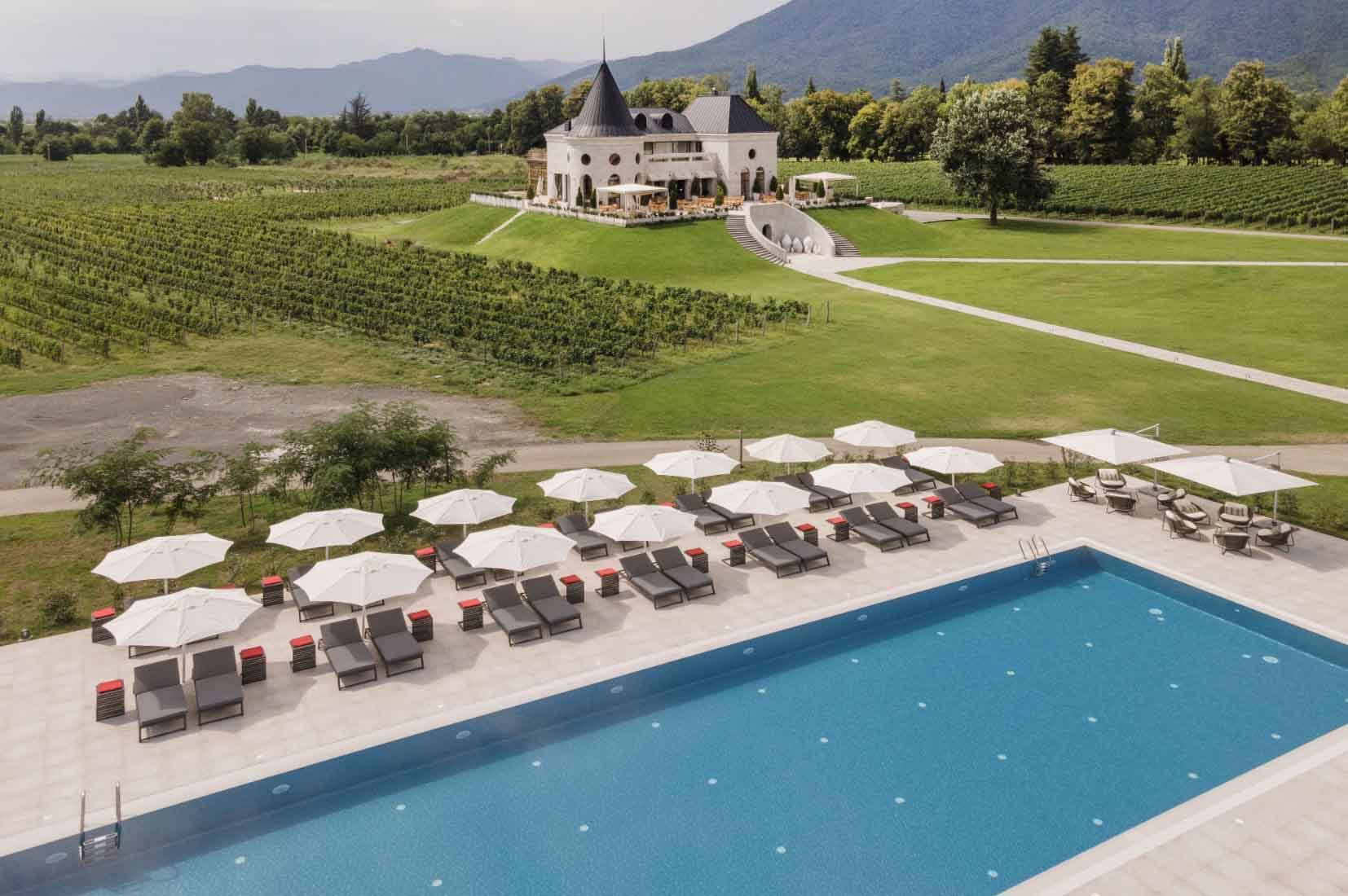
For those seeking something different, the Asian-inspired Ike offers a more contemporary menu, while the Oval restaurant serves comforting Italian dishes that work particularly well for families. At sunset, the château-like building that houses the estate’s cellar becomes a popular gathering point, its terrace overlooking the vineyards that ripple across the surrounding hills.
Wellness is another strong thread running through the property. The Forest Spa sits high among the trees, offering wide views over the lake and valley below. Treatments combine modern techniques with regional traditions, including hydrotherapy rituals that draw on locally sourced ingredients and natural extracts. A recent partnership with Swiss skincare house Valmont has introduced advanced facial and body treatments, blending high-performance cellular science with the slower, restorative pace of the countryside.
Elsewhere on the estate, a traditional Slavic bathhouse provides a more rustic experience involving steam, cold plunges and restorative herbal teas in a wooden cabin. There are also several outdoor pools scattered across the grounds, along with cycling trails, tennis courts, horse riding routes and an aqua park tucked discreetly away from the lake.
Music, too, plays its part in the atmosphere. On weekends the resort’s contemporary jazz club, designed with sweeping wooden lines and polished concrete, becomes a gathering point for local musicians and visiting performers. The building itself resembles a sculptural instrument rising from the landscape, a modern counterpoint to the more traditional architecture around it.
Despite its scale, the resort rarely feels busy. Perhaps it is the expanse of the grounds, or the fact that guests disperse across so many different activities, cycling through vineyards, rowing across the lake, walking forest trails or simply sitting quietly with a book beside the water. Even during high season, moments of stillness are easy to find.
The wider Kakheti region rewards exploration too. Rolling farmland, medieval monasteries and small villages dot the countryside, while the nearby town of Telavi offers lively markets and historic landmarks such as the Alaverdi Cathedral, whose stone towers rise above the surrounding fields. Yet many visitors find themselves reluctant to leave the estate once they arrive.
Recognition from the Michelin Guide, which awarded the resort one of its coveted hotel ‘Keys’, reflects the balance the property has managed to achieve, thoughtful design, a strong sense of place and an atmosphere that feels both polished and deeply personal.
In the end, what lingers most about Lopota Lake Resort & Spa is not any single feature but the overall mood of the place. Mornings begin with mist rising from the water and the distant sound of horses in the fields. Evenings settle into slow dinners beneath wide skies, the mountains darkening beyond the vineyards.
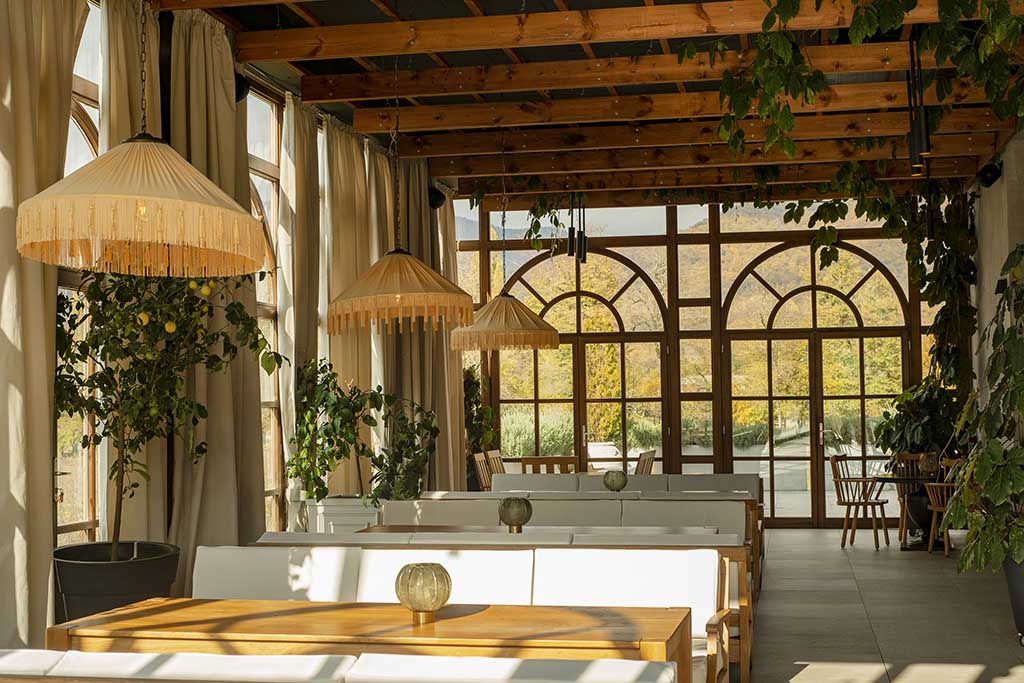
It is the sort of retreat where time seems to stretch slightly, where days are shaped by the landscape rather than schedules and where leaving often feels just a little premature.