

The African country is emerging as one of the most compelling long-haul destinations for 2026, defined by vast, uncrowded landscapes and a powerful sense of scale. From the world’s oldest desert to wildlife-rich river systems and a haunting Atlantic coastline, it offers raw beauty without spectacle. This is travel stripped of excess, where silence, space and time become luxuries. For travellers seeking authenticity, remoteness and meaning, Namibia feels not just timely, but essential.
There are few places left on Earth that feel genuinely untamed. Fewer still that manage to combine geological drama, deep human history and a sense of near-total solitude. Namibia is one of them. As global travel continues to tilt towards meaning over momentum, this vast southern African nation is quietly positioning itself as one of the most compelling destinations for 2026.
At first glance, Namibia is often reduced to a single image: endless sand. But to travel through the country is to discover a landscape of extraordinary variety and nuance. The world’s oldest desert, yes dating back some 55 million years but also fog-kissed coastlines, wildlife-rich savannahs, river systems that carve life through arid land, and skies so dark they feel almost primordial.
In the south, Sossusvlei’s towering dunes rise like burnt-orange cathedrals at dawn, their sculptural forms shifting with the light. Along the Atlantic edge, the Skeleton Coast lives up to its name: shipwrecks half-swallowed by sand, seal colonies stretching as far as the eye can see, and a sense of complete exposure to the elements. Inland, Damaraland offers one of Africa’s most remarkable conservation success stories, where desert-adapted elephants, black rhino and even lions have learned to survive against all odds. Further north, in Kunene, vast skies and the presence of the nomadic Himba people remind visitors that this is not just a landscape, but a lived-in world.
What sets Namibia apart, however, is not simply its scenery, but the way it is experienced. This is a country made for unhurried travel. Distances are long, roads are arrow-straight, and the reward for patience is space, physical, mental, emotional. You don’t so much tick off highlights here as absorb them. Namibia invites stillness.
SANDFONTEIN, A DIFFERENT LENS ON AFRICAN TRAVEL
Set far from the classic safari circuit, in southern Namibia along the Orange River, Sandfontein occupies a landscape that seems to operate on a different timescale altogether. Spanning 97,000 hectares, one of Africa’s largest private reserves, it is a place defined less by spectacle than by depth: geological, historical and emotional.
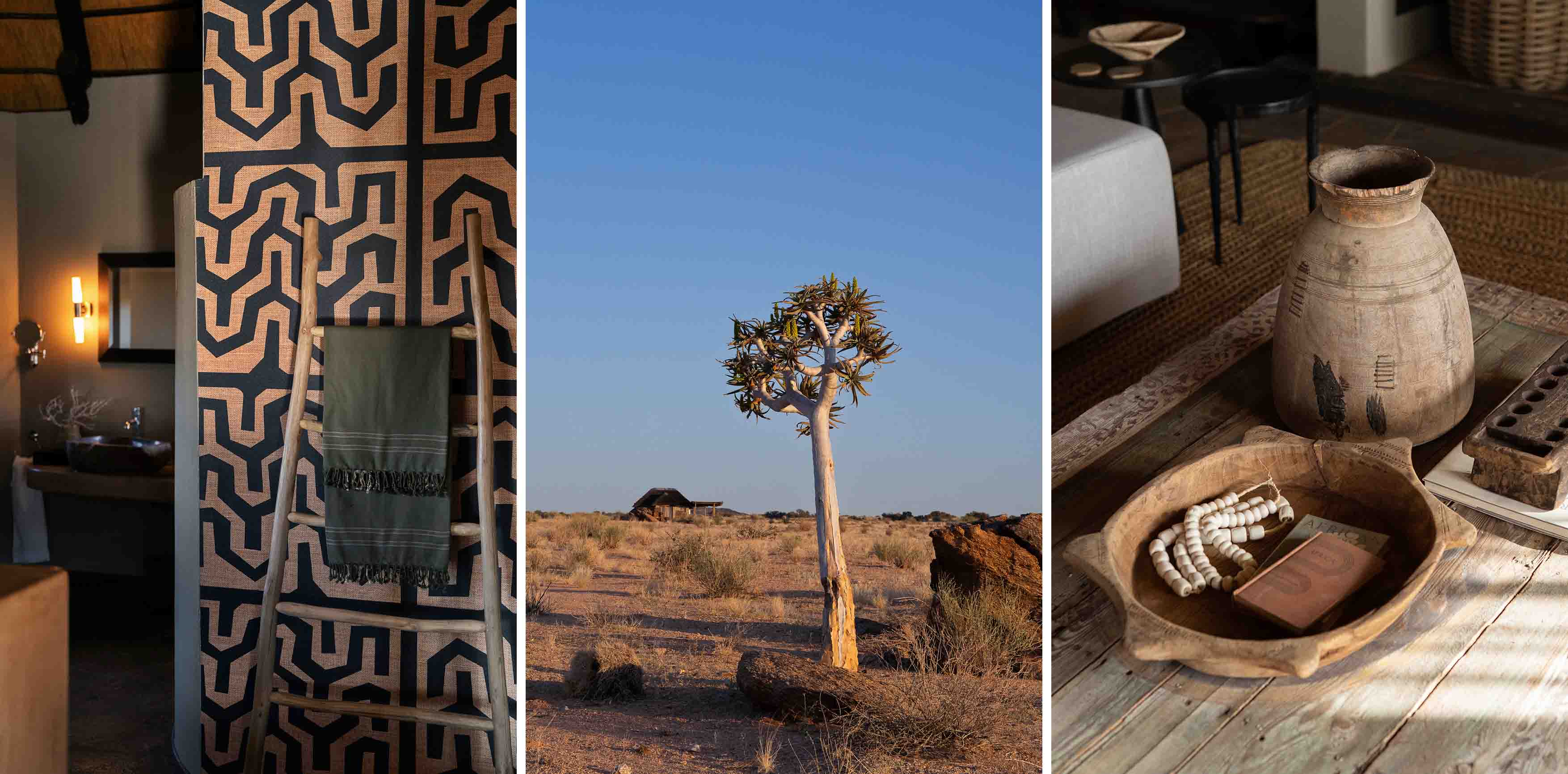
This is land shaped by millennia of tectonic shifts. Basalt outcrops rise from desert plains, river terraces trace ancient watercourses, and the Orange River continues its slow, life-giving journey through an otherwise unforgiving environment. Archaeological evidence points to early hunter-gatherer communities who once relied on this river as a corridor for trade and survival, while the more recent scars of history remain visible in preserved battlefields and graveyards from the Nama-German conflicts and the opening stages of the First World War.
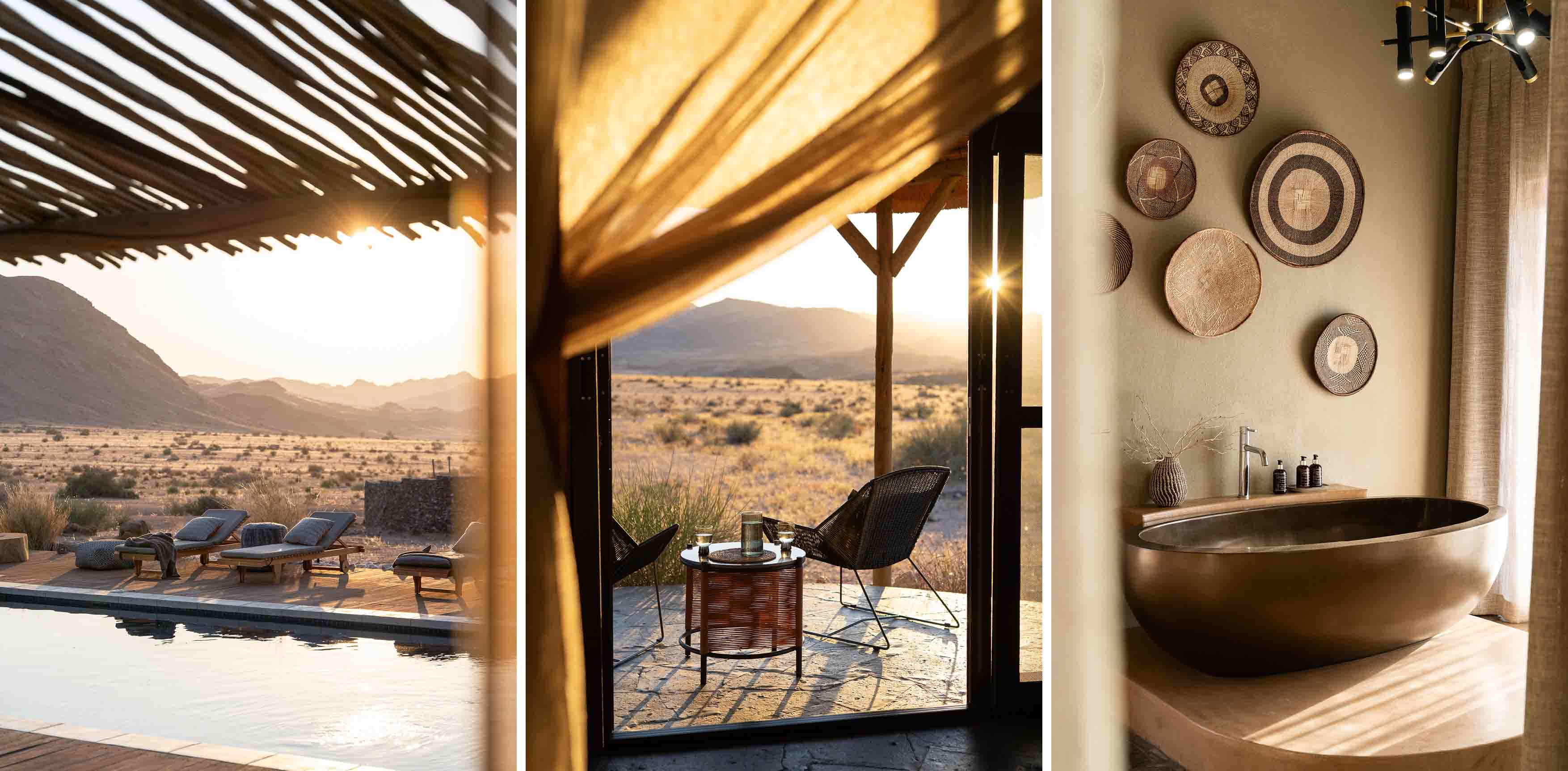
Sandfontein does not attempt to soften this history or over-curate the experience. Instead, it offers access to land, to stories, and to silence.
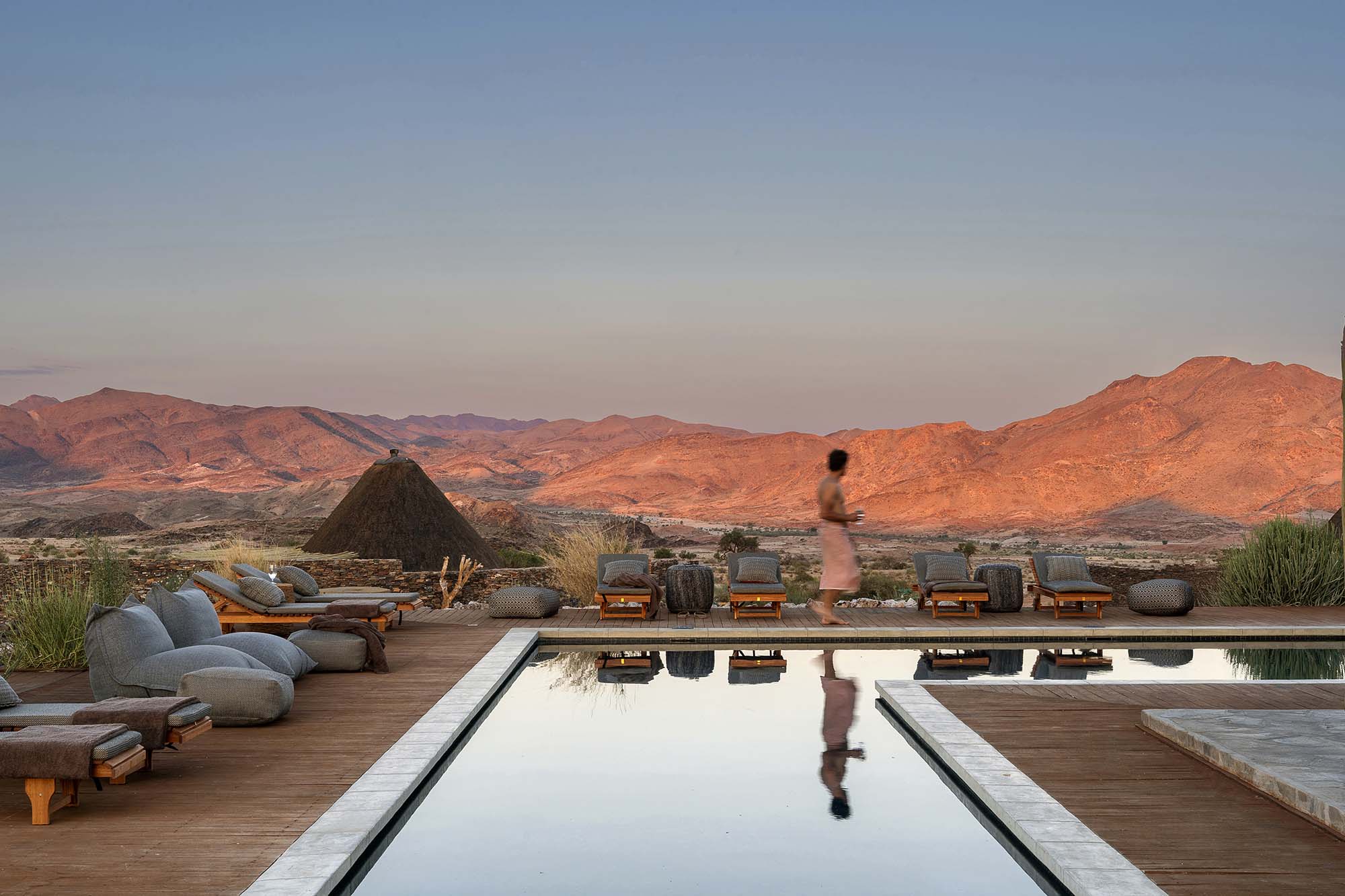
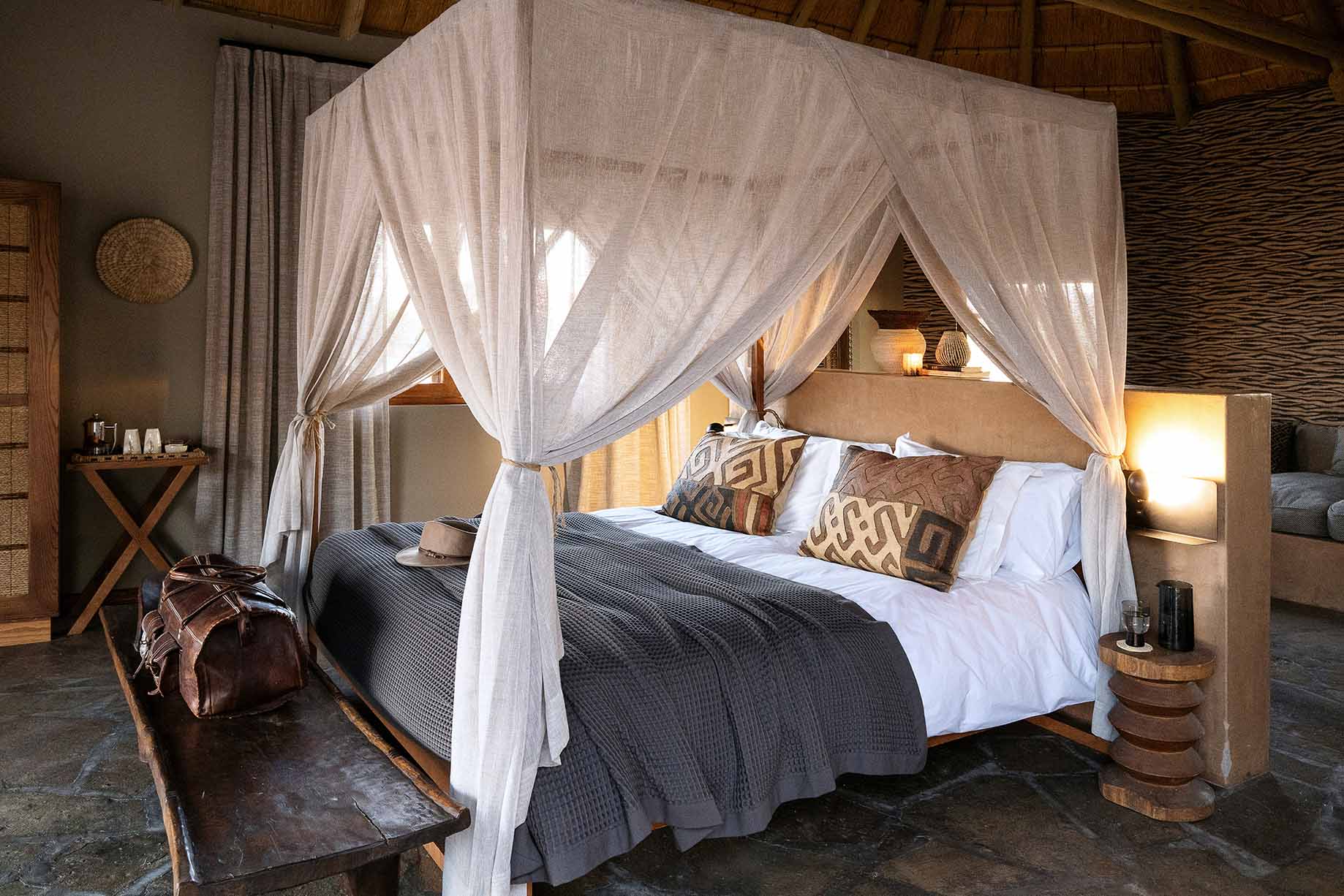
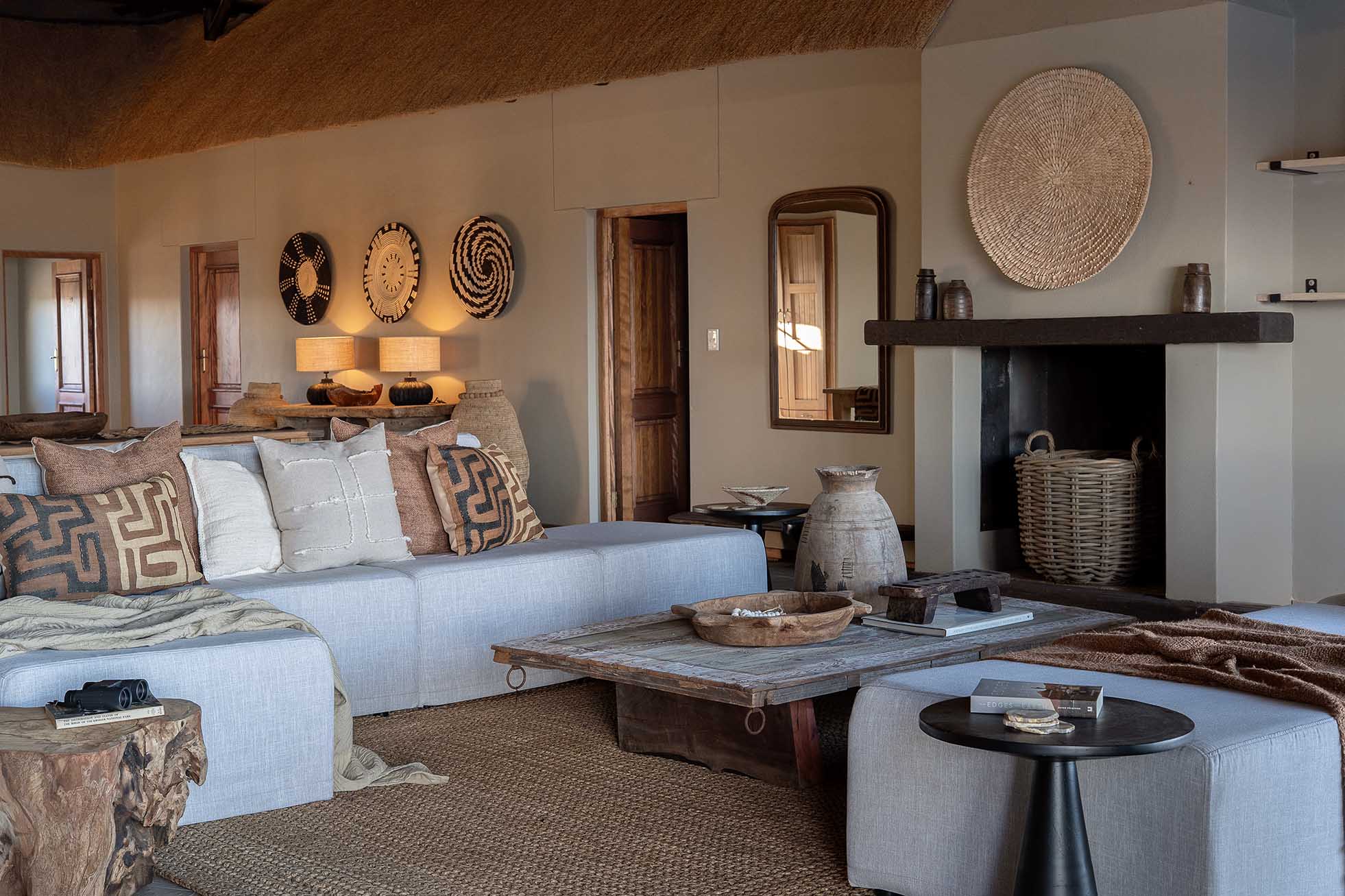
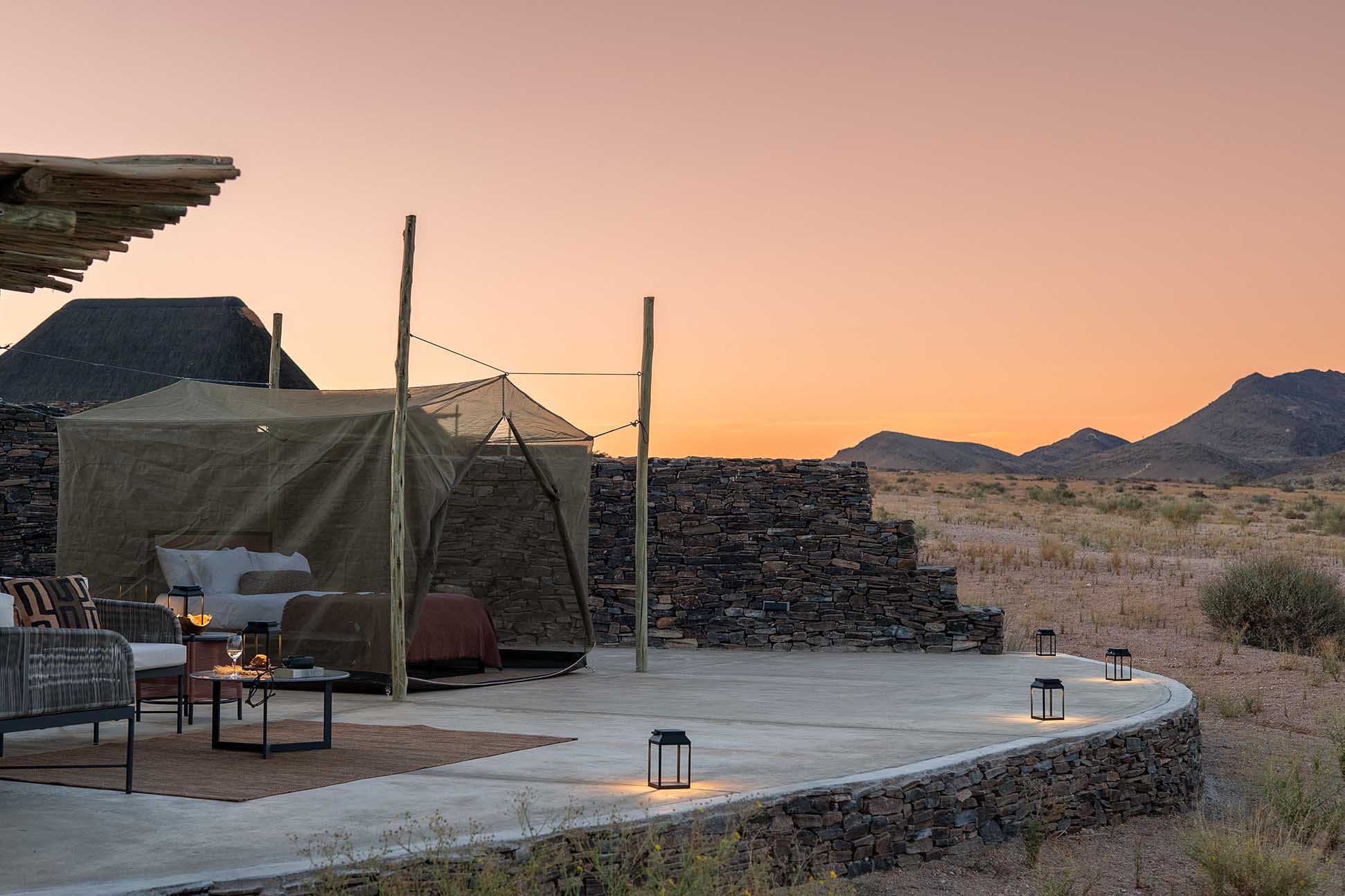
The lodge itself is available exclusively for private use, accommodating up to 18 guests across five suites, each designed with private outdoor living spaces and star beds. For those seeking even greater seclusion, the Lost Poet Villa sits alone on a remote hilltop, offering uninterrupted 360-degree views across mountains and desert plains. Built using locally sourced materials and guided by eco-conscious principles, both lodge and villa blend quietly into their surroundings. There are no neighbouring properties, no intrusive infrastructure, and no light pollution only dark skies and a silence so complete it becomes a presence in its own right.
Days at Sandfontein unfold slowly. Guided walks replace game drives, allowing guests to track oryx, springbok, giraffe and ostrich on foot, reading the land as much as the wildlife. Historical explorations reveal stories etched into the terrain itself. Along the Orange River, time stretches further: kayaking, fishing, or drifting downstream offers a perspective that feels almost meditative. Conservation is not a side note here but a foundation, with ongoing efforts to expand the reserve and reintroduce native species, allowing the ecosystem to regenerate on its own terms.
As night falls, the experience becomes even more elemental. Guests can sleep beneath the stars or retreat to the lodge’s iconic StarBeds, wrapped in blankets, listening to nothing but the desert breathing. In an era of constant noise and connection, this kind of silence feels quietly radical.
WHY NAMIBIA AND WHY NOW
As travellers look ahead to 2026, Namibia stands out not because it promises more, but because it offers less: fewer crowds, fewer distractions, fewer compromises. The luxury here is not excess, but space to move, to think, to feel.
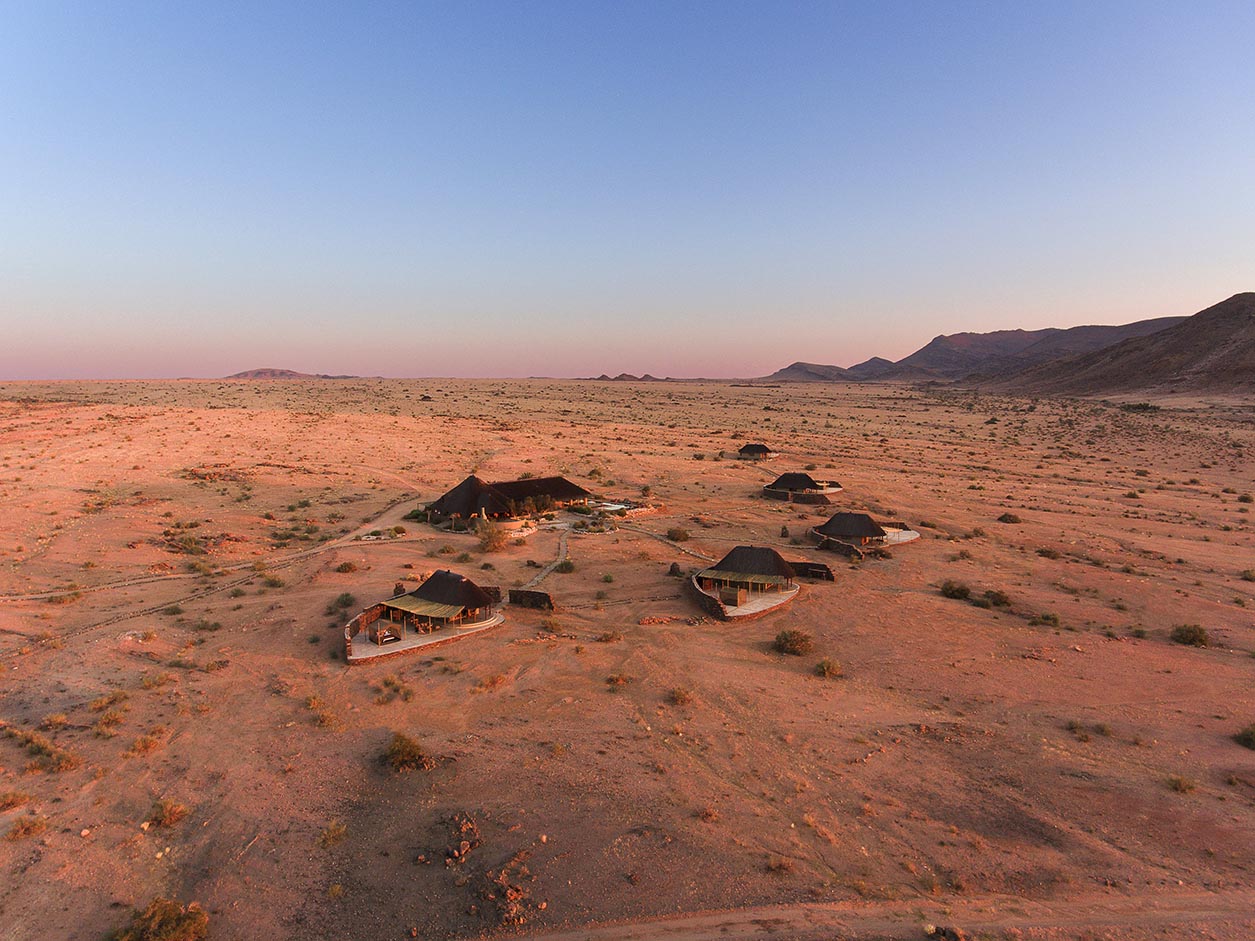
Sandfontein captures this ethos perfectly. It is not a place of checklist safaris or hurried itineraries, but of immersion and perspective. In a world increasingly obsessed with speed, Namibia and Sandfontein in particular, reminds us that some journeys are most powerful when taken slowly, guided not by urgency, but by curiosity.
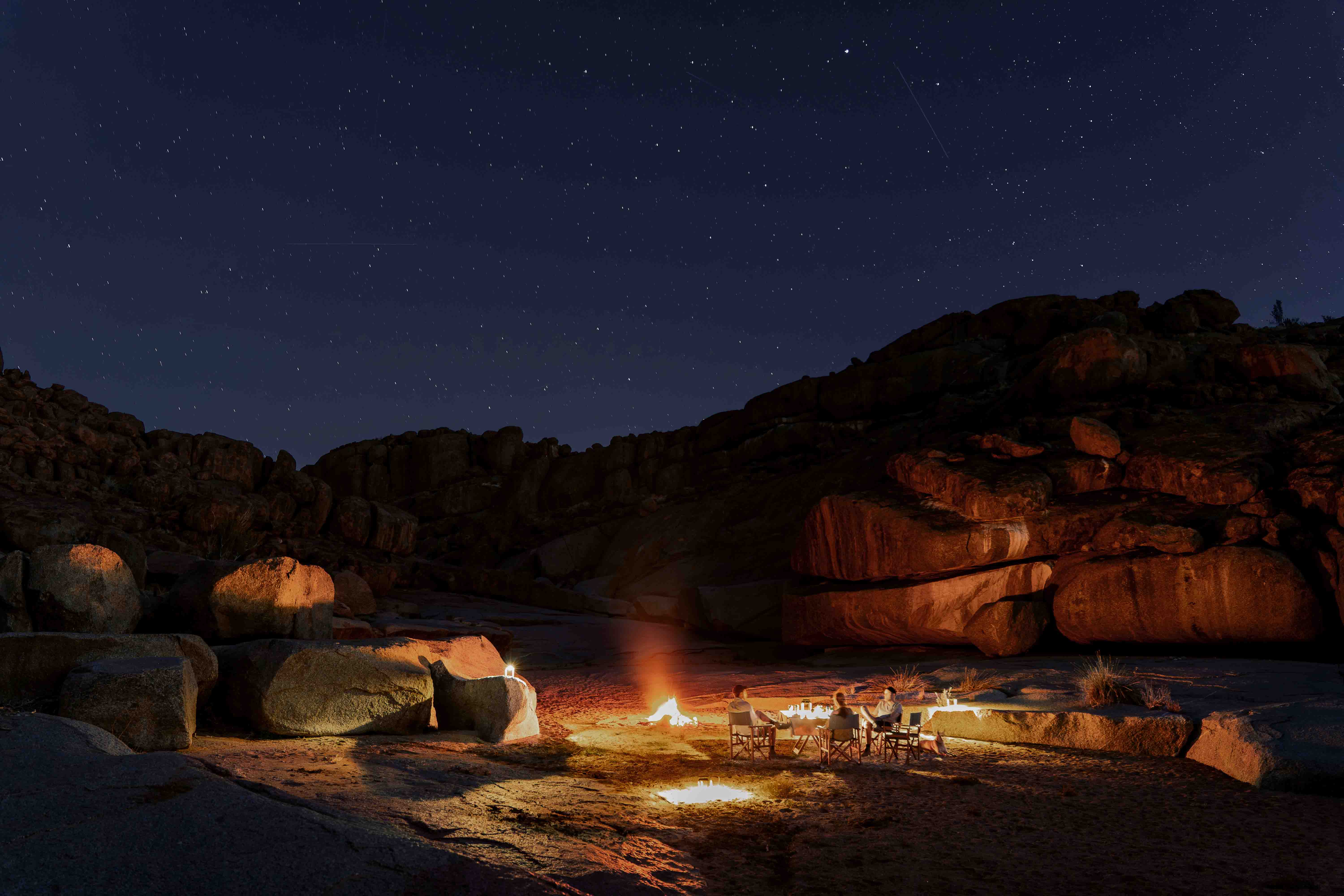
For those willing to venture beyond the familiar, Namibia remains one of the last great frontiers of travel. And in its vast, ancient silence, it still has plenty to say.