
Using colour, courage and creativity to amplify voices that deserve to be seen.
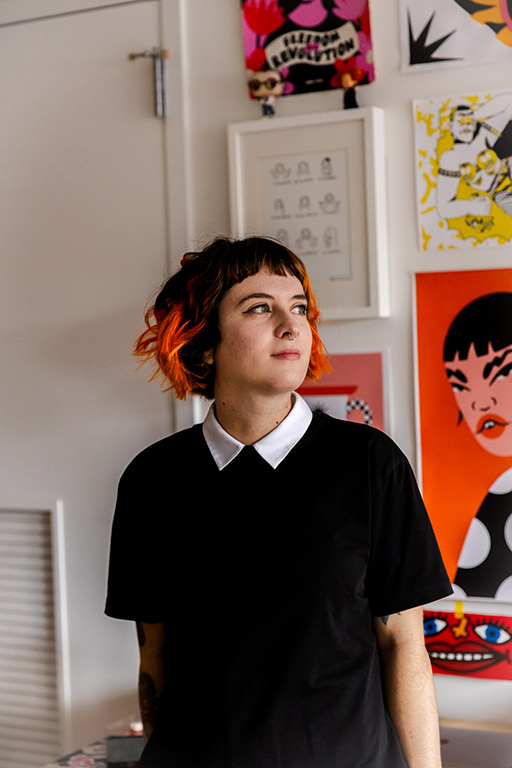
Brazilian illustrator and visual artist Camila Rosa has built a globally recognised artistic voice through bold imagery, powerful social commentary and an uncompromising commitment to authenticity. Originally from Joinville in southern Brazil and now based in Brooklyn, Rosa’s work sits at the intersection of feminism, activism, street culture and contemporary illustration. Her striking visual language, characterised by vivid colours, strong feminine figures and politically conscious storytelling has earned collaborations with major international names including Nike, Apple and The New York Times.
Deeply influenced by hardcore punk culture, DIY movements and Brazilian street art, Rosa approaches illustration not only as a creative practice but also as a means of connection and reflection. Her work explores themes of identity, resistance, diversity and collective empowerment, resonating with audiences across cultures and communities.
In this exclusive conversation with CP Magazine, Camila Rosa reflects on her journey from designing punk flyers in Brazil to becoming one of today’s most distinctive contemporary illustrators. She discusses creativity, political expression, artistic integrity and the importance of creating work that carries both meaning and impact.
To begin, could you introduce yourself and tell us a bit about your journey into illustration
My name is Camila Rosa. I’m a Brazilian illustrator and visual artist, originally from Joinville, a small city in the south of Brazil, and now living in Brooklyn. My journey wasn’t a straight path. I studied Industrial Design and spent several years working as a graphic and industrial designer. My interest in art began in my teenage years, when I created flyers for punk/hardcore gigs and social movements in my city. After some years, I joined a female street art collective, and that experience showed me that art could be more than a hobby. So I moved to São Paulo in 2012 to pursue that, and only in 2016, when I moved to NYC, was I officially able to leave my career as a designer and become a full-time freelance illustrator. And here we are, it’s been 10 years as an illustrator and artist, and I couldn’t be happier with the decision I made in my life.
Growing up in Brazil, what early influences shaped your creative identity?
Two things shaped me more than anything else: the hardcore punk scene and the streets. I got into hardcore music when I was 13, and that world cracked everything open for me. It was at those shows that I first heard about feminism, animal liberation, anti-racism, and social movements. By the time I was 16, I was designing gig posters, zines, and flyers for social movements. That DIY culture, the idea that you could create your own materials and your own language without waiting for anyone’s permission, became the foundation of how I think about art. Growing up in Brazil, surrounded by a big, loud, food-filled family, also gave me a deep connection to collective life and community, which still shows up in my work.
When did you first realise that art could become your full-time career?
Honestly, it happened in stages. I didn’t even start drawing regularly until I was 21 through the street art collective. For years, I was a designer during the day and an illustrator/artist on the side. The real turning point came when I moved to New York in 2016. The city has so many incredible artists, and seeing how they built their careers through consistent work showed me what was actually possible. By the time I arrived in Brooklyn, I was ready to make illustration my only job. It was a leap of faith, but everything I’d been quietly building finally had room to grow.
How would you describe your artistic style to someone discovering your work for the first time?
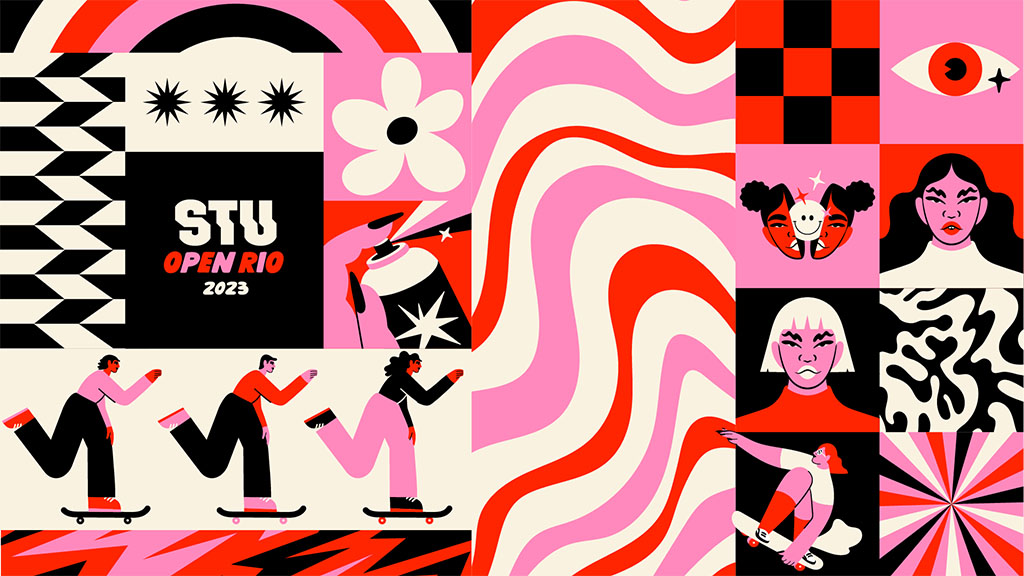
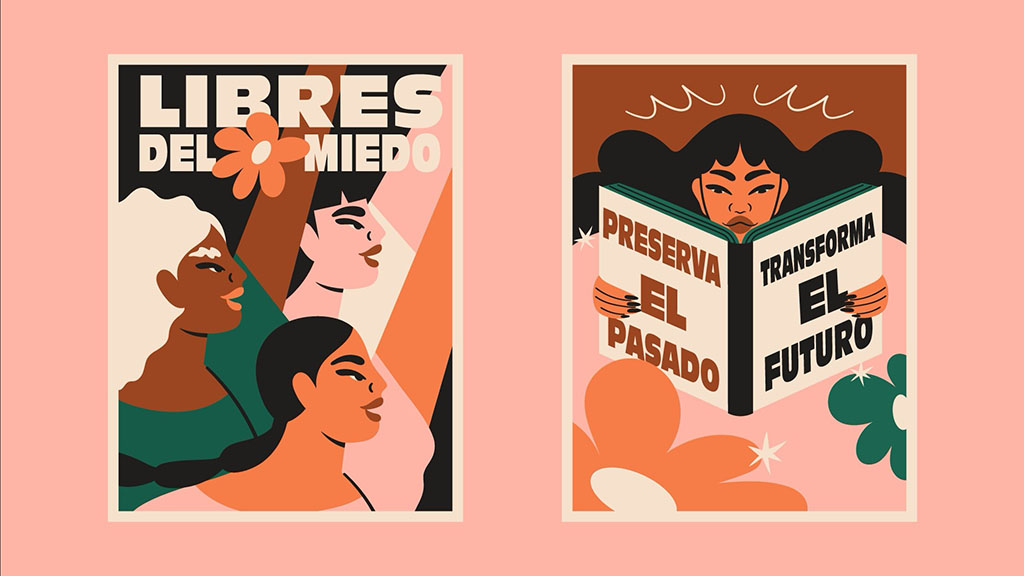
Bold, colourful, and with a strong message. My work is built around a few core elements that are very intentional. It’s figurative, centred on women in all their diversity, and it usually carries a direct social or political message. I want someone to look at a piece of mine and feel something immediately. The subjects, feminism, veganism, social justice, diversity are not trends. I think of the whole thing as a visual language I’ve been building my entire life.
Your work often explores feminism, identity and social justice. Why are these themes so central to you?
Because they’ve been central to my life since I was a teenager. Hardcore punk brought me into these conversations very early, and once you understand feminism, racial justice, and LGBTQ+ rights, you can’t unsee them. For a long time, I kept those politics separate from my illustration work because I didn’t know how to incorporate them into it. Around 2015, I started quietly weaving them in, and by 2016, when the conservative wave was rising both in Brazil and globally, I stopped holding back. These themes are my essence. I’m not performing activism for the work; the work is just a natural extension of who I am and what I believe.
How do you approach translating complex social issues into visual storytelling?
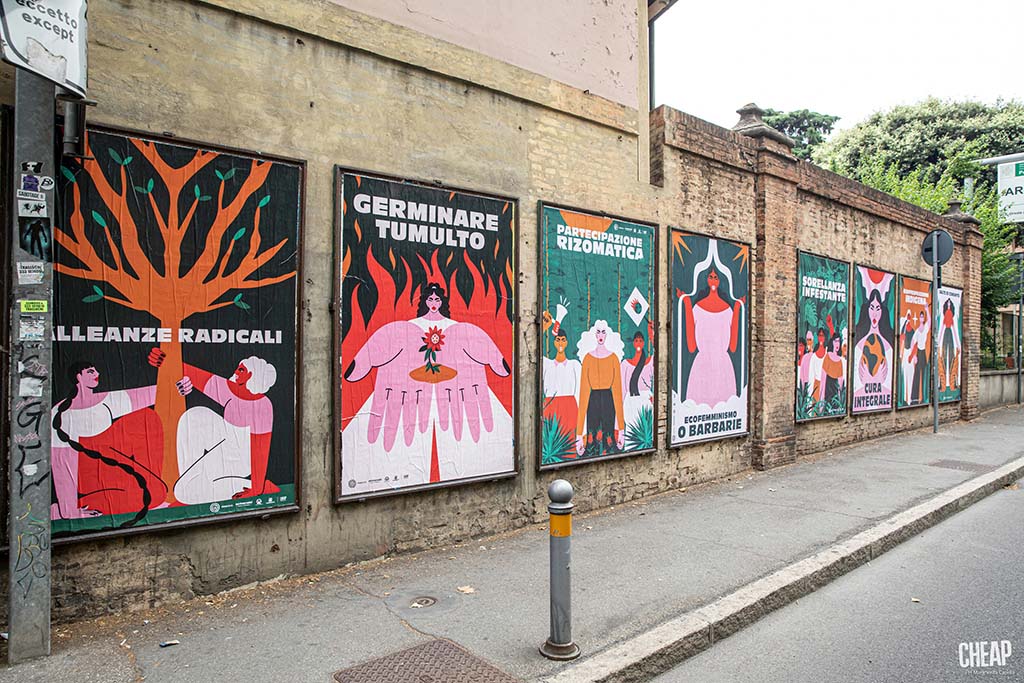
I think about simplicity and directness above all else. One of my biggest influences, for example, is Emory Douglas, the designer of the Black Panther Party newspapers. He communicated powerful, complex messages with clarity and impact. That taught me that the message is the hero, not the visual complexity. I also draw on the punk zine tradition, where a handmade poster on a wall could carry an entire political argument. I try to create images where the meaning is felt before it’s even fully read, through colour, body language, and composition working together.
Do you see your art more as personal expression or as a form of activism, or both?
It’s personal expression with a political body of work. I don’t call myself an activist because, for me, to be an activist, you have to be directly involved in causes and participating in activities, and I’m not doing that. But my work carries my political views and gives me the emotional sustenance to keep believing in art as something transformative, for me and for the people who connect with it. My commercial illustration work is a separate thing. It pays the bills and doesn’t always carry that political weight, though I’ve been fortunate that many of my commissions came through my political artwork.
Your illustrations celebrate diversity in women’s bodies and identities.How intentional is that representation?
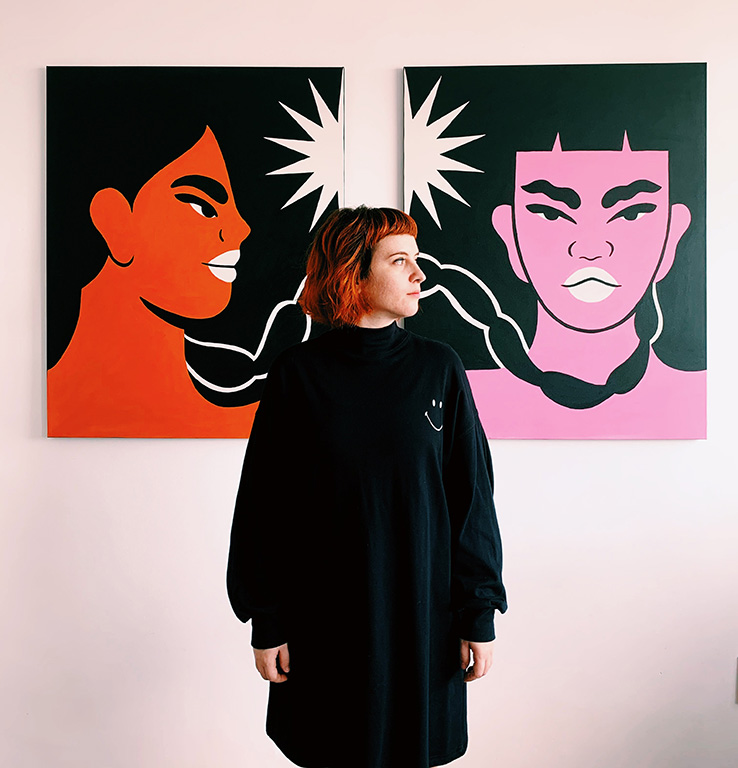
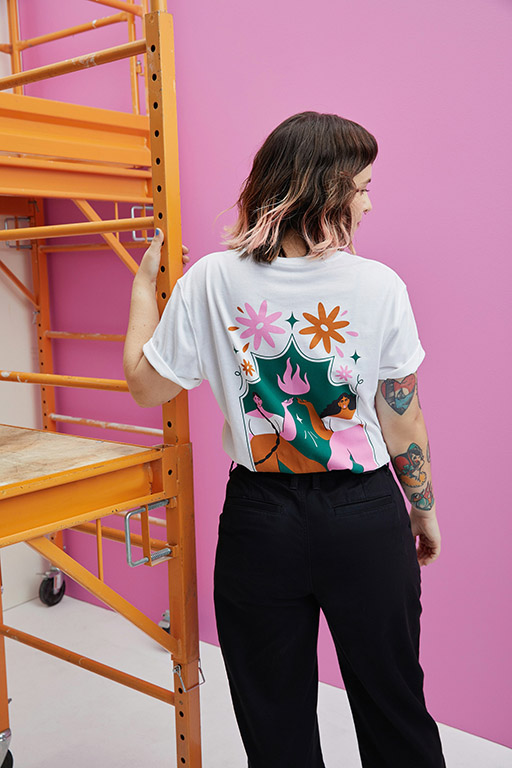
Completely intentional. Women and the incredible diversity that exists between us are the main inspiration for my work. I believe that women move between sadness and happiness, between strength and vulnerability, and that’s okay, sometimes we are also weak. But what I like to show is that the women I draw have internal power, and that’s why I intentionally use bigger shoulders, hips, and bodies in general. It’s a way to show that power in a subjective, physical form. When I draw, I think about who is being seen, who has historically been left out of visual culture, and what it means for a woman to suddenly find herself represented in a way that feels true. I’ve received so many messages from women saying a piece of mine meant something real to them. That feedback is one of the things that keeps me going.
You’ve worked with major global brands like Nike, Apple and The New York Times. How do you balance commercial work with your personal values?
I’ve thought about this a lot, and I think the key is keeping things honestly separate while staying true to yourself in both spaces. Commercial work is different because it’s a service, the client is buying my visual language, not my politics. But I try to only take on work that doesn’t contradict my values, and I’ve been lucky that most brands approach me because of my political artwork in the first place. That said, I’m a person living inside a capitalist system, especially coming from a country like Brazil, where economic inequality is so stark. The bills have to get paid.
Can you walk us through your creative process, from initial idea to final piece?
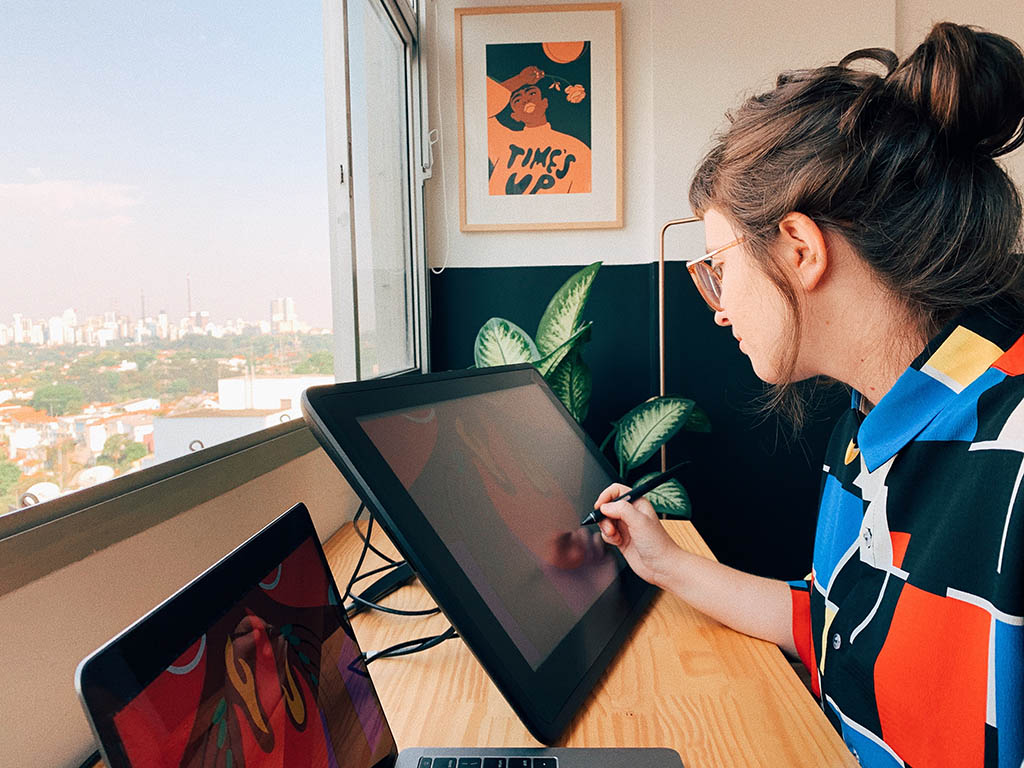
It usually starts with observation. The streets, people, and places I go. My visual references come from everywhere, not just illustration. When I’m working on something personal or political, I start with what I want to say. For commercial work, the brief usually frames the message, and I build from there. In terms of the actual making, I usually draw a sketch by hand or on an iPad, depending on my schedule, and after that I move to Adobe Illustrator to vectorise and add colours and final details. That part is honestly what I love the most. I work from my home studio, make some tea or coffee, and go to my desk. I try to draw every day, even when I’m not working on any project. The daily practice of being occupied with your art is what keeps me in the flow.
How does working across different mediums, murals, digital illustration, editorial change your approach?
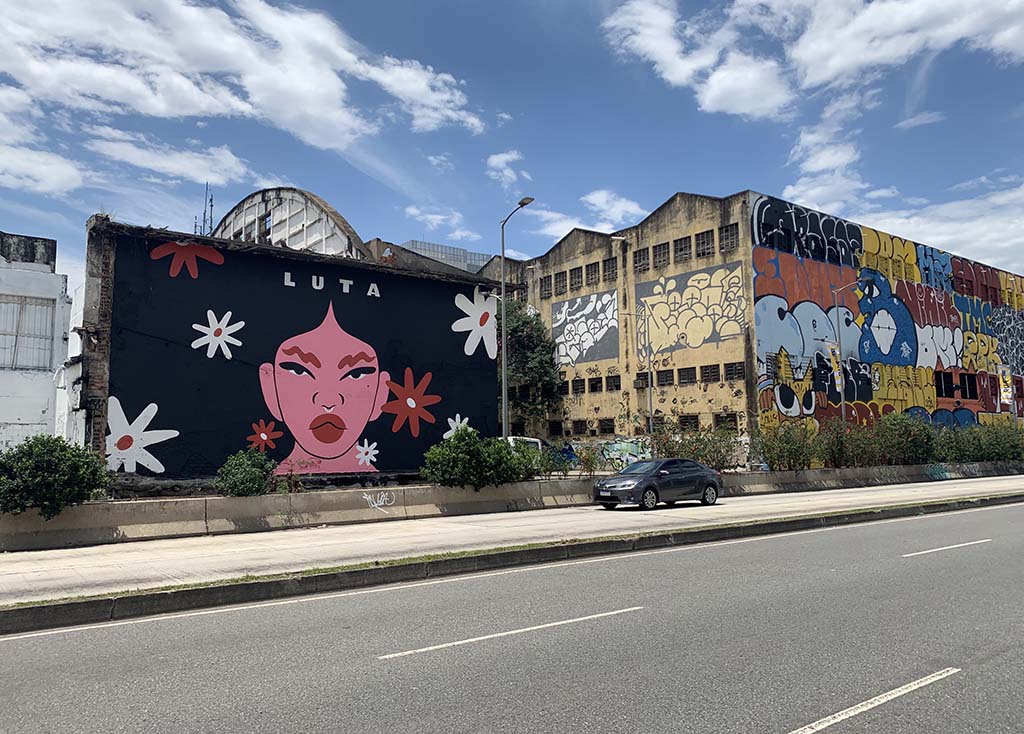
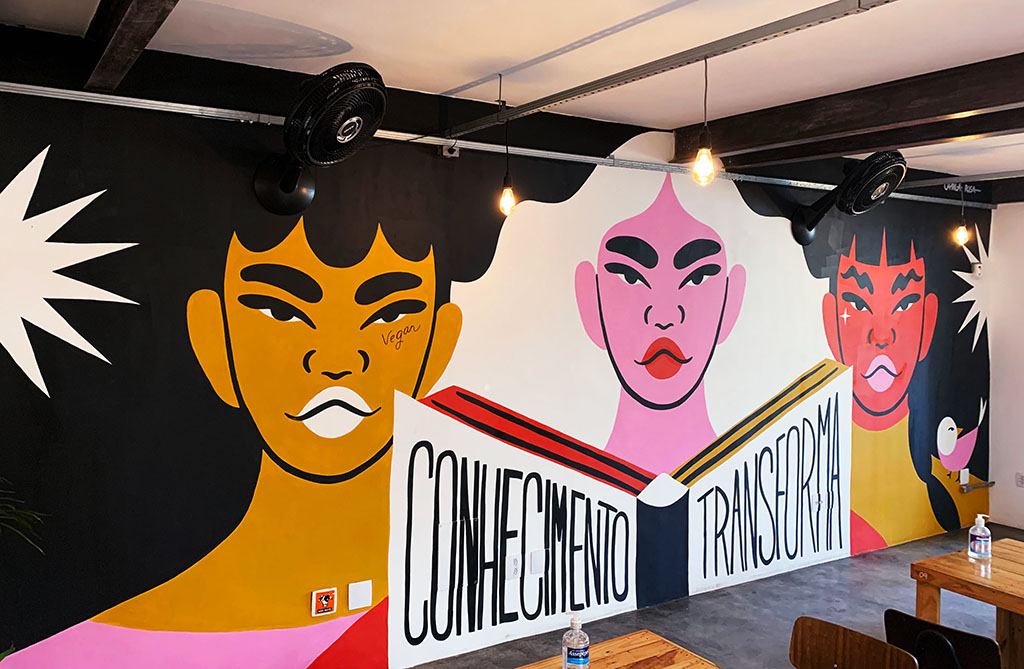
Each medium asks something different of you. A mural is a conversation with a city, the scale, the permanence, the fact that strangers will pass by it every day without choosing to. That responsibility changes how I think about the image. Editorial work is faster and often more reactive; it needs to communicate in seconds alongside text. Digital illustration gives me the most control and precision. What stays constant is the directness of the message. I want the work to land clearly no matter the format. Honestly, switching between mediums keeps me honest. They all teach you something about your own visual thinking.
What role does colour play in your work, and how do you decide on your palettes?
Colour is fundamental. I love using strong, vivid colours together with black and white, that combination gives me contrast and impact. The boldness of the palette does a lot of work before the viewer even reads the image. I decide on them based on what I want to say, and sometimes I get inspired by a scene I saw in real life. I think of my palette as part of the message, not decoration on top of it.
Have there been any projects that challenged you creatively or personally?
The cover I created for The New Yorker’s 100th anniversary special edition was probably the most significant of those. It came together in an unexpected way. The market had been slow, I was proactively reaching out to past contacts, and I pulled up an old email thread with the magazine’s editor from 2023 that had never moved forward from the sketch phase. I pushed to revisit it, and weeks later, I was signed on to illustrate one of the four covers for that anniversary edition. It was a dream realised! But the weight of that project, the history of that publication, what it means to be a Brazilian immigrant on that cover at this particular political moment in the US was genuinely immense.
How do you maintain originality in a fast-paced, trend-driven digital landscape?
By keeping my attention on my own story rather than the feed. I look at what other artists are doing because it’s stimulating and keeps me from going stale, but my originality comes from a very specific set of references, hardcore punk, Brazilian street art, the tradition of activist design, the women in my life. Those aren’t things an algorithm can generate. I also think moments of crisis, politically and socially, are actually generative for artists who have something to say. When the world is difficult, the urgency to speak becomes a creative force. I try to stay rooted in what I actually want to say, rather than what performs well.
What advice would you give to emerging illustrators trying to build a platform online?
Draw whenever you can and collect references and inspiration from life. Also, let people see your work. Social media changed how illustrators build careers; it made the daily practice visible in a way that creates a real connection with an audience over time. Don’t wait until the work is “ready” or perfect. Also, be intentional about your message. The illustrators I find most compelling have something they genuinely want to say, and that specificity is what makes work recognisable and lasting.
You’ve exhibited work internationally. How does the reception of your art differ across cultures?
I only understood myself as Latina when I arrived in New York for the first time and connected with that community. That identity shift actually added new layers to my work. What I’ve found is that the political and emotional core of what I make tends to cross cultural lines more than I’d expect, women responding to images of women, people responding to images of resistance, regardless of where they’re from. But context always matters. What reads as a direct political statement in Brazil might need different framing in Europe, or carry a different kind of weight in the US right now, particularly for work that addresses immigration. I find those differences interesting rather than frustrating.
What are some of your other hobbies?
Music has always been a huge part of my life. I actually played guitar and sang in a hardcore band called “Odeie Seu Ódio” (“Hate Your Hate”) back in 2008. I still listen obsessively to music while I work, moving between hardcore, punk, R&B, rap, indie rock, and more depending on the day and my mood. I love spending time outside, walking around the city, going to the movies, and watching TV. I’m also interested in exploring new materials beyond illustration; recently, I’ve been practising ceramics as a new territory to explore.
What does it mean to you to create art that “resonates and inspires”?
It means the work is doing more than sitting on a wall. When a woman sends me a message saying a piece of mine made her feel seen, or gave her strength on a hard day, that’s the work doing what it’s meant to do. I make art because I believe it can be a small but real way to change the world. I’m not naive enough to think a drawing stops a law from passing, but I do believe in the cumulative power of images that say: you are strong, you exist, your fight matters. When the work reaches someone in that way, it justifies everything.
What legacy do you hope your work will leave within both the art world and wider society?
I want to have contributed to a visual culture that took women seriously, all women, in all their forms, colours, and politics. I want my work to be part of a tradition that showed art could be both aesthetically bold and politically committed, and that those things aren’t in tension. Also, I’d love for my work to be evidence that an artist from a small city in Brazil, shaped by the punk/hardcore community and street art collectives, could build something recognised globally.
Your message for us at CP Magazine.
Thank you for giving space to stories like mine! To anyone reading this who is making work at the edges, carrying a message that feels too niche or too political or too personal: those are exactly the reasons to keep going. The world needs art with a point of view more than ever. Keep making it.