
DRESSING DREAMS. DEFINING IDENTITIES.
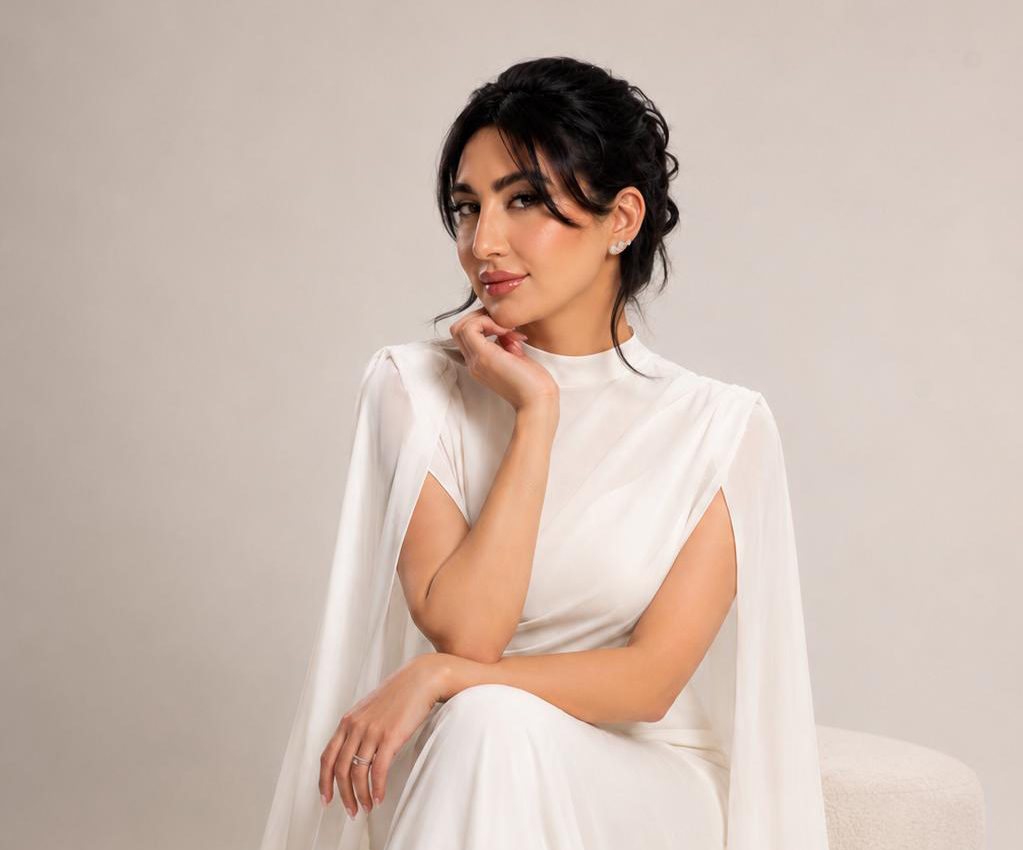
Some creative journeys begin in classrooms; others are quietly shaped long before we recognise where they are leading us. For Taghreed Alshammari, the woman behind Taawoos and White Peacock, design grew from a childhood spent across Abu Dhabi, Riyadh and Kuwait, absorbing the subtle differences in culture, beauty and personal expression that would eventually influence her distinctive creative eye.
Trained in electrical engineering, Taghreed’s path into fashion was anything but conventional. Yet the precision and problem-solving of her education found an unexpected harmony with a lifelong fascination for fabrics, detail and individuality. Today, through two distinct brands, she creates for women at very different moments in their lives, with White Peacock placing particular emphasis on the deeply personal world of bridal wear.
For Taghreed, a wedding gown is never simply a beautiful dress. It is an emotion, a memory and an expression of the woman wearing it. In this conversation with CP Magazine, Taghreed Alshammari shares her journey, philosophy, creative process and the responsibility of transforming a bride’s vision into something unforgettable.
Before we talk about fashion and bridal wear, tell us a little about yourself. Where did you grow up, and what was your childhood like?
My childhood unfolded across several Gulf cities. I spent my early years in Abu Dhabi, my teenage years in Riyadh, and later moved to Kuwait as a young adult. I believe moving frequently because of my father’s work played an important role in shaping me. It taught me adaptability, but it also sharpened my curiosity, observation and creative instinct.
From the outside, Gulf cultures may appear quite similar, but living among them teaches you that every city has its own rhythm, taste and way of expressing beauty. Over time, I became very sensitive to those nuances, what women in each place are drawn to, and how their ideas of elegance, luxury and detail differ.
Without realising it at the time, that experience became an important part of the eye I have as a designer today.
What did you study, and did your education have any connection to the creative path you eventually chose?
I studied electrical engineering, which, at first glance, is very far from what I do today. I strongly believe in the value of education, but over time I also learnt that a degree does not have to define the only path you are allowed to follow.
Engineering taught me logic, precision and problem-solving, while design gave me the space to express the creative side of who I am. I have learnt that when people find work that brings their abilities and passions together, they do not simply become happier, they become more willing to give, create and grow.
Growing up, were you always drawn to fashion, fabrics and design, or was this a passion that developed later in life?
Absolutely. My relationship with fashion began before I even knew that what I was doing could be called design. As a child, I insisted on choosing my own clothes and never liked anyone deciding what I should wear.
I also remember collecting leftover fabrics from my mother and grandmother. My friends and I would play with them and turn them into our own little outfits and designs. At the time, it was simply a childhood game, but looking back, I think it may have been my first experience of designing.
Outside fashion, what are some of the interests, experiences or influences that have shaped you as a person?
Outside fashion, I am naturally quite calm and I love being active. I genuinely enjoy running and spending time at the gym. At the same time, I am fascinated by art, and especially by rugs, their colours, patterns, craftsmanship and the stories they can carry.
I love travelling, but I am not only attracted to new or glamorous places. I love old paved streets that feel as though they hold memories. I can find beauty in a cup of coffee on a quiet, distant street just as easily as I can find it on a mountaintop or by the sea. I think that perspective influences my work deeply because, for me, creativity begins with noticing beauty in details that other people might pass by.
Do you remember the first moment when you realised that designing could become more than a passion and actually turn into a career and business?
I realised design could become my profession even before I finished university. My sisters and friends were already coming to me for advice whenever they had an occasion and did not know what to wear.
At the same time, I was designing pieces for myself to wear to events, and people would repeatedly ask me, ‘Where is that from?’ Hearing that question again and again made me realise something important: what I saw as a personal expression of my taste was something other women actually wanted to own. That was when I first began to see the possibility of turning my passion into a real career and business.
Today, you are behind two brands. Tell us about each of them and the different identities you wanted them to have.
Today, I am behind two brands, Taawoos and White Peacock. They come from the same creative spirit, but each has its own world.
Taawoos is for the woman who wants to feel distinctive, whether she is dressing for an occasion or for her everyday life. I want her to feel feminine in a Taawoos piece, but also to feel that it expresses her rather than turning her into a copy of someone else.
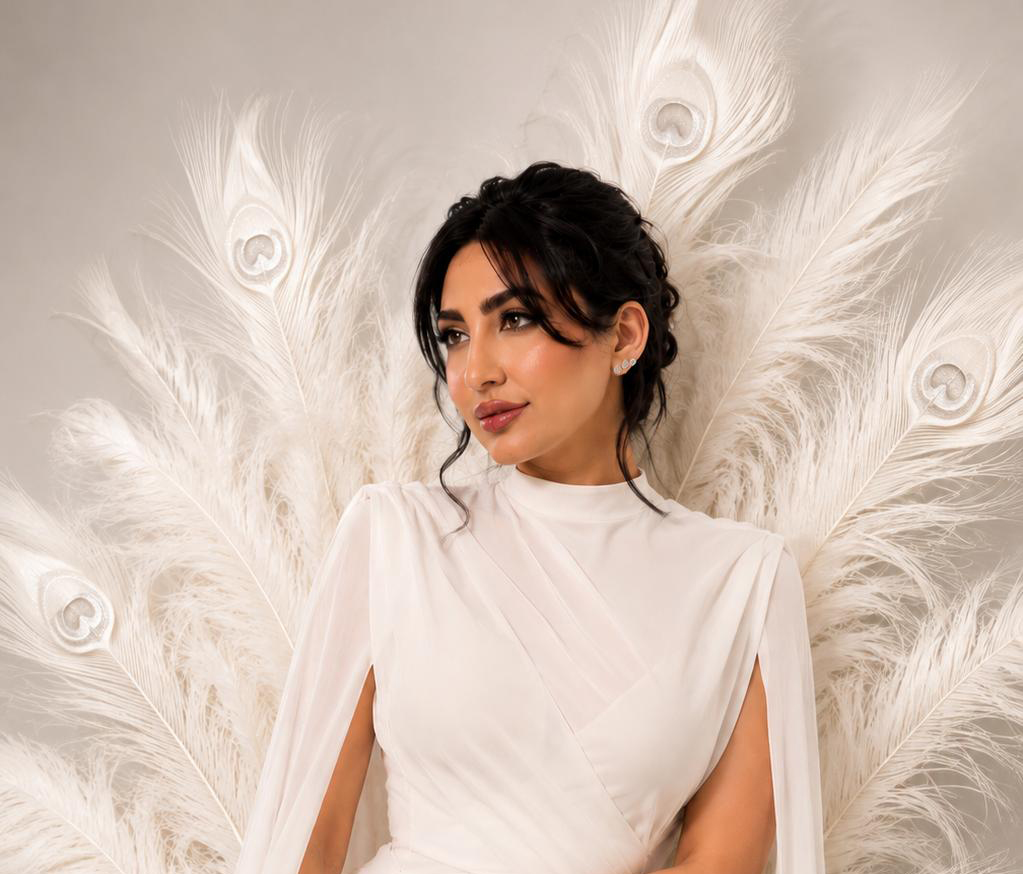
White Peacock is the more intimate and emotional side of that vision. It is connected to a dream many girls carry from childhood: the white dress, the entrance, and the way a woman imagines seeing herself on one of the most important days of her life. When a bride walks in a White Peacock gown, I want her to feel that she is not simply wearing a wedding dress, she is living a moment she may have imagined for years.
What made you decide to build two separate brands rather than bringing everything you create under one name?
Separating the brands was intentional because I wanted White Peacock brides to have a different experience, with a greater level of privacy and individual attention. A wedding gown, to me, cannot simply be another order among many. A bride is going through an entire emotional experience, and everything surrounding her dress deserves a different level of care, detail and discretion.
At the same time, separating the two allows Taawoos clients to receive the attention they deserve as well. Each brand can therefore deliver the experience it promises without one overshadowing the other.
How do you divide your creativity between the two brands while ensuring that each maintains its own personality and audience?
I see the two brands as complementary, but not identical. The creative source is the same, yet I enter a different world when I design for each one. With Taawoos, I think about the woman, her life, her wardrobe and her personality. With White Peacock, I enter a more intimate and emotional space connected to the bride, her memories and the day itself.
So, I do not really feel that I divide my creativity between the two. I see them as two different expressions of the same creative vision.
Bridal wear has become an important focus of your work. What is it about designing for brides that you find particularly special
With bridal design, I never feel that I am simply creating a dress. I am participating in the creation of a moment, a memory and an emotion. The way a bride looks at herself in the gown, the happiness in her eyes, and the confidence she feels as she enters her wedding mean more to me than the material side of the work.
In the end, what I physically hand her may be a dress, but what I am really trying to deliver is a feeling she will remember every time she looks back at the photographs from that day.
A wedding dress carries far more emotion than an ordinary garment. How does knowing that you are creating something for one of the most memorable days of a woman’s life affect your design process?
It creates a very different sense of responsibility. Designing something a woman will wear on one of the most important days of her life is something I take very seriously. I am not only thinking about how she looks; I feel responsible for her happiness, her comfort and her confidence in that moment.
No matter how beautiful a gown is, if the bride feels uncomfortable or as though she is pretending to be someone else, then, for me, the design has not succeeded. I want her to feel like the most beautiful version of herself, not a version of another woman.
When a bride first comes to you, where does the creative journey begin with her personality, the wedding itself, the silhouette she imagines, or your own vision for her?
For me, the journey begins from the moment the bride walks through the door, even before we start talking about the dress. I notice how she dresses, the way she speaks and moves, the details she is naturally drawn to and, of course, her personality. Then I want to understand the wedding itself, the venue, the theme, the atmosphere and the image she has of herself within it.
My role as a designer is to bring all of those elements together with her proportions, body shape and movement. I do not believe a dress is beautiful in isolation. It becomes truly beautiful when it is right for the woman wearing it.
Every bride wants to feel unique. How do you create something distinctive without allowing trends to overpower the bride’s own personality?
I follow trends, of course, but I never allow them to become the bride’s identity. A trend should be a reference, never an identity.
I want a bride to look at her wedding photographs ten years later and think, ‘That is me,’ rather than, ‘That was very 2026.’ To me, successful design can belong to its time without becoming trapped by it.
What, in your opinion, is the difference between a beautiful wedding dress and a truly unforgettable one?
A beautiful dress gets noticed. An unforgettable dress makes the woman wearing it unforgettable.
A beautiful gown may catch the eye, but an exceptional one creates such harmony between the woman, her personality, her movement and the design that you cannot separate the dress from the person wearing it. That is the level I am always trying to reach.
How important are fabric, movement and craftsmanship in your bridal designs, particularly when a gown has to look beautiful both in person and through photography?
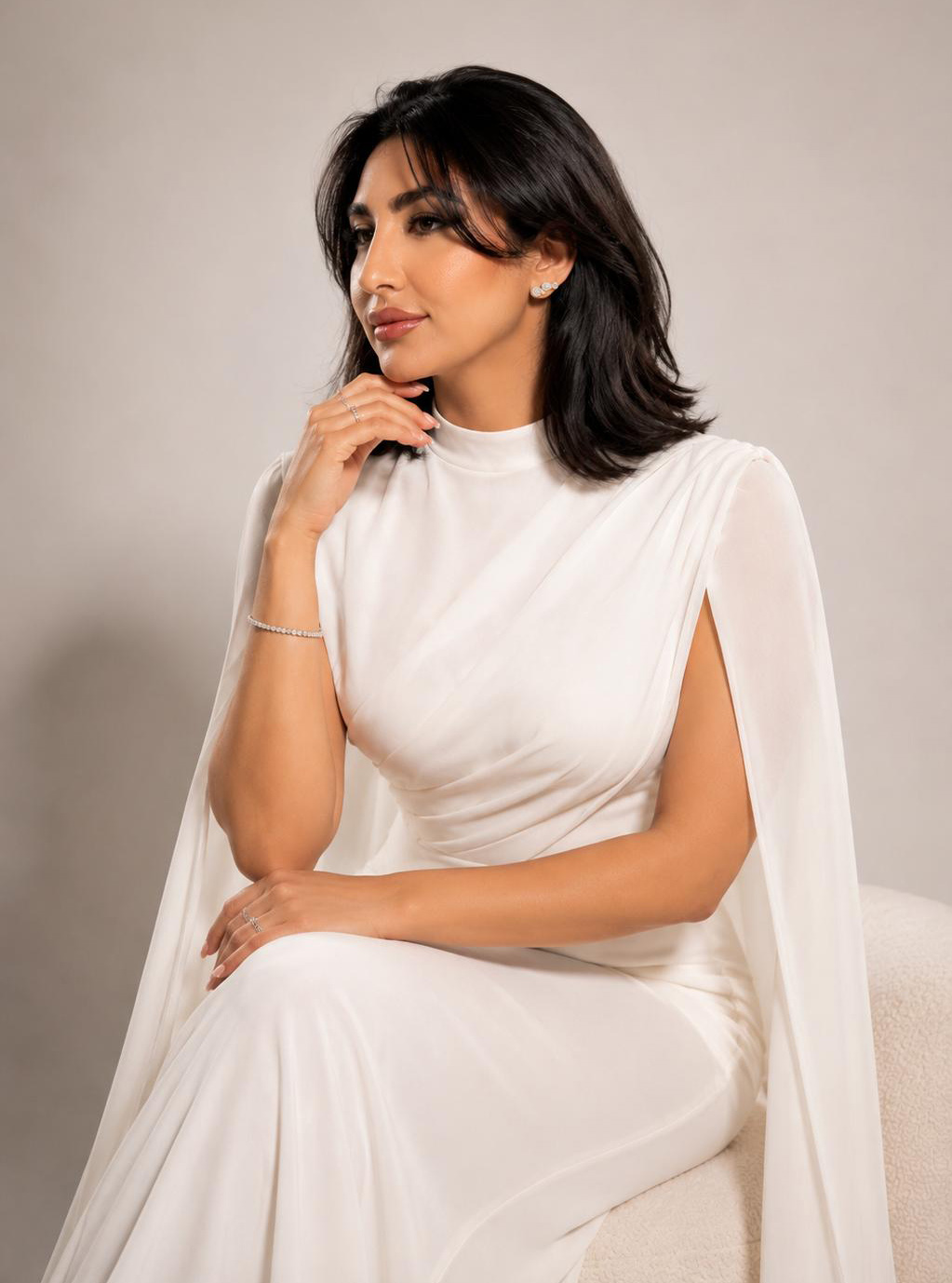
Fabric is not simply the material used to execute a sketch; it is part of the design itself. Its weight, drape, movement on the body and relationship with light can completely transform a gown.
A bridal gown also has to succeed in several ways at once. Up close, you should see the quality of the craftsmanship. From a distance, the silhouette has to read beautifully. In motion, it should remain alive, and in photographs, it needs to retain its presence. I never design a gown only as a static object, I imagine it walking, moving and being photographed.
Bridal fashion can sometimes be associated with extravagance and heavy detailing. Do you believe simplicity can make an equally powerful statement?
Absolutely. In fact, simplicity can require even greater confidence and craftsmanship because every decision becomes visible. Simplicity is not the absence of detail; it is knowing exactly which details deserve to remain.
For me, luxury is not defined by the amount of embroidery or embellishment. It comes from the quality and harmony of the choices. Sometimes, a perfect line and an exceptional fabric can say far more than dozens of decorative details.
How do you approach the balance between a bride’s dream dress and what you, as a designer, know will best complement her body, personality and overall wedding aesthetic?
I rarely tell a bride directly, ‘That dress does not suit you.’ I prefer to understand what she fell in love with in the first place. Was it the fabric, the movement of the skirt, the silhouette, the waistline, or simply the feeling the image gave her?
Once I understand the real reason behind her choice, I can preserve the element she loves and reinterpret it in a way that works more beautifully with her body and personality. My role is not to erase her vision and replace it with mine. It is to translate what she wants into the best possible version for her.
Brides can understandably be emotional and very particular about their gowns. What has working so closely with them taught you about patience, trust and understanding your clients?
Working with brides has taught me that behind many of the details a bride insists on, there is often a feeling she is trying to protect. Sometimes, she simply needs to feel heard, to know that everything is under control, and to feel that she still has ownership of the decision. That is why I try to be very flexible and to contain the anxiety rather than treat it as a problem.
I remember one bride in Riyadh who was very worried that her gown might be damaged in transit. In the end, I decided to fly to Riyadh and deliver it myself and I even booked the seat next to me for the dress so that it could arrive in perfect condition. I still remember her face when I handed it to her. By then, it was no longer simply a service for a client; it had become a beautiful memory and a small adventure we shared.
Kuwait and the wider Gulf have a distinctive wedding culture, often combining tradition, luxury and contemporary fashion. How does this influence the way you approach bridal design?
Gulf wedding culture is distinctive because it combines a deep appreciation for craftsmanship and luxury with a strong awareness of global fashion. Gulf women can appreciate embroidery, handwork and exceptional fabrics while also being very informed about international fashion and very clear about their own identity.
That makes designing for them both exciting and demanding because luxury alone is not enough. There has to be taste, intention and quality behind it.
How do you see the modern Gulf bride changing? Are today’s brides becoming more experimental, more individualistic, or perhaps more interested in understated elegance?
I believe Gulf brides have long been among the women most engaged with fashion, luxury and quality. They notice details, and that naturally requires a very high level of attention from a designer.
What I see changing today is that the Gulf bride is becoming even clearer about her individuality. The question is no longer only, ‘What should a bride wear?’ It is increasingly, ‘What represents me as a bride?’ I find that very exciting because she can preserve her love of luxury and tradition while making her choices much more personal.
Running a fashion brand requires far more than creativity. What has been the most challenging lesson you have learnt about turning your creative vision into a successful business?
One of the most important lessons I have learnt is that talent alone does not build a successful brand. A designer may be excellent creatively, but a business also involves pricing, production, marketing, clients, financial decisions, teams and consistency. I have also learnt the importance of knowing when to say no, and when to separate my emotional attachment to an idea from what is actually the right decision for the business.
Another important lesson is that asking for help is not a weakness. A designer does not have to be an accountant, marketer, manager and expert in everything. Part of maturing as an entrepreneur is knowing what you do exceptionally well and recognising where you need people who are better than you at something else. Creativity may start a brand, but structure is what allows it to grow.
Finally, what is your message for us at CP Magazine?
First, I would like to thank CP Magazine for choosing me to be part of this very special edition, especially as it marks issue number 200. It is meaningful to be included in such an important milestone for the magazine.
If there is one thought I would like to leave with your readers, it is that I do not see fashion as a way of turning a woman into someone else. I see it as a way of helping her see herself more clearly, more beautifully, and with greater confidence and strength.
Ultimately, that is what I try to do through everything I design: not to change the woman, but to reveal what is already there.