
A Visionary Artist Transforming Heritage, Emotion and Identity into Powerful Expressions of Art.
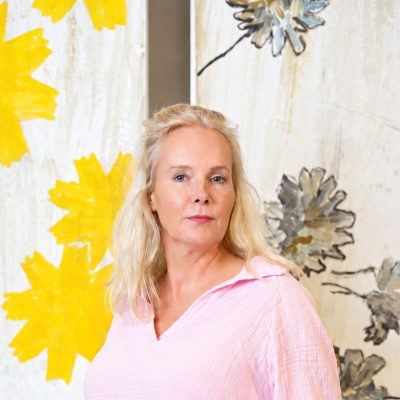
In Nariman Al Adham’s world, creativity is not confined to a canvas, a room or a carefully constructed visual identity. It is a language through which memory, emotion and belonging find form. The artist and designer behind NINO Design Studio moves fluidly between disciplines with instinct and intention, drawing on a foundation in interior architecture to create work that is as thoughtful in its purpose as it is expressive in its execution.
Having graduated at the top of her class from the University of Petra, Nariman began her professional journey in design before allowing her lifelong passion for painting to take centre stage. Today, her artistic practice combines contemporary textured realism with abstraction and symbolic storytelling, embracing layers, colour and the unexpected possibilities of experimentation.
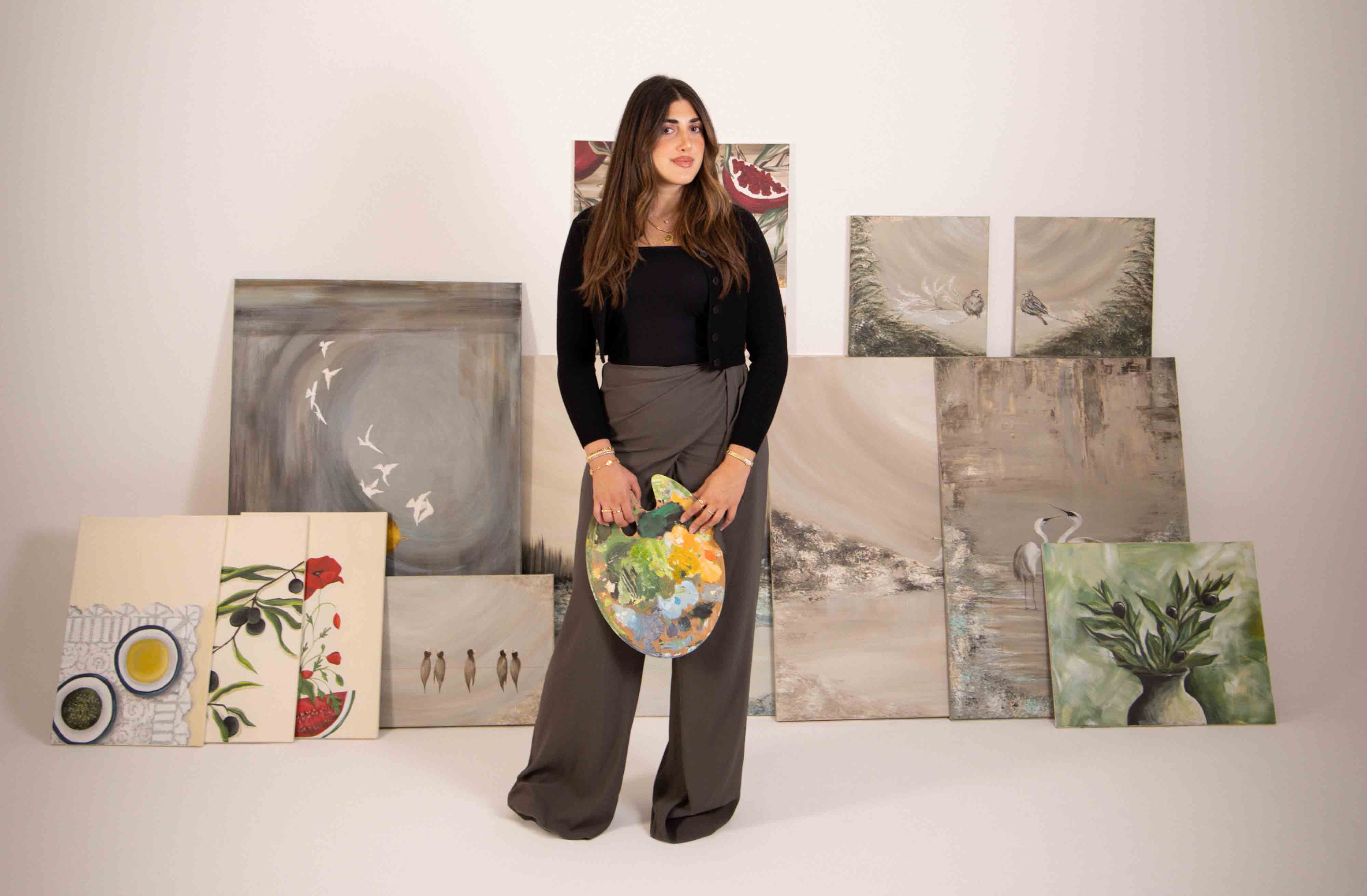
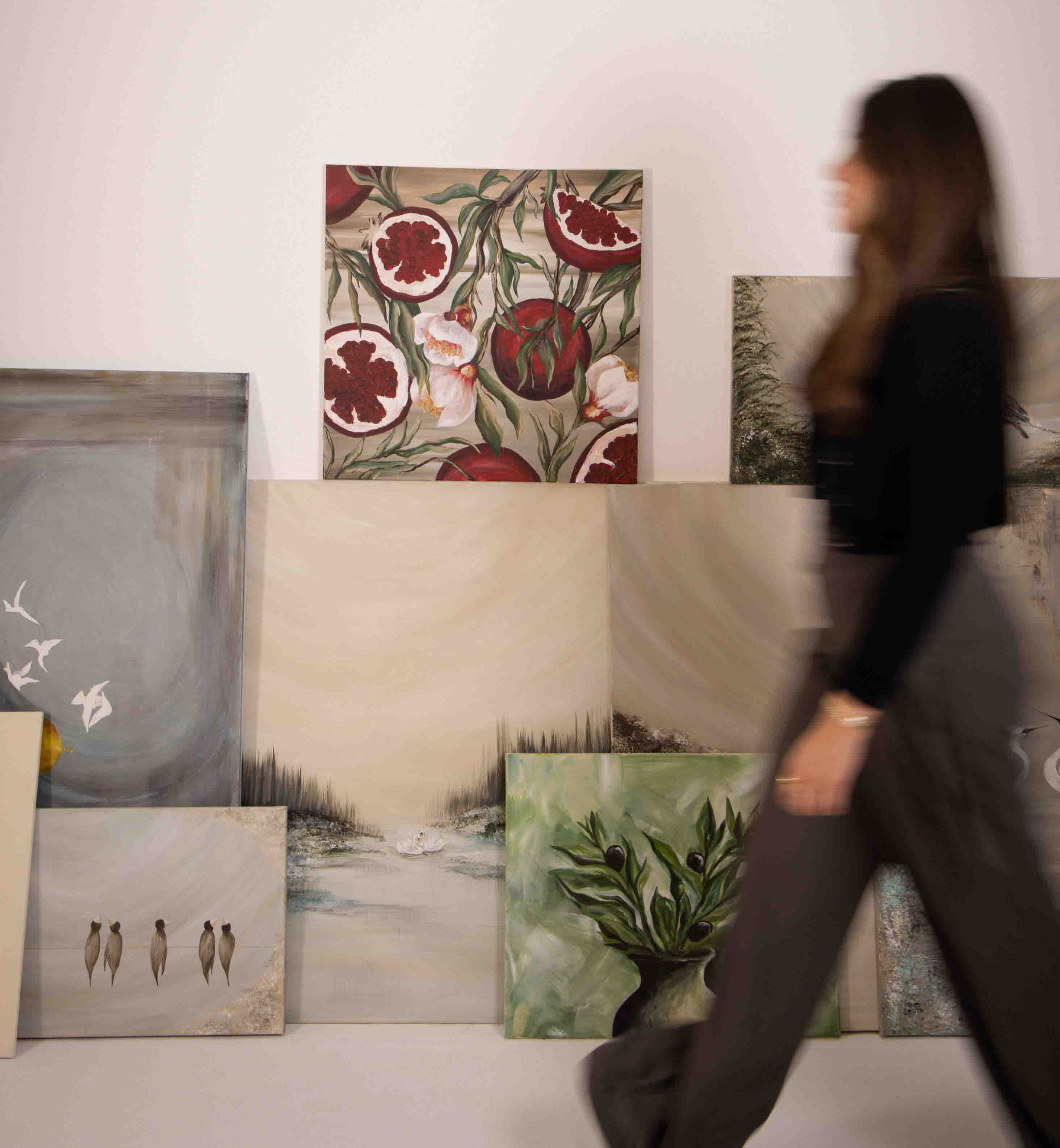
Yet beneath the tactile beauty of her work lies something more personal. Her Palestinian heritage informs a collection rich in cultural symbolism, from olive branches and pomegranates to the evocative painting Rising, a statement of resilience, connection and hope.
For Nariman, creativity is also about people: understanding their stories, shaping meaningful spaces and encouraging others to discover their own artistic voices. In this conversation with CP Magazine, she reflects on the experiences that shaped her, the freedom of creating without certainty and the enduring power of art to express what words sometimes cannot.
The Art of Identity, Memory and Belonging
For our readers meeting you for the first time, who is Nariman Al Adham beyond the artist and designer?
Beyond being an artist and designer, I’m someone who is constantly observing, learning and finding meaning in the little things around me. I value authenticity, connection and staying true to who I am. I’m naturally drawn to the stories behind people, places and cultures, and I think that curiosity influences how I see the world, not just how I create. I’m also someone who is still discovering herself, exploring new possibilities and learning to embrace the process rather than having everything figured out. For me, art is an important part of who I am, but it is also a reflection of the person I’m becoming.
Tell us a little about your childhood and the experiences that first sparked your creativity.
My love for art started when I was very young. I was always drawing, even on the walls, and finding creative ways to use the little things around me. I loved experimenting and turning ordinary objects into something new, even if it meant making a mess around the house! My family recognised this passion early on and played a huge role in shaping who I am today. Their support, along with the opportunities I had to develop my artistic skills at school, helped me grow and turn my childhood passion into an important part of my life today.
You studied Interior Architecture at the University of Petra and graduated top of your class. How did that experience shape your creative journey?
Studying Interior Architecture at the University of Petra opened up a whole new world of creativity for me. It helped me discover skills I didn’t even know I had and explore different ways of expressing myself, from drawing and painting to designing functional spaces. It also taught me that art and design are not just about creating something beautiful; they’re about creating something meaningful for the people who will experience it. I loved the process of combining functionality with my own artistic touch to create spaces that serve a purpose while reflecting creativity and personality. It was such a fun and rewarding journey, and graduating top of my class made the experience even more special.
What inspired you to establish NINO Design Studio, and what is the story behind its name?
I started NINO Design Studio to share the creative ideas, designs and artworks I had been developing. It began with interior design, then expanded into graphic design and branding, with art gradually becoming the focus of my work. Over time, I found myself drawn more towards art and wanted to dedicate more of my time to expressing myself through it.
The name ‘Nino’ is especially meaningful to me because it’s the nickname my family and closest friends have called me since childhood. I chose it because it represents a personal part of who I am and connects me to the creative little girl I’ve always been. In many ways, NINO Design Studio has grown with me, evolving as I discover new ways to express myself creatively.
Your work spans interior design, branding and fine art. How did you develop such a multidisciplinary creative identity?
My creative journey began with interior design, where I gained experience working with architecture and interior design companies before venturing into freelance work. Along the way, I explored graphic design and branding, discovering new ways to apply my creativity and gradually expanding into different projects.
Fine art, however, has always been a part of me since childhood. Over time, I wanted to dedicate more space to painting, and it has naturally become a bigger focus of my work today. I believe what connects all these disciplines is the combination of creativity, curiosity and purpose, whether it’s designing a functional space, developing a visual identity or creating an artwork that communicates an emotion.
What drew you towards painting, and when did it become an important part of your artistic expression?
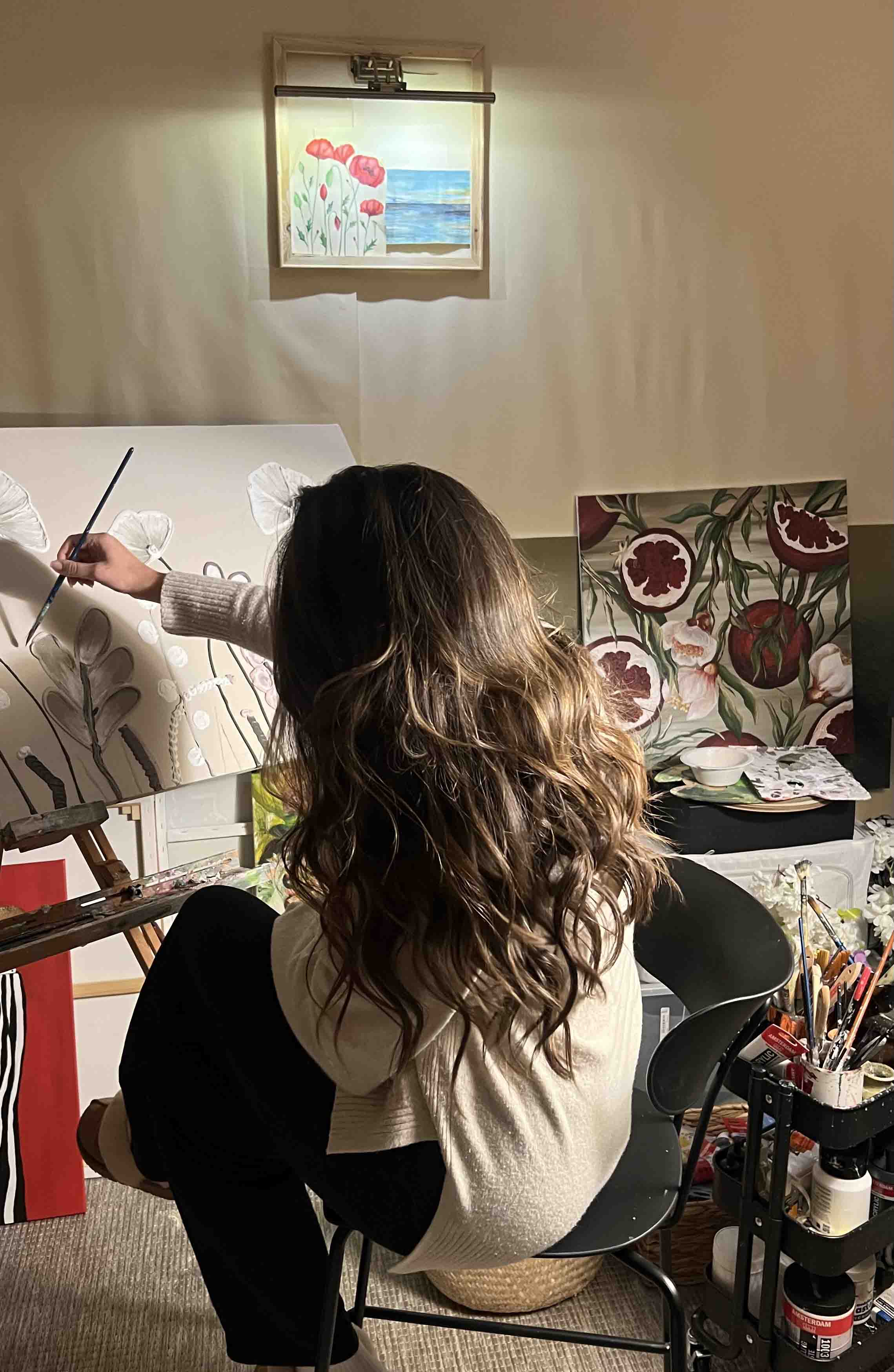
Painting has been part of my life since childhood. What draws me to it most is the process itself, especially experimenting with colours and textures and seeing how they come together. I love creating something with my own hands without knowing exactly how it will turn out. There is something exciting about allowing the process to unfold and discovering the result along the way.
Although I’ve explored different creative fields, painting has always remained a part of me. In recent years, I’ve started dedicating more time to it, allowing me to experiment further, develop my own style and grow into the artist I am today.
Your artwork often explores colour, emotions and personal memories. How do these elements come together in your creative process?
For me, colour is one of the first things I connect with when creating an artwork. I enjoy experimenting with different colours and textures and exploring how they can create a certain feeling or atmosphere. My work is often influenced by personal experiences, memories and my connection to my culture and identity.
Sometimes, I begin with a specific idea, while at other times, the process itself guides me towards something unexpected. I like leaving room for experimentation, allowing the colours, textures and emotions to come together naturally. Ultimately, I want my work to communicate something that people can connect with in their own way.
You work with watercolours, acrylics, oils and modelling paste. How do you decide which medium best expresses an idea?
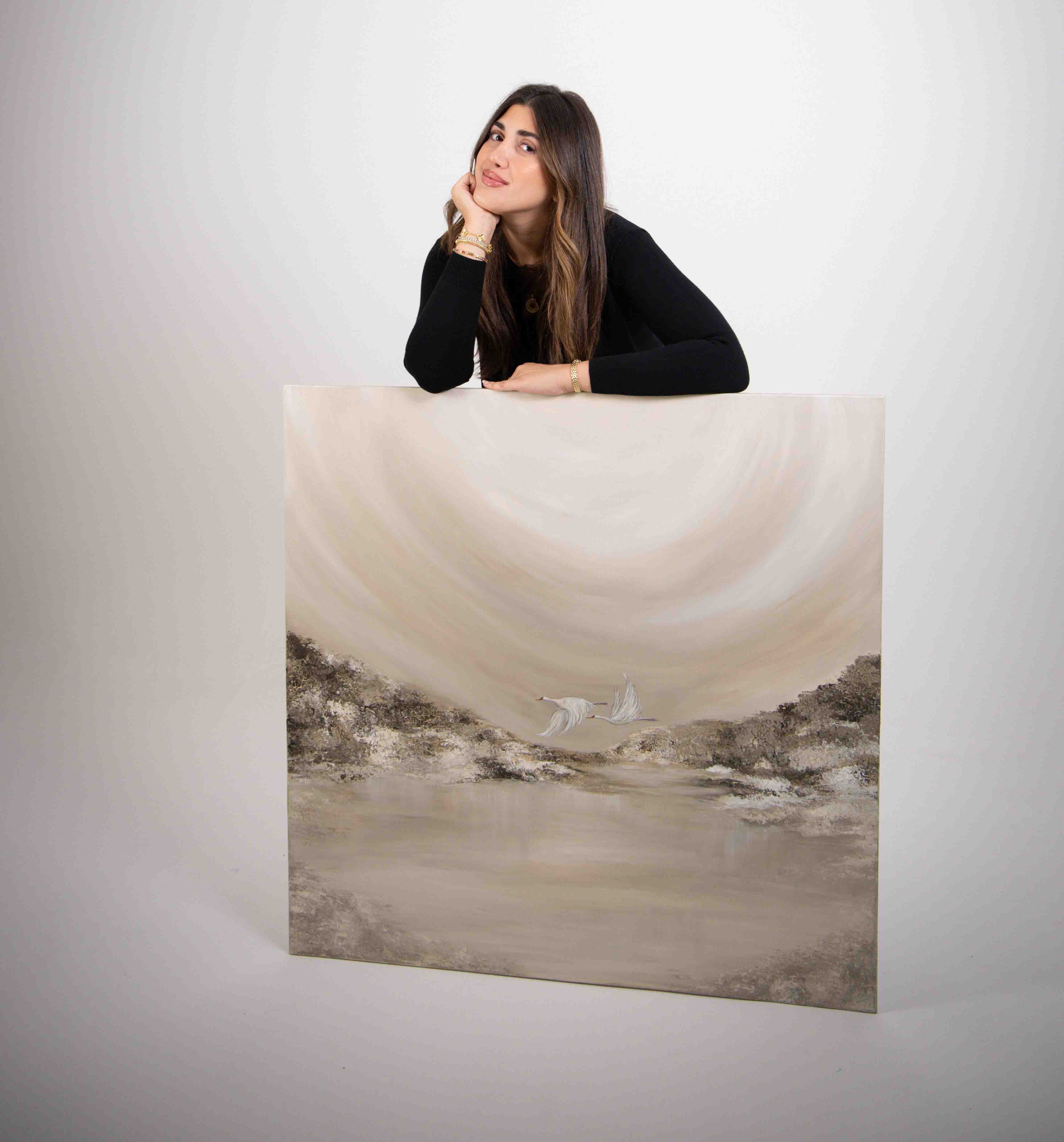
I don’t always choose a medium based on a specific idea; sometimes, the medium itself inspires me to experiment. I use watercolours mainly for sketching, testing ideas before starting a larger canvas and creating customised paintings for clients.
Acrylics and oils are usually my starting point when working on larger pieces. Modelling paste allows me to step outside my usual approach, experiment with texture and create something unexpected. I also enjoy combining different media out of curiosity, even when I’m not entirely sure how they will work together.
For me, that element of experimentation and unpredictability is part of the fun. It allows me to take risks, discover new possibilities and sometimes create something I hadn’t imagined at the beginning.
Texture and layering can add another dimension to a painting. What do these elements represent in your work?
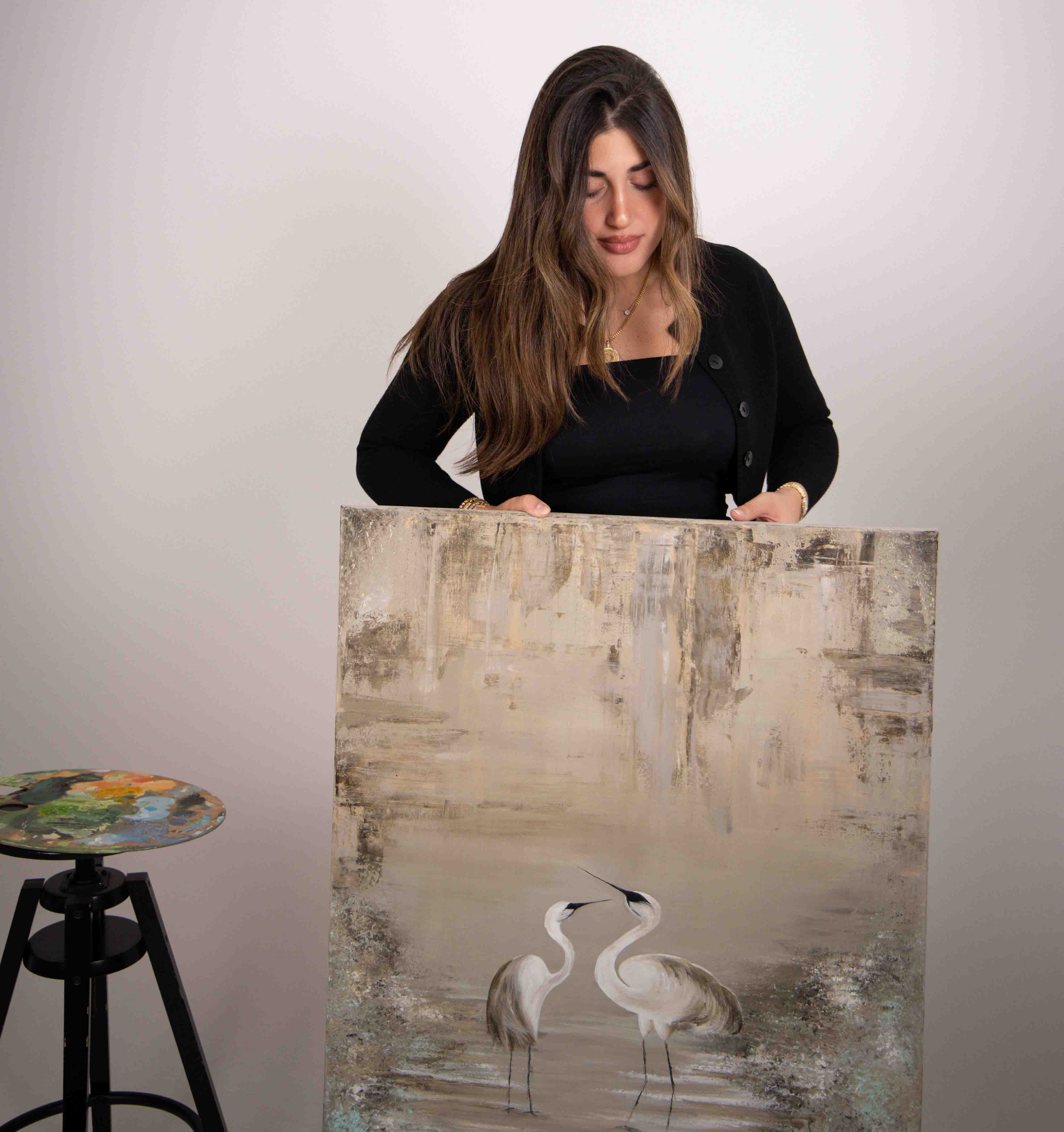
For me, texture adds depth and character to a painting, regardless of the medium I use. I enjoy creating surfaces that invite people to look more closely, explore the details and discover something new each time they look at the artwork.
Layering is also an important part of my process, but it’s something I approach intuitively. I often begin without knowing exactly what the final result will look like and continue building layers and experimenting until the composition feels complete. I think this process allows the painting to develop naturally, with each layer adding something to the overall experience of the artwork.
How would you describe your signature artistic style, and how has it evolved over the years?
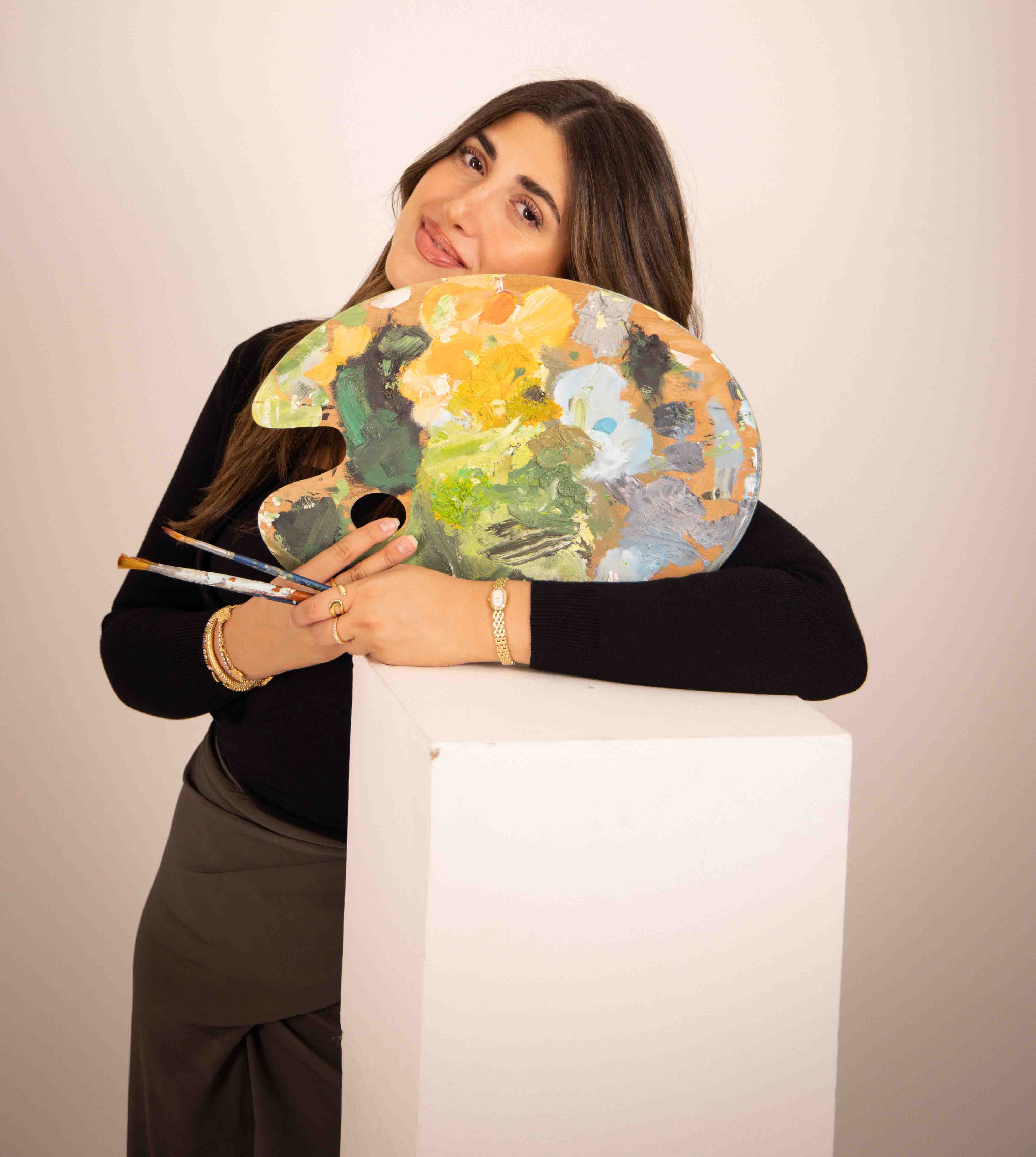
I would describe my current style as contemporary textured realism, with elements of abstraction and symbolic storytelling. I enjoy combining recognisable subjects with expressive textures, layers and colours to create depth and give my work a distinctive character.
My artistic journey began with still-life painting when I was younger, then evolved through my studies in interior architecture, where I developed a deeper understanding of composition, form and space. Over time, I became more interested in experimenting with different materials and techniques, allowing my work to evolve into the style I’m exploring today.
I still see my style as something that continues to develop, and I enjoy leaving room for experimentation and discovering new ways to express my ideas.
When beginning a new painting, do you usually have a clear vision, or do you allow the artwork to develop naturally?
I usually begin a painting with a clear idea or vision of what I want to create, but I don’t expect the final result to look exactly as I imagined. During the process, unexpected things happen. A colour might turn out differently from what I had planned, a texture might form by accident or something might not work the way I intended.
Instead of seeing these moments as mistakes, I often find ways to incorporate them into the painting. I enjoy allowing these unexpected changes to influence the direction of my work. For me, painting is a balance between having an initial vision and being open to discovering something new along the way.
Is there a particular painting you have created that holds a deeply personal story or special meaning?
Yes, Rising holds a very personal and cultural meaning for me. As a Palestinian, creating this painting was a way for me to express my connection to my homeland and my hope for its future. The painting represents the resilience of the Palestinian people and the belief that, despite everything we have endured under occupation, we will continue to rise.
The white birds flying towards the Dome of the Rock, set against an abstract background of faded colours and lines, symbolise our hope for freedom and a future where we can live peacefully on our land.
Every time I visit Palestine, I’m reminded of how deeply connected I am to it and how much this land means to us. Through Rising, I wanted to express my belief that our connection to our homeland will endure and that one day, we will experience the freedom we have long hoped for.
Your artwork explores themes of cultural identity and belonging, particularly through your Palestinian-inspired collection. What inspired you to explore these themes, and what message do you hope to share through your work?
My Palestinian-inspired collection grew from my deep connection to my homeland and my desire to preserve and celebrate the elements that make up our culture and identity. I wanted to bring attention to the symbols, objects and foods that carry meaning for Palestinians and connect us to our roots.
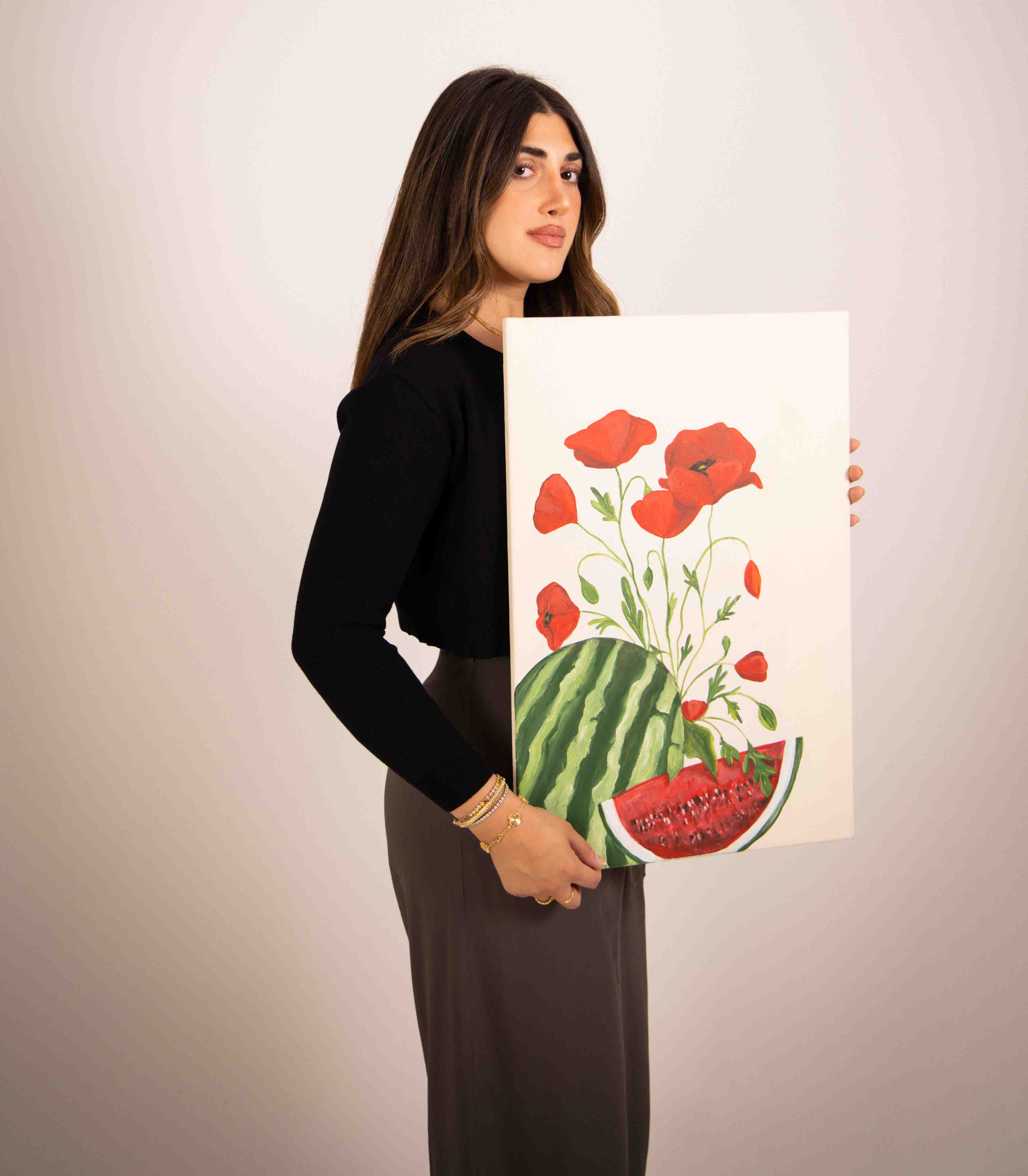
The collection began with Rising, which expresses resilience and hope for freedom. From there, I explored other meaningful symbols, such as the key of return, which represents the connection of Palestinian families to their original homes, as well as olive branches, pomegranates, za’atar, olive oil, watermelons and poppy flowers.
These are more than cultural references to me; they represent our memories, traditions and sense of belonging. Through these paintings, I hope to celebrate Palestinian identity and remind people that, despite everything, our connection to our homeland remains strong.
Above all, I want my work to communicate hope for a future in which we can experience freedom and return to the places that mean so much to us.
As your artistic journey continues to evolve, what new directions or creative challenges would you like to explore in your work?
I’m always interested in exploring new possibilities in my work. I’d like to experiment with different media, combine materials in new ways and discover techniques that bring new dimensions to my paintings.
I’m particularly interested in experimenting with textures and incorporating metallic elements, such as gold and silver, to see how they interact with different colours and surfaces. I don’t want to limit myself to one technique or approach. For me, the exciting part of being an artist is continuing to experiment, take creative risks and discover new ways to develop my style.
Your branding work includes projects such as Raffinato Bakery. How do you translate a brand’s personality into a distinctive visual identity?
For me, every branding project begins with understanding the story behind the brand. I want to know what it represents, what message it wants to communicate and what makes it different.
From there, I develop a visual concept that reflects its personality, sometimes using indirect symbols or creative elements to communicate the idea in a subtle but meaningful way.
I enjoy creating identities where every design choice has a purpose and where people can connect with the story behind the brand through its visual elements. My goal is to create a distinctive identity that goes beyond aesthetics and gives the brand a recognisable character of its own.
What do you believe separates a beautiful design from one that genuinely connects with people?
For me, a beautiful design goes beyond aesthetics. Whether it’s interior design, graphic design or architecture, what makes a design truly connect with people is how it makes them feel and how well it serves its purpose.
Functionality, atmosphere and visual appeal all play an important role. Whenever I work on a design, I try to put myself in the shoes of the people who will experience it. I ask myself what they might see, feel and think when they interact with it.
This helps me develop a design that is not only visually appealing but also meaningful, functional and capable of creating a genuine connection with its audience.
When working with clients, how do you balance their expectations with your own creative vision?
For me, working with clients is a collaborative process. I start by understanding their expectations, ideas and goals, then build on them through brainstorming and mind mapping to explore different creative directions.
I like involving clients in the process step by step, sharing ideas and developments along the way so they feel connected to the project and have a clear understanding of how it is evolving.
Ultimately, it’s about finding a balance between their vision and my creative input, ensuring the final result reflects their needs while still maintaining a thoughtful and distinctive design approach.
You also create customised paintings. How does working on a commissioned piece differ from creating artwork purely for yourself?
Creating commissioned paintings is a different experience from creating artwork for myself because the focus shifts from expressing my own ideas to bringing someone else’s vision to life.
Sometimes, clients ask me to paint subjects or explore styles that I wouldn’t normally choose for myself, which challenges me to step outside my comfort zone and discover new things about my abilities. I’m often surprised by what I can create when I approach something unfamiliar.
What makes commissioned work especially rewarding is knowing that I’ve translated someone’s idea or imagination into something tangible. While my personal artwork allows me to explore my own identity and emotions, commissioned work gives me the opportunity to connect with someone else’s story and create something meaningful to them.
What emotions or conversations do you hope your paintings inspire in the people who experience them?
I hope my paintings evoke different emotions rather than communicate one clear feeling or message. I enjoy playing with contrasts, whether between sadness and happiness, light and darkness, or clarity and mystery.
I don’t want people to look at my work and immediately decide what it means. Instead, I want them to pause, explore the details and reflect on what they see and feel.
I also believe that everyone brings their own experiences and perspectives to an artwork, so their interpretation may be completely different from mine. For me, that’s part of the beauty of art: allowing people to connect with a painting in their own way rather than telling them exactly what to feel.
Amman Design Week 2026 explored the theme Accumulations. From your perspective as an artist and designer, what are your thoughts on this theme, and how do you see accumulated experiences and memories shaping the creative process?
I think accumulation is a beautiful concept because our creative identity is shaped by everything we experience over time. Our memories, emotions, cultural backgrounds and even the smallest details we encounter gradually influence how we see the world and express ourselves through art and design.
For me, every experience adds another layer to my creative process, just as each layer adds depth to a painting. These accumulated experiences continue to shape my perspective and influence the work I create today.
You have also been involved in bringing people together through painting activities. What do you enjoy most about sharing the creative experience with others?
What I enjoy most about my painting workshops is seeing people from different backgrounds come together and express themselves through art.
My workshops are open to everyone, regardless of their artistic experience or skill level. I believe creativity isn’t limited to artists; everyone can enjoy creating something with their own hands.
I love seeing people experiment, discover their creative side and enjoy the process without worrying about getting everything right. For me, it’s about creating a welcoming space where people can connect, try something new and share a meaningful experience through art.
Finally, what message would you like to share with CP Magazine and our readers?
First, I would like to thank CP Magazine for this opportunity. Your questions encouraged me to reflect on my artistic journey and think more deeply about things I hadn’t really taken the time to explore before.
I think what you’re doing by giving people a platform to share their stories, experiences and perspectives is a valuable contribution to society. These conversations allow people to discover different sides of one another, learn from different experiences and appreciate the stories behind the people they see every day.
I’m grateful to have been part of this experience, and I wish CP Magazine continued success in bringing more inspiring stories to light.